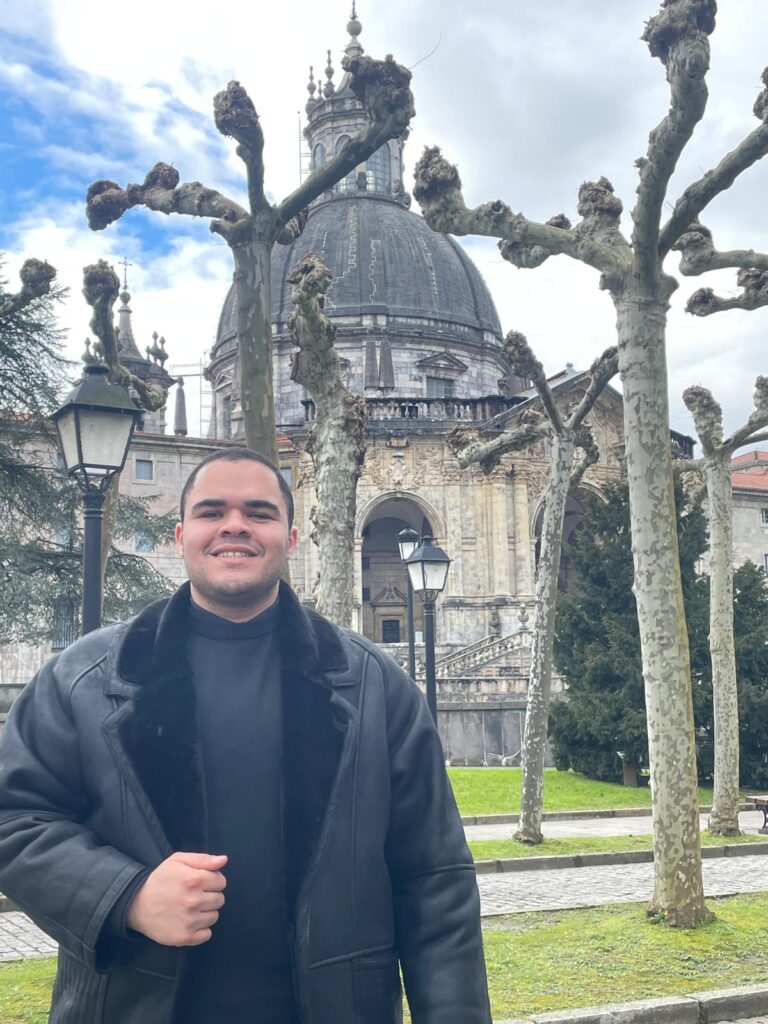
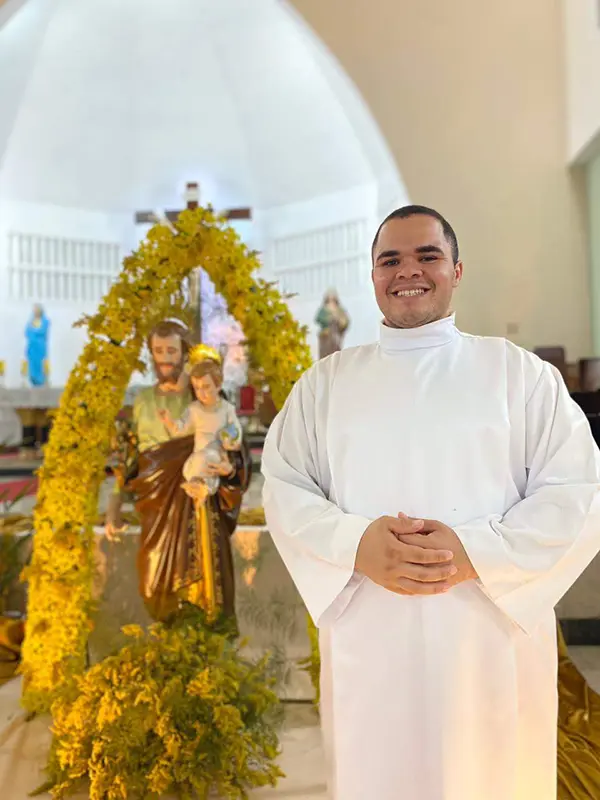
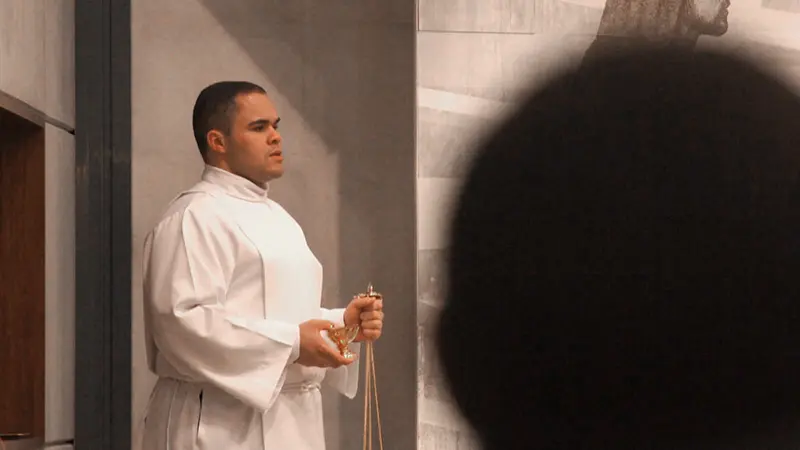
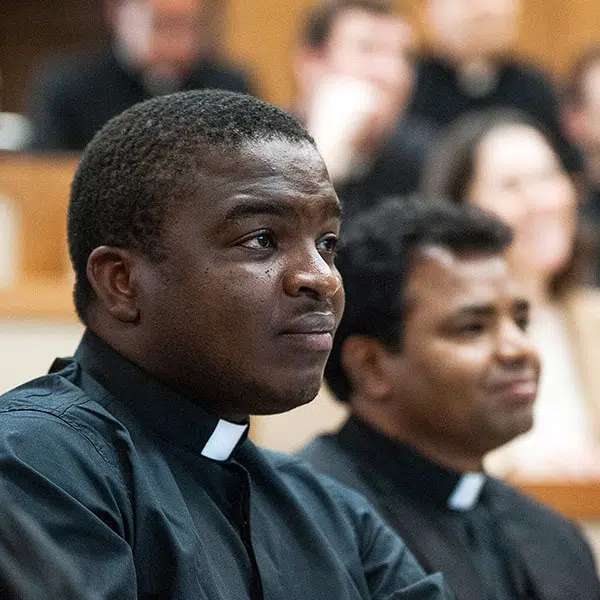
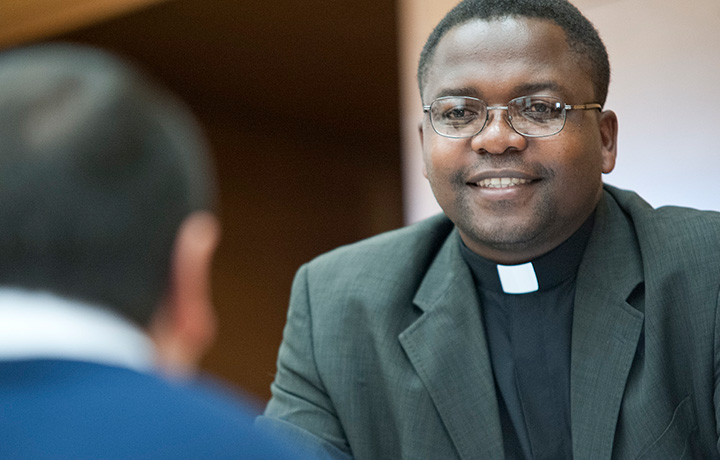
Jonathas Camargo (1998) felt God's call during the Covid-19 pandemic, although this was not always the case. One of the things that held him back from taking that step was his fear of opening himself to a true encounter with the Lord. Jonathas is now in Pamplona training to become a priest. He comes from the diocese of Leopoldina, Brazil.
Introduction to faith and its 'fear' of God
Jonathas arrived in Pamplona in 2023, where he is studying Theology at the Ecclesiastical Faculties of the University of Navarra. From a very young age, he participated in catechesis in his home parish.
God has always been present in Jonathas' family. Since he was a child, his mother took him and his three sisters to the parish to participate in the catechesis of formation. But in his adolescence, a time of rebellion and crisis, he drifted away from the faith, because all he did was attend Mass just for the precept. "Not leaving Sunday Mass, even if it is only to fulfill the ecclesiastical norm even if one does not feel like it, confers an infinite value that is always rewarded by God".
To this reluctance was added a temptation: "that always stopped me from committing myself more to God; it was my fear of opening myself to a true encounter with the Lord," he confesses.
However, the sacrament of Confirmation was vital to become more committed to the Church. Receiving this sacrament is a Grace from God, a sacrament that, as its name indicates, helps a Christian to commit himself to be a witness of Jesus Christ: the baptized person is strengthened by the gift of the Holy Spirit, becomes more deeply rooted in the divine filiation and is more intimately united with the Church.
Coronation to the Sacred Heart of Jesus, a mission that brought him closer to God
With this determination, Jonathas began to participate in other celebrations of his parish, such as the coronations to the Sacred Heart of Jesus.
"In addition, my commitment to the service of the Church was greater when I helped form and coordinate a youth group, also in my parish. This mission brought me very close to God", he says.
This young Brazilian seminarian recalls that being close to young people means above all listening to them in order to accompany them on their journey of faith and true love for the Lord.
Thus, her union with God grew, fruit of her will, of the good people around her, such as the parish priest, and of her own freedom.
God's call to his vocation
Jonathas recounts the moment he felt in his heart a striking presence with the Lord: "In 2016, at the age of eighteen, I was invited to be an extraordinary minister of Holy Communion, and with this service to the Lord I felt in my heart the duty to live my faith in a more responsible way.".
Later, with the arrival of the pandemic, came the turning point for Jonathas: "I was studying for a degree in another city when the pandemic started and with it, all the restrictions imposed on us.
So, I returned to my hometown and dedicated myself to helping my parish priest in everything necessary so that the faithful could follow the celebrations through the Internet. Witnessing all the difficulties we were facing, and being able to feel the people's desire and expression of faith, I felt God's call like a flame burning in my heart as I participated in a Eucharistic adoration".
After this wonderful experience, in 2021 he began his vocational discernment process, and in 2022 he entered the preparatory seminary of his diocese. In July 2023, his bishop sent him to study at the University of Navarra, Spain., as it relates the website of your dioceseHe landed in Bidasoa accompanied by the rector of the seminary of Our Lady of Apparition of Leopoldina, Father Alessandro Alves Tavares.
Jonathas Camargo in Bidasoa.
Your training in Spain
His experience in the Bidasoa international seminar is discovering to him the great beauty of the universal Church: "My stay in Bidasoa has been of great benefit to my vocation. Here I have been able to grow even more in my prayer life and also in my academic life. Sharing life with priests and seminarians from the farthest corners of the world teaches me that the Church is universal and that the Lord can reach all hearts, and for that he wants us to be prepared to evangelize all nations.".
When he finishes his theology studies at the University of Navarra, he will return to his diocese where he will be ordained a priest. Jonathas is aware that all cities and countries have their peculiarities and difficulties in evangelization, but without prayer little can be achieved.
We must continue to pray for vocations
"I believe that, in my diocese, as well as in the whole Church, we must continue to pray that many holy vocations may arise for the Lord's harvest," says Jonathas.
A thought very much in line with the initiative proposed by the Church for March 19, the Day of the Seminary. The first thing the Church asks is to pray for vocations. Then, as far as possible, to help financially to support vocations.
He leaves his future in God's hands, but asks him to continue with this desire to serve the Church wherever necessary and "to take the truth of the Gospel to all corners, and never forget to be faithful to what the Lord asks of us through our bishop".
Marta Santínjournalist specializing in religion.
The impact of a solidarity will on the future of the Church
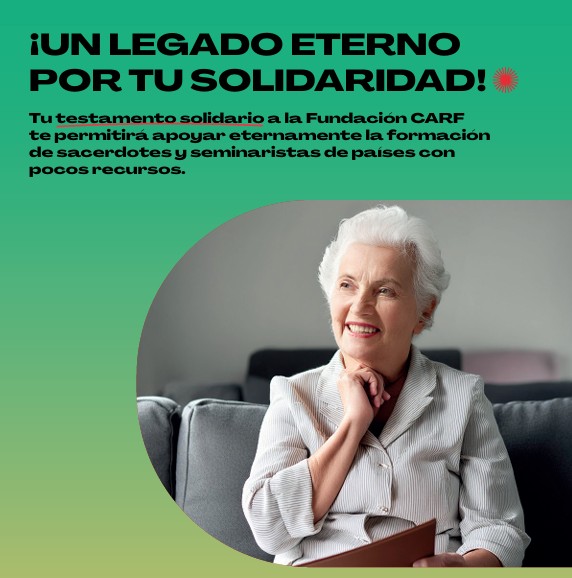
In life, we all seek to leave a deep and permanent mark. Beyond what we accumulate over the years, what really defines us as a person is the good we do for others. A bequest or testament of solidarity will become a meaningful way to extend your perpetual generosity beyond the ephemerality of existence..
With the Solidarity Will, we will be able to support causes that reflect our faith and beliefs, ensuring that our legacy will have a lasting impact on the Catholic Church: the integral formation of priests.
In addition, it is important to understand that a legacy or testament of solidarity is not only about leaving an economic asset, but also about transmitting values and teachings to future generations. For example, when a person decides to allocate part of his inheritance to the formation of seminarians and diocesan priests, he is investing in the future and holiness of the Church by reaching out to people around the world who will in turn form others and guide their local communities. Such decisions can inspire others to follow suit, creating a ripple effect of generosity and commitment.
The integral formation of seminarians and diocesan priests, and religious, becomes essential, since they are not only taught Philosophy, Canon Law, Theology or Institutional Communication of the Church, but it goes far beyond the practical skills for their ministry. It impacts their most human and spiritual realm as well as their academic and intellectual one.
With an adequate and integral formation, diocesan and religious priests will be better equipped to face the challenges of a society thirsty for light, offering support and hope to those in need regardless of their religious beliefs.
For those who share a deep faith and wish to strengthen the mission of the Church, even for all those who see the great social work that priests do around the world, including in the solidarity will a bequest or a donation in favor of the integral formation of seminarians and diocesan priests becomes a way to contribute to the consolidation of faith and the evangelization of all those who have fewer options.
The Solidarity Will becomes a powerful tool for those who wish to leave a perpetual and significant footprint; you leave assets that will end up being part of the financing of formation programs for seminarians and diocesan priests.
The legacy should be seen as an act of social justice. By allocating resources to the integral formation of priests, it is helping more people to have access to quality education within the religious sphere, which increases opportunities for those who otherwise would not be able to access it.
Finally, it is essential to remember that a solidarity will is not only limited to the life of one person, but reflects an intergenerational commitment. Through our will, we can inspire others to follow our example and foster a culture of generosity and commitment to the Church that will endure over time. This legacy, whether through material or spiritual resources, can be a focus of hope and faith for generations to come, and a constant reminder of what it means to live with purpose.
How does a joint and several will work?
A legacy (part) or joint and several will (complete document) is a legal document establishing that, upon death, part or all of the assets will go to a foundation or non-profit organization, in this case, for the formation of seminarians and diocesan and religious priests. This decision does not imply disprotecting the family or harming the legitimate heirs, but sharing a percentage of the inheritance with a cause that will last in time in perpetuity.
It is a simple and flexible process, which allows adjusting the terms according to the circumstances and wishes of the person. It can include financial, movable and immovable assets; an amount of money or a percentage of the total inheritance.
Reasons for a testament of solidarity in favor of the formation of priests
1. Promotion of Christian values: by supporting the formation of new priests, we contribute to the spread of fundamental values such as solidarity, compassion and service to others. These principles are essential for building more just and humane communities.
2. Strengthening of local churches: the presence of well-trained priests in a community helps to make a significant difference in the spiritual and social life of parishioners. These people, in addition to preaching the Gospel and imparting the sacraments, organize activities, provide counseling and support, and help bring people together around common causes.
3. Encourage vocations: by contributing to the formation of diocesan and religious priests, an environment can be created that encourages others to consider a life of total dedication to God for others. The visibility of committed and well-prepared priests can inspire young men to follow in their footsteps and dedicate their lives to the service of others.
4. Continuity in evangelization: Seminarians are the future of the Church. Their formation requires financial support to ensure that they are well prepared in their mission to lead and serve the community.
5. Support of priests: Many communities depend on the generosity of the faithful to support their priests, who dedicate their lives to prayer, service and teaching. But what better sustenance than that of a solid formation that has a direct impact on their local churches.
6. An act of faith and love: A legacy or testament of solidarity is a tangible manifestation of your commitment to the universal Church and all its spiritual and social work.
7. A permanent and lasting impact: although life is ephemeral and fleeting, the fruits of a well-directed gift can perpetuate and extend for generations, strengthening God's work on earth.
How to make a joint and several will
Inform yourself and reflect: think about what you would like to give up. Any contribution will have an impact in the lives of the people we help and who, in turn, help hundreds of thousands in their countries of origin. If you need more information or to resolve any questions, we offer you free legal advice and a total confidentiality.
In this process, it is critical that the person wishing to make a charitable will take the time to reflect on his or her wishes and goals. It may be helpful to create a list of the causes that are most meaningful to you and consider how your bequest can positively impact those areas in the world. In addition, it is advisable to speak with a will attorney to ensure that all provisions are clear and properly carried out.
Is a notary necessary? To ensure the legal validity of the bequest or will, and that your will is carried out in the future, it is advisable to have a notary. This not only ensures that the document is correctly drafted, but also helps to avoid possible disputes between heirs and to comply with local regulations. Don't forget correctly include the CARF Foundation's data and, above all, remember to save a copy. The identification data necessary to include the CARF Foundation in the will or solidarity bequest are:
ROMAN ACADEMIC CENTER FOUNDATION CIF: G-79059218 Conde de Peñalver, 45. Mezzanine, Office 1 28006 Madrid
You can contact us by e-mail and send a copy to Ana at carf@fundacioncarf.org.
Consider including an update clause: Throughout life, our circumstances may change. It is advisable that a clause be included in the will that allows it to be revised and updated as necessary to reflect our current wishes.
If you finally wish to include in your solidarity will a donation or a bequest in favor of seminarians and diocesan and religious priests, please remember inform the institution. Although it is not mandatory, informing the CARF Foundation of your decision makes it easier for your wishes to be fulfilled in an efficient manner.
Leaves an indelible mark
A testament of solidarity is a unique way to transcend and perpetuate the good work you did in life, bringing a future of hope and faith to generations to come. If you feel in your heart the desire to contribute to the mission of the Church, this is a noble and transformative path.
For more information on how to make a will in favor of the integral and ongoing formation of diocesan priests and religious, contact us at. We are here to help you fulfill your desire to leave an perpetual legacy of love and service in the Catholic Church.
Table of Contents
How are the different types of donations tax deductible?
Taxation applied to non-profit organizations such as the CARF Foundation.
Donations made by companies or individuals to a foundation have tax benefits in the form of deductions from the tax liability of both the company and the foundation. corporate income tax as in the personal income tax (IRPF).
The donations that benefit from these deductions are those made to associations or institutions such as the CARF Foundation, declared of public utility and to non-governmental organizations, which meet the requirements set forth in Law 49/2002 on the tax regime for non-profit entities and tax incentives for patronage.
What are the tax deductible donations?
If we refer to Article 17 of Law 49/2002 on Patronage Incentives, which refers to deductible donations, donations and contributions, irrevocable donations and contributions, pure and simple, made in favor of entities covered by the Patronage Law, whether in cash, goods or rights, or through membership fees, provided that they do not entitle them to receive a present or future service, will be eligible for the deductions provided for. The different types of donations to non-profit entities may be:
One-time donations: to address a specific situation or a campaign for a specific fundraising determined. For example Donate Sacred Vessels600 euros guarantees that a seminarian about to be ordained will receive a backpack of sacred vessels to administer the sacraments wherever he may be.
Periodic donations: a commitment to collaborate with the foundation by donating a certain amount of money at a certain frequency. In our online donation form you can select the contribution you want to make and how often you want it to be made.
Tax benefits for relief in kind
Are donations in kind tax deductible? In-kind donations are those in which, instead of contributing money, the benefactor makes a contribution in goods. Most of the time these are valuable goods that the donor already counts that he will not use or enjoy, and considers that they will be more useful if he supports a noble cause with them.
Currently, the donations in kind, in favor of entities covered by Law 49/2002, such as foundations, appear in a law of varied content, Law 7/2022, of April 8, 2002, on waste and contaminated soils for a circular economy. This type of donation includes goods such as watches, jewelry, paintings and works of art. The CARF Foundation guarantees a secure and professional procedure for the treatment of all donated goods: official appraisal and public auction.
The current Patronage Law, in order to encourage private efforts, helps to encourage in-kind donations at no cost to contribute to a foundation. The law states that the tax base of a property, which still has value, is zero, if the donation is for a foundation that will use it for its purposes. In addition, a 0 % VAT is applied. to deliveries of goods made as donations in kind.
The goods received by the CARF Foundation undergo a professional appraisal and will subsequently be auctioned. At the same time that an official appraisal of the Monte de Piedad CaixaBank is available, the corresponding certificate of the donation of these goods in kind can be issued. The CARF Foundation will try to improve the appraisal price through a public auction.
What about joint and several wills and legacies?
A solidarity bequest is a testamentary disposition in favor of a non-profit institution. A legacy is considered to be a specific asset (vehicles, shares, life insurance, real estate...), whereas an inheritance is a succession in which the estates of both the heir and the deceased are merged.
To make a bequest or joint and several will in favor of the CARF Foundation you only need to go to a notary and express your will to testament or bequeath all or part of the assets you own.
In the liquidation of the will, non-profit entities shall are not subject to inheritance and gift tax, and therefore solidarity bequests are tax free for the beneficiaries. The entire value of the donation will be destined to the work of the foundation.
Patronage Law 49/2002
The Patronage Law of December 23, on the tax regime for non-profit organizations and tax incentives for patronage includes the:
Article 19. Deduction of the income tax liability of individuals.
Article 20. Deduction of the amount of income tax due companies. Tax benefits for companies (IS).
You can calculate the tax deductibility of your donation with our donation calculator.
Tax benefits for donations made by individuals
Thanks to the Law of Patronage, donations of up to 250 € have an income tax deduction of 80 %. In other words, by donating 20,83 €/month or 250 €/year, the Tax Agency will refund you 200 € in your income tax return. Donations of larger amounts have a deduction of 40 % on the quota.
Tax benefits for recurring donations
A deduction of 40 % may be applied to donations, instead of the general 35 %, provided that donations of the same or greater amount have been made to the same foundation in the two immediately preceding tax periods, thus rewarding the committed donor. The deduction has a limit of 15 % of the net taxable income.
Tax deduction for donations made by companies and partnerships
In the case of donations made by legal entities, such as corporations, the amount donated has a corporate income tax deduction of 35 % and 40 % in the case of recurring donations. In this case there is no mention of two donation brackets.
In addition, it is important to note that the basis of this deduction may not exceed 10 % of the taxable income for the tax period. Amounts in excess of this limit may be applied in tax periods ending in the ten years immediately following and thereafter.
How to deduct donations made to the CARF Foundation?
When you file your income tax return, or your corporate tax return if you are a company, do not forget to apply the deduction for donations made by crediting your donations. To do so, it is necessary to present the donation certificate issued by the CARF Foundation to all its donors, which in turn informs the Tax Agency so that it can include these amounts in the tax information of each person or company and in its draft tax return.
Anonymous donations cannot be deducted because the tax authorities do not know to whom the deduction should be applied. That is why it is important to make sure that you give complete information, always filling out the forms provided on the website. In this way, the foundation will be able to issue you a donation certificate acknowledging the donation made.
These are two themes addressed by Pope Francis in the final part of his letter Patris corde (December 8, 1920) on St. Joseph.
Since Leo XIII (cf. enc. Rerum novarum, 1891), the Church proposes St. Joseph as a model worker and patron of workers. In contemplating the figure of St. Joseph, Francis says in his letter, we can better understand the significance of the work that gives dignity, and the place of work in the plan of salvation.
On the other hand, today we should all reflect on parenthood.
The work and the plan of salvation in St. Joseph
Work," writes the Pope, "becomes a participation in the very work of salvation, an opportunity to hasten the coming of the Kingdom, to develop one's potential and qualities, placing them at the service of society and communion. Work becomes an occasion of fulfillment not only for oneself, but above all for that original nucleus of society which is the family" (Patris corde, n. 6).
Two interconnected references should be highlighted here: one is the relationship between work and family. The other is the current situation, not just the pandemic but the broader framework, which calls for review our priorities in relation to work.
Thus Francis writes: "The crisis of our time, which is an economic, social, cultural and spiritual crisis, can represent for everyone a call to rediscover the meaning, importance and necessity of work in order to give rise to a new 'normality' in which no one is excluded. St. Joseph's work reminds us that God made man himself did not disdain work. The loss of work that affects so many brothers and sisters, and which has increased in recent times due to the Covid-19 pandemic, should be a call to review our priorities" (Ibid.).
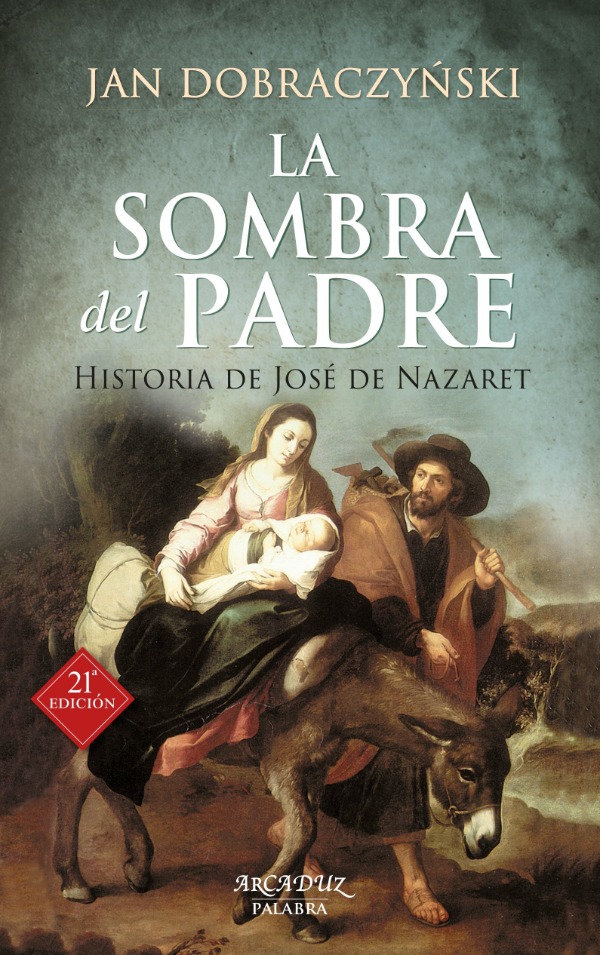
In the last part of his letter, the Pope stops to consider that Joseph knew how to be a father "in the shadow" (he quotes the book by the Polish Jan Dobraczyński, La sombra del Padre, 1977, published in Spanish by Palabra, Madrid 2015).
The shadow of Father St. Joseph
Thinking about this "shadow of the father" or the one in which the father is, we can consider that our postmodern culture experiences the wounds caused by a rebellion against fatherhood, explicable if we take into account many pretensions of fatherhood that were not or did not know how to be what they should be; but a rebellion against fatherhood is unacceptable in itself, because it is an essential part of our humanity and we all need it. Today, in fact, we need, everywhere, fathers, to go back to the father.
In the society of our timeFrancis observes, children often seem to have no father. And he adds that the Church also needs fathers, in the literal sense, good fathers, but also in a broader sense, spiritual parents of others (cf. 1 Cor 4:15; Gal 4:19).
What does it mean to be a parent?
The Pope explains in a suggestive way: "To be a father means to introduce the child into the experience of life, into reality. Not to hold him, not to imprison him, not to possess him, but to make him capable of choosing, of being free, of going out" (n. 7). And he thinks that the word "most chaste" that the Christian tradition places next to Joseph expresses this "..." (n. 7). logic of freedom that every parent should have in order to to love in a truly free way.
Francis notes that St. Joseph would not consider all this primarily as a "self-sacrifice," which could give rise to a certain frustration, but simply as a gift of self, as the fruit of trust. That is why St. Joseph's silence does not give rise to complaints but to gestures of trust.
"The missionary spirit of the Church is nothing more than the impulse to communicate the joy that has been given to us," Address to the Roman Curia, December 22, 2008.
From sacrifice to self-giving
Here is a further explanation of the relationship between sacrifice and generosity for lovein a perspective that could be called Christian humanism or Christian Christian anthropology:
"The world needs fathers; it rejects masters, that is: it rejects those who want to use the possession of others to fill their own emptiness; it rejects those who confuse authority with authoritarianism, service with servility, confrontation with oppression, charity with assistance, force with destruction. Every true vocation is born of the gift of self, which is the maturation of simple sacrifice".
In order to take advantage of this argument, in our opinion, it is convenient to keep in mind the rather negative and impoverishing meaning that the word "sacrifice" has in the street today. For example, when we say: "If there is no other choice, we will make a sacrifice to achieve this...". Or when we express that we don't like something or that person we don't like, but "making a sacrifice" we can bear it.
This can be seen as a result of the de-Christianization of cultureFrom a Christian perspective, sacrifice does not primarily have this sad, negative or defeatist connotation, but on the contrary: it is something worthwhile, because behind it lies life and joy. However, no mother or father who does what they have to do thinks that they are doing it "out of sacrifice", or doing a favor with a lot of effort on their part, because "there is no other way".
By losing the Christian perspective (i.e., the faith that Christ triumphed on the cross, and therefore the cross is a source of serenityToday the word "sacrifice" has a sad and insufficient ring to it. The Pope expresses it well when he proposes overcoming the "merely human logic of sacrifice. In fact, sacrifice, without the full meaning given to it by the Christian perspective, is oppressive and self-destructive.
In fact, in connection with the generosity that all parenting requiresThe Pope adds something that illuminates the road map of ecclesial vocations: "When a vocation, whether in married, celibate or virginal life, does not reach the maturity of self-giving, stopping only at the logic of sacrifice, then instead of becoming a sign of the beauty and joy of love, it runs the risk of expressing unhappiness, sadness and frustration.
And this can be seen in relation to the true meaning of Christian freedom, which overcomes not only the sacrificial mentality of the Old Testament, but also the temptation of a "voluntaristic moralism".
Joseph Ratzinger-Benedict XVI, has explained this well
On various occasions, regarding the passage of Rom 12:1 (on "spiritual worship"). It is a mistake to want to be saved, purified or redeemed by one's own efforts. The message of the Gospel proposes to learn to live day by day the offreshening of one's own life in union with Christin the Church and on the center of the Eucharist (cf. specifically General Audience, January 7, 2009).
This seems to us to illuminate what Francis' letter says, formulated in terms that can be accepted by anyone, not just a Christian, while at the same time setting out on the path towards the fullness of what is Christian: parenthood must be open to the new spaces of children's freedom. Certainly this supposes the concern of the father and the mother to form the children in freedom and responsibility.
It is worth transcribing this paragraph, located almost at the end of the letter: "Every child always carries with him a mystery, something unknown that can only be revealed with the help of a parent who respects his freedom. A father who is aware that he completes his educational action and fully lives his paternity only when he has become 'useless', when he sees that the child has achieved autonomy and walks alone along the paths of life, when he puts himself in the situation of Joseph, who always knew that the Child was not his own, but had simply been entrusted to his care".
Don Ramiro Pellitero Iglesias, Professor of Pastoral Theology at the Faculty of Theology of the University of Navarra.
Published in Church and new evangelization.
5 keys to a good examination of conscience for Confession
To seek a remedy for our faults is a task of love. That is why we must take advantage of a very necessary and indispensable means, which is the examination of conscience. Bishop Javier Echevarría.
What is the examination of conscience for?
The purpose of the examination is not to be anguished with the faults but to recognize them with sincerity and trust in God to then go to the sacrament of confession, knowing that we will be forgiven. The whole process moves in the infinite mercy of God manifested in Jesus Christ.
We see our faults in relation to:
Ten commandments.
Seven deadly sins.
Character defects.
Gifts that God has given us to serve Him.
The responsibilities of our vocation.
Examination of conscience is a bridge to confession
At times, it is our own life that seems to go astray as a result of wrong decisions or simply our personal weaknesses. We Christians are fortunate in that we have the possibility of starting over. That possibility exists thanks to the goodness of being able to turn to the sacrament of Forgiveness, to reach the certainty that God forgives us and encourages us to start again.
How to make a good examination of conscience
In the first place, the examination is made before God, listening to his voice in the conscience of each one of us.
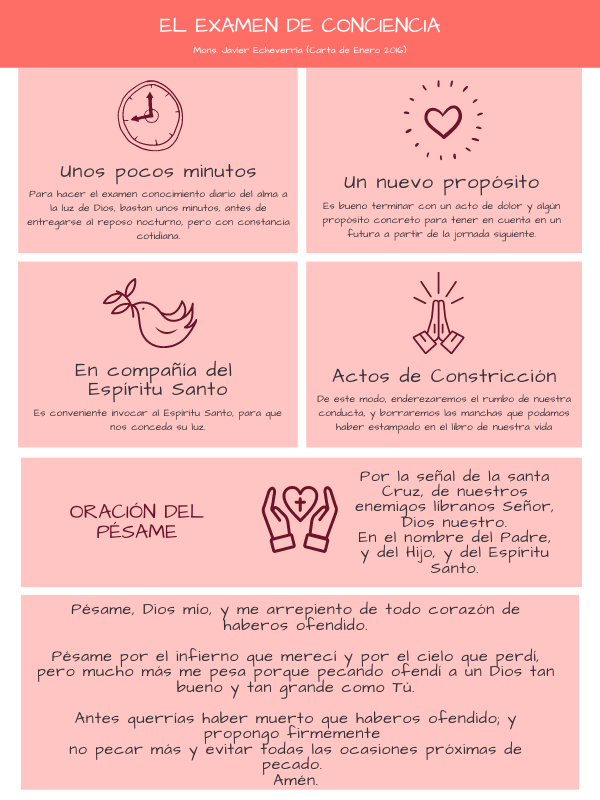
Recommendations of Bishop Javier Echevarría in 2016.
Take a few minutes for a daily soul-searching session.
After that, it only takes a few minutes of daily reflection to look with the soul at the light of God. As St. Josemaría explained, it only takes a few minutes before giving oneself to nightly rest, but with daily constancy.
Ask for the Holy Spirit's help
But there are punctual moments, for example, the examination of conscience for confession, where it will be convenient to proceed more carefully. And in all cases, it is convenient to invoke the Holy Spirit, so that he may grant us his light.
Ending with an act of pain and a purpose for improvement.
Finally, it is not just a matter of enumerating sins but of discovering the wrong attitude of the heart and with sorrow for our sins, making a firm resolution not to commit them again. It is important to end with an act of sorrow and a concrete resolution for the following day. There are always areas in which we are weaker and require special attention, but if we understand that Christ is the measure, we will see that in everything we have much to grow.
The examination of conscience proposed by Pope Francis
Moreover, during Lent 2015, Pope Francis presented the faithful in St. Peter's Square with a special booklet entitled. "Custodian of the heart". It contains important resources for the journey towards Holy Week. It can be downloaded from the link above.
Among these resources is an examination of conscience of 30 questions posed by the Pope to make a good confession, as well as a brief explanation on why to go to the sacrament of Reconciliation.
Questions for a good examination of conscience
We offer a series of questions directed by St. Josemaría Escrivá, which can help in the examination of conscience prior to confession. This version is intended for adults.
Thou shalt love God above all things....
Do I believe all that God has revealed and that the Catholic Church teaches us? Have I doubted or denied the truths of the Catholic faith?
Do I reluctantly do the things that refer to God? Do I remember the Lord throughout the day? Do I pray at any time during the day?
Have I received the Lord in Holy Communion while having some grave sin on my conscience? Have I kept silent in confession out of shame about some mortal sin?
Have I blasphemed, have I sworn unnecessarily or untruthfully, have I practiced superstition or spiritism?
Have I missed Mass on Sundays or feast days? Have I observed the days of fasting and abstinence?
... and your neighbor as yourself.
Do I show respect and affection to my family members, am I attentive and help in the care of my parents or relatives if they need it, am I kind to strangers and do I lack that kindness in family life, am I patient, do I have patience, do I show respect and affection to my family members, am I kind to strangers and do I lack that kindness in family life, am I patient?
Do I allow my work to take up time and energies that belong to my family or friends? If I am married, have I strengthened my spouse's authority, avoiding reprimanding, contradicting or arguing with him/her in front of the children?
Do I respect human life? Have I cooperated or encouraged anyone to abort, destroy embryos, euthanize or any other means that threatens the life of human beings?
Do I wish others well, or do I harbor hatred and make critical judgments? Have I been verbally or physically violent in family, work or other settings? Have I set a bad example to those around me? Do I correct them angrily or unfairly?
Have I tried to take care of my health? Have I drunk alcohol to excess? Have I taken drugs? Have I risked my life unjustifiably (by driving, entertainment, etc.)?
Have I watched pornographic videos or websites? Do I incite others to do evil?
Do I live in chastity? Have I committed impure acts with myself or with others? Have I indulged in impure thoughts, desires or sensations? Do I live with someone as if we were married without being married?
If I am married, have I cared for marital fidelity? Do I try to love my spouse above anyone else? Do I put my marriage and my children first? Am I open to new lives?
Have I taken money or things that are not mine, and if so, have I made restitution or reparations?
Do I try to fulfill my professional duties, am I honest, have I cheated others: overcharging, purposely offering a defective service?
Have I spent money for my personal comfort or luxury, forgetting my responsibilities to others and to the Church? Have I neglected the poor or the needy? Am I fulfilling my duties as a citizen?
Have I told lies? have I repaired any damage that may have followed? have I, without just cause, discovered serious faults in others? have I spoken or thought ill of others? have I slandered? have I slandered?
The life of St. John Paul II, a journey to the heart of mankind
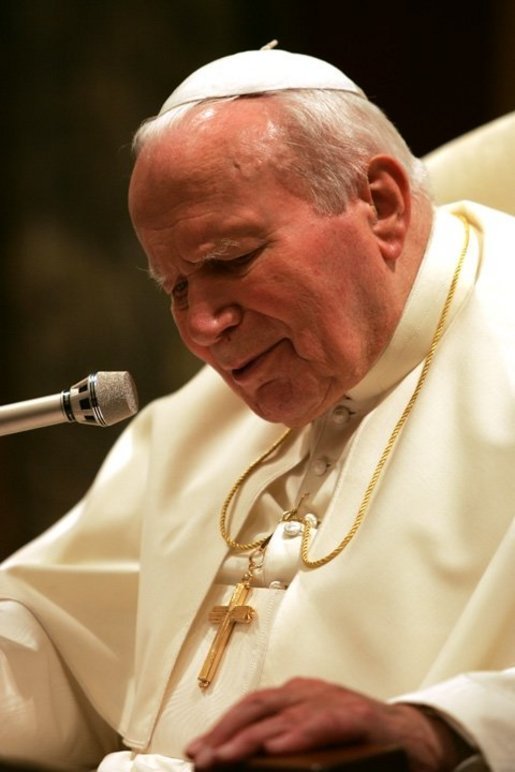
The life and legacy of St. John Paul II, whose birth name was Karol Wojtyła, is a theme that resonates deeply in the history of the Catholic Church and the world at large. Born in Wadowice, Poland, on May 18, 1920, St. John Paul became one of the most influential popes of the 20th century.
His papacy, which lasted from 1978 to 2005, witnessed profound cultural, political and social changes. From his focus on human rights and interreligious dialogue to his role in the fall of communism in Eastern Europe, St. John Paul II left an indelible mark. This article will explore his life, from his origins in Poland to his impact as a spiritual and cultural leader in the world.
Origins in Wadowice
The childhood of St. John Paul
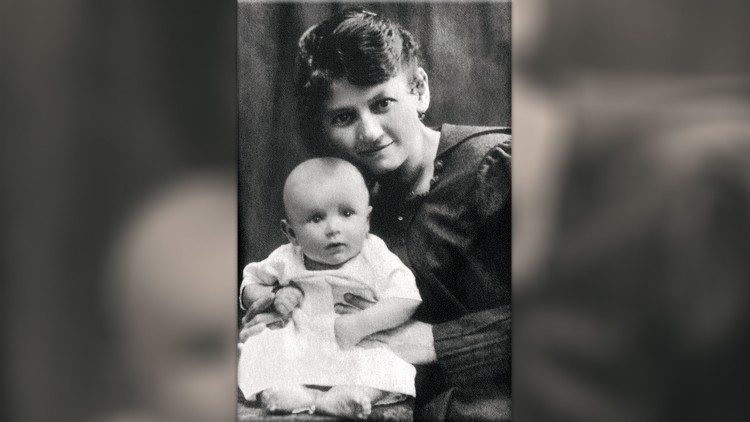
St. John Paul II was born into a working-class family. His father, a Polish army officer, and his mother, an educator, instilled in him values of faith, hard work and dedication. The untimely death of his mother when he was only 9 years old marked the beginning of a life that would face numerous adversities. Despite the difficulties, St. John Paul excelled in school and showed an interest in theater and poetry.
St. John Paul's childhood was deeply influenced by the Catholic community of Wadowice. There, he attended the local church, where he developed a personal relationship with God that would grow stronger throughout his life. This religious foundation was fundamental in his spiritual and moral formation, motivating him to follow a path to the priesthood.
Family and cultural influences
In his youth, St. John Paul witnessed the impact of World War II in Poland, which left a deep mark on his worldview. His relationship with his father, who taught him about the importance of faith and endurance, was vital to his personal development. In addition, his interest in literature and theater led him to explore existential and philosophical themes that would later influence his teachings as pope.
Polish culture, rich in tradition and spirituality, also played a key role in the formation of his identity. The teachings of the Catholic Church in this cultural context provided him with a framework that would guide him in his priestly life and, later, in his papacy.
First steps in faith
As Karol Wojtyła moved into adolescence, his commitment to the Catholic faith deepened. He studied in an underground seminary during the Nazi occupation, a testament to his determination and courage. It was a time when many Catholics in Poland faced severe persecution, and his decision to become a priest reflected remarkable courage.
The influence of religious figures and mentors during this time also helped shape his character. St. John Paul II would not only be a religious leader, but an advocate for human dignity and fundamental rights, themes that would resonate throughout his life and papacy.
Karol continued his education at the Jagiellonian University in Krakow, where he studied philology and became actively involved in theater. This period at the university not only provided him with a solid academic background, but also allowed him to explore his passion for the arts. Through theater, he developed communication and empathy skills that he would later use in his ministry.
The combination of his love of literature and theater with his growing religious devotion laid a unique foundation for his future. The college experience also allowed him to form meaningful friendships, many of which would remain throughout his life and contribute to his perspective on social and political issues.
World War II and its impact
The German invasion of Poland in 1939 abruptly interrupted the life of the Karol Wojtyła. The brutality of the war and the Nazi occupation had a profound impact on him, leading him to reflect on the human condition and the need for faith. During this time, he continued his priestly formation in secret, and his passion for social justice began to grow.
The war not only led him to question the nature of suffering, but also strengthened his determination to become a leader who would advocate for the oppressed. This period of adversity was crucial in his development, as it shaped his character and his future mission as pope.
Wojtyła was ordained a priest in 1946 and quickly earned a reputation as a charismatic leader and deep thinker. His work in the diocese of Krakow led him to become involved in social and cultural activities, seeking to connect faith with people's daily lives. During these years, he devoted himself to ministering to youth and working with the working-class community, which foreshadowed his pastoral approach in his papacy.
As he advanced in his career, Wojtyła was appointed auxiliary bishop of Krakow and then archbishop. His ability to dialogue with people of different backgrounds and his ability to tackle difficult issues made him stand out. His time in Krakow provided him with a platform to develop his theological thinking and commitment to human rights.
Rise in the Catholic Church
Experiences in Krakow
As Archbishop of Krakow, Wojtyła worked tirelessly to revitalize the Catholic faith in Poland. He organized spiritual retreats and promoted Christian education, establishing formation centers for young people. His innovative approach and connection to the community made him a respected leader, not only in Poland, but also internationally.
Wojtyła excelled in his opposition to the communist regime, defending freedom of conscience and the rights of believers. His commitment to social justice earned him the admiration of both the Catholic community and those fighting for freedom in Poland.
The Second Vatican Council
The Second Vatican Council, which took place between 1962 and 1965, was a turning point for the Catholic Church. Wojtyła was present as a bishop and actively participated in the discussion on the modernization of the Church. He advocated an openness to the modern world, emphasizing the importance of interreligious dialogue and the need for the Church to be involved in contemporary social issues.
His participation in the Council strengthened his position within the Church and laid the foundation for his future teachings as Pope. The experience reinforced his belief in the importance of peace and reconciliation in a divided world.
Cardinal of Krakow
In 1964, Wojtyła was named a cardinal, consolidating his influence within the Vatican. His leadership in Krakow and his active participation in the Council positioned him as a candidate for papacy. During these years, he continued to work for justice and human dignity, establishing a legacy that would accompany him until his election as pope in 1978.
Wojtyła's relationship with young people, as well as his ability to communicate with different groups, made him an internationally respected figure. His charisma and vision of a Church committed to peace and social justice resonated throughout the world.
Papacy: a new direction for the Church
Election as successor of St. Peter
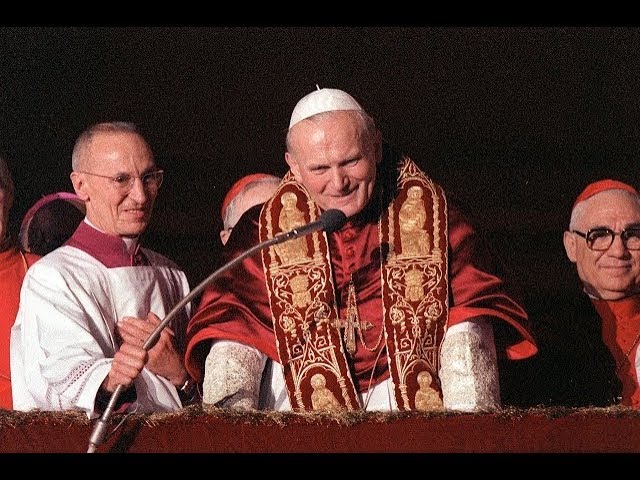
Wojtyła's election as pope on October 16, 1978 marked a historic moment. He was the first non-Italian pope in more than 400 years and his election was greeted with joy around the world, especially in his native Poland. He adopted the name John Paul II, paying homage to his predecessor and signaling his intention to continue his legacy of openness and dialogue.
His papacy began in a complicated international context, with political and social tensions on the rise. John Paul II set out to address these problems from the outset, using his platform to advocate for peace and justice throughout the world.
Early teachings and apostolic journeys
One of the highlights of his papacy was his dedication to apostolic travel. John Paul II made more than 100 international visits, bringing his message of hope and renewal to millions of people. During these trips, he focused on the importance of human dignity and religious freedom, addressing social and political problems in each country he visited.
His first encyclicals reflected his vision of a Church in dialogue with the modern world. In Redemptor Hominis, he emphasized the centrality of Christ in the life of man, while Dives in Misericordia underscored God's mercy as a response to the injustices of the world. These teachings set a tone for his papacy and laid the foundation for his ongoing commitment to human rights.
Confrontation with communism
John Paul II became an emblematic figure in the struggle against communism, especially in Eastern Europe. His visit to Poland in 1979 was a pivotal event that inspired millions to question the communist regime. His call for freedom and human dignity resonated with the population, giving rise to a solidarity movement that would culminate in the fall of communism in Poland in 1989.
John Paul II's influence on global politics was significant. His close relationship with world leaders, as well as his commitment to interreligious dialogue, contributed to the de-escalation of tensions between the superpowers and promoted peace in various regions of the world.
A world leader
Interreligious dialogue
John Paul II was a pioneer in interreligious dialogue, emphasizing the importance of understanding and cooperation between different traditions. In 1986, he organized a historic meeting with leaders of various religions in Assisi, Italy, where they united in prayer for world peace. This event symbolized his commitment to peace and his desire to build bridges between different religious communities.
His focus on dialogue helped foster greater openness among religions and promoted a sense of unity in diversity. As he reached out to other traditions, his message of respect and love spread, laying the foundation for a more peaceful future.
Your defense of human rights
The defense of human rights was a pillar of John Paul II's papacy. His work in this area was not only limited to the fight against communism, but also encompassed issues such as racism, poverty and social injustice. He was a fervent defender of human dignity, advocating for the oppressed and denouncing violations of fundamental rights.
In his famous 1995 speech on the anniversary of the United Nations, John Paul II urged the international community to work together for a more just and equitable world. His focus on human dignity and social justice made him a powerful voice in the international arena, influencing policy and promoting significant change.
The impact on youth
John Paul II was a pope particularly beloved by young people, to whom he dedicated a special place in his ministry. He established World Youth Days, an initiative that brought together millions of young people from around the world in celebrations of faith and community. These events not only strengthened the faith of young people, but also provided them with a platform to voice their concerns and aspirations.
His message to young people emphasized the importance of hope, authenticity and commitment to Christian values. Through his interaction with them, John Paul II left an indelible mark on the lives of many young people, inspiring them to live with purpose and dedication.
Spiritual and cultural legacy
Canonization and recognition
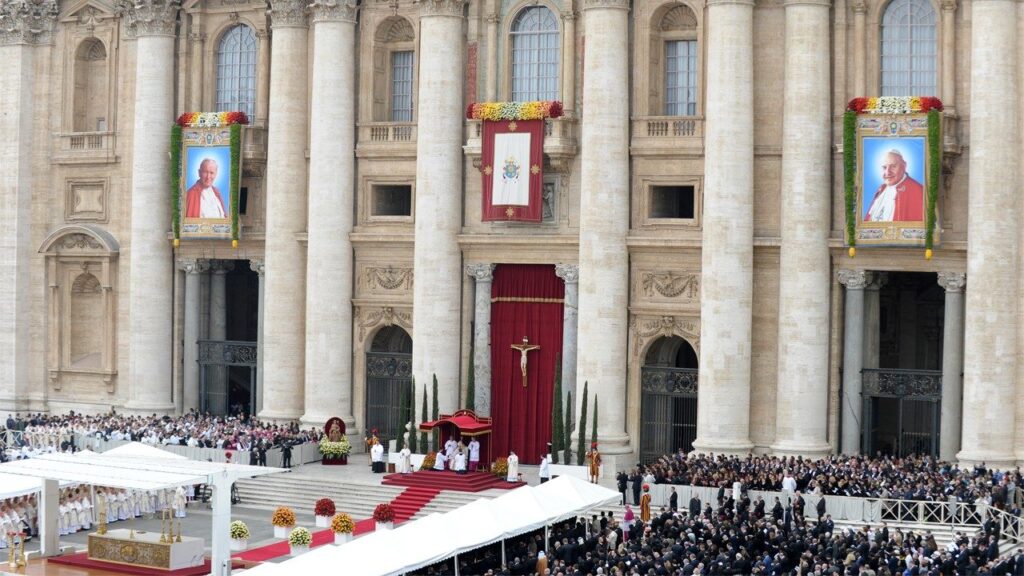
St. John Paul II was canonized on April 27, 2014, a recognition of his life of service and his impact on the Church and the world. His canonization was a significant event, drawing millions of pilgrims to Rome to celebrate his legacy. This recognition not only solidified his place in the history of the Catholic Church, but also reaffirmed his continuing influence.
The canonization was a moment of reflection on his life and teachings. Many people remembered his dedication to peace, justice and human dignity, considering his legacy as an example for future generations to follow.
Influence on contemporary society
St. John Paul II's legacy goes beyond his time as pope. His focus on human dignity, social rights and interreligious dialogue continues to influence contemporary thought. Organizations and movements promoting social justice often cite his teachings as inspiration and guidance in their work.
In addition, his emphasis on the importance of family and life has left a lasting mark on modern society, where the defense of family values and respect for life are topics of ongoing discussion. His legacy is still present in culture, politics and spirituality throughout the world.
Memorial and celebrations in his honor
The memory of St. John Paul II is celebrated around the world through various activities and events in his honor. From memorial Masses to social justice initiatives, his life and teachings continue to inspire millions. World Youth Days, which he established, remain a prominent event on the Church's calendar, fostering faith and community among young people.
Cities and communities have also erected monuments and spaces dedicated to his memory, recalling his commitment to peace and dialogue. His legacy lives on in the lives of those who seek to follow his example of love, hope and service to others.
Conclusion
The life and legacy of St. John Paul II is a testament to an individual's ability to influence the world through faith, dedication and love. From his childhood in Wadowice to his papacy and beyond, his message of human dignity and justice continues to resonate today. In a world that often faces conflict and division, his life reminds us of the importance of working for peace, mutual respect and unity.
The figure of St. John Paul II is not only a symbol of the Catholic faith, but also a beacon of hope for all those who seek justice and reconciliation in society. His legacy will live on in the collective memory, inspiring future generations to follow his path of love and service.
St. John Paul II was elected Pope on October 16, 1978.
What impact did St. John Paul II have on the fall of communism?
St. John Paul II played a crucial role in inspiring the Solidarity movement in Poland, which was instrumental in the fall of the communist regime in 1989.
Why are you known as a human rights advocate?
John Paul II advocated for human dignity and fundamental rights throughout the world, confronting social and political injustices both at home and globally.
What was St. John Paul II's approach to interreligious dialogue?
John Paul II promoted interreligious dialogue as a way of building bridges between different traditions, emphasizing mutual respect and understanding.
How does St. John Paul II continue to influence us today?
His legacy continues to inspire movements for justice, peace and human dignity, as well as celebrations and events in his honor around the world.
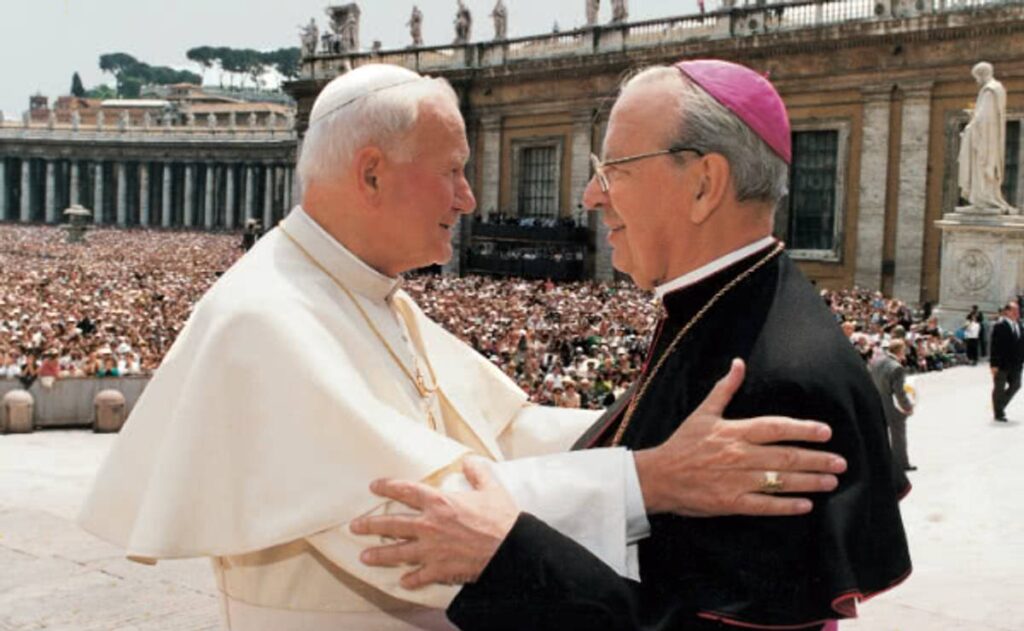
What did St. John Paul II inspire in his friend Blessed Alvaro del Portillo?
Blessed Alvaro del Portillo was inspired by Saint John Paul II to carry out the Roman Academic Center of the Holy Cross erected on January 9, 1985 by the then Congregation for Catholic Education.
Saint Josemaría Escrivá Opus Dei's founder, had desired a center of university studies that, in collaboration with other universities in Rome, would carry out a broad and profound work of research and formation in the various ecclesiastical sciences, at the service of the whole Church.
The challenge was taken up by his successor, Bl. Álvaro del Portillo The project was materially carried out by him, directing the entire execution phase and assuming the role of first Grand Chancellor.
Who grants the title of pontifical to the PUSC?
With the passage of time and with the addition of other academic activities, the Center became the Roman Athenaeum of the Holy Cross, with the Faculties of Theology, Philosophy, Canon Law and the Higher Institute of Religious Sciences of Apollinare.
On June 26, 1995, Saint John Paul II conferred on the Ateneo the title of Pontifical. Three years later (1998), with the establishment of the fourth Faculty of Institutional Social Communication on February 26, 1996, the title of Pontifical University was finally conferred.