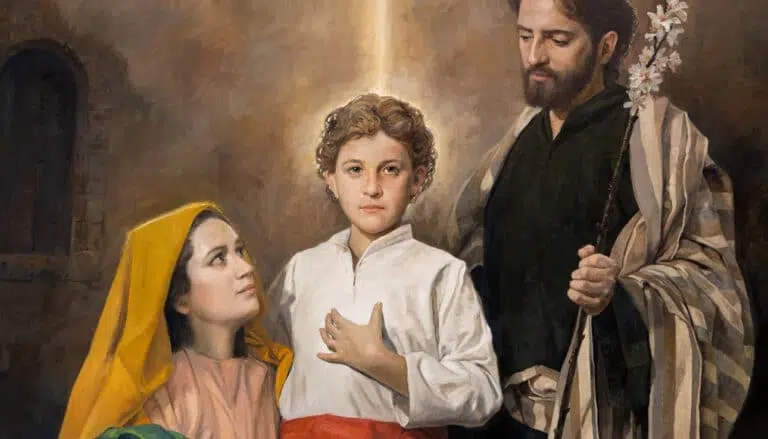
Part 2: Jesus or Mohammed: who is right?

 
Analyzing the issue of the origins of Islam is necessary to understand the historical consequences of the advent of this doctrine.

Here you can read the first installment of this analysis.

The Qur'an and the Šarī‛a

The term Koran is derived from the Semitic root qaraʼa, in the sense of recitation or recited reading, hence psalmody. Already in antiquity, Christians and Jews of the Near East used the equivalent Aramaic voice, qeryan, to indicate the solemn recitation of sacred texts.

However, the use of the same root is even older: ʼAnī qōl qōreʼ ba-midbar (Hebrew: voice of one crying out in the wilderness, as in the book of the prophet Isaiah, later quoted in Greek in the New Testament) has the meaning to cry out, to call, to proclaim, to sing.

The Koran is the sacred text of the Muslims that Muhammad left them as a legacy. For most of them it is the uncreated word of God. It is divided into one hundred and fourteen chapters, called sūra, with their respective verses, called ayāt.

For any non-Islamic exegete, there are many passages in the text that are identical or parallel to those in other older documents, the Old and New Testaments in the first place, as well as pre-Islamic practices, traditions and customs such as the belief in goblins, ǧinn, pilgrimage rites, legends of vanished peoples and the veneration of the Ka‛ba.

The problem of Qur'anic sources is therefore very important. Such sources can certainly not be something written, since Muhammad, universally considered the author (by scholars) or bearer (by Muslim believers) of the revelation reported in the Qur'an, was illiterate and could not, of course, have personal access to the reading of Christian and Jewish holy books.

Consequently, it is in oral form that many religious notions of Christianity and Judaism reached their ears, and this in two phases: the popular festivals that were held periodically in Mecca, where proselytes of heretical Christian and Jewish sects often took refuge to escape persecution in the Byzantine Empire (this can be deduced from many heretical Christian notions and reminiscences of the books of haggadah and apocryphal books of which the Koran abounds).

As we said, the commercial trips he made beyond the desert (again, the notions he had to learn are few, imprecise and incomplete, as is clear from the Qur'anic quotations).

We have seen, then, that Muhammad was immediately convinced that he was the object of a revelation already communicated to other peoples before him, the Jews and the Christians, and that it came from the same source, a heavenly book which he called umm al-kitāb.

However, communications in his case occurred intermittently, which caused the adversaries to laugh at him. We have also seen that Allah often provided the latter with incredibly appropriate responses to his demands and difficulties and admonitions, such as the following:

"The disbelievers say: 'Why has not the Qur'an been revealed to you all at once? But [know, O Muhammad, that] We have revealed it to you gradually, that We may thus strengthen your heart. And whenever they present an argument [against the Message] We will reveal to you the Truth, so that you may refute them with a clearer and more evident foundation.[1]".

The result of such intermittency, and of Muhammad's habit of often changing his version, is the fragmentary character of the Koran, as well as the lack of a logical and chronological order: everything is for immediate use and consumption.

This was already obvious to the early Qur'anic commentators, shortly after the death of the "prophet" of Islam, particularly with regard to the question of verses abrogated by later ones. To try to resolve the matter in the best way, the sūra were classified into Meccan and Medinan, according to the period in which they were revealed.

The first period, the Meccano

It is divided into three phases: a first, corresponding to the first four years of Muhammad's public life, characterized by brief, passionate and solemn sūra, with short verses and power-packed teachings intended to prepare the minds of the listeners for the day of judgment (yawm al-dīn).

The second, covering the next two years, in which the enthusiasm, at the beginning of the persecutions, cools down and stories are told about the lives of the previous prophets, in a form very similar to the haggadah (rabbinic literature of a narrative and homiletic type); a third, from the seventh to the tenth year of public life in Mecca, also full of prophetic legends, as well as descriptions of divine punishments.

In the second period, on the other hand, that of Medina

We find the great change undergone by M. after the hegira. The sūra are addressed to Jews and Christians, and the friendly and laudatory tone reserved for them in the first phase is gradually lost, culminating, in the last years of the life of the "prophet" of Islam, in a real attack. It is of this age, for example, the sūra 9, in which, in verse 29, it is demanded: the humiliation of:

"Fight those who believe neither in Allah nor in the Day of Judgment, do not respect what Allah and His Messenger have forbidden, and do not follow the true religion [Islam] from among the People of the Book [Jews and Christians], unless these agree to pay a tax [whereby they are allowed to live under the protection of the Islamic state while retaining their religion] with submission."

This will be translated into laws that will impose various restrictions on those who profess the Jewish or Christian religion, such as dressing in a special way, not being able to carry weapons and ride horses, etc.

Although the Pentateuch, the Psalms and the Gospel are explicitly admitted as revealed by the Koran, there are considerable differences between Islam and Judaism, and even more between Islam and Christianity. These divergences, as we said, reflect the contacts between Muhammad and the heretical Christian sects, whose existence at that time was quite common both in the Byzantine Empire and, above all, just outside its borders.

Among the most evident divergences are those related to the figure of Christ, by which the Christian apocryphal books exert a particular influence on the Koran. In the holy book of Islam, for example: Jesus is the son of Mary and was born of a virgin birth, and yet this Mary is the sister of Moses.

The miracles performed by Jesus since childhood are narrated in great detail, and the names of Messiah, Spirit of Allah and Word are attributed to him, placing him on a level of superiority with respect to the other prophets, but it is specified that Christ is only a servant of Allah, a man like the others; it is established, among other things, that his death on the cross would never have occurred: instead of Jesus, only a simulacrum would have been crucified.[2].
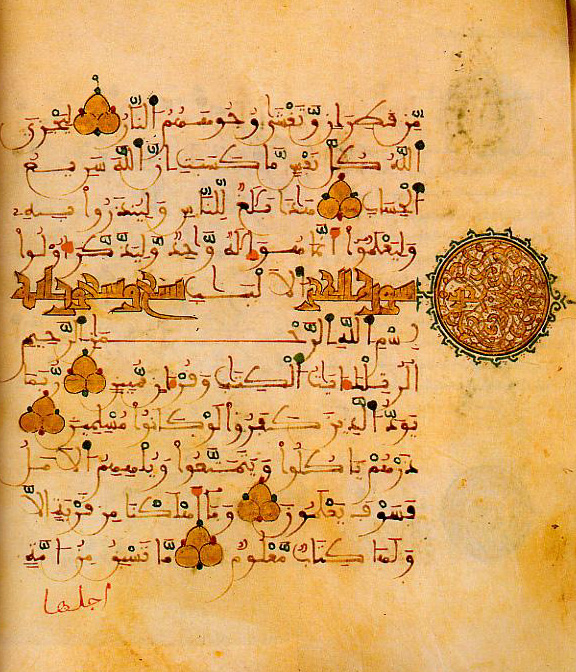
jesús o mahoma caligrafía corán antiguo

The idea of paradise

Another considerable difference, which for Islam is something absolutely earthly (another reason why we speak of Islam as a natural religion), made to impress the simple and rough inhabitants of the desert: green gardens, enchanting streams, wine that does not intoxicate, virgins always untouched. There is nothing there to express the concept of the beatific vision and the participation of believers in the very life of God: Allah is inaccessible to human vision (6/103).

Finally, among other differences, there is the predetermination of human actions by Allah (in this respect Islam is very similar to Calvinism). There are passages of the Koran more or less in favor of or completely opposed to free will, but it is the latter that have been accepted, with skillful corrections, by Sunni orthodoxy, and that to give Islam its predeterminist mark (the maktub, the destiny of each man, is rigidly written and predetermined by God).

The actual compilation of the Qur'an is subsequent to Muhammad's death, at which time the compilation of all the fragments of the revelation that he had entrusted to his followers began. The sūra were ordered by length (from the longest to the shortest, although with several exceptions, also due to the impossibility of a logical or chronological order).

To this same epoch goes back the beginning of the fierce fights and internal divisions, between various parties and currents, fights all suffocated in blood, with each party fabricating verses and Koranic quotations à la carte that supported the respective claims.

Šarī‛a

It is an Arabic word meaning "beaten path", like halakhah in Hebrew, and indicates the written law From a semantic point of view, both terms, Arabic and Hebrew, can be assimilated to our "law" ("direct" path, way to follow). The Šarī‛a, Islamic law or law (according to the "orthodox" Sunni view), is based on four main sources:

  1. The Koran;
  2. The sunna (through the ḥadīṯ);
  3. The qiyās;
  4. The iǧmā‛.

The sunna

As we have already spoken of the Koran, let us analyze directly the other three sources, starting with the sunna (habit, tradition, line of conduct of the ancestors), which is a word that indicates, even before Muhammad, the traditional customs that regulated the life of the Arabs. In the Islamic context, the same term defines the set of sayings, deeds and attitudes of Muhammad according to the testimony of his contemporaries.

And it is here that the ḥadiṯ comes into play, that is, the narration or account of Muhammad's sunna made according to a certain scheme, based on isnād (support and enumeration in ascending order of the persons who reported the anecdote until reaching the direct witness of the episode) and matn (the text, the body of the narration). This source was extremely necessary when, at M.'s death, Islam was only a rough draft of what would later become.

It was also necessary, after the conquest of such vast territories and the consequent confrontation with new cultures, to find solutions to problems and difficulties with which the "messenger of God" had never been directly confronted.

And it was precisely Muhammad who was called upon so that he himself could specify, although he had already passed away, a number of points that are only hinted at in the Qur'an or were never addressed, in relation to various disciplines. Thus, a set of true, presumed or false traditions was created at a time when each of the factions fighting within Islam claimed to have Muhammad on their side and attributed this or that statement to him, constructing entire apparatuses of totally untrustworthy testimonies.

The method adopted to stop this overflowing flow was extremely arbitrary. In fact, neither textual analysis nor the internal evidence of the texts was used (the same can be said with respect to Koranic exegesis which is almost non-existent), which is the criterion par excellence, in Christianity, to determine and verify the authenticity of a text.

On the contrary, it relied exclusively on the reputation of the guarantors: if, therefore, the chain of witnesses was satisfactory, anything could be accepted as true. It should be noted, in this connection, that the traditions defined as the oldest and closest to Muhammad are the least reliable and the most artificially constructed (something that can also be ascertained from the excessive affectation of the language).  

The qiyās

The third source of Islamic law, or Šarī‛a, is the qiyās, or deduction by analogy, through which, from the examination of determined and resolved questions, the solution was found for others not foreseen. The criterion used, in this case, is ra'y, i.e. point of view, intellectual view, judgment or personal opinion. The source in question became necessary from the dawn of Islam, since, as we have seen, the inconsistency of the Qur'an and the ḥadīṯ had produced considerable confusion and led to the entry into force, for the first two sources, of the tradition of the abrogator and the abrogated.

Iǧmā‛

However, if in case the qiyās had not been sufficient to resolve all unresolved issues, a fourth source, the vox populi or iǧmā‛ (popular consensus) was inserted to provide a solid basis for the entire legal and doctrinal apparatus. This source seemed more than justified for both Qur'anic quotations and for some hadīṯ, in one of which Muhammad claimed that his community would never err.

The iǧmā‛ may consist in a doctrinal consensus reached by doctors of the law; in a consensus of execution, when it comes to customs established in common practice; in a tacit consent, even if not unanimous, by jurisconsults, in the case of public acts that do not involve the condemnation of anyone.

The constructive work to derive law from the four sources indicated (Qur'an, sunna, qiyās, and iǧmā‛) is called iǧtihād (da ǧ-h-d, the same root as the term ǧihād), or "intellectual effort." The effort in question, a true elaboration of Islamic positive law, based however on a "revealed" word, lasted until around the tenth century, when the legal schools (maḍhab) were formed, after which "the iǧtihād gates" are considered officially closed. Since then, one can only accept what has already been settled, without introducing further innovations (bid‛a).

The most rigid in this regard are the Wahhabis (founded by Muḥammad ibn ‛Abd-el-Waḥḥḥab: the Wahhabi doctrine is the official doctrine of the kingdom of the Sa‛ūd, absolute monarchs of Saudi Arabia) and the Salafists (founders and main exponents: Ǧamal al-Dīn al-Afġāni and Muḥammad ‛Abduh, 19th century; the Muslim Brothers are part of this current).

According to the vision of both movements, excessive innovations were introduced within the Islamic doctrine; therefore, it is necessary to return to the origins, to the golden age, that of the fathers (salaf), in particular that of the life of Muhammad in Medina and of his first successors, or caliphs.

Before proceeding further, we may say a few words regarding the concept of ǧihād. Muslim law considers the world divided into two categories: dār al-islām (house of Islam) and dār al-ḥarb (house of war): against the latter, Muslims are in a state of constant war, until the whole world is not subject to Islam.

The ǧihād is so important, in Islamic law, that it is almost considered a sixth pillar of Islam. In this sense, there are two obligations to fight: a collective one (farḍ al-kifāya), when there is a sufficient number of troops; an individual one (farḍ al-‛ayn), in case of danger and defense of the Muslim community.

There are two types of ǧihād, one small and the other large. The first is the duty to fight to propagate Islam; the second is the daily and constant individual effort in the way of God, in practice, a path of conversion.

It is through the ǧihād that many Christian lands have fallen, most often by capitulation, into Islamic hands and, in this case, their inhabitants, considered "people of the covenant" or ahl al-ḏimma, or simply ḏimmī, have become state-protected subjects, second-class citizens subject to the payment of a capitulation tax, called ǧizya, and of a tribute on the lands owned, ḫarāǧ.

Annex

  1. Sūra 25/32-33.
  2. "...they neither killed him nor crucified him, but they were made to mistake him for another whom they killed in his place (4/157). In this aspect the Islamic doctrine is identical to the docetic doctrine, of Gnostic origin (already in the second century of the Christian era, from the Greek verb dokéin, to appear), whose main exponent was the Gnostic theologian Basilides.

According to this doctrine, the coexistence in Christ of two natures, one human (bearer of evil) and one divine (bearer of good), was inconceivable. Therefore, either Christ had been replaced by someone else at the time of the crucifixion or the whole episode had been an illusion. Simon Magus (quoted in the Acts of the Apostles) had already expressed himself in this sense, and to him and his Gnostic followers John already seems to answer, in 1Jn 4: 1-2: "Every spirit that confesses that Jesus Christ has come in the flesh is of God"; and also Jn 1:14: "And the Word became flesh and dwelt among us".


Here you can read the third installment of this analysis.

Gerardo Ferrara
BA in History and Political Science, specializing in the Middle East.
Head of the student body at the University of the Holy Cross in Rome.
Anto Bezingar, seminarian from India: "my country needs more priests".

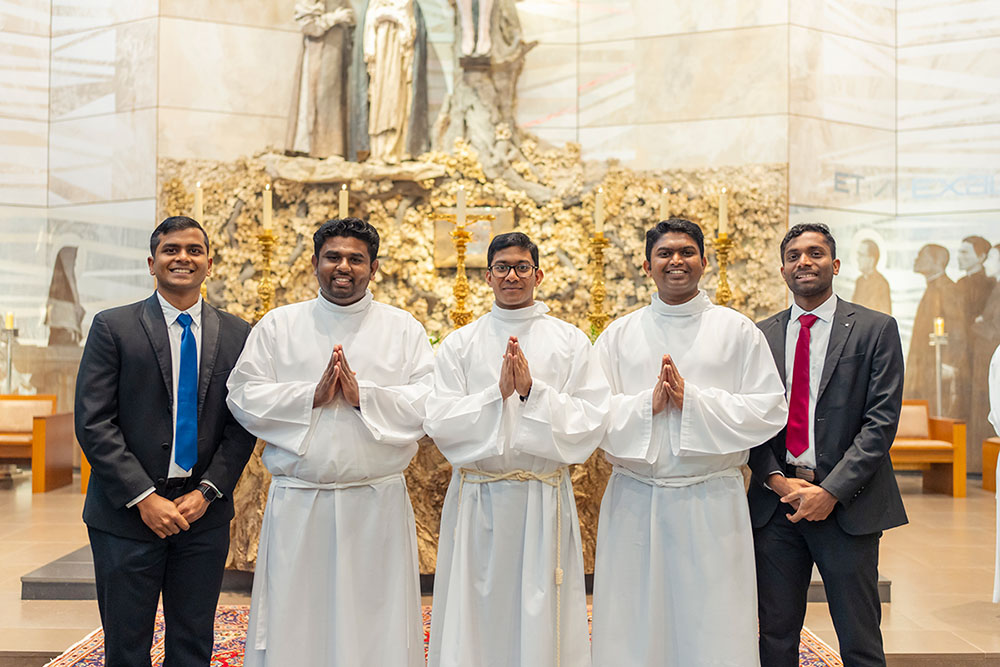
Anto Benzigar, a seminarian from India, entered the seminary at the age of 17. Now 26 (in 2025), he is studying the fourth year of theology at the Ecclesiastical Faculties of the University of Navarre and resides at the Bidasoa International Seminary in Pamplona.

He discovered God's love as a child, thanks to the Christian formation of his parents.

Anto discovered the love of God as a childFrom a very early age, I received the spiritual nourishment I needed from my family, catechism and a formation in the association. Little Way. Through my parents' prayer life, and their total trust in Christ and devotion to Mary Most Holy, I became aware of the love of God, my almighty Father".

Because for him, the training received at home, in the family, is a treasure that we all have to thank our parents for.. A Christian formation that remains impregnated in our soul.

Anto (center of the picture), together with other seminarians from India.

A faith handed down from generation to generation

"Keralite (South Indian) families, like my own, often have a deep-rooted Catholic faith that is passed down from generation to generation.. This determination in family prayer and spiritual practices can be a valuable lesson for European families seeking to strengthen their faith," says the young Indian seminarian.

During his childhood, serving as an altar boy sparked in him a burning desire to become a Catholic priest. And after finishing his high school studies, he entered the seminary on May 31, 2015. He remembers the exact date with great joy and hope.

The origin of Christianity in your Indian diocese

The origin of Christianity in his diocese (Neyyattinkara) dates back to 1600, when a group of Catholics baptized by St. Francis Xavier settled in some localities in the area such as Neyyattinkara, Vlathankara, Amaravila and Parassala.

In 1707, the Jesuit missionary Fr. Severia Borgis started the Nemom Mission. The first converts came from the community of Nair and the first church of this diocese was erected in 1775 in Amaravila.

An 11 % of Catholics

But the spread of the Catholic faith increased in his diocese at the beginning of the 20th century with the missionary activity of the saint. Archbishop Aloysius Maria Benziger (OCD).

"His holy life, powerful leadership, missionary zeal and generous assistance to missionary priests paved the way for the formation of several ecclesial communities and the erection of many churches," says Anto.

Finally, on June 14, 1996, St. John Paul II, by means of the bull Ad Aptius Provehendum erected the Latin diocese of Neyyattinkara.

Today, the total population of this diocese is 1,467,000 inhabitants, of which 160,795 are Catholics, 11 %.

Shortage of priests: a major challenge

"With a relatively small Catholic population compared to the total population, there is a potential need for evangelization and reaching more people," says Anto, who says vocation needs and a shortage of priests in his diocese is a major challenge.

Paradoxically, this area of India has many parishes and missionary centers, and it is a great responsibility of the diocese to provide adequate pastoral care to its faithful, because, in addition, the people in India respect the catholic priest and holds him in high esteem.

What can we Europeans learn from India?

This shortage of priests does not prevent the parish life of Kerala is very activewith vibrant communities that foster a sense of belonging and participation in the Church.

"This is something that can inspire European parishes: to create more attractive and inclusive environments for young people," says this young seminarian.

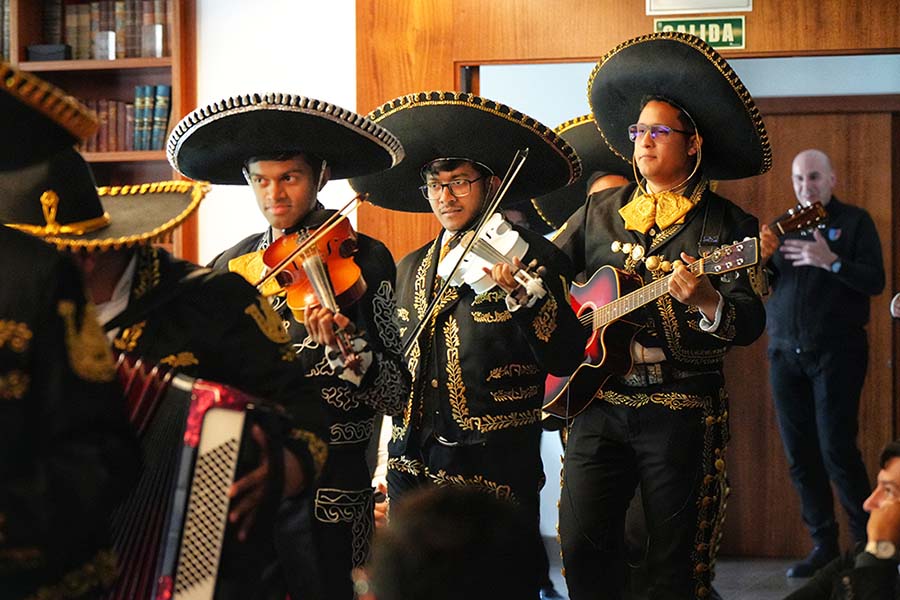
Anto's classmates dressed as mariachis playing at an end-of-year festival in Bidasoa.

Cultural and religious diversity in India

Another of the riches of Kerala, the province of Anto Benzigar, is the rich cultural heritage that combines Hindu, Christian and Muslim traditions. For him, this cultural diversity creates a unique and vibrant society where people from different backgrounds can live and work together.

"I believe this feature can inspire Europeans to embrace cultural diversity and learn from different traditions," he says.

One thing Europeans can also learn from their country is how to overcome obstacles: "Kerala has faced numerous challenges, including natural disasters and socio-economic problems. However, the Keralite people have demonstrated a remarkable resilience and a strong sense of community to overcome these adversities. This spirit of perseverance can be an inspiration to Europeans as they face their own difficulties".

The richness of living in Bidasoa

But Anto Benzigar is also gaining great knowledge of Spain. In addition to the language that gives him an international perspective, the cultural heritage of our country and its different ways of thinking.

Of course, as he says, Spain's rich history and art are giving him a deeper insight into the country's past.

But the most important thing is the international perspective that residing in the United States provides. Bidasoa International Seminar: "Meeting people from diverse backgrounds and cultures fosters understanding, tolerance and a broader worldview," she says with satisfaction.

To this he adds the broad theological, spiritual, human and community formation, because, for him, living in a seminary fosters a sense of community and shared values.

"I am learning to live closer to others, cultivate relationships and support each other in this spiritual journey. Moreover, the pastoral experience I am gaining, such as volunteering in local parishes or working with marginalized communities, is of great value in serving others. All of this contributes to deeper personal growth, to manage my time, develop self-discipline and cultivate inner peace," she concludes.

Anto Benzigar formación seminarista India

The seven characteristics of a 21st century priest

Faced with the great challenge he will face when he returns to his country, this young seminarian from India dares to launch seven characteristics that a 21st century priest must have in order to live for the people he serves.

1. Authentic and accessible

2. Technology expert and communicative

3. Compassionate and inclusive

4. Passionate and mission-driven

5. Open to learning and growth

6. Collaborative and team-oriented

7. Openness to scientific research


Marta SantínJournalist specializing in religious information.

1 Part 1: Jesus or Mohammed: who is right?

Who was really Muhammad, in Arabic Muḥammad (the praised one), and was the story of the "revelation", which spread around the world from him under the name of Islam, really the story of a misunderstanding, of a fake news?

We will try, in an absolutely non-exhaustive way, to answer these questions, above all because analyzing the issue of the origins of Islam is necessary to understand the historical consequences of the advent of this doctrine.The company is supposedly new in the world.

Introduction

Let's start with the question of whether it was really a misunderstanding. To do this, we will elaborate three postulates about the credibility of Muhammad and its message:

  • If Muhammad did receive a revelation, and if this revelation is authentic, then Islam is the true religion, Jesus is not God, has not been crucified and has not been resurrected;
  • If he did not receive it or said he did not receive it, then his disciples misunderstood him, so we are faced with the most colossal misunderstanding in history;
  • If he did not receive it at all, but said he did, he lied in bad faith and it was not a misunderstanding, but a fraud.

For us Christians, the first postulate is unacceptable. If it were true, in fact, the foundation of our faith (a faith that, as we have seen, is based on thousands of testimonies and historical documents) would be missing.

On the other hand, the second statement also seems difficult to accept, at least from a scholarly point of view: the hypothesis that Muhammad has been misunderstood is rather strange, mainly because his intention to make himself believe to be a prophet, and not just any prophet, but the last one, the seal of the prophets, is proven.

Therefore, the third hypothesis is the most plausible, so much so that Dante, in the Divine Comedy, places Muhammad, precisely because of his bad faith, in the lower circles of Hell: "Or vedi com'io mi dilacco! Vedi come storpiato è Maometto!" [1] (Hell XXVIII, 30). Others, especially St. John Damascene, identify his message as a Christian heresy destined to die out in a few years.

In any case, it is difficult, if not impossible, to provide a precise and unequivocal answer to the complex questions we have asked. The most widespread opinion among contemporary Islamologists, then, is that Muhammad was really convinced, at least in the first phase of his preaching, in Mecca, in which he plays the role of a heated religious reformer and nothing more, of having received a true divine revelation.

Even more convinced appears later, in the next phase of his public life, called Medinese (to contrast it with the first, known as Meccan), that it was right and necessary to give men a simple religion, in comparison with the monotheisms that existed until then and that he himself had known more or less; a religion stripped of all the elements that did not seem really useful, especially for him.

Everything happened in different phases, in a kind of schizophrenia that caused many doubts regarding the so-called revelation and the bearer of the revelation, even among the most convinced supporters of the self-proclaimed prophet.

Mahoma o Jesús ¿quién tiene razón? Un viaje por Arabia

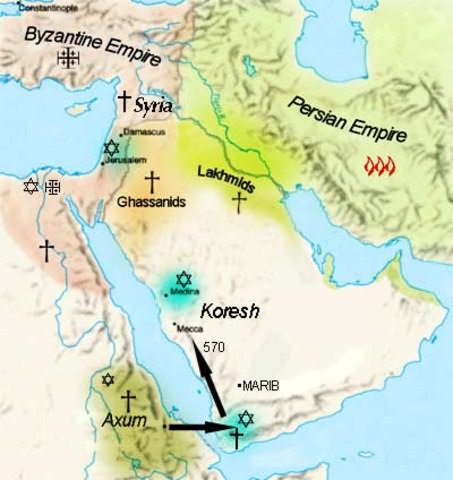
Map Arabia pre-Islam.

The context: the pre-Islamic Arabia of the ǧāhilīya.

The 1975 film "The Message" describes in detail what Mecca was like at the beginning of Muhammad's preaching: a pagan city, immersed in the ǧāhilīya (in Arabic and in Islam, this name, which translated means "ignorance," is attributed to the period before the advent of Islam itself). At that time, in the 6th century CE, Arabia was a frontier area, completely cut off from the so-called civilized world.

It was cut off from the traditional trade routes and the caravan routes (which passed through the "desert ports" such as Palmyra, Damascus or Aleppo to enter Mesopotamia and then, passing the Persian Gulf, reach India and China). However, in periods when the same trade routes were not passable due to wars and political instability, Arabia became a crossroads of great importance. In such cases, there were two routes followed by the caravans: one passed through Mecca, the other through Yaṯrib (Medina).

The cradle of Islam is located right in this area, called Ḥiǧāz, where Mecca (the homeland of Muhammad, born in 570 or 580) and Medina (a city where Muhammad himself took refuge after the disputes arising from his preaching in Mecca: period called hiǧra, in English hegira) are located, main inhabited centers around which orbited nomadic Bedouin tribes, always in struggle with each other.

Herding, hunting, raiding caravans and raids against rival tribes were the main means of subsistence and the harshness of life forged the character of the Bedouins, who had an ideal of virtus, a code of honor: murūwa. This unites the concepts of hospitality and inviolability of the guest, fidelity to the word given, ruthlessness in ta‛r, i.e. revenge for bloodshed and shame suffered.

The religiosity of the nomadic and sedentary people of pre-Islamic Arabia was purely fetishistic: sacred stones were venerated, with vague notions about the survival of the soul after death (completely absurd and mocked was the concept of the resurrection of the flesh, later preached by Muhammad).

Some places were considered holy, in particular the shrine of the Ka‛ba in Mecca, where, during certain proclaimed holy months, people made pilgrimages and held festivals and fairs (in particular poetic contests).

In Mecca, gods such as Ḥubal, Al-Lāt, Al-‛Uzzāt and Al- Manāṯ were worshipped, as well as the Black Stone, set in a wall of the Kaaba, a kind of Arab pantheon in which was also the effigy of Christ (the only one not destroyed by Muhammad at the time of his triumphant return from the hegira in 630).

Before the advent of Islam, Arabia (which had seen the flourishing of a great civilization in the south of the peninsula, that of the Minaeans and Sabeans before and of the Himyarites after, was formally under the rule of the Persians, who had expelled the Abyssinian Christians (a people who had flocked from Ethiopia to defend their co-religionists persecuted by the Sabean kings, of Jewish religion, after the massacre of Christians who were thrown by the thousands into a fiery furnace by King Ḍū Nūwās, in Naǧrān, in 523).

In the north, on the border of the Byzantine Empire, vassal kingdoms of Constantinople had been created, ruled by the Gasanid (sedentarized nomads of Monophysite Christian religion) and Laḥmid (Nestorians) dynasties: these states prevented Bedouin raiders from crossing the borders of the Empire, protecting the most remote regions from it, as well as the caravan trade.

Therefore, the presence of Christian and Jewish elements in the Arabian peninsula at the time of Muhammad is quite certain. These elements, however, were heterodox and heretical, suggesting that the "prophet" of Islam himself was misled about many of the Christian and Jewish doctrines.

Muhammad

There is no precise historical information about the first phase of Muhammad's life (a situation curiously analogous to that of Jesus). About himself, on the other hand, there are many legends that today are part of the Islamic tradition, even though these anecdotes have not been investigated by means of a detailed historical and textual analysis (which did happen, on the contrary, for the apocryphal gospels).

For this reason we find two different historiographies on the self-proclaimed prophet of Islam: one, precisely, Muslim; the other, the one we are going to consider, is the modern Western historiography, which is based on more reliable sources, as well as on the Koran itself, which can be considered, in one way or another, a kind of autobiography of the prophet. Muhammad.

The most certain date we have is 622 (I of the Islamic era), the year of the hiǧra, the hegira, emigration of Muhammad and his followers to Yaṯrib (later renamed Medina).

As for the year of the birth of Muhammad himself, the tradition relates, although not supported by sufficient concrete elements, 570, while several historians agree in giving birth to ours around 580, always in Mecca.

Muhammad was part of the Banū Qurayiš (also called Coraichites) tribe, was born when his father had already passed away and lost his mother at an early age. He was then received first by his grandfather and, after the latter's death, by his paternal uncle Abū Ṭālib.

At the age of about twenty, Muhammad took the service of a wealthy widow who was already of advanced age at the time: Ḫadīǧa, a kind of businesswoman who traded perfumes with Syria. With her (who later became famous as the first Muslim because she was in fact the first person to believe that he was the one sent by God) Muhammad married a few years later.

This union was apparently long, happy and monogamous, so much so that ‛Āʼiša, who, after Ḫadīǧa's death, would later become Muhammad's favorite wife, is said to have been more jealous of the deceased than of all the other wives in the life of the "prophet" of Islam.

With Ḫadīǧa, Muhammad had no children, while from the marriage with Āʼiša were born four daughters, Zaynab, Ruqayya, Fāṭima and Umm Kulṯūm. Muhammad's only son, Ibraḥīm, who died at a very young age, had a Christian Coptic concubine as his mother.

On behalf of Ḫadīǧa, Muḥammad had to travel with caravans to sell goods beyond the Byzantine border, i.e. in Syria. During these travels, he presumably came into contact with members of various heretical Christian sects (Docetists, Monophysites, Nestorians), being indoctrinated by them, without having, as an illiterate, the possibility of direct access to Christian sacred texts. However, we reiterate that elements of the Judaic and Christian faiths - or simply monotheistic ideas, ḥanīf, already existed in and around Mecca.

Everything changed, in Muhammad's life, when he was already around forty years old and abandoned paganism to adopt - and start preaching - monotheistic ideas. Muḥammad was convinced, at least in the early years of his "prophetic" mission, that he was professing the same doctrine of Jews and Christians and that, therefore, even these, as well as pagans, should recognize him as rasūl Allāh, messenger, sent from God.

It was only later, when he was already in Medina, that he himself pointed out the notable differences between his preaching and the official Christian and Jewish doctrine. In fact, the Koran contains distortions of the biblical narratives (both Old Testament and New Testament), as well as Muhammad's docetic ideas in Christology and his confusion regarding the doctrine of the Trinity (in his opinion formed by God, Jesus and Mary).

According to Ibn Iṣḥāq, the first biographer of Muḥammad, when he was asleep in a cave on Mount Ḥīra, outside Mecca, the angel Gabriel appeared to him with a brocade cloth in his hands and telling him to read ("iqrāʼ"); Muhammad, however, was illiterate, so it was the archangel who recited the first five verses of the sūra 96 (called "of the clot"), which, according to him, were literally imprinted on his heart.

This night is called laylat al-qadr, night of power. At first, Muḥammad did not think of himself as the initiator of a new religion, but as the recipient of a revelation transmitted also to other envoys of Allah who had preceded him. He believed, in fact, that what inspired him were passages from a heavenly book, umm al-kitāb (mother of the book), already revealed also to Jews and Christians (called by himself ahl al-kitāb, i.e. people of the book).

At least at the beginning of the Meccan period, everything suggests that M. truly felt called to spiritually elevate his fellow citizens, and precisely his personal conviction, combined with the charisma he did not lack, pushed others - Ḫadīǧa, first of all, then his cousin ‛Alī and then his future father-in-law, Abū Bakr - to have faith in him. The Meccan period is characterized by ardor, by the zeal that is typical of a neophyte, by a kind of naivety and sincerity in the self-styled envoy of God.

Not for nothing were many who called him maǧnūn (madman, possessed by the ǧinn), especially for the absurdity of what he preached: the presence of only one God, the final judgment, the resurrection of the flesh; the rudiments, in practice, of a monotheistic faith very close to Christianity and Judaism. The "five pillars [2] (arkān al-islām), i.e. the five fundamental elements of the Islamic faith, were introduced only later, in the Medinan period, especially after contacts and disputes with the local Jewish tribes.

Speaking again of the early period in Mecca, it is not difficult to imagine the reaction of the city's notables to Muhammad's preaching, for none of them wanted to subvert the religious status quo of the city, endangering its economic prosperity and ancient traditions, just because of the word of Muhammad, who, although urged, never performed any miracles or gave any tangible sign of the revelations he claimed to have received.

Thus began a persecution of the "prophet" and his followers, to the point that Muhammad had to send at least eighty of them to Abyssinia, to take refuge under the protection of a Christian king.

The Islamic scholar Felix M. Pareja, as well as older Islamic authors, for example Ṭabarī e al-Wāqidī, places in this period the famous episode of the "satanic verses", to which the Qur'an seems to refer in sūra 22/52. [3]

It happened, in fact, that Muhammad, in order to try to come to an agreement with the fellow citizens of Mecca, would have been tempted by Satan while reciting the sūra 53/19 and would have proclaimed:

"How is it that you worship al-Lāt, al-‛Uzzāt and al-Manāṯ Lât, 'Uzza and Manât? They are the exalted Ġarānīq, from whom we await their intercession."

As we have seen, these three goddesses were a fundamental part of the Meccan pantheon and protagonists of various rites that attracted hundreds of pilgrims to the Ka‛ba every year: their title was that of "three sublime cranes" (Ġarānīq) and admitting their existence, in addition to the power of intercession with Allah, if on the one hand it meant reconciling with the Meccan elite and allowing the return of their exiled followers, on the other it meant discrediting himself and the rigid monotheism he had professed until then.

Evidently, the game was not worth playing, so much so that the next morning the "Messenger of God" recanted and declared that Satan had whispered those verses in his left ear, instead of Gabriel in his right; they were to be considered, therefore, of satanic origin. In their place, the following were dictated:

"How is it that you worship al-Lāt, al-‛Uzzāt and al-Manāṯ? [These three idols] They are only names that you and your fathers have invented, and Allah gave you no authority for them."

The episode just cited brought even more discredit to Muhammad, who, with the death of his wife and his uncle-protector Abū Ṭālib, remained without two valid supporters.

Given the situation, he was forced (and the sūra of this period reveal the desolation and abandonment in which he found himself, with the sūra of the ǧinn sūra counting how many goblins became Muslims at those very times) to seek protection elsewhere, something he accomplished by finding valid listeners among the citizens of Yaṯrib, a city north of Mecca, then populated by three Jewish tribes (the Banū Naḍīr, the Banū Qurayẓa and the Banū Qaynuqā‛ and by two Bedouin tribes).

Between the Jews and the Bedouins there was not a good relationship and Muhammad, by virtue of his fame, was called to be an impartial arbiter between the contenders, so that in the year 622, the first year of the Islamic era, began the hiǧra, hegira of the "prophet" and his followers, about one hundred and fifty. The term hiǧra does not mean just "emigration," but estrangement, a kind of renunciation of citizenship and belonging to Mecca and the tribe, with the consequent deprivation of all protection.

Yaṯrib would later be called Medina (Madīnat al-nabī, the city of the prophet). Newly arrived here, in order to win over the Jews, who constituted the wealthy and notables of the city, M. introduced innovations in the primitive Islamic ritual, in particular by orienting the qibla, the direction of prayer, toward Jerusalem. However, when the Jews themselves became aware of Muhammad's confusion in biblical matters, they mocked him, making enemies with him forever.

At that very moment, then, the division began to take place between what would evolve as Islam, on the one hand, and Judaism and Christianity, on the other. Muhammad could not admit that he was confused or that he did not know the biblical episodes he had repeatedly quoted to his followers. What he did, then, was to use his ascendancy over his disciples and accuse Jews and Christians of deliberately falsifying the revelation they received; the same ascendancy and authority are sufficient for Muslims today to continue to believe such accusations.

Once again, however, the intention of Muhammad was not to found a new religion, but to try to restore what, according to him, was the pure and authentic, primitive faith, based on Abraham, who for him was neither a Christian nor a Jew, but a simple monotheist, in Arabic ḥanīf. By that word he was known to the pagan Arabs, who considered themselves his descendants through Ishmael.

And so it was that, in the Qur'an, Ishmael became Abraham's beloved son, instead of Isaac; it is Ishmael whom Abraham is commanded to sacrifice in Jerusalem, where the Dome of the Rock stands today; it is Ishmael who, together with his father, builds the shrine of the Ka‛ba in Mecca, where, moreover, his mother Hagar had taken refuge after being driven out of the desert by Sarah.

Always to take revenge on the Jews, even the direction of the qibla changed, and it was oriented towards Mecca. Islam became the national religion of the Arabs, with a book revealed in Arabic: the reconquest of the holy city thus became a fundamental purpose.

In Medina, in the figure and in the person of Muhammad, religious and political authority meet, and it is there that the concepts of umma (the community of Muslim believers), of Islamic state and of ǧihād, holy war, are born: the community of Medina, with the various religions. That were professed there (Muslim, Jewish, pagan), lived in peace under the rule of the arbiter, and already political and religious authority, who came from Mecca.

The Muslims prospered particularly well, guaranteeing themselves considerable income through raids on passing caravans. Successes and failures (successes were called divine work, failures lack of faith, indiscipline and cowardice) alternated in the campaigns against the Meccans.

In a few years, however, Muhammad decided to get rid of the Jewish tribes that had become hostile in the meantime: the first were the banū Naḍīr, followed by the banū Qaynuqā‛, whose property was confiscated but whose lives were spared; a more atrocious fate, on the other hand, befell the banū Qurayẓa, whose women and children were enslaved, and whose men, once their property was confiscated, had their throats slit in the square (there were about seven hundred dead: only one of them was spared as he converted to Islam).

In the sixth year of the Hegira Muhammad In the sixth year of the Hegira M. claimed to have received a vision in which he was given the keys of Mecca. He then began a long campaign of reconquest, violating a truce (something that was terribly dishonorable for the time) and taking, one after another, the rich Jewish oases north of Medina. The economic and military success was a magnet for the Bedouins, who began to convert en masse (obviously not for religious reasons). It all culminated in the triumphal entry into the city of origin in 630, without encountering resistance. The idols present in the Ka‛ba (except the effigy of Christ) were destroyed.

The following two years saw the consolidation of the strength and power of M. and his followers, until, in 632, the "prophet" died, in the midst of fever and delirium, without indicating successors.

What emerges from an analysis of Muḥammad's life is above all his great ambiguity, along with his personality that scholars often define schizophrenic, because of how contradictory his attitudes and speeches are, as well as the very revelations reported in the Qur'an. It is for this reason that Muslim scholars and theologians will resort to the practice of nasḫ wa mansūḫ (abrogating and abrogating, a procedure according to which, if one passage in the Qur'an contradicts another, the second nullifies the first). [4]

It may serve as an example of this the episode in which M. goes to the house of his adopted son Zayd (this same episode is quoted in the conclusion of this article) and many others: extravagant and suspicious circumstances in which Allah literally comes to Muhammad's aid and reveals to him verses admonishing the unbelievers and the doubtful who dare to accuse him of having entered into contradiction; or also words encouraging Muhammad himself not to want to follow the laws and customs of men and to accept the favors that God bestowed only on him:

"Sometimes they have wanted to see themselves in Muhammad two almost contradictory personalities; that of the pious agitator of Mecca and that of the overbearing politician of Medina. [---] In his various aspects he seems to us generous and cruel, timid and bold, warrior and politician.

His way of acting was extremely realistic: he had no problem in abrogating one revelation by replacing it with another, in going back on his word, in making use of hired assassins, in letting the responsibility for certain actions fall on other people, in making up his mind between hostilities and rivalries. His was a policy of compromises and contradictions always aimed at achieving his goal. [Monogamous until his first wife lived, he became a great friend of women as circumstances permitted and showed a predilection for widows". [5]

Annex

  1. "Look how I am torn! Look how battered Muhammad is!". Dante places Muhammad among the sowers of discord in the IX Bolgia of the VIII Circle of Hell, whose penalty is to be torn to pieces by a demon armed with a sword. Muhammad appears in Canto XXVIII, vv. 22-63, cut from chin to anus, with entrails and internal organs hanging between his legs; he himself appears to Dante and shows his wounds by opening his chest, explaining that he and his companions have sown scandal and schism in the world, for which reason they are now fessi, that is, cut by a demon who mutilates them with a demon who mutilates them with a sword (with the wounds healing and then being reopened).
  2. The five pillars of Islam are: šahāda, the profession of faith; ṣalāt, prayer five times a day; zakāt, almsgiving or tenth; ṣawm, fasting in the holy month of ramaḍān; ḥaǧǧǧ, pilgrimage to Mecca at least once in a lifetime in the month of ḏu-l-ḥiǧǧǧa).
  3. "And We have not sent before you [O Muhammad] a Messenger or a Prophet without Satan whispering to his people that they should not understand correctly when they conveyed to them the divine precepts. But Allah thwarts the plans of Satan and makes clear His precepts, for Allah is All-Knowing, All-Wise."
  4. It is thus, for example, that we observe Meccan verses, therefore older, speaking of Christians as the best among men, while other verses from the Medinan period encourage Muslims to fight against fighting Christians until the latter do not pay, humiliated, the tributes of the ǧizya and the ḫarāǧ, i.e. the particular taxes that Christians and Jews must pay to the Treasury of the Muslim state to benefit from its protection as second-class citizens.
  5. Pareja, F.M., Islamologia, Rome, Orbis Catholicus, 1951, p. 70.
 

Gerardo Ferrara
BA in History and Political Science, specializing in the Middle East.
Responsible for students at the University of the Holy Cross in Rome.
Here you can read the second installment of this analysis.

Benedict XVI: his theological significance

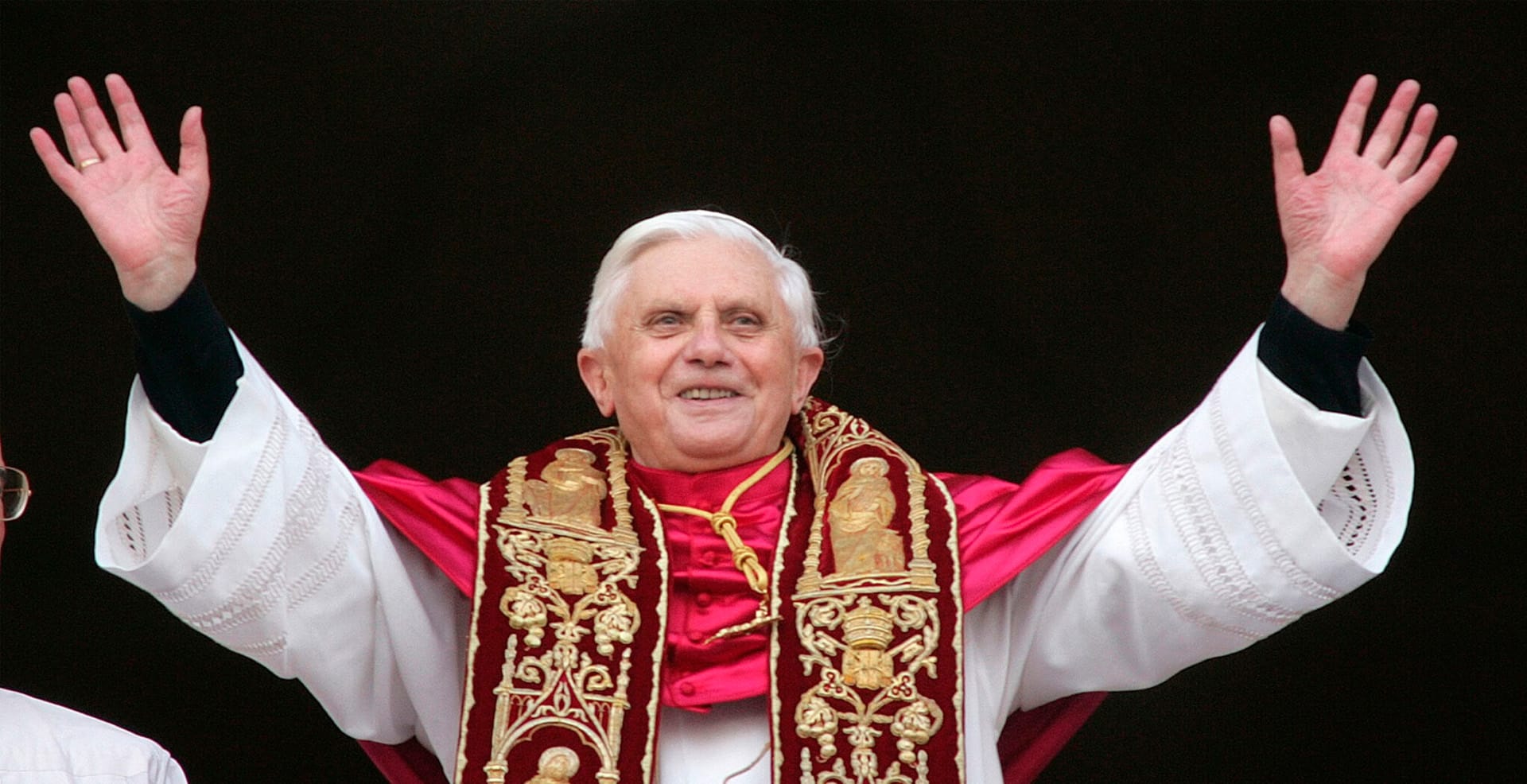
We will always remember the pope Benedict XVIThe Bishop of the Philippines, who died on Saturday, December 31, 2022, for encouraging all the Catholic faithful to seek, know and love Jesus Christ; for teaching us how to behave and live as Christians in a pagan society, with the optimism and vigor that comes from the hope of spreading the Gospel, motivating us to transform it from within.

A brief profile of Benedict XVI

The pontificate of Benedict XVI lasted only a few years. eight yearsNevertheless, he has been transcendental in the history of the Church for his reflections on faith and doctrine. Faithful to his motto, "collaborator of the truth", the intellectual impulse to the dialogue between faith and reason, and the fight against abuses and division in the Church were the standards of his pontificate.

He always had a clear and fraternal stance with all persons and theological positions that deviated from the truths of faith of the Church.

On the other hand, Benedict XVI considered that it was necessary to act in favor of a just order in society, and that the common good should be promoted through economic, social, legislative, administrative and cultural action. His three encyclicals are the culmination of his great theological work in response to the problems of today's world.

Some milestones in his life

  • June 29, 1951: Joseph Ratzinger was ordained priest with his brother Georg in Freising Cathedral.
  • In 1953: D. in Theology with the dissertation People and House of God in the Doctrine of the Church of St. Augustine.
  • March 24, 1977: appointed him Archbishop of Munich and Freising. Joseph Ratzinger, not yet 50 years old when he was appointed archbishop, was already a well-known and respected theologian. That appointment gave an unexpected turn to his life. He was a student, researcher and teacher of theology. He accepted government positions out of obedience and service to the Church. The same year the Pope also created him a cardinal.
  • April 19, 2005: Cardinal Joseph Ratzinger was elected as the successor of Peter and presented to the world as Pope Benedict XVI at 78 years of age. In his first words he remembered St. John Paul II and defined himself as a "simple and humble worker in the vineyard of the Lord". Following the example of his predecessor, he visited 24 countries.
  • December 25, 2005: Publishes his first encyclical Deus caritas est dedicated to the love of God. As Pope he continually speaks of the "joy of being a Christian".
  • November 30, 2007: Publishes the encyclical Spe Salvi where he deals with the theme of hope. He also published the first part of his work Jesus of Nazareth, a great theological and pastoral work, which he finished publishing in 2012.
  • June 29, 2009: Publishes his latest encyclical Caritas in veritate on social justice in the 21st century. It was in the latter that he criticized consumerism and also the current economic system completely removed from the common good.
  • February 11, 2013:  He announced his resignation from the pontificate, generating a cultural and theological revolution, which will shape his great legacy to the history of the Church, and will definitively mark the way in which popes will have to conceive their pontificates.
  • December 31, 2023: Pope Emeritus Benedict XVI dies in Rome at the age of 95. With him disappears the last of the pontiffs personally involved in the work of the Vatican Council II.

"For me there is no lack of personal, fraternal and affectionate encounters with the Pope Emeritus. But this occasion is important to reaffirm that the contribution of his theological work and, in general, of his thought continues to be fruitful and active, not directed to the past, but fruitful for the future, for the application of the Council and for the dialogue between the Church and the world of today.

These contributions offer us a solid theological basis for the Church's journey: a 'living' Church, which he taught us to see and live as communion, and which is in movement - in 'synods' - guided by the Spirit of the Lord, always open to the mission of announcing the Gospel and serving the world in which it lives".

Pope Francis, during the award ceremony of the Ratzinger Prize 2022.

Benedict XVI: a great theologian pope

The contribution of Benedict XVI's work and theological thought to Christianity and humanity is already prolific and effective today. One of his concerns was to respond to current problems through reflection and interpretation of the Holy Scriptures.

Joseph Ratzinger worked closely for many years with St. John Paul II, who appointed him to the position of prefect of the Congregation for the Doctrine of the Faith in November 1981, where he became known as a theologian, inspiring the Church for 31 years.

He was a direct witness of the post-conciliar crisis, of the questioning of the essential truths of the faith and of the experimentation in the liturgical field. Already in 1966, one year after the end of the Vatican Council II, said he saw the advance of a "cut-price Christianity".

Thus, the theologian pope was able to express with great argumentative force and, at the same time, with great spiritual unction what constitutes the heart of the Christian faith and the mission of the Church. In the face of ecclesiastical scandals, Benedict XVI called for conversion, penance and humility.

In September 2011, he invited the Church to be less worldly: "historical examples show that the missionary witness of the Church detached from the world is clearer. Freed from material and political burdens and privileges, the Church can dedicate herself better and in a truly Christian way to the whole world; she can be truly open to the world...".

Jesus Christ: the central core of Joseph Ratzinger's theology

His legacy as a theologian and pastor, the main elements of which it is good to remember at this time and where the work of a lifetime comes together, focuses on the figure of Christ.

Jesus Christ present in scripture and in the liturgy, and his relationship with the Church and with Mariais the central core of his theology. In Jesus Christ, God himself has made himself visible and has shown mankind his saving Love.

Pointing out that this revelation of God is not a simple fact of the past, but a divine force of today and for the future, accessible in the Church of the saints, empowered as witnesses of the resurrection through the Holy Spirit.

Among the theological and ontological pillars of her thought is also the person, and the meaning that love, truth, beauty and hope have for her, themes that are reflected in her encyclicals.

For the proclamation of the Christian message, Benedict XVI insisted on both faith and reason; and from the relationship between the two we can deduce his conception of theology, catechesis and preaching. Finally, with regard to mission, his affirmations on ministry and preaching are interesting. Eucharist (with important implications for ecumenical theology), creation, religions and the relationship of the Church.

papa benedicto xvi

Benedict XVI: humility and service to the Church

Benedict XVI was one of the great theologians of the 20th and 21st centuries; an intellectual who sought throughout his life, through the study of theology, research and teaching, the face of God. At the same time, he was a simple man, very cordial and gentle, even shy, who placed his life at the total disposal and service of the Church.

When in 2005 he was elected Pope with the name Benedict XVI, he commented in an interview that during the conclave he prayed "to the Lord to elect someone stronger than me, but in that prayer He evidently did not listen to me". The name was not by chance, he chose it in honor of Benedict XV and Benedict of Nursia, the Pope of Peace and the initiator of monastic life in the West, respectively.

Resignation from the pontificate

One of the most surprising and humbling actions of Benedict XVI, as well as a demonstration of his courage, was the fact of his resignation as Pope. It was a historic event in the life of the Church. Only in 1294, seven hundred years earlier, Celestine V had resigned the papacy. The reality is that until that time no one thought that the bishop of Rome had an age limit. Pope Benedict XVI broke a millenary tradition and did so in a thoughtful and reasoned manner.

It is for all these reasons that the figure of Benedict XVI, as pope, theologian, formerly prefect of the Congregation for the Doctrine of the Faith, is and will be of special transcendence for the history of the Church. He notoriously influenced Francis I, and will also influence subsequent papacies. His interpretative contributions to the Second Vatican Council have defined some of the lines of the Catholic Church, as have the dozens of works of extraordinary theological and metaphysical value that he wrote. His legacy will remain beyond and will reach heights that are now difficult to value in their just measure.


Bibliography:

- Joseph Ratzinger - Benedict XVI. A life in the continuity of thought and faith, Hansjürgen Verweyen.
- Pope theologian, Jean-Heiner Tück.
- The Theology of Joseph Ratzinger, White Fr.

New Year's Eve and New Year's Day: celebrate like a Christian

As Catholics, celebrating New Year's Eve and New Year's Eve is much more than celebrating with the traditions of each locality or country: it is recognizing God's presence in the time we live in and in our own personal history. What does this celebration mean from a Christian perspective?

The arrival of the New Year is not just an excuse for parties and good resolutions, it is a perfect opportunity for Catholics, and for all Christians, to live it with a deep sense of faith!

What do we celebrate on New Year's Eve and New Year's Day?

Pope Francis invited us to live gratitude as a way of life and not just on the last day of the calendar and the first day of the next: «Gratitude is a powerful weapon. Only those who know how to give thanks to God can also radiate hope".

As the year draws to a close, we can look back and recognize God's hand in every moment, even in the difficulties that we all experience without exception. Every joy and every trial has been an opportunity to grow in faith and holiness.

A good exercise can be to spend a few minutes before midnight writing a list of the blessings we have received during the year that is ending.

noche vieja año nuevo cristiano

Tip: participates in the Mass of thanksgiving on December 31st. It is a beautiful tradition that helps us to close the year praising the Lord for all that we have lived and to start the New Year with the illusion of counting on his support.

New Year: it begins and begins again

St. Josemaría encouraged us to begin and begin again with hope and without fear, because God is our Father and we are his children. The New Year reminds us that God always gives us a new opportunity to draw closer to him. No matter how many times we have fallen or failed in our resolutions, the important thing is to get up and walk with confidence.

???? Purpose: Rather than superficial goals, such as going to the gym or eating healthier, ask God what He expects of you this year. How can you grow in holinessHow can you best serve others?

Prayer: World Day of Peace

On January 1, the Church celebrates the World Peace Dayinstituted by St. Paul VI. It is a reminder that peace must begin in our hearts and then spread to our families, communities and the whole world.

St. Francis of Assisi said: "Lord, make me an instrument of your peace, where there is hatred I will bring your love. Where there is injury, your forgiveness Lord. Where there is doubt, faith in you". A whole life plan and New Year's resolution.

???? Reflection: this New Year's Eve and New Year, ask God to make you a peacemaker, someone who forgives, listens and seeks reconciliation in everything and with everyone.

Offering the New Year to Mary, Mother of God

On January 1, we also celebrate the Solemnity of St. Mary, Mother of God. As our spiritual Mother, she accompanies us every step of the way. It is the perfect time to consecrate the coming year to her maternal protection.

???? Tip: reads a Rosario in the family or dedicate a special prayer asking for his intercession.

How to live these holidays in a Christian way?

1️⃣ Live the celebrations with joy, not excess. Celebrate in moderation and take time to share with your loved ones, remembering that Christ is the center of everything and everyone.

2️⃣ Make an examination of conscience before the end of the year. Reflect on your actions, ask forgiveness for your failures and propose to improve. And take the opportunity as soon as you can to make a good Confession.

3️⃣ Prepare a list of spiritual resolutions: Read more BibleWe need to be more generous with our time, which is what costs the most and has the most value.

4️⃣ Dedicate some time to silence and prayer. The hustle and bustle of New Year's Eve can be distracting, but giving yourself a few minutes of recollection will help you start the year with serenity and peace.

New year, new life

St. Josemaría said in a letter of December 1970: "You know that the Father opens his heart to you with sincerity. I don't believe in that saying: new year, new life. In twenty-four hours nothing changes. Only the Lord, with his grace, can convert Saul in a moment, from persecutor of the Christians to Apostle".

And at Christmas 1972 he added: "Therefore, this year especially is a time of thanksgiving, and so I have pointed it out to my daughters and sons, with words taken from the liturgy: "...".Ut in gratiarum semper actione maneamus!".

May we always be in a continual thanksgiving to God for all thingsFor what seems good and for what seems bad, for what is sweet and for what is bitter, for what is black and for what is white, for what is small and for what is large, for what is little and for what is much, for what is temporary and for what is eternal. Let us thank Our Lord for all that has happened this year, and also in a certain way for our infidelities, because we have recognized them and they have led us to ask his forgiveness, and to concretize the resolution - which will bring much good for our souls - never to be unfaithful again".

Happy New Year's Eve and blessed New Year!

May each chime be an act of gratitude and hope, and may Christ be our light in this new beginning of the year.

The Christian family: concept and importance

The Church celebrates five years since the publication of the Apostolic Exhortation Amoris Laetitia on the beauty and joy of family love. On the same day Pope Francis will inaugurate the year dedicated to her, which will end on June 26, 2022, on the occasion of the 10th World Meeting in Rome with the Holy Father.

The first of all

Both the great human offspringand each of the familias who were to compose it, is one of the natural instruments willed by God to cooperate in his creative mission.

God's will to count on the family in his saving plan will be confirmed with the fulfillment of the divine plan. When Jesus is born, in Nazareth, of Mary, by the work of the Holy Spirit. And God provides for his Son a family, with an adoptive father, Joseph, and with Mary, the virginal Mother. The Lord wanted that, also in this, the way in which He wishes to see His children born and grow up, the human beings, be reflected:.

"What does the simple and admirable life of the Holy Family teach us?" To this question suggested by St. Josemaría, we can answer with words from the Catechism, pointing out that the Christian family, in the image of Jesus' family, is also a domestic church. because it manifests the united and familial nature of the Church as the family of God.

That of Nazareth is the model in which all those of the world can find their solid point of reference. and a strong inspiration says Pope Francis

The importance 

Every family has a sacred entityand deserves the veneration and solicitude of its members, of civil society and of the Church. Both by its natural and supernatural mission, by its origin, by its nature and by its end, the dignity of the Christian family is great.

The home must be the first and foremost school where children learn and live human and Christian virtues. The good example of parents, siblings and other components is reflected in the configuration of the social relationships that each of the members establishes. The family reality establishes rights and duties.

At the time of the life of society, it is particularly urgent to reinstilling a sense of Christianity or in the heart of so many homes. The task is not a simple one, but it is an exciting one. To contribute to this immense task, which is identified with that of giving a Christian tone to society, each one of us must begin by "sweeping" our own house.

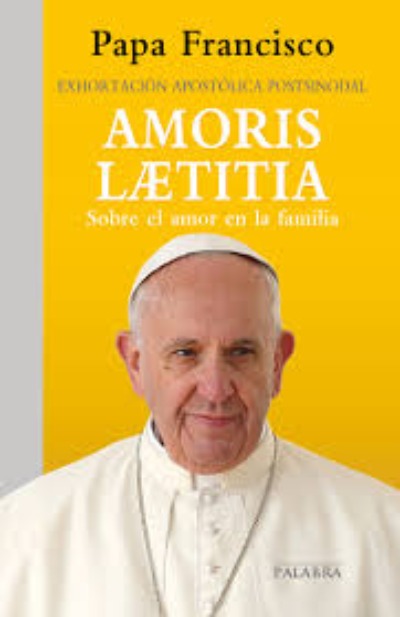
amoris-laetitia-papa-francisco (1)

Amoris laetitia is the second post-synodal apostolic exhortation of Pope Francis, signed on March 19, 2016 and made public on April 8 of the same year.

The year of Amoris Laetitia

This is why Pope Francis has launched this initiative, which aims to reach every home in the world through different proposals. It arises from the experience of the pandemic. It has highlighted the central role of the Christian home as a domestic Church and the importance of the community bonds between them, which make the Church a "family of families". AL 87.

Bishops' Conferences, Dioceses, Parishes, Ecclesial Movements, Family Associations, but especially Christian families from all over the world are invited to participate and are the protagonists with new proposals.

The Pope also recalled that, in imitation of the Holy Family, "we are called to rediscover the educational value of the family nucleus, which must be based on love that always regenerates relationships, opening horizons of hope.".

This feast "presents us with the ideal of conjugal and family love, as was emphasized in the Apostolic Exhortation Amoris laetitia".

Amoris Laetitia summary

  1. "To make you experience that the Gospel is joy that fills the heart and the whole of life" (AL 200). A family that discovers and experiences the joy of having a gift and being in turn a gift for the Church and society, "can become a light in the darkness of the world" (AL 66). And today's world needs this light!
  2. Announce that the sacrament of marriage is a gift and has in itself a transforming force of human love. For this, it is necessary that pastors and families walk together in a pastoral co-responsibility and complementarity among the different vocations in the Church (cf. AL 203).
  3. Make families the protagonists of pastoral care. This requires "an evangelizing and catechetical effort aimed at them" (AL 200), since a Christian family also becomes a missionary family.
  4. Raising awareness among young people of the importance of formation in the truth of love and self-giving, with initiatives dedicated to them.
  5. Broadening the outlook and action of the pastoral ministry to become transversal, to include spouses, children, young people, the elderly and situations of family fragility.

"Christian family life is a vocation and a path to holiness, an expression of the 'most beautiful face of the Church' (Gaudete et exsultate 9)."


The Pope recalls the importance of making peace. On the feast of the Holy Family, Pope Francis invites us to follow the model of Nazareth and gives some advice for a healthy environment: "if you argue, make peace the same day, the cold war the next day is very dangerous".

Recommendation for living 

The Pontiff has recommended a series of actions so that the family can experience a sincere communion and live deeply this year Amoris Laetitia

  • Maintain "deep and pure affections".
  • To prevail "forgiveness over discord". Never end the day without making peace
  • May "the daily hardness of life be softened by mutual tenderness and by serene adherence to the will of God".

In this way, Francisco pointed out, "the family is open to the joy that God gives to all those who know how to give with joy"But she also "finds the spiritual energy to open herself to the outside world, to others, to the service of her brothers and sisters, to collaboration in the construction of an ever new and better world; capable, therefore, of being the bearer of positive stimuli; evangelizing by the example of her life".

He also restated the three words that must always prevail: permission, thanks and apology. "Permission not to be invasive in the lives of others, then thanks, thanks for all the help and services we provide; thanks always, but gratitude is the blood of the noble soul, and then the most difficult to pronounce: apology". Because, as the Pope said: "we always do ugly things and someone can feel offended".

sagrada-familia-cristiana

Bibliography: