The 108 Eucharistic miracles of St. Carlo Acutis

With his actions and his conduct, the already declared saint, represents a model of a young man who knows how to follow with courage and firmness the path indicated by the Lord, despite the difficulties without ceasing to lead a life close to Jesus.

The life project of St. Carlo Acutis, considered the millennial saint, was to live with Jesus, for Jesus and in union with Jesus. His life was not to dedicate it to vain things, but to give it to God, placing all his projects in his hands.

The life of this young Italian saint, leaves as fruit a work on the Eucharistic miracles for all Christians with which he manages to bring Jesus to the whole world through the Internet. He made, almost unwittingly, a contribution to the evangelizing work of the Church around the Holy Eucharist and the real presence of Jesus in it.

Blessed Carlo Acutis is an authentic witness that the Gospel can be fully lived by an adolescent. His brief existence, destined to the goal of the encounter with Jesus, is an example for Christian youth..
milagros eucarísticos carlo acutis
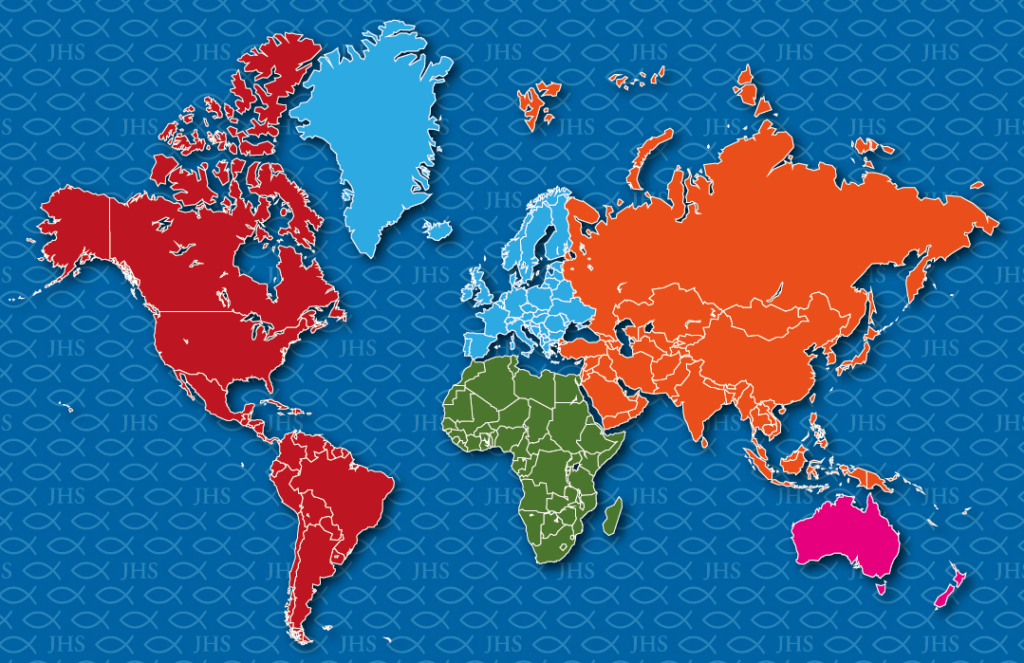
Map with the 163 panels created by saint Carlos Acutis

The exhibition on the Eucharistic miracles of St. Carlo Acutis

Carlo Acutis is known as Patron Saint of the Internet because he was able to use the new communication techniques to transmit the Gospel and to communicate Christian values.

In addition, he conducted research, compilation and design work that resulted in the creation of 163 panels where photographs and historical descriptions of Eucharistic miracles are shown. in different centuries and in the world.

In this way the exhibition on the Eucharistic miracles of Saint Carlo Acutis which has already toured many countries around the worldHe has visited more than 500 parishes in Italy and more than ten thousand parishes in other countries with translations in different languages.

With a a wide variety of photographs and historical descriptions, the Eucharistic miracles exhibition, the that have occurred over the centuries in different countries and that have been the subject of major events that have recognized by the Catholic Church. By means of the panels, the millennial saint gets us to virtually visit the places where these miracles occurred.

St. Carlo Acutis has a message for today's youth: life in Christ is beautiful and must be lived in fullness. Eternal realities are authentic and we are immersed in them more than we think.

"Everyone is born an original, but many die as photocopies." In order not to die as a photocopy, Carlo Acutis drinks from the source of the sacraments, which for him are the most powerful means to grow in Christian virtues. 
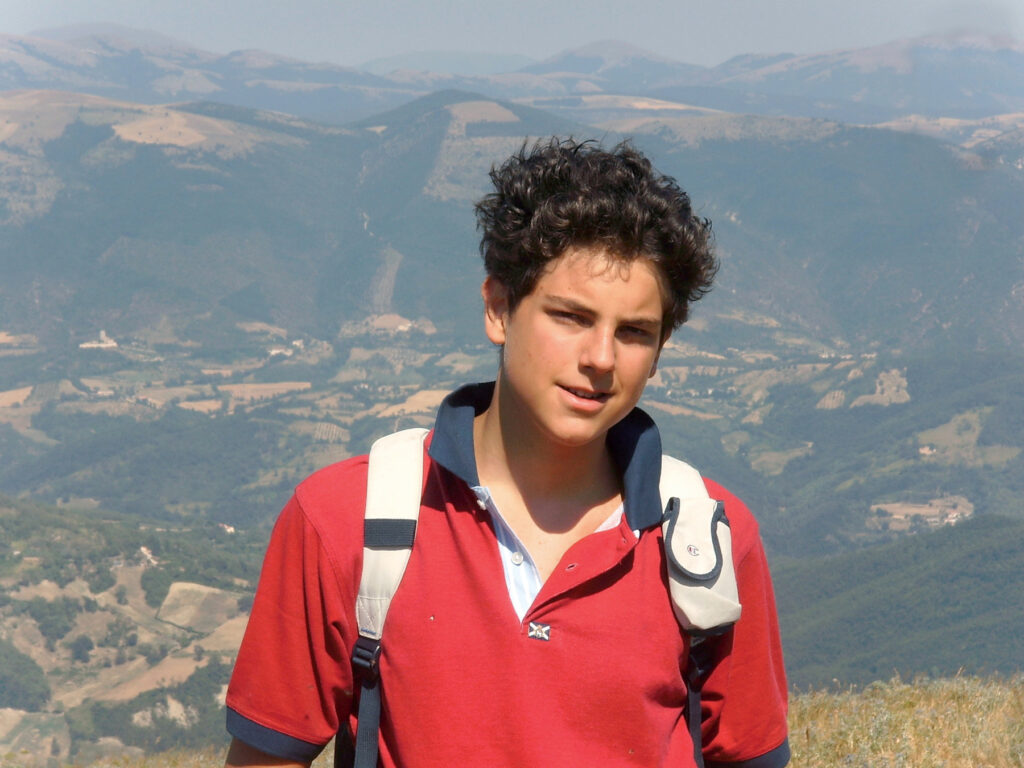
El joven san Carlo Acutis en una foto al aire libre con un paisaje de montañas al fondo, vistiendo un polo rojo y una mochila.
Carlo Acutis (1991-2006), the "cyber-apostle of the Eucharist," whose upcoming canonization will make him St. Carlo Acutis.

What are Eucharistic miracles?

The Eucharistic miracles are prodigious interventions of God. which are intended to confirm faith in the real presence of the body and blood of the Lord in the Eucharist.

During the liturgy of the Eucharist, the most important moment of the Catholic Mass is the Consecration of the bread and wine that will be transformed, through the words of the priest, into the body and blood of Christ.

This marvelous transformation, in the most important part of the Mass, takes the name of transubstantiation, that is, the change of one substance for another, cannot be experienced at all by the senses, only faith assures us of this marvelous transformation. It changes the substance without changing the accidents.

The Eucharistic miracles seek to confirm this faith, which is based on the words of Jesus: what looks like bread is not bread and what looks like wine is not wine.

In the Eucharistic miracles, flesh and blood are indeed seen, or one without the other depending on the miracle.

The purpose of these wonders is to demonstrate that we should not look for the external appearance (bread and wine), but for the substance, the true reality of things, which is the flesh and blood of Jesus Christ God our Lord.
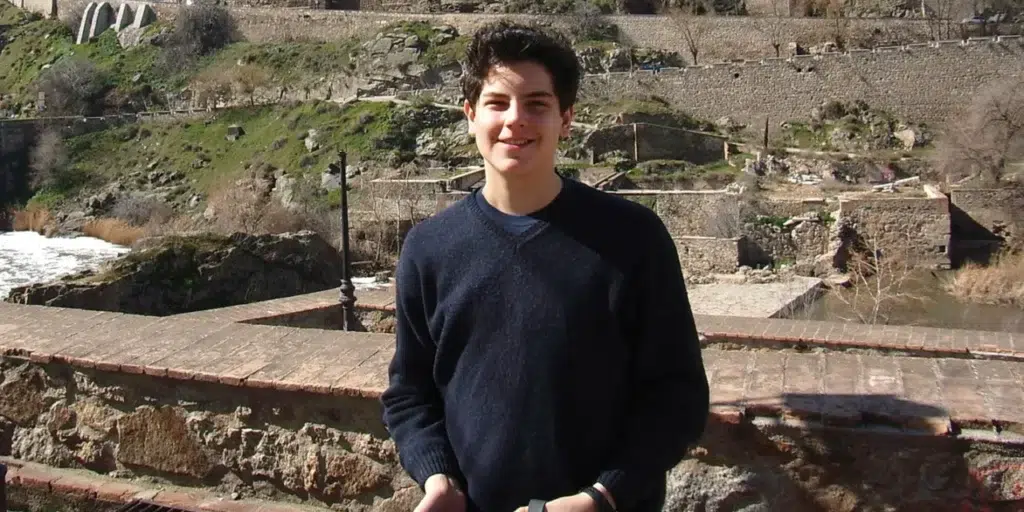
Fotografía del adolescente san Carlo Acutis sonriendo a la cámara en un entorno histórico, con un puente de piedra y un río al fondo, durante un viaje.
St. Carlo Acutis in an image that reflects his simplicity and the joy of a young man of our time.

Brief biography of St. Carlo Acutis

This young saint died in October 2006, at the age of 15, of acute myeloid leukemia, leaving in the memory of those who know his life a deep admiration for his witness of Christian life.

From a very early age, Carlo showed a great attraction for the Eucharist, he was a normal boy. He carried out different apostolic works.

He played the saxophone, played soccer and had fun with video games. But he did it all with an absolutely special harmony, thanks to his great friendship with Jesus.

He was a great connoisseur of the computer world. His knowledge ranged from computer programming to film editing, website creation, digital newspapers, and he used it for his apostolate.

His devotion grew daily thanks to Communion; he participated fervently in Holy Mass and prayed before the Blessed Sacrament.

Carlo's love for the Eucharist and the Virgin Mary were the pillars of his life. The Virgin Mary was his confidant and he never ceased to venerate her, praying the Holy Rosary and dedicating to her his sacrifices in the form of renunciations.

This is how he lived Carlo AcutisIn intimate friendship with Jesus and in his constant presence, he understood that an authentic spiritual life was necessary for effective missionary action. When he was diagnosed with leukemia, he offered his sufferings "for the Lord, the Pope and the Church".

As of April 6, 2019, the mortal remains of Carlo rest in the Sanctuary of the Despoilment of Assisi. Pope Francis named him blessed on October 10, 2020. And on September 7, 2025, Pope Leo XIV proclaimed him a saint, together with Pier Giorgio Frassati.

Canonization of St. Carlo Acutis

Acutis considered the millennial saint is canonized together with Pier Giorgio Frassati on September 7th 2025 in St. Peter's Square by Pope Leo XIV, accompanied by thousands of people.

If you were not able to see his canonization, you can now watch it through the following video:

Faustina Kowalska, Apostle of the Divine Mercy

In the history of the Catholic Church, few twentieth century figures have had such a profound and universal impact as saint Faustina Kowalska. This Polish nun, Apostle of the Divine Mercy, canonized in the year 2000

He received his message directly from Jesus Christ through a series of mystical revelations. His confessor obliged him to write down all the revelations in what is known as the Diary of Divine Mercy.

The first years

Helena Kowalska was born in 1905 in the village of Głogowiec, Poland, into a poor and pious peasant family. From a very young age, she felt a strong inclination towards the spiritual life. At the age of seven, she already sensed in her soul the call to the consecrated life.

Her parents were initially opposed due to the family's precarious economic situation. During her adolescence, she worked as a servant to help her family and save for her dowry, a common requirement at the time for entering a convent.

Despite the difficulties, the call of God was insistent. At the age of 18, faced with the refusal of her parents, she decided to give herself to the vagaries of life in order to silence the call of Grace. Precisely with her sister Josephine, when everyone was enjoying themselves and having a good time, she was not capable, she suffered and felt great sadness.

This episode was decisive for her vocation. She had a vision of the suffering Jesus who asked her: "Helena, my daughter, how long will you make me suffer, how long will you deceive me? This moment marked a point of no return.

She abandoned everything and, following this divine impulse, went to Warsaw to look for a convent that would accept her. After being rejected by several congregations, she was finally admitted into the Congregation of the Sisters of Our Lady of Mercy in 1925, where she adopted the name of Sister Maria Faustina of the Blessed Sacrament.

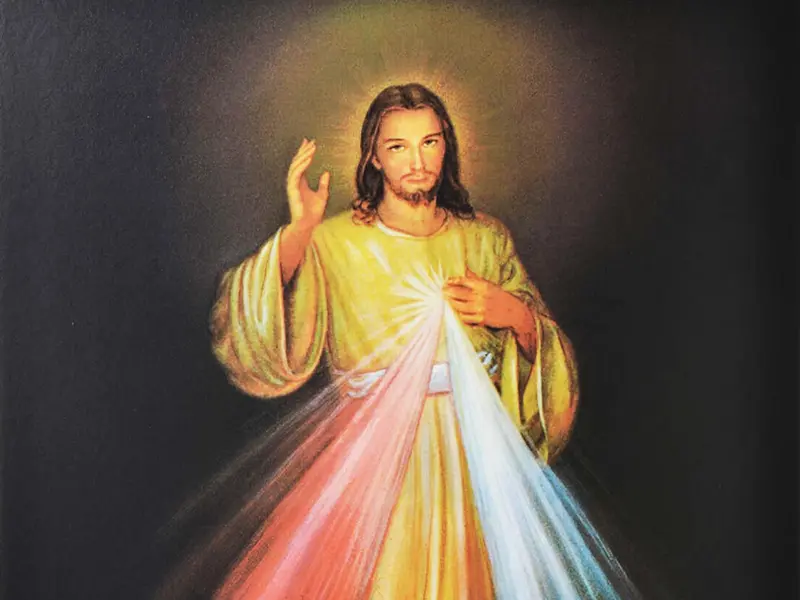
Imagen de Jesús de la Divina Misericordia de Santa Faustina Kowalsk

The mission of the Divine Mercy Secretariat

In 1928 she took her vows as a nun and lived very few years as such, since she died on October 5, 1938, at the age of 33, of which 13 years were spent in the convent. The life of Saint Faustina Kowalska like nun was apparently ordinary and simple. She performed with humility and diligence the simplest tasks: cook, gardener, doorkeeper, for she was warned that she would enter there as a lay sister and that, because of her low level of schooling, she might not reach higher levels in the order.

However, in the secret of her cell and of her heart, a mystical life of unprecedented depth was developing. Jesus appeared to her and entrusted her with a mission: to be the apostle and secretary of His Divine Mercy.

The core of her mission is found in her Diary, which her confessor obliged her to write with the simplicity of a person who barely received any academic training because of her extreme poverty. The manuscript of more than 600 pages meticulously recorded Jesus' words, visions and spiritual experiences.

In these revelations, Christ asked him to paint an image of Him as He appeared to him, with two rays emanating from His heart, one red and the other pale, symbolizing the blood and water shed on the Cross. Under the image was to be the inscription: "Jesus, I trust in You". Jesus told her that he wanted the image of the Divine Mercy to be "solemnly blessed on the first Sunday after Easter; that Sunday will be the feast of mercy".

This image, known today as the Divine Mercy, is one of the most recognized Christian icons in the world. Jesus also taught Sister Faustina the Chaplet of Divine Mercy, a prayer to implore mercy for the whole world, and asked her to establish the first Sunday after Easter as the Feast of Mercy.

This devotion was not a simple addition to popular piety, but an urgent reminder to a world mired in conflict and despair that God's greatest attribute is His infinite mercy.

A humble life

The service life humble of saint Faustina Kowalska was not limited to her prophetic mission. Her spirituality was deeply rooted in sacrifice and self-offering for the salvation of souls. She offered her sufferings, both physical-she suffered from tuberculosis for years-and spiritual, in union with the Passion of Christ. She understood that service to others and love of neighbor were the most authentic manifestation of devotion to Divine Mercy.

His obedience to his superiors and his spiritual director, Blessed Michael Sopoćko, was exemplary. Despite the doubts, misunderstandings and difficulties he encountered, even within his own congregation, he persevered with unwavering trust in the will of God. It was precisely his confessor, Sopoćko, who indicated to him that he should write a Diary with all the revelations that Jesus was making to him.

His life reflects how God chooses the humble to carry out his greatest works, demonstrating that holiness does not lie in doing extraordinary things, but in doing ordinary things with extraordinary love.

Faustina told Sopoćko about the Divine Mercy image, and in January 1934, he introduced her to the artist Eugene Kazimierowski, also a professor at the same university, where her confessor was teaching Pastoral Theology.

Divine Mercy

The Journal of saint Faustina Kowalska has been translated into dozens of languages and has guided countless people into a deeper relationship with God. Devotion to the Divine MercyThe company was decisively driven by St. John Paul II -who called her the great apostle of Mercy in our times, has spread throughout the Church. Today, its message resounds in a world wounded by division and sin, God's Mercy is the only refuge and the only hope.

On April 18, 1993, the Feast of Divine Mercy (second Sunday of Easter), John Paul II declared Sister Faustina Blessed in front of a crowd of Divine Mercy devotees in St. Peter's Square in Rome.

Maria Faustina Kowalska was canonized on April 30, 2000.The Holy Father presided over the canonization ceremony, the second Sunday of Easter, which the Catholic Church also calls Divine Mercy Sunday. The Holy Father presided over the canonization ceremony before a large crowd of devotees.

The life of this humble nun Polish teaches us that a service lifelived in faith and trust, can transform the world. St. Faustina reminds us that, no matter how great our weaknesses or sins, God's loving heart is always open to welcome us with his infinite mercy.


October 4, St. Francis of Assisi

The October 4the universal Church looks at the figure of St. Francis of Assisi. Known as the Francesco d'Assisinicknamed il poverello d'Assisi (the poor man of Assisi), his life is an invitation to rediscover the joy in simplicity and unconditional love for Christ through the poverty. He was noted for his love for others, his detachment and his eagerness to reform the Church. He would never forget the words he heard in a dream in Spoleto: "....¿Why do you persist in seeking the servant instead of the Lord?"

His life took a new direction, guided by the constant desire to know what the Lord might be calling him to. Prayer and contemplation in the silence of the lands of Umbria led him to embrace as brothers the lepers and vagabonds for whom he had always felt disgust and repulsion.

Giovanni Pietro Bernardone

Born Giovanni di Pietro Bernardone, he always had in his heart the desire to accomplish great undertakings; this is what at the age of twenty prompted him to leave, first to the war between Assisi and Perugia and then to the Crusades. Son of the rich cloth merchant Pietro di Bernardone, and of Pica, a lady of the Provençal nobility, he was born in 1182 and grew up in the comforts of family and worldly life. When he returned from the harsh experience of war, ill and agitated, he was unrecognizable to everyone. Something had deeply marked his mood, something different from the experience of the conflict.

Young Francis lived a life of opulence, dreaming of the glory of being a knight. However, God had other plans. After experiences as a prisoner of war and a serious illness, his restless soul began to search for a higher purpose. The turning point came at the hermitage of San Damiano, when, praying before a crucifix, he heard a voice saying to him: "Francis, go and repair my Church which, as you see, is in ruins". This call would mark the rest of his life and his vocation of service to the Church.

The embrace of poverty

St. Francis understood that call in a literal way at first, dedicating himself to physically repairing hermitages. However, he soon realized that the Lord was asking him for something much more profound: a spiritual renewal of the Church through example. To this end, he stripped himself of everything. In a public and dramatic act, he renounced his father's inheritance, stripped himself of his luxurious clothes and consecrated himself to God, embracing what he called his Lady Poverty, in front of Bishop Guido.

This was not a poverty miserable or sad, but a free choice. For St. Francis of Assisithe poverty was the most direct way to imitate Christ, who "though he was rich, yet for our sake he became poor" (2 Cor 8:9). Possessing nothing, Francis became completely dependent on the Providence of God, finding immense joy in the little he had.

This attitude is a model for the Christian life and, in a particular way, for the priestly vocation, which demands a detached heart in order to serve God and souls without any attachment. The formation of priests continues to draw from this spirit of detachment.

With the most disadvantaged

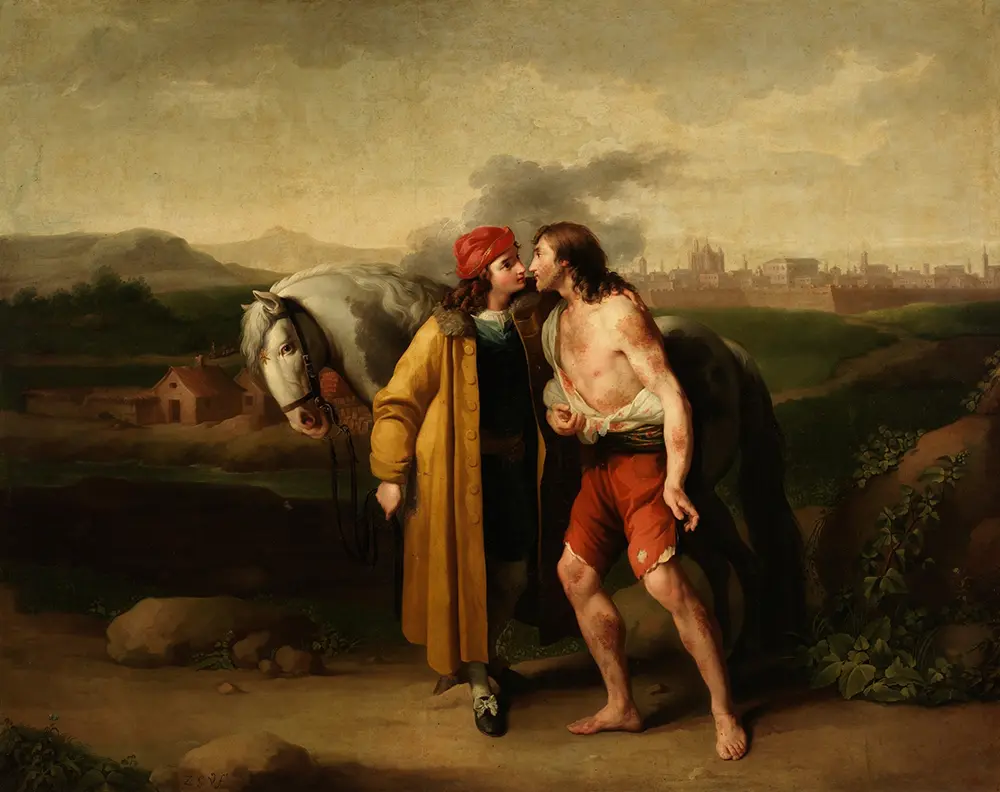
His love for the poverty of Jesus led him to encounter Him in the most disadvantaged. The famous episode of the embrace of the leper symbolizes his total conversion: where before he felt repulsion, now he saw the suffering face of Christ. This love for the poor and the marginalized is a dimension of the service to the Church that every baptized person, and especially the priestis called to live.

San Francisco de Asís abraza con compasión a un hombre con lepra, superando su propia repulsión.
St. Francis embracing a leper, Oil on canvas, 217 x 274 cm. by Zacarías Joaquín González Velázquez y Tolosa ©Museo Nacional del Prado.

Rebuilder of the Church

The mission to repair the Church finally materialized in the founding of the Order of Friars Minor (Franciscans), a fraternity that lived the Gospel. sine glossathat is, without interpretations that would soften its radicalism.

Later, together with St. Clare, he also inspired the female branch of the Poor Clares. The example of Francis and his friars was a spiritual revival at a time when the Church was suffering in the midst of luxury and power struggles.

They demonstrated that true reform does not come from destructive criticism, but from personal holiness and obedience. A priestThe way to holiness, as tradition teaches us, can transform an entire parish. The road to that holiness is a constant struggle that lay and consecrated people must follow.

Love for Creation

St. Francis of Assisi is also remembered for his deep love for Creation. In his famous Canticle of the Creatures, he praises God through "brother sun", "sister moon" and "sister our mother earth".

He was not an ecologist in the modern sense, but a mystic who saw in every creature the imprint of the Creator. Everything spoke to him of God, from a bird to a wolf.

This theological vision of nature, which inspired the encyclical Laudato Si' of Pope Francis, invites us to care for the world as a gift received from God.

Example for priests

The life of St. Francis of Assisi culminated in the gift of the stigmata, the signs of Christ's Passion imprinted on her own body for two years, a visible sign of her complete identification with her Lord.

His legacy teaches us that true joy is not in having, but in being. He reminds us of the importance of humility and obedience to the Church, even as we yearn for her reform.

For each priest, St. Francis is a mirrora call to live a new life poverty to preach the Gospel with life more than with words, and to love every soul as a gift from God. As St. Josemaría Escrivá taught in his book Loving the Churchlove for the Church passes through humble service and total dedication.

Embracing the Cross

On the evening of October 3, 1226, when Sister Death came to visit him, he went out to meet Jesus with joy. He died on October 4, lying on the bare earth, faithful to his beloved poverty until the end.

Let us ask St. Francis of Assisi to intercede for us so that, like him, we may know how to strip ourselves of everything that separates us from God and joyfully embrace the daily cross, rebuilding the Church from the only place possible: our own heart.


St. Jerome: love for the Bible

"Ignorare Scripturas, ignorare Christum est." (Ignorance of the Scriptures is ignorance of Christ). This sentence, coined more than sixteen centuries ago by St. Jerome, remains just as topical in the Church today. St. Jerome holds that faith and love of Christ must be based on a solid knowledge obtained directly from his principal source of revelation: the written Word of God.

St. Jerome dedicated his entire life to a seemingly endless task, the translation of the Bible Latin, known as the Vulgatacommissioned by Pope Damasus I. This translation is still valid after 1,500 years of history and has served as a reference for the development of the work of the Bible of the University of Navarra.

For the CARF Foundation, which one of its founding purposes is to help in the formation of seminarians and diocesan and religious priests, the figure of this Doctor of the Church continues to be a reference of how Sacred Scripture must occupy an essential place in the life of every Christian and, in a special way, in that of his pastors.

Who was St. Jerome? The lion of the desert and the scholar of Rome

Eusebius Hieronymus Sophronius, born around 347 in Stridon (Dalmatia), was not a man of gentle character. He was vehement, with a sharp pen and an ascetic temperament. However, all that passion was channeled by his love for Christ and his Word.

His training in Rome made him one of the most brilliant intellectuals of his time, a master in Latin, Greek and rhetoric. But a dream in which he was accused of being "Ciceronian rather than Christian" prompted him to devote his intellect entirely to God.

This commitment led him to seek the solitude of the desert of Chalcis, in Syria. There, in the midst of penance and prayer, he devoted himself to the study of a language that would be key to his future mission: Hebrew. This work forged his spirit and provided him with the necessary philological tools for an undertaking that no Latin had dared to undertake with such rigor.

His fame as a scholar reached the ears of Pope Damasus I, who appointed him his secretary in Rome. It was precisely the Pope who, concerned about the chaotic diversity of Latin versions of the Bible in circulation (Vetus Latina), entrusted St. Jerome with the task of producing a unified and reliable translation.

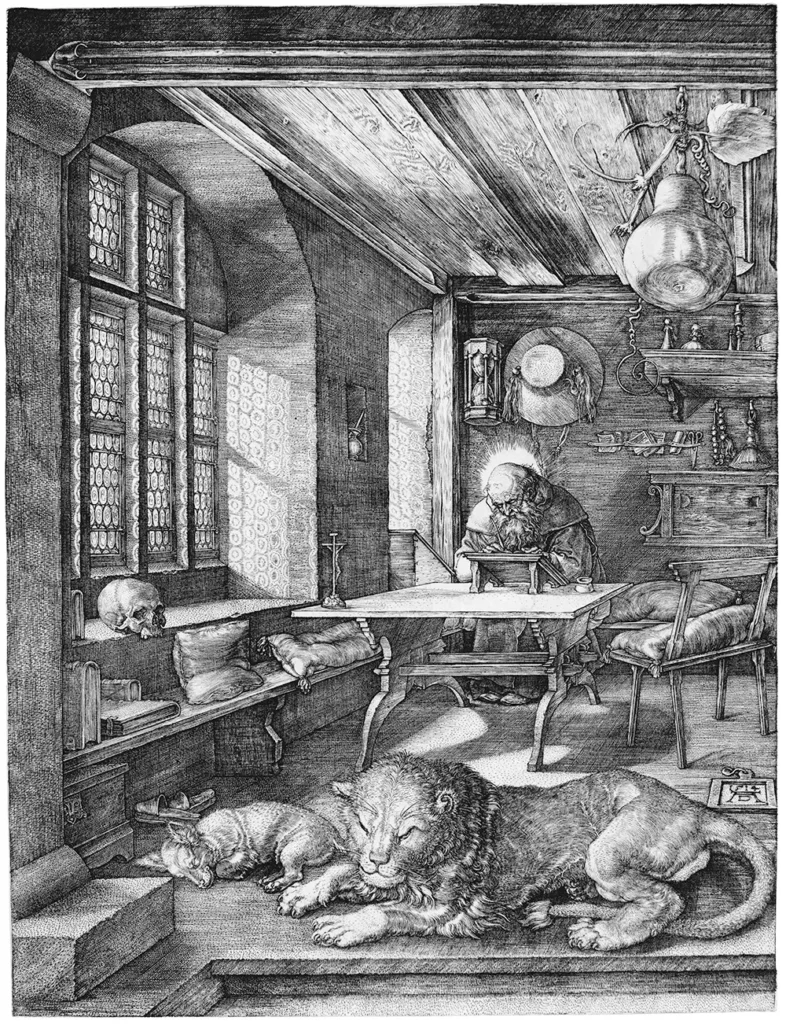
Grabado en blanco y negro de san Jerónimo como un erudito trabajando en su estudio, con un león y un perro durmiendo pacíficamente a sus pies.
St. Jerome in his study (1514), engraving by Albrecht Dürer.

The mission of a lifetime: the Vulgate

Pope Damasus's commission was the beginning of a work that would occupy St. Jerome for more than thirty years. After the death of his patron, he settled definitively in Bethlehem, in a cave near the place where the Word became flesh. There, surrounded by manuscripts and with the help of disciples such as St. Paula and St. Eustochia of Rome (c. 368 - 419/420), who was the daughter of St. Paula. Both accompanied St. Jerome on his journey to the East, settling in the city of David.

What was the genius of St. Jerome? His revolutionary principle of Hebraica veritas (the Hebrew truth). Whereas the existing Latin versions were based mainly on the Septuagint (the Greek translation of the Old Testament), St. Jerome insisted on returning to the original Hebrew and Aramaic sources. This earned him much criticism from illustrious contemporaries, such as St. Augustine, who viewed with suspicion the abandonment of the Septuagint tradition, used by the Apostles themselves.

Nevertheless, St. Jerome persevered, convinced that only by drinking from the original source could he offer the Church a more accurate version of the Bible. He translated the 46 books of the Old Will Hebrew (with the exception of some that he revised from the Hebrew Vetus Latina), and revised and translated the Gospels and the rest of the New Testament from the original Greek. The result was what is known as the Vulgate, so called because of its aim to be the edition accessible to the people (vulgus). It was a work of scholarship, discipline and faith.

This effort was a philological exercise and an act of pastoral love. As those involved in the formation of seminarians and priests know well, making the Word of God available to the faithful in an understandable and faithful way is a sacred mission.

The soundness of St. Jerome's bible

The Vulgata from St. Jerome far transcended its initial purpose. For more than a millennium, it was the biblical text of reference throughout the Christian West.

The Vulgata was not a perfect translation - Jerome himself was aware of its limitations - but its fidelity and impact made it a treasure for faith and culture. His work is a reminder of the importance of having patron saints who, like St. Jerome, dedicate their lives to the service of Truth.

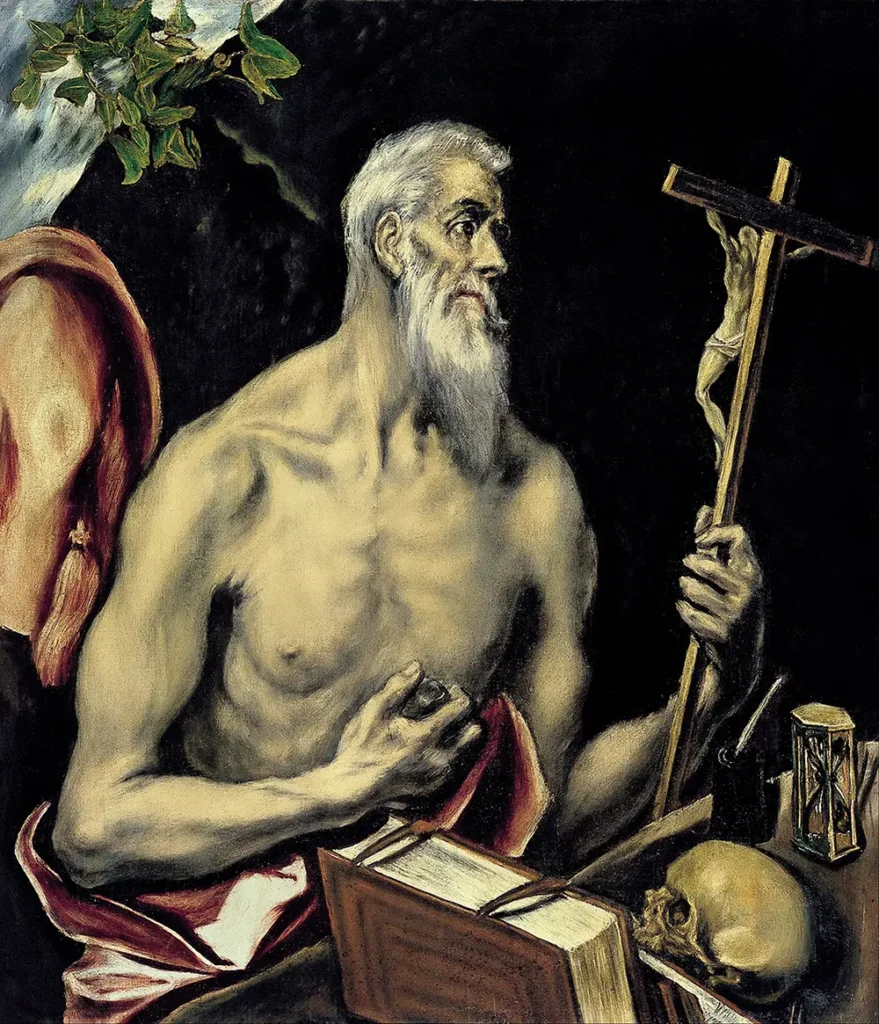
San Jerónimo como un anciano asceta en el desierto, semidesnudo y con barba larga, meditando frente a una cruz mientras sostiene una piedra para golpearse el pecho.
St. Jerome penitent (1600), canvas by El Greco.

From the Vulgate to the University of Navarra Bible

Does this mean that the Vulgata is the only Bible valid? Not at all. The very spirit of St. Jerome to return to the sources is the driving force of the Church. The Second Vatican Council, in its dogmatic constitution Dei Verbumencouraged the creation of new translations based on the original Hebrew, Aramaic and Greek texts, which we now know much more accurately thanks to archaeology and papyrology.

As a result of this impetus, Pope Paul VI promulgated in 1979 the Nova VulgataThe text, a revision of St. Jerome's version in the light of modern criticism, is still the reference text for the Latin liturgy.

At the same time, excellent translations into vernacular languages have emerged. A paradigmatic example is the Bible of the University of Navarra. Produced by the Faculty of Theology of the University of Navarra, this version is a direct heir to the rigor and love for the truth of St. Jerome.

It offers a faithful and elegant translation of the original text, as well as being enriched with extensive notes and commentaries drawn from the Patristics, the Magisterium of the Church and great saints, allowing the reader to delve into the inexhaustible richness of the Word of God. It is a formidable tool for personal meditation and study, a resource that every seminarian and priest should have within his reach.

The life of St. Jerome goes beyond his work. He teaches us an attitude towards the BibleThe book is a blend of intellectual rigor and humble piety. It reminds us that approaching Scripture is not an academic exercise, but a personal encounter with Christ. In its pages we discover the face of God who gives meaning to our lives.

For the CARF Foundation, supporting the formation of a seminarian or diocesan priest is, in essence, a continuation of the mission of St. Jerome. It is to give the Church future pastors who, like him, love the Word of God, study it with passion, meditate on it in prayer and know how to transmit it faithfully to the faithful. A well-formed priest is a priest who knows and loves the Word of God. Bibleand who can, in turn, teach his people not to ignore Christ.

Therefore, make a donation for the formation of these young people is to invest directly in evangelization and in the future of the Church, assuring that the light of the Word, so well guarded and transmitted by St. Jeromecontinue to shine in the world.

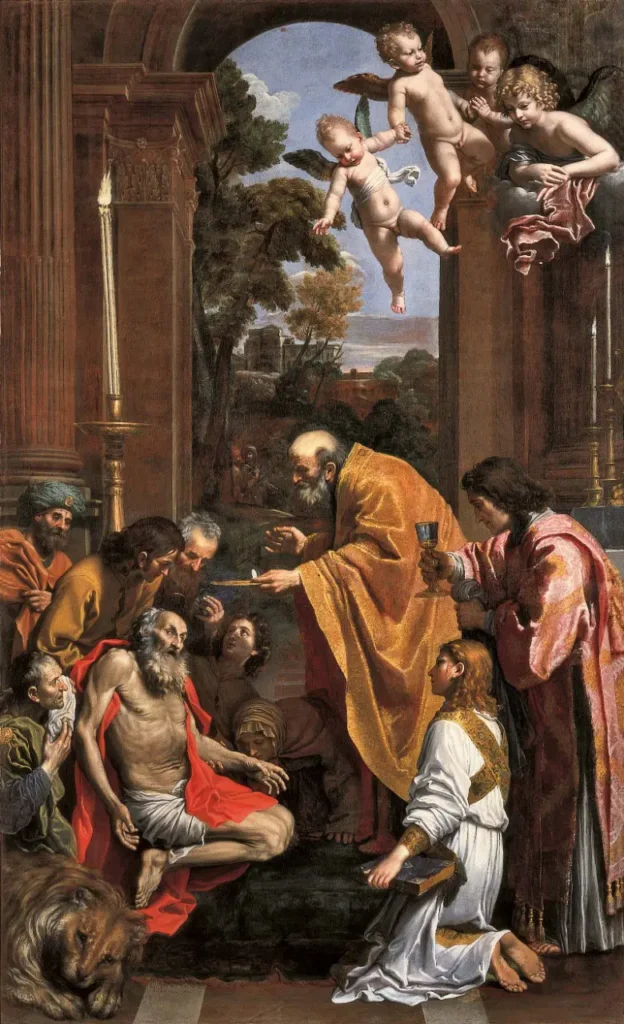
El anciano y frágil san Jerónimo es sostenido por sus discípulos mientras se arrodilla para recibir la Eucaristía de manos de un sacerdote.
St. Jerome's last communion (1614), by Domenico Zampieri, known as Domenichino.

St. Jerome was more than a translator, he was a servant of the Word, a man who dedicated his life to making the treasure of the Word accessible to all. Bible. Your Vulgata unified the biblical texts of the Western Church and became the channel through which divine revelation nourished the faith, culture and thought of hundreds of generations.

His example invites us to take up our Bibles, to read them with the same love and reverence that he did, and to discover in them the living voice of God speaking to us. For, as he taught us, to ignore Scripture is, and always will be, to ignore Christ.


St. Pio of Pietrelcina, September 23: Holiness and Stigmata for the Church

The 20th century was marked by wars, persecutions and a profound human and spiritual crisis. In the midst of this panorama, God wanted to give the Church an exceptional example of holiness: St. Pio of Pietrelcinabetter known as Padre Pio. This humble and humorous Capuchin friar became a focus of attraction for millions of faithful around the world who continue to be moved by his life today.

Its simple message -"Pray, wait and don't worry."- encloses a spirituality of absolute trust in the goodness and mercy of God. For seminarians and diocesan priests, and for everyone, his life was an example of love for God and the Church. His figure is a living model of what it means to be configured to Christ, the Good Shepherd, in favor of souls.

Childhood and early vocation

The future saint was born as Francesco Forgione in Pietrelcina (Italy) in 1887, in the bosom of a humble and deeply believing peasant family. From childhood he stood out for his prayer life and spiritual sensitivity. His parents, Grazio and Maria GiuseppaThey transmitted to him a simple and solid faith, which became the basis of his whole life.

At the age of ten, Francesco clearly expressed his desire to consecrate himself to God. He entered the Capuchin order, where he took the name of Pío in honor of St. Pius V. His training was marked by austerity and discipline, but above all by an ardent love for Christ the Eucharist and a deep devotion to the Virgin Mary.

This detail is key to understanding his later ministry: the priesthood was not for him an office or a task, but a total and radical dedication to others for Jesus Christ.

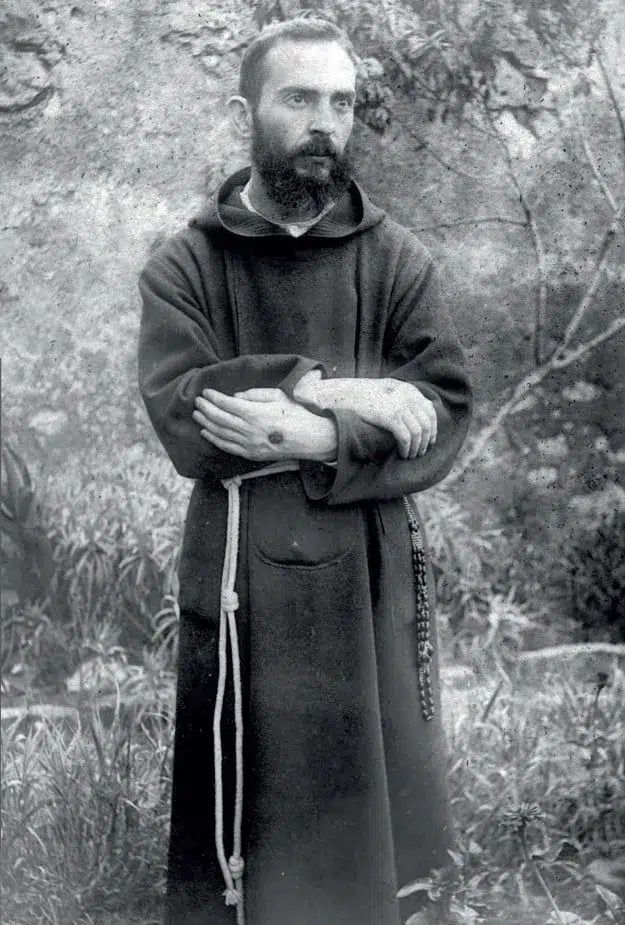
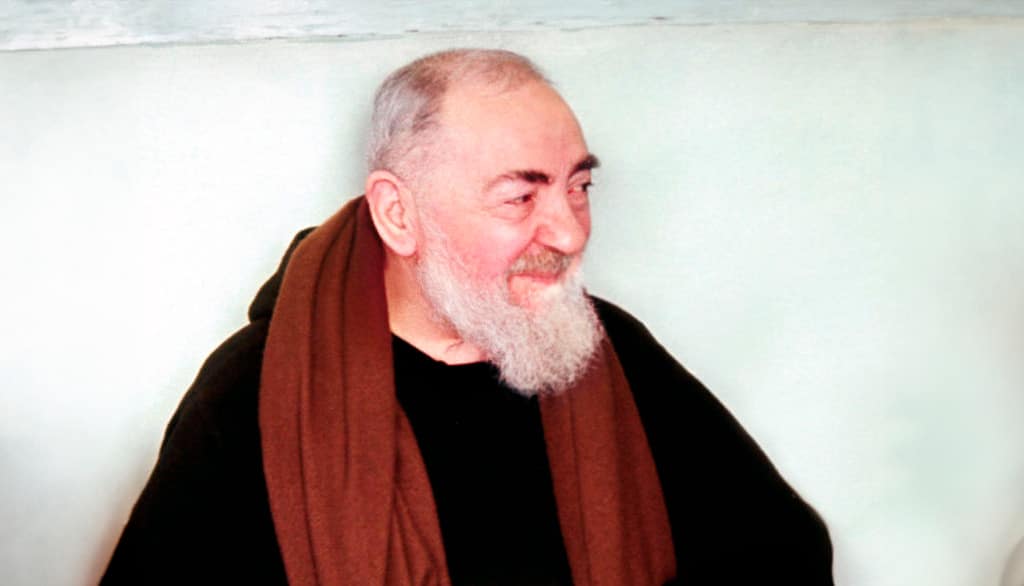
Padre Pio, with the stigmata on his hands.

Priestly ordination and pastoral dedication

In 1910, at the age of 23, he was awarded the priestly ordination. From the beginning of his ministry he stood out for his pastoral zeal and intense interior life.

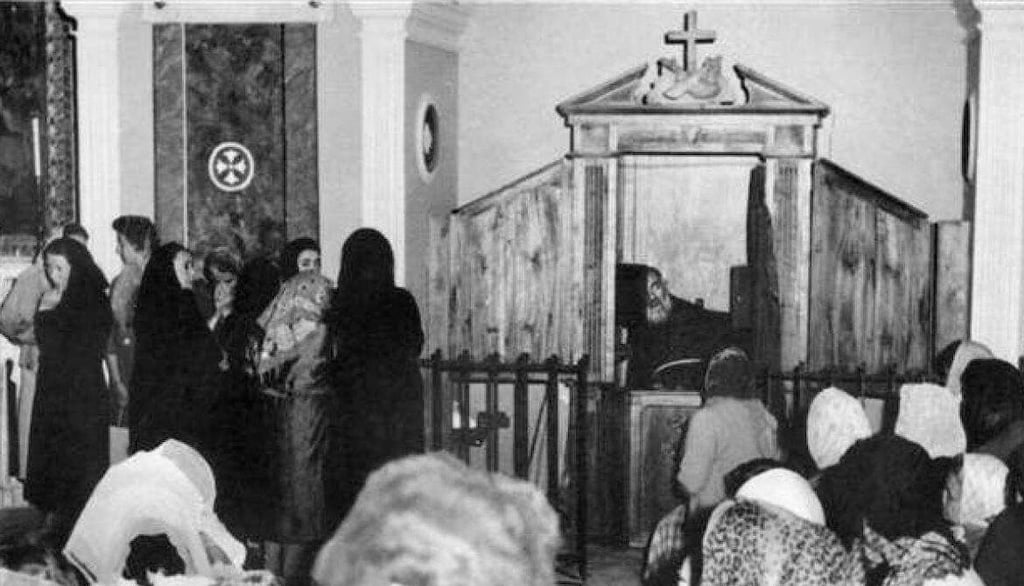
During most of his priestly life he resided in San Giovanni RotondoThe small Capuchin convent was soon to become a center of worldwide pilgrimage. There, Padre Pio dedicated himself to two great missions: celebrate Holy Mass with extraordinary fervor y spending countless hours at the confessionalreconciling the faithful with God.

His life demonstrates that the mission of a priest does not depend on grand scenarios or complicated programs, but on living faithfully the mystery of Jesus Christ through the sacraments and, above all, in the Eucharist and in the forgiveness of sins. As St. Josemaría Escrivá reminds us in many of his texts, holiness is achieved in the ordinary, in fidelity to one's daily duties and in the love with which one serves God and others.

Stigmata: Participation in the Passion of Christ

One of the most surprising phenomena of his life were the stigmasThe visible wounds of the Passion of Christ, which appeared on his body in 1918 while he was praying before a crucifix, remained with him for 50 years, until his death in 1968. These wounds on his hands, feet and side remained with him for 50 years, until his death in 1968. No saint has lived so long with the stigmata of the Passion. As an example, St. Francis of Assisi had them for the last two years of his life.

Padre Pio accepted this suffering as a participation in the Cross of Christ. He never boasted of these extraordinary gifts; on the contrary, he lived them with discretion and humility, enduring much misunderstanding and even investigations by ecclesiastical authorities.

The stigmata were a visible sign of what every priest is called to be: another Christ. The priestly ministry is not a career of prestige, but of a dedication that passes through the cross. For seminarians training to become priests, contemplating the life of Padre Pio is an invitation not to fear sacrifice, but to embrace it with love.

Charismas and extraordinary gifts

Among Padre Pio's most notable charisms are:

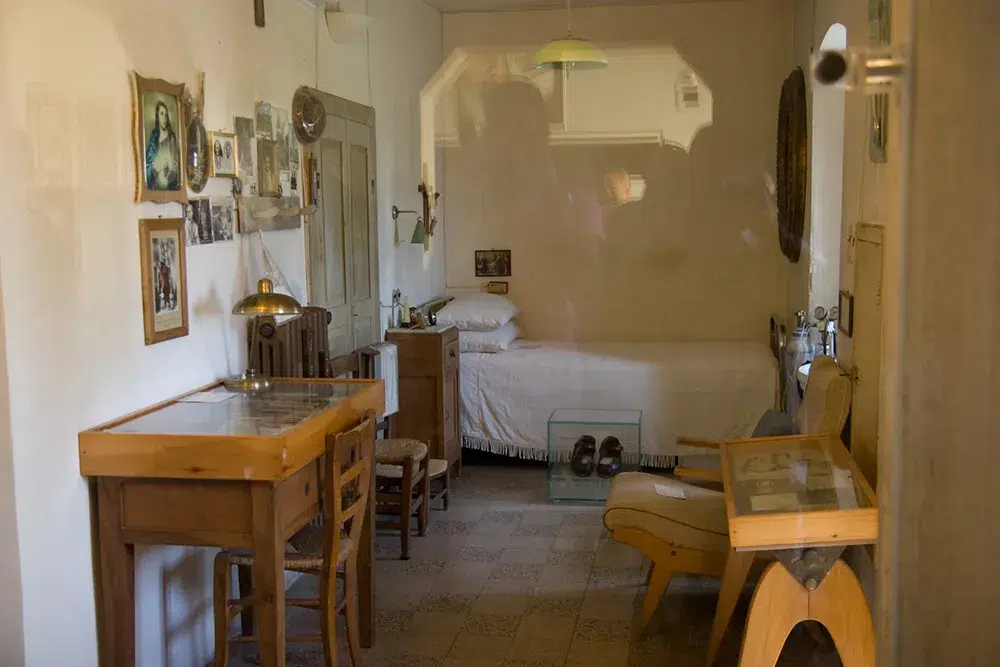
The monastic cell of Padre Pio of Pietrelcina at San Giovanni Rotondo (province of FoggiaItaly).

But, above all, Padre Pio was characterized by his deep devotion to the Eucharist, to the Virgin Mary and to the Passion of Christ. His life was marked by constant prayer, penance, obedience to the Church (even in times of persecution and false accusations; among other things he was forbidden to celebrate Mass in public from 1923 to 1933) and a tireless dedication to confession and spiritual direction.

These charisms impressed the crowds, but he always insisted on the essential: God's grace is poured out mainly through those who have the grace of the Holy Spirit. sacraments.

His life reminds us that the most important aspect of the priestly ministry is not extraordinary phenomena, but fidelity in daily life: celebrating Mass with devotion, confessing with patience, preaching with truth and pray with perseverance.

Charitable works: the hospital of suffering

Padre Pio's love was not limited to the spiritual realm. In 1956 he inaugurated the Casa Sollievo della Sofferenza Hospitalan institution that to this day remains a medical reference in Italy.

This project was born out of his conviction that the sick should not only be treated with medical techniques, but also with compassion and spiritual care. The hospital was the fruit of her prayer, divine Providence and the collaboration of many benefactors.

In this way, Padre Pio showed that Christian charity does not remain in words, but is translated into concrete works that alleviate human suffering. A very current lesson for the Church: priests are called to be instruments of hope and mercy for those who suffer.

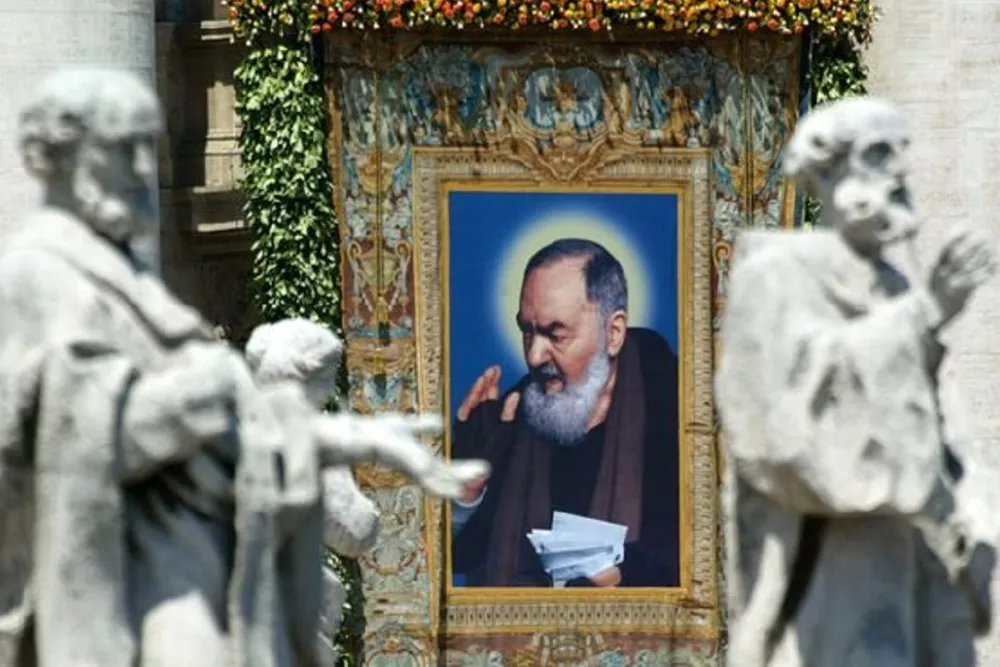
Padre Pio's canonization in Rome (via fatherpio.org)

Death and canonization

On September 23, 1968, Padre Pio gave up his soul to God after a life of heroic dedication. He was 81 years old. His last words were: "Jesus, Mary."

His funeral was attended by more than 100,000 people, a testimony to the immense affection and devotion he had aroused during his lifetime. In 1999 he was beatified by St. John Paul IIand in 2002, the Pope himself canonized himproposing him to the world as a model of holiness.

Today, millions of pilgrims flock to San Giovanni Rotondo to pray at his tomb, and his devotion has spread to every continent.

Padre Pio's teaching

Beyond the extraordinary phenomena, what is most appealing about Padre Pio is the depth of his spiritual life. His message can be summed up in three words: prayer, suffering and trust.

  1. PrayerHe spent long hours in intimacy with God. He invited everyone to pray the Rosary daily and to unite with Jesus Christ at Mass.
  2. SufferingHe accepted with love his physical and spiritual pains, offering them for the conversion of sinners.
  3. TrustHe taught us to live without anguish, because God's love is greater than our problems.

Padre Pio and the priestly vocation

These three attitudes are fundamental for any Christian, but especially for those preparing for the priesthood. The priest must be a man of prayer, who offers his life with Christ and trusts fully in the Providence of God the Father.

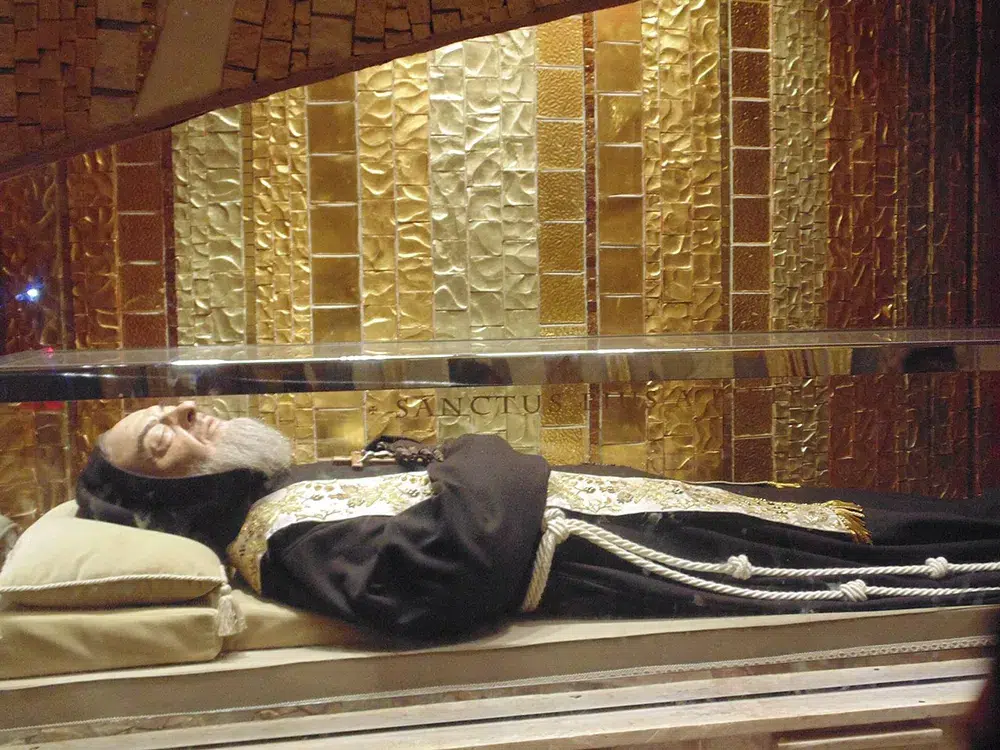
Padre Pio's body exposed for public veneration since 2008. A wax mask covers his face.

The CARF Foundation works so that thousands of seminarians and diocesan priests, especially from poor countries around the world, receive training at the Pontifical University of the Holy Cross in Rome and at the Ecclesiastical Faculties of the University of Navarra in Pamplona.

The seminarian or priest, and all the lay faithful, in looking at the life of Padre Pio, find a direct inspiration:

Future priests, sustained by the support of the Foundation's benefactorsmust follow this path of holiness. Padre Pio's testimony reminds us that the priest does not belong to himself, but is all of Christ and of the whole Church.

A saint for today and forever

His example of life invites the faithful to rediscover the value of Confession, the Eucharist, prayer and trust in God the Father. For priests and seminarians, he should be a mirror in which to contemplate what it means to live configured to Christ to the ultimate consequences.

Today, his voice resonates as strongly as it did in life: "Pray, wait and don't worry. Anxiety is of no use. God is merciful and will hear your prayer." Mediaset Italia produced a major film production about his life lasting more than three hours. Here is the link to watch it


Friendship between saints: Padre Pio and John Paul II

Padre Pio, Italian Capuchin, (1887-1968), canonized in 2002, in a multitudinous ceremony by St. John Paul II under the name of St. Pio of Pietrelcina, this holy priest received an extraordinary spiritual gift to serve all the men and women of his time. This gift marked his life, filling it with suffering, not only with the physical pain caused by his stigmata, but also with the moral and spiritual suffering caused by those who considered him a madman or a swindler.

Padre Pio, generous dispenser of God's mercy

The reality is that this saint helped thousands of people to return to the faith, to convert and come closer to God. Padre Pio performed amazing healings. And predictions difficult to contrast, such as the one made to Karol Wojtyla himself, predicting his future papacy. The Frenchman Emanuele Brunatto credited that same gift of prophecy that allowed him to find out from time to time what was going to happen. "It is Jesus," explained Padre Pio, "who sometimes lets me read his personal notebook...".

Privilege of a penitent

At the Mass of canonization on June 16, 2002 in St. Peter's Square at the Vatican, St. John Paul II affirmed that ".Padre Pio was a generous dispenser of divine mercyHe made himself available to everyone by welcoming them, giving them spiritual direction and especially by administering the sacrament of penance. I too, in my youth, had the privilege of benefiting from his availability to penitents. The ministry of the confessional, which is one of the distinctive features of his apostolate, attracted countless crowds of the faithful to the convent of San Giovanni Rotondo".

How did John Paul II and Padre Pio meet?

The relationship between Padre Pio and St. John Paul II is not only due to the fact that the beatification and canonization ceremonies of the Capuchin friar were held during the Polish pope's pontificate, but also because, in 1948, Karol Wojtyla met Padre Pio at San Giovanni Rotondo.

The first meeting of two saints

It was in April 1948 that Karol Wojtyla, a newly ordained priest, decided to meet Padre Pio. "I went to San Giovanni Rotondo to see Padre Pio, to participate in his Mass and, if possible, to go to confession with him." 

This first meeting was very important for the future pope. This was reflected years later in a letter he sent in his own handwriting, written in Polish, to the Father Guardian of the convent of San Giovanni Rotondo: "I spoke with him in person and exchanged a few words, it was my first meeting with him and I consider it the most important".

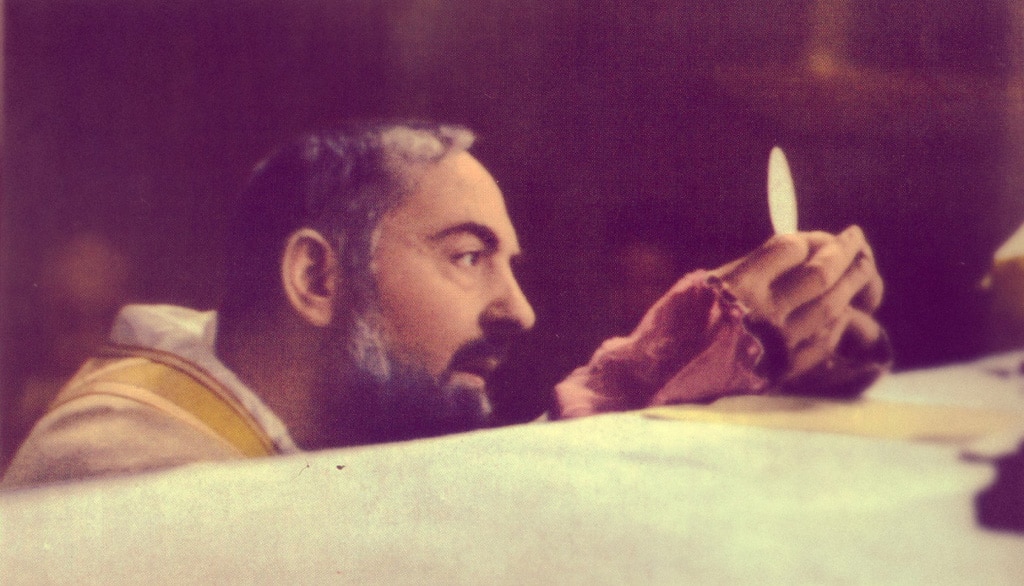
While Padre Pio was celebrating the Eucharist, the young Wojtyla took special notice of the friar's hands, where the stigmata could be seen covered by a black scab. "On the altar of San Giovanni Rotondo the sacrifice of Christ Himself was being fulfilled, and. during confession, Padre Pio offered a clear discernment and simple, addressing the penitent with great love".

The painful wounds of Padre Pio

The young priest was also interested in Padre Pio's wounds: "The only question I asked him was which wound caused him the most pain. I was convinced it was the one on my heart, but Padre Pio surprised me when he said: 'No, the one that hurts me the most is the one on my back, the one on my right side.

This sixth shoulder injuryas the one Jesus suffered while carrying the cross or the patibulum on the road to Calvary. It was the sore "that hurt the most", because it had festered and had never "been treated by the doctors".

The letters of John Paul II and Padre Pio date back to the Council period.

The letter dated November 17, 1962 read: "Venerable Father, I ask you to pray for a forty-year-old mother of four daughters who lives in Krakow, Poland. During the last war she was in the concentration camps in Germany for five years, and is now in grave danger of health, even life, due to cancer.

Pray that God, with the intervention of the Blessed Virgin, will show mercy to her and her family. In Christo obligatissimus, Carolus Wojtyla".

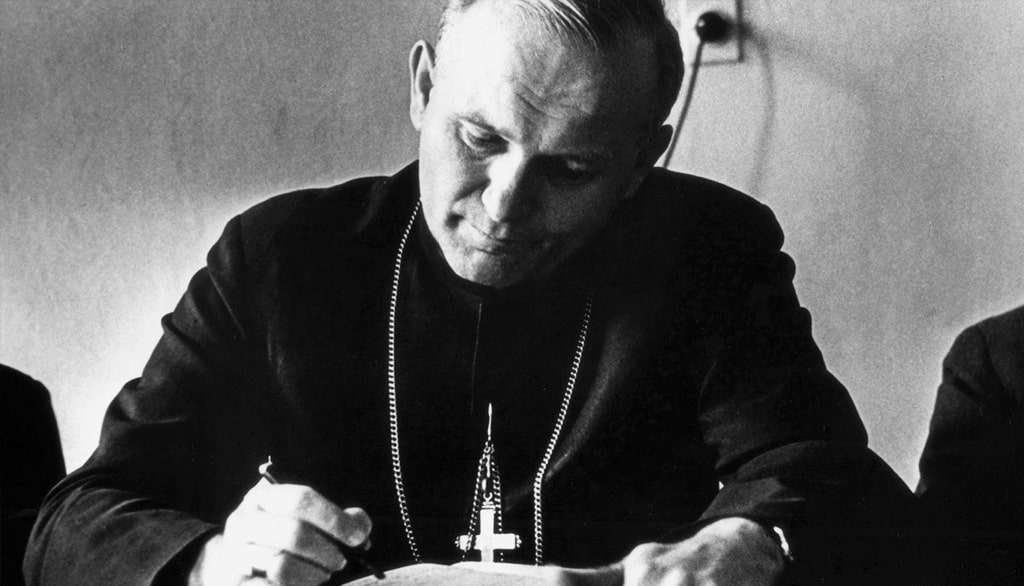
At that time, Monsignor Wojtyla, who was in Rome, received the news of the serious illness of Wanda Poltawska. Convinced that Padre Pio's prayer had a special power before God, he decided to write to him to ask for help and prayers for the woman, mother of four daughters. 

This letter came to Padre Pio from Angelo BattistiAngelo, an official of the Vatican Secretariat of State and administrator of the House of the Relief of Suffering. He himself recounts that after reading the contents to him, Padre Pio uttered the famous phrase: "I can't say no to this one!", and added: "Angelo, keep this letter because one day it will be important".

Thanks for the healing

A few days later, the woman underwent a new diagnostic examination which showed that the cancerous tumor had completely disappeared. Eleven days later, John Paul II again wrote her a letter, this time to thank her.

The letter said: "Venerable Father, the woman who lives in Krakow, Poland, mother of 4 girls, was suddenly cured on November 21 before surgery. We give thanks to God and also to you, Venerable Father.

I express my sincere thanks on behalf of the lady, her husband and the whole family. In Christ, Karol Wojtyla, Capitular Bishop of Krakow". On that occasion the friar said: "Praise be to the Lord!

"Look at the fame that Padre Pio has achieved; the followers he has gathered around him from all over the world. But why, because he was a philosopher, because he was a wise man, because he had the means?
Nothing of the sort: because he said Mass humbly, went to confession from morning to night and was, it is difficult to say, a representative sealed with the wounds of Our Lord. A man of prayer and suffering". Pope St. Paul VI, February 1971.

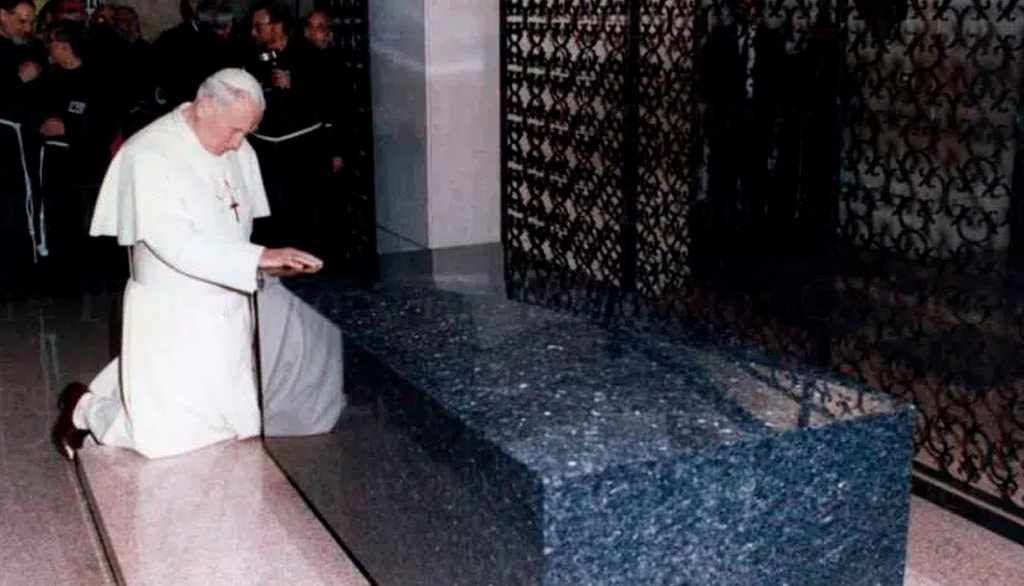
Karol Wojtyla praying at the tomb of Padre Pio in San Giovanni Rotondo.

John Paul II's visits to the tomb of Padre Pio

Wojtyla returned to San Giovanni Rotondo on two more occasions. The first, when he was Cardinal of Krakow, in 1974 and the second, when he was already proclaimed Pope, in 1987. On these two trips he visited the mortal remains of Padre Pio and prayed kneeling at the tomb of the Capuchin friar. 

In the autumn of 1974, then Cardinal Karol Wojtyla, was back in Rome and, "as the anniversary of his ordination to the priesthood (November 1, 1946) approached, he decided to commemorate the anniversary in San Giovanni Rotondo and celebrate the Mass at the tomb of Padre Pio. Due to a series of vicissitudes (November 1 was particularly rainy) the group composed of Wojtyla, Deskur and six other Polish priests was delayed considerably, arriving in the evening around 9 pm.

Unfortunately Karol Wojtyla could not fulfill his wish to celebrate Mass at Padre Pio's tomb on the day of his ordination to the priesthood. So he did it the next day. Stefano Campanella, director of Padre Pio TV.

Love for penitents

Padre Pio "had a simple and clear discernment and treated the penitent with great love," John Paul II wrote that day in the visitors' book of the convent in San Giovanni Rotondo.

In May 1987, St. John Paul II, now Pope, visited the tomb of Padre Pio on the occasion of the first centenary of his birth.

Before more than 50,000 people, His Holiness proclaimed: "Great is my joy at this meeting, and it is for several reasons. As you know, these places are linked to personal memories, that is, to my visits to Padre Pio during his earthly life, or spiritually after his death, at his tomb.

St. Pio of Pietrelcina

On May 2, 1999, John Paul II beatified the stigmatized friar, and on June 16, 2002, he proclaimed him a saint. On that day, St. John Paul II canonized him under the name of St. Pio of Pietrelcina. In the homily of his sanctification, John Paul recited the prayer he composed for Padre Pio: 

"Humble and beloved Padre Pio: Teach us too, we ask you, humility of heart, so that we may be considered among the little ones of the Gospel, to whom the Father has promised to reveal the mysteries of his Kingdom. 

Help us to pray without ever tiring, in the certainty that God knows what we need before we ask him for it. Reach out to us with a gaze of faith capable of readily recognizing in the poor and the suffering the very face of Jesus. 

Sustain us in the hour of struggle and trial, and if we fall, grant that we may experience the joy of the sacrament of forgiveness. Transmit to us your tender devotion to Mary, Mother of Jesus and our Mother. 

Accompany us on our earthly pilgrimage towards the happy homeland, where we too hope to arrive to contemplate eternally the glory of the Father, the Son and the Holy Spirit. Amen.

Did St. Pio and St. Josemaría have a relationship?

According to several sources, There is no record that St. Josemaría Escrivá and Padre Pio of Pietrelcina ever met personally.

Although they did not meet directly, there was an indirect relationship and mutual respect between them. Padre Pio even defended Opus Dei on one occasion. It is related that an Italian businessman, Luigi Ghisleri, who had doubts about the Work, consulted Padre Pio, who replied: "Don't worry. Opus Dei is God's work, it is a holy thing!

Moreover, the founder of Opus Dei, St. Josemaría, was convinced of Padre Pio's holiness and defended him whenever anyone questioned the figure of the Capuchin. Both saints were elevated to the altars by St. John Paul II, becoming important intercessors for the Church.


Bibliography

- La Brújula Cotidiana interviews the director of Padre Pio TV, Stefano Campanella.
- Interview with Polish Archbishop Andrew Maria Deskur, 2004.
- Homily of John Paul II. Mass of Sanctification, 2002.