Jacques Philippe: keys to hope in times of crisis

At an event on November 24 at the Omnes Forum of the Universidad de Villanueva de Madrid, Jacques Philippea prominent French Catholic author, shared profound reflections on spirituality in the contemporary world. More than two hundred people were immersed in the fundamental question: Do we need God? The meeting was sponsored by the CARF Foundation and Banco Sabadell.

Jacques Philippe's books

In addition to his inspirational talks, Jacques Philippe is acclaimed for his literary work on the spiritual life. With influential titles such as Inner freedom, Time for God y The spiritual paternity of the priestPhilippe offers practical and profound insights into faith and the interior life, guiding countless people toward a more intimate relationship with God.

The importance of maintaining the connection with God

Jacques Philippe's reflections on the absence of God are poignant. "To turn away from God is also to turn away from the source of truth" he explains, offering a clear perspective on how this absence affects us greatly. This is why he invites us to reflect on the importance of maintaining a living connection with God, even in moments of apparent darkness. 

Emphasizing the need to constantly seek God's presence and trust in His love and mercy to find hope in our lives.

Addressing Spiritual Challenges in the Contemporary World

In a society marked by secularization and the emergence of new spiritualities, Jacques Philippe recognizes the phenomenon of individualism and loneliness that characterizes the contemporary world. He observes how each individual tends to construct his or her own beliefs and to move away from the idea of a shared faith that unites the community as a single family. 

This is why Philippe advocates an openness to religious community and the shared search for God as a source of spiritual fulfillment and human connection.
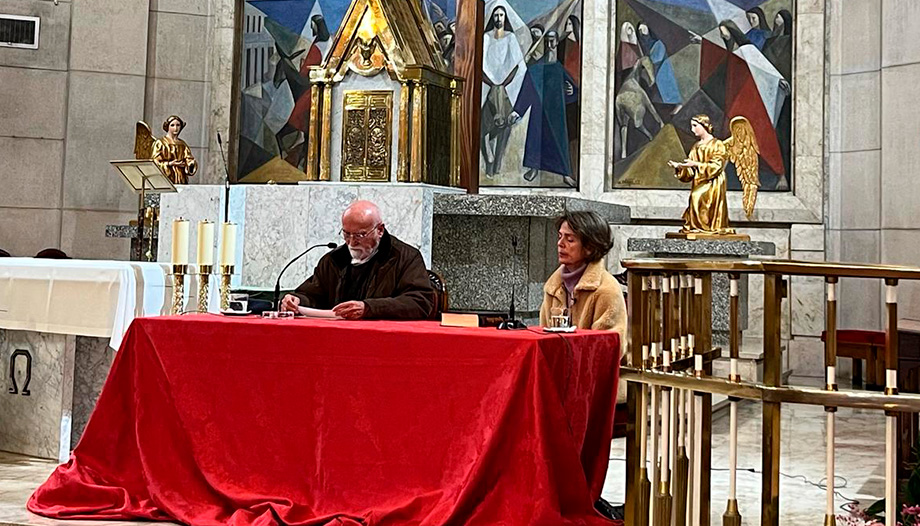
jacques-philippe
Meditation delivered by Jacques Philippe in Madrid.

The vital importance of God's presence at Jacques Philippe

Jacques Philippe defends the need for God and his mercy in a world increasingly marked by individualism and atheism. He points out the lie of atheism, and uses the parable of the prodigal son to illustrate how, once God is rejected, the possibility of finding mercy and forgiveness is eliminated. Philippe describes how the absence of God leaves man alone with the weight of his mistakes, without the possibility of receiving the forgiveness that only God can grant. 

In this context, he highlights the importance of returning to God and finding the grace and mercy that only He can offer, stressing the importance of returning to the Gospel and rediscovering divine fatherhood as an antidote to human pride and loss of meaning.

Spiritual parenthood in modern society

Philippe addresses the complex exercise of human freedom in the absence of the presence and love of God as Father. Pointing out that, without this divine guidance, we can fall into two extremes: total irresponsibility, where everything is permitted and responsibility for actions is not assumed; or excess of responsibility, carrying the weight of life and decisions in a solitary and distressing way. Highlighting the tendency in today's society towards these extremes, where immense freedom coexists with the lack of spiritual guidance and objective truth. 

It underscores the importance of God's role as Father, not to restrict freedom, but to help us discern and exercise our freedom in a way that benefits us and our neighbor. God offers us a light in the midst of the uncertainty and loneliness that characterize the contemporary world.

A transformative perspective for everyday life

Next, Jacques Philippe encourages us to reflect on the importance of Kingdom hope as a transformative perspective on daily life. It highlights how living without the certainty of eternal life can make existence feel cramped and heavy, with the feeling that every missed opportunity is irretrievable. 

Philippe emphasizes that the hope of the Kingdom offers an infinite horizon of possibilities and freedom, even in the midst of life's responsibilities and challenges. He uses the example of the good thief at Jesus' crucifixion to illustrate how even the most unsuccessful life can be transformed into achievement with the hope of the Kingdom and God's mercy. For at any moment God can bring salvation and renewal to those who trust in his mercy.

The Importance of Forgiveness in a Godless World

Jacques Philippe presents us with how living in a world without God and without mercy can lead to generalized anguish and harshness in human relationships. It highlights how a lack of faith hinders forgiveness, since the wrong received is perceived as irremediable.

He discusses how faith in God's mercy is fundamental to making forgiveness possible, as it provides the hope of healing and salvation for both the wrong that has been done and the wrong that has been suffered. And he warns us about the risk of hardening ourselves against others when we remove God from the equation, which can lead to anger and lack of inner peace. 

A successful life is not defined by material possessions, but by glorifying God's mercy and love, which is always possible with faith in His transforming power.

Self-acceptance in the light of Faith

One of the most significant challenges in today's world is the difficulty in accepting ourselves. Philippe stresses that God's loving gaze upon us is fundamental to our self-acceptance. By embracing our fragility and accepting His love, we find a freedom to love ourselves and others.

Jacques Philippe reminds us that, in the midst of the internal struggles of the modern world, the presence of God and His merciful love are our greatest comfort and hope. As we welcome God into our hearts, we find the confidence and joy that come from His eternal love.

With these words, Jacques Philippe gives us a light of hope in times of uncertainty, reminding us that, even in the darkest moments, God is present and His love and infinite mercy never abandons us.

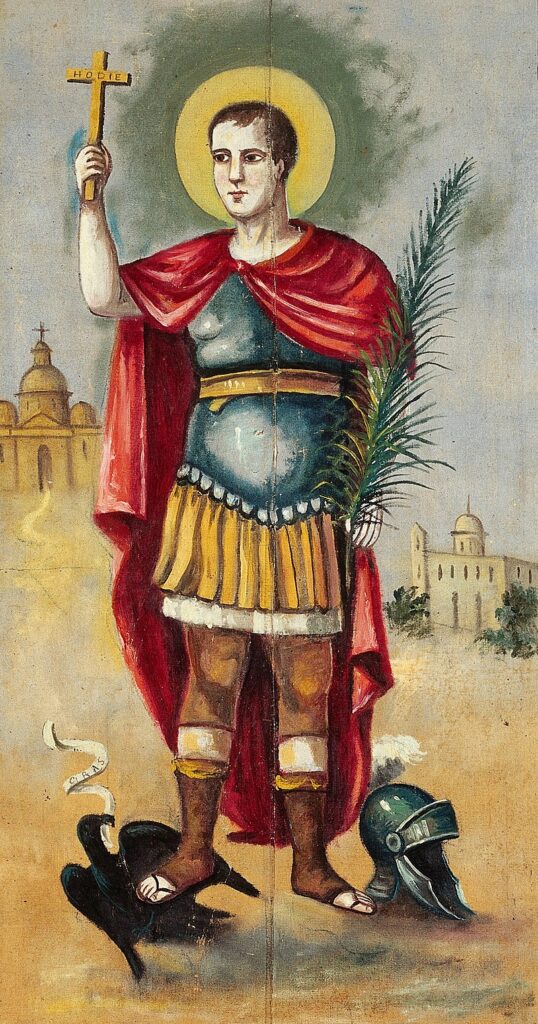
St. Expeditus, 3 prayers: money, urgent causes and love

Due to its name Expedito, which in Latin means fast, This saint is considered the patron of emergencies, of just and noble causes. He is also the defender of impossible causes and the mediator of conflicts or trials. In addition, he is patron and protector of the military, students, young people, the sick and travelers. And he is prayed for those who are undergoing trials and for the success of these processes.

Although he does not appear in the Roman Martyrology, his figure and devotion grow year after year and he is one of the most popular saints. He is a traditional saint with many followers.

Life of Saint Expeditus

San Expedito was a commander of the Roman legions, who was in charge of thousands of men and served the emperor Diocletian, between the third and fourth centuries. Those who studied his life believe that he fought the barbarians in the East of the Roman Empire.

In the midst of his task, Expedito began to have more and more devotion to the Christian faith, and after some hesitation he finally decided to convert. It is said that when St. Expeditus was converted, a raven appeared to him and told him "cras" (in Latin, tomorrow). However, Expedito replied "hodie" (today), referring to the fact that he would not let any more time pass before adopting Christianity.

After all that had happened, his doubts were dispelled and he decided to leave the army of men to join the army of heaven. It was his conversion to Christianity that triggered the persecution of his own Roman compatriots. Expeditus was martyred and then beheaded on April 19, 303, according to historians, in the city of Melitene. Along with him, other legionaries also died. martyrs they had become. Their remains were never found.

oracion-san-expedito-para-el-amor

Today, he is depicted dressed as a Roman soldier stepping on the raven that cries out "cras". He holds a cross in his right hand raised to the height of his head that reads ".hodie". In some cases, he also carries with him a palm leaf expressing his martyrdom. His helmet usually rests beside him as a sign that the martyr abandoned his earthly and human victories for the love of God. Although this cost him his life, his courage, commitment and fortitude in the face of adversity, sustained by his faith, are an example for his devotees.

Perform the family prayer to ask for the intercession of St. Expeditus can be beneficial. Since he is a saint who sacrificed his life to spread Christianity, it is good to gather to pray to him. Part of his mission is to bring more people to the glory of God.

There are several good times to turn to St. Expeditus, the following are the most popular prayers. Praying gives us tranquility and peace to our Christian soul. It is also important to remember that we can pray to give thanks for what has been granted or to ask to understand God's will. Ask him to help many priests to be trained to be holy, learned, joyful and sporting.

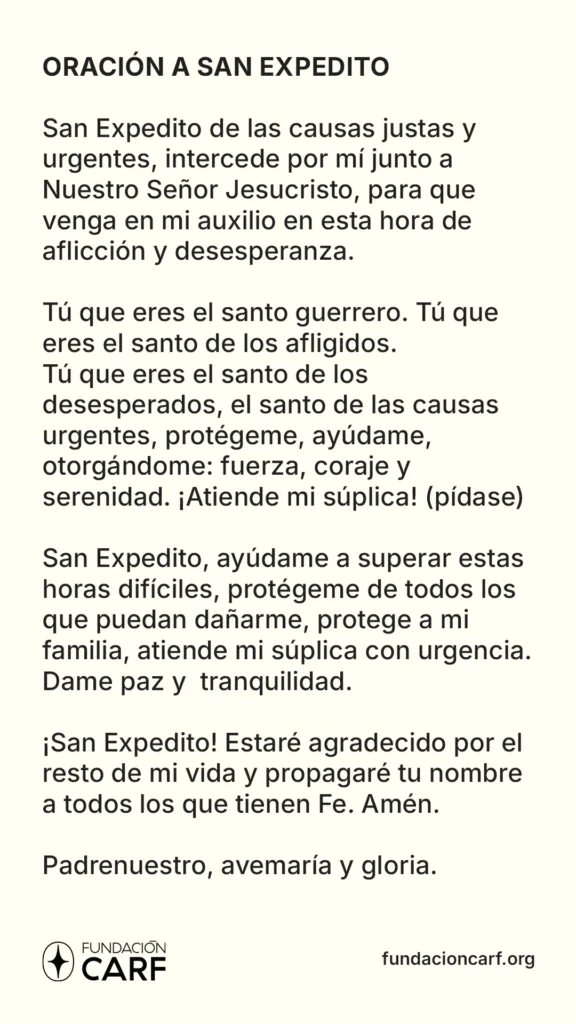
Prayer to Saint Expedite for an urgent cause

San Expedito is characterized by interceding before God to meet urgent situations. So when we need a prompt response. We pray this prayer in petition of trust and devotion to the saint.

"Jesus Christ, my Lord, I come to your help! Most Holy Immaculate Virgin, help me!

St. Expeditus, you, who were armed with courage and opened your heart to God and did not accede to the temptations exposed so that your heart would not be approved by the Almighty, I ask you to help me to do today what I will need tomorrow, that the acts that I need today, tomorrow I will use them, all done for and for the love of Jesus.

Give me your heavenly help, to no longer depend on vices and addictions, keep them away from me with the power that God has given you. I want to be a militant, honorary and of great prestige for the Lord, to only serve and praise his name, and do not be afraid of the trials that will come my way.

You who are the Holy One of justice and needs, I present to you today my request. (To petition with great devotion).

Above all and above all things that I can demand, I ask you to intercede in me, so that faith may be the greatest virtue of my being, and thus lead me to the kingdom of God, with the Virgin Mary, the angels and archangels. Amen."

San Expedito
St. Expeditus prayer card to attend to emergency situations.

St. Expeditus prayer for money

Many people go to Saint Expeditus to ask for an improvement in their economic life. Others wish for a good job or the resolution of a situation of injustice.

"St. Expeditus, our blessed protector: warrior and martyr who now enjoys the Eternal Paradise, today I kneel before you to ask for your assistance, I claim you with urgency and fervor to come to my aid.

The urgent needs in my life do not allow me to rest, I live in a state of worry and continuous depression. I feel alone and desperate, despondency accompanies me, bewilderment guides me, and suffering has taken hold of me. You who are the patron saint of just and urgent causes, help me, glorious saint, to rise up.

I ask you to come quickly and pour over me courage, energy and hope, to alleviate my hardships and miseries, so that through your mediation I may be able to solve my distressing needs, the economic problems that are pressing me and the ruin from which I do not know how to get out, I ask you to grant me with your charity: (Mention now the request).

Help me to use my courage, to develop my strength and strengthen my will, so that the terrible situation I am going through now, is resolved soon and everything remains a memory, that everything is an experience that I had to go through to learn and improve, and that once the obstacles are solved, my doors open to a future of success and prosperity.

Glorious Saint Expeditus, hear my plea, I beg you to attend to my prayers with urgency. Thank you Saint Expeditus, benevolent saint, for I know that you are here with me, listening to me, and that my improvement will begin at this very moment, I will thank you for the rest of my life and I will take your name to whoever needs it. Amen.

At the end, pray three Our Fathers, three Hail Marys and three Glory Glories.

san expedito oración
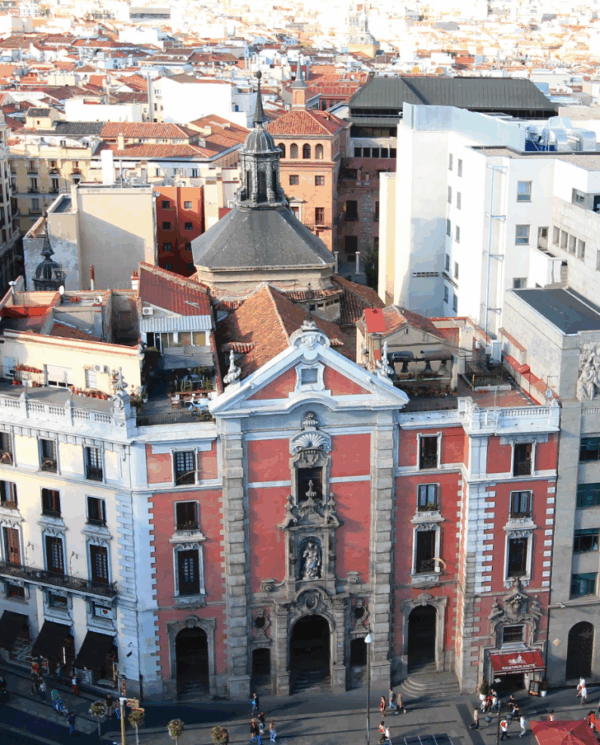
Parroquia de San José, Calle Alcalá, contains the most venerated image of San Expedito in Madrid.

A very special place to pray to Saint Expedito is the chapel built in his honor. It is located on the side of the parish church of St. Joseph, at 43 Alcalá Street in Madrid.

Prayer to St. Expeditus, three days

This triduum to St. Expeditus consists of a first prayer to be prayed every day, plus a different prayer to be prayed on each of the three consecutive days.

At the end of each day's prayer, we must pray with faith and devotion a Our Father and a Hail Mary.

Prayer to St. Expeditus to repeat the 3 days

"Saint Expeditus, you who are a great intercessor, who have the power that you received from God to hear our prayers, we seek you and we take refuge in you, to solve our problems, to lessen our hardships, those that we are not able to bear, and we need to be able to solve them urgently. I come to you for help, I no longer have the strength to continue, so I direct my prayers to you, in the hope that you give me a quick solution, come to my aid. St. Expeditus, you who achieves even the impossible, I leave my supplications in your hands. Amen.

Prayer for the first day of triduum

"My soul begs for your help, I have no more strength to go on. I turn to you Saint Expeditus, I beg you to take away this pain as soon as possible, I trust you completely, make my heart full of hope and faith, and always follow the path of good, I know that you always protect me and guide me. Amen.

Prayer for the second day of triduum

"Today is a very gray day, I cannot see clearly, my enemies are stalking me, they want to hurt me without mercy. That is why today I turn to you, Saint Expeditus, I can no longer bear this burden I carry, the betrayal, the falsehood, the lack of tolerance, that there is at this time in my life, do not let me move forward, but if you, Saint Expeditus, are at my side, none of this can hurt me, or slow me down. Cover me and protect me from all my enemies, who only want to hurt me. Give me your protection urgently. Amen.

Prayer for the third day of triduum

"Your courage can be felt, Saint Expeditus, that is why God chose you as his servant, no evil can defeat you. You are stronger than any hurricane, you have emerged victorious from the hardest storms, and among the most inhuman and merciless men, you put an end to evil and hatred, you managed to make love flourish in the most merciless and cold souls, because only you, Saint Expeditus, can do everything. And with you at my side anything is possible, O Glorious St. Expeditus, pray for me, for my family and for world peace. Amen.

At the end of each day's prayer, we should pray an Our Father and an Our Father. Ave Mariawith great faith and devotion.

St. Expeditus prayer for love

"St. Expeditus, you who hear and help the lament and despair of your faithful, I would like you to give me the satisfaction of recovering my great love. He/she, (state your name)I don't know why he has abandoned me, and I don't know why he has abandoned me.

Make him/her understand that by my side he/she will have the happiness he/she is looking for. Calm the sadness I have in my heart, I feel that without him/her I will not make all my dreams come true.

Come back to my side, love of my life, come back to my life. (say the name of the person we love seven times). And let us be happy . And let's be happy as we were before. My dream is that we walk together this path of love with much humility. Glorious St. Expeditus, put an end to this pain that I feel, I beg you from the bottom of my heart. Amen.

Novena to Saint Expeditus

You can also pray a ninth to the saint. You can do it as many times as you wish, especially the days before the feast (April 10 to 18).

To do so, we will pray one of the above prayers and we can follow the following steps every day.

  1. Make the sign of the cross.
  2. Pray an act of contrition.
  3. Make the prayer to San Expedito for every day.
  4. Silently ask for the grace you wish to obtain.
  5. We read the meditation for each day.
  6. Pray an Our Father, three Hail Mary's and a Glory Be.
  7. We make the sign of the cross again.

Bibliography:

hearts.org
editorialsantamaria.com


The 7 sorrows of Our Lady: What are they?

The feast of Passion week reminds us especially of the participation of the Virgin Mary in the sacrifice of Christ, represented by the 7 sorrows of the Virgin.

The feast of Our Lady of Sorrows conveys the compassion that Our Lady feels for the Church, always subjected to trials and persecutions.

Brief historical review

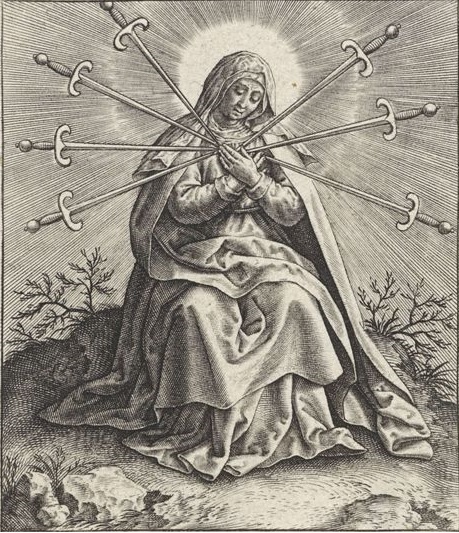
Around the year 1320, the Virgin Mary manifested herself to St. Bridget in a place in Sweden. On this occasion, her heart was wounded by 7 swords. These wounds represented the 7 sorrows of the Virgin Mary experienced at the side of her Son Jesus.

Then the suffering Virgin told St. Bridget that those who prayed remembering her pain and sorrow would receive 7 special graces: peace in their families, confidence in God's action, consolation in their sorrows, defense and protection from evil, as well as the favors they ask of her that are not contrary to the will of Jesus. Finally, forgiveness of sins and eternal life to the souls who propagate her devotion.

Devotion to the Sorrowful Virgin took root among the Christian people, especially in the Servite Order, who devoted themselves to the meditation of the 7 sorrows of the Virgin Mary. And this same devotion was extended to the whole Church through Pope Pius VII in 1817.

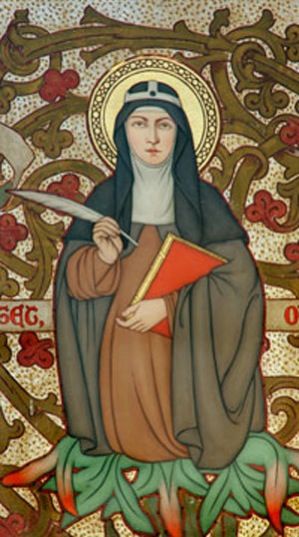
Santa Brigida de Suecia. Donde la Virgen se apareció y le explico la devoción de los 7 dolores de la Virgen

Representation of the 7 sorrows of the Virgin Mary, antique stamp

The devotion of the 7 sorrows of the Virgin Mary

Meditating on Our Lady's sorrows is a way of sharing the deepest sufferings of Mary's life on earth. She promised that she would grant seven graces to the souls who honor and accompany her by praying 7 Hail Marys and an Our Father while meditating on the 7 sorrows of Our Lady. If you are experiencing any suffering today, take the opportunity to place your pain and mourning in the heart of the Virgin Mary.

First Sorrow: The Prophecy of Simeon at the Presentation of the Christ Child

Reading the Gospel of Luke (cf. 2:22-35)

The first of the 7 sorrows of the Virgin Mary was when Simeon announced to her that a sword of sorrow would pierce her soul for the sufferings of Jesus. In a certain way Simon manifested that the participation of the Virgin Mary in the redemption would be based on pain.

Imagine what a great impact she felt in Mary's heart when she heard the words with which Simeon prophesied the bitter Passion and death of her Son, Jesus.

Our Lady listens attentively to what God wants, ponders what she does not understand, and asks what she does not know. Then, she gives herself totally to the fulfillment of the divine will: behold the handmaid of the Lord, let it be done to me according to your word. Do you see the wonder? St. Mary, teacher of all our conduct, teaches us now that obedience to God is not servility, it does not subjugate the conscience: it moves us intimately to discover the freedom of the children of God. (It is Christ who passes by, 173).

Second Sorrow: The Flight to Egypt with Jesus and Joseph

Read the Gospel of Matthew (2:13-15)

It represents the second of the 7 sorrows of the Virgin, the one she felt when she had to flee with Joseph and Jesus suddenly and at night so far away in order to save her Son from the slaughter decreed by Herod. Mary experienced real sufferings when she saw that Jesus was already being persecuted to death as a baby. How many sufferings she experienced in the land of exile.

The Holy Gospel, briefly, makes it easier for us to understand the example of Our Mother: Mary kept all these things within herself, pondering them in her heart. Let us try to imitate her, dealing with the Lord, in a loving dialogue, with everything that happens to us, even the smallest events. Let us not forget that we must weigh them, evaluate them, see them with eyes of faith, in order to discover the Will of God (Friends of God, 284; Friends of God, 285).

Third Sorrow: The loss of Jesus - The Child lost in the Temple

Read the Gospel of Luke (2,41 -50)

The tears shed by the Virgin Mary and the pain she felt at the loss of your Son are the third of the 7 sorrows of the Virgin. Three days searching for him in anguish until she found him. found in the temple. In order to understand this, we can imagine that Jesus was lost at a very early age, still dependent on the care of Mary and St. Joseph. How distressing was Our Lady's grief when she realized that Jesus was not there.

"The Mother of God, who eagerly sought her son, lost through no fault of hers, who experienced the greatest joy in finding him, will help us to retrace our steps, to rectify what is necessary when, because of our lightness or sins, we fail to distinguish Christ. We will thus attain the joy of embracing Him again, to tell Him that we will not lose Him any more (Friends of God, 278).

Fourth Sorrow: Mary encounters Jesus on the road to Calvary

We read the IV Station of the Cross

In the fourth of the 7 sorrows of the Virgin Mary we think of the deep sorrow that the Virgin Mary felt when she saw Jesus carried with the crosscarrying the instrument of her own martyrdom. Let us imagine Mary meeting her Son in the midst of those who drag him to such a cruel death. Let us live the tremendous pain she felt when their eyes met, the pain of a Mother trying to support her Son.

Hardly has Jesus risen from his first fall, when he meets his Blessed Mother, beside the road through which he is passing.
With immense love Mary looks at Jesus, and Jesus looks at his Mother; their eyes meet, and each heart pours into the other its own sorrow. Mary's soul is flooded with bitterness, in the bitterness of Jesus Christ.
O you who pass by on the way, look and see if there is any sorrow comparable to my sorrow (Lam I, 12).

Fifth Sorrow: The Crucifixion and Agony of Jesus - Jesus dies on the Cross

Reading the Gospel of John (19:17-39)

This sorrow contemplates the two sacrifices on Calvary, that of Jesus' body and that of Mary's heart. The fifth of the 7 sorrows of the Virgin Mary is the suffering she felt when she saw the cruelty of the nails being driven into the hands and feet of her beloved Son. Mary's agony watching Jesus suffering on the cross; to give life to us. Mary stood at the foot of the cross and heard her Son promise heaven to a thief and forgive His enemies.

"Happy fault, sings the Church, happy fault, because she has achieved to have such a great Redeemer. Happy fault, we can also add, that we have merited to receive Holy Mary as our Mother. We are already sure, nothing should worry us anymore: because Our Lady, crowned Queen of heaven and earth, is the omnipotence supplicant before God. Jesus can deny nothing to Mary, nor can He deny anything to us, children of His own Mother (Friends of God, 288).

Sixth Sorrow: La Lanzada - Jesus is taken down from the Cross and handed over to his Mother.

Read the Gospel of Mark (15, 42-46)

We consider the pain Our Lady felt when she saw the spear thrown into the heart of Jesus. In the sixth of Our Lady's 7 sorrows, we relive the suffering Mary's Heart felt when the lifeless body of her beloved Jesus was taken down from the cross and placed in her lap.

Now, as we stand before that moment of Calvary, when Jesus has already died and the glory of his triumph has not yet been manifested, it is a good opportunity to examine our desires for Christian life, for holiness; to react with an act of faith to our weaknesses, and trusting in the power of God, to resolve to put love into the things of our day. The experience of sin should lead us to sorrow, to a more mature and deeper decision to be faithful, to truly identify ourselves with Christ, to persevere, whatever the cost, in that priestly mission that he has entrusted to all his disciples without exception, which urges us to be salt and light of the world. (Christ Is Passing By, 96).

Seventh Sorrow: The Burial of Jesus in the Sepulcher and the Loneliness of Mary

Reading the Gospel of John (19:38-42)

This is the infinite suffering that a Mother feels when burying your Son and although You know that on the third day He will rise again, the trance of death is real for the Virgin. Jesus was taken from her with the most unjust death in the whole world and Mary, who accompanied Him in all His sufferings, now remains alone and full of affliction. This is the last of Our Lady's seven sorrows and the hardest of all.

Scripture also sings of this love in glowing words: the abundant waters could not extinguish charity, nor the rivers sweep it away. This love always filled the Heart of Holy Mary, to the point of enriching her with the bowels of a Mother for all humanity. In the Virgin, love for God is also confused with solicitude for all her children. Her most sweet and attentive Heart must have suffered greatly, down to the smallest details - they have no wine - when she witnessed that collective cruelty, that cruelty which was, on the part of the executioners, the Passion and Death of Jesus. But Mary does not speak. Like her Son, she loves, keeps silent and forgives. That is the power of love (Friends of God, 237).

Los 7 dolores de la Virgen, comunicados a Santa Brigida para devoción de los cristianos.

Prayer for the 7 sorrows of the Virgin Mary.

O Sorrowful and Immaculate Heart of Mary, abode of purity and holiness, cover my soul with your maternal protection so that being always faithful to the voice of Jesus, I may respond to His love and obey His divine will.

I want, my Mother, to live intimately united to your Heart which is totally united to the Heart of your Divine Son.

Abide with us and give us your help, that we may turn struggles into victories, and sorrows into joys.

Our Lady of Sorrows, strengthen me in the sufferings of life.

Pray for us, O Mother, for you are not only the Mother of Sorrows, but also the Mistress of all graces. Amen.


Bibliography

Prayer to the Holy Spirit to thank Him or ask for favors

Pope Francis explains faith in the Holy Spirit.
Imagen del Espíritu Santo interpretado por una paloma blanca con las alas abiertas

Pentecost Sequence

The oldest prayer to the Holy Spirit to ask for a favor is the Pentecost sequence or Veni Sancte Spiritus is a prayer written in Latin, with which to invoke the Holy Spirit. This is one of the four sequences that remained after the liturgical reform carried out by the Council of Trent.

It recalls the first coming of the Holy Spirit upon the Apostles at Pentecost, narrated in chapter 2 of the Acts of the Apostles.

The original text of this prayer to the Holy Spirit is attributed to Stephen Langton, Archbishop of Canterbury (ca. 1150-1228), although both King Robert II the Pious (970-1031) of France and Pope Innocent III (ca. 1161-1216) were also considered its authors.

Come, Holy Spirit,
and sends down from Heaven
a ray of your light.

Come, father of the poor,
come, giver of graces,
see the light of hearts.

Magnificent dildo,
sweet guest of the soul,
its sweet refreshment.

Rest in fatigue,
breeze in the summer,
consolation in crying.

O most holy light!
fills the most intimate
of the hearts of your faithful.

Without your help,
there is nothing in man,
nothing that is good.

Wash what is stained,
water what is arid,
heals what is wounded.

Bend what is stiff,
heats what is cold,
straightens what is astray.

Grant to your faithful ones,
who trust in You
your seven sacred gifts.

Give them the merit of virtue,
give them the port of salvation,
give them eternal happiness.

Amen.

Juan Pablo II de rodilla con las manos juntas rezando
John Paul II on his knees with hands together praying

Come Creator Spirit: Prayer to the Holy Spirit prayed daily by John Paul II

In January 1980, in his first meeting with the Catholic Charismatic Renewal, Saint John Paul II He confided to his listeners that he prayed this prayer to the Holy Spirit to ask for a favor.

"I learned to pray to the Holy Spirit from an early age. When I was 11 years old, I was sad because I had a hard time with mathematics. My father showed me in a little book the hymn "The Holy Spirit.Come Creator SpiritHe said to me: "Pray it and you will see that He helps you to understand. I have been praying this hymn every day for more than 40 years and I have known how much the Divine Spirit helps."

"I remain obedient to this commandment that my father gave me," noted the Polish saint who until the end of his life prayed daily the prayer suggested by his father, the hymn Come Holy Spirit Creator. "This was my own spiritual initiation," he added.

Come, Creator Spirit,
visit the souls of your faithful
and fills hearts with divine grace,
which Thou Thyself hast created.

You are our Comforter,
gift of God Most High,
living fountain, fire, charity
and spiritual anointing.

You pour out upon us the seven gifts;
You, the finger of God's hand;
You, the promised one of the Father;
You who put on our lips the treasures of your word.

Enkindle our senses with your light;
infuse your love in our hearts;
and, with your perpetual help,
strengthens our weak flesh.

Keep the enemy away from us,
give us peace soon,
be yourself our guide,
and placed under your guidance, we will avoid all that is harmful.

Through you let us know the Father,
and also to the Son;
and that in You, Spirit of both of us,
we create at all times.

Glory to God the Father,
and the Son who rose again,
and the Comforting Spirit,
for ever and ever. Amen.

V. Send your Spirit and they will be created.
R. And thou shalt renew the face of the earth.

Let us pray: O God, you have enlightened the hearts of your children with the light of the Holy Spirit; make us docile to your Spirit so that we may always taste the good and enjoy its consolation. Through Jesus Christ our Lord.

R. Amen.

Prayer to the Holy Spirit by St. Josemaria

St. Josemaría had a special devotion to the Paraclete, perhaps because he was the least invoked Person of the Blessed Trinity.

Every year, St. Josemaría made the Decenary to the Holy Spirit, using the book by Francisca Javiera del Valle. In April 1934 he composed a prayer to the Paraclete, which he gave, in manuscript, to Ricardo Fernández Vallespín, then director of the first Opus Dei Residence.

Come, Holy Spirit
Come, Holy Spirit,
Fill the hearts of your faithful
and ignites in them
the fire of your love.
Send, Lord, your Spirit.
May it renew the face of the Earth.

Prayer:

Oh my,
that you filled the hearts of your
faithful with the light of the Spirit
Holy One; grant that,
guided by the same Spirit,
and we feel righteously and
may we always enjoy your consolation.

Through Jesus Christ our Lord.
Amen.

Decennial to the Holy Spirit, 10 days of preparation for Pentecost

The Decennial to the Holy Spirit is a beautiful and ancient custom with which the Church encourages its faithful to prepare in the best possible way for the coming of the Holy Spirit on Pentecost.

It begins 10 days before the feast, that is, on the day of Jesus' Ascension to heaven. On that day Jesus Christ promised his disciples that he would send them the Paraclete. The disciples remained in Jerusalem in continuous prayer to the Holy Spirit together with Mary.

These are, therefore, the days of Lent are a propitious occasion to remember that first prayer together and to prepare ourselves to celebrate the coming of the Holy Spirit.

"On the eve of beginning this Decade, which is the eve of the glorious Ascension of our Divine Redeemer, we must prepare ourselves, with firm resolutions, to undertake the interior life, and having undertaken this life, never to abandon it."    (Francisca Javiera del Valle)

The following is a proposal for a simple decennialbased on the requests of Pope Francis for the Year of Faith. Designed to prepare for the feast of Pentecost, pray a prayer to the Holy Spirit, read a text of St. Josemaría and propose a mission for each of the ten days.

(more…)

Prayer in uncertain times

Because today there are so many situations of injustice, war and self-interested oblivion in many corners of the world. Let us listen to the plea for help from persecuted Christians in many countries, the poor, the sexually exploited children and abused women in countries where protests are systematically put down. Many are silenced by terrorism or economic interests. We cannot remain indifferent to the climatic disasters that leave many without resources, nor to the number of entire families who drown in silence with the unfulfilled dream of reaching Europe by sea. Today, the whole world is experiencing a situation of political, economic and cultural uncertainty that is disturbing. Also today we see thousands of elderly people alone, abandoned in the big cities of the whole planet. And without forgetting Ukraine, Syria, Afghanistan, up to a total of 57 armed conflicts, of which we do not speak.

As Christians we cannot leave in silence so many realities for which we must pray together. We want to be a united body that suffers and celebrates as a family. This is our way to Easter, and the sense of union, with Mary and Joseph, who already at the foot of so many crosses of history, visible and invisible, announces the morning of resurrection. "Like the soldier who stands guard, so must we stand at the door of God our Lord: and that is prayer". St. Josemaría, Fork 73.

To pray is to awaken and to set out on the way, in communion.

If Christianity," said John Paul II, "is to be distinguished in our time above all by the art of prayer, how can we not feel a renewed need to spend long periods in spiritual conversation, in silent adoration, in an attitude of love, before Christ present in the Blessed Sacrament? How often, my dear brothers and sisters, have I made this experience and found strength, consolation and support in it!

St. Josemaría defines it as necessary for the spiritual life. Prayer is the breath that allows the life of the spirit to develop, and actualizes faith in the presence of God and his love. This can sometimes be a glance at an image of the Lord or his Mother; sometimes a request, with words; sometimes the offering of good works, a rosary in familyWe can attend Holy Mass or embark on a pious novena.

"Praying is the way to stop all the evils from which we suffer". Forge, 76. no two times of prayer are the same. The Holy Spirit, source of continuous novelty, takes the initiative, acts and waits. "Fruit of the action of the Holy Spirit who, infusing and stimulating faith, hope and love, leads us to grow in the presence of God, until we know that we are at once on earth, where we live and work, and in heaven, present through grace in our own hearts". St. Josemaría, Conversations, 116.

There is a need for "true Christians, men and women of integrity, capable of facing with an open spirit the situations that life throws at them, of serving their fellow citizens and contributing to the solution of the great problems of humanity, of bearing witness to Christ wherever they find themselves later in society". It is Christ who passes, 28.

St. Josemaría Escrivá.

The antidote for uncertain times: prayer

Sometimes it seems that prayer, although important, can hardly stop something as big as armed conflict or social injustice. But it has already shown that it can prevent wars or, if they are already happening, minimize their effects or even put an end to them. An example of this situation happened with the apparitions at Fatima. When on May 13, 1917, in the midst of World War I, the apparitions took place at Fatima, The Virgin Mary asked: "Pray the Rosary every day to achieve peace in the world and an end to war".

God tirelessly calls each person to the mysterious encounter of prayer. God is the one who takes the initiative in prayer, placing in us the desire to seek him, to speak to him, to share our life with him. The person who prays, who is ready to listen to God and to speak to him, responds to this divine initiative. When we pray, that is, when we speak to God, the one who prays is the whole person. To designate the place from which prayer springs, the Bible sometimes speaks of the soul or the spirit, and more often of the heart (more than a thousand times): It is the heart that prays.

Therefore, "Prayer is not a matter of speaking or feeling, but of loving. And one loves by making an effort to try to say something to the Lord, even if nothing is said". St. Josemaría, Furrow, no. 464. We must awaken ourselves not to the terror of difficulties, but to the humble courage of those who unite, like the early Christians, to pray with the certain conviction that Jesus on the cross is the victor of history.

Because the God of our faith is not a distant being, who contemplates indifferently the fate of mankind. He is a Father who ardently loves his children, a Creator God who overflows with affection for his creatures. And he grants man the great privilege of being able to love, thus transcending the ephemeral and transitory. St. Josemaría, Speeches about the University.

We are all in the same fight

St. Paul says, if one part of the body suffers, we all suffer. As Christians we are against suffering, war, hopelessness and lack of freedoms. We stand with those who suffer, even if they do not make the news. "Current events often make it clear that we are outraged, but not awake; frightened, but not on our feet; angry, but not on our way; in solidarity with those far away, but not so attentive to those nearby; generous, but safe in our enclosures of comfort. To pray is to wake up to what we are not seeing and recognizing about ourselves, our family, community and country, in this crucial hour of the world and the Church. What would our prayer be like if we have enough to eat and to clothe, house and roof, and we see those caravans of mothers with their children passing by and we do not offer, I do not say what we need, but what we do not use and what is empty. We must open our hearts, welcome and receive Jesus who is asking for lodging.". Miguel Márquez Calle, G. Carmelita.

oración en tiempos inciertos

Pope Francis asks all Christians to pray "that those who suffer may find ways of life, allowing themselves to be touched by the Heart of Jesus".

For our prayer to be effective

Pope Francis tells us in his Catechesis on prayer that began on May 6, 2020. "In the face of all these difficulties we must not be discouraged, but continue to pray with humility and trust." Pope Francis.

Recollection against distractions

Prayer, like every fully personal act, requires attention and intention, awareness of God's presence and effective and sincere dialogue with Him. A condition for all this to be possible is recollection. This attitude is essential in the moments dedicated especially to prayer, cutting off other tasks and trying to avoid distractions. But it should not be limited to those times, but should extend to habitual recollection, which is identified with a faith and a love that, filling the heart, lead one to try to live all one's actions in reference to God, whether expressly or implicitly.

Hope against aridity

Many times we are down, that is to say that we have no feelings, we have no consolations, we can't go on any longer. They are those gray days..., and there are many of them in life! But the danger is in having a gray heart. When this "being down" reaches the heart and makes it ill..., and there are people who live with a gray heart. This is terrible: one cannot pray, one cannot feel consolation with a gray heart! Or one cannot carry on a spiritual aridity with a gray heart. The heart must be open and luminous, so that the light of the Lord may enter. And if it does not enter, it is necessary to wait for it with hope. But do not close it in the gray.

Perseverance against acedia

What is a real temptation against prayer and, more generally, against the Christian life.. Acedia is "a form of harshness or unpleasantness due to laziness, laxity of asceticism, carelessness of vigilance, negligence of the heart". CIC, 2733. It is one of the seven "deadly sins" because, fueled by presumption, it can lead to the death of the soul. In these moments, the importance of another of the qualities of prayer, perseverance, becomes evident.. The raison d'être of prayer is not the obtaining of benefits, nor the search for satisfactions, pleasures or consolations, but communion with God; hence the necessity and value of perseverance in prayer, which is always, with or without encouragement and joy, a living encounter with God. Catechism 2742-2745, 2746-2751.

Trust

Without a full trust in God and in his love, there will be no prayer, at least sincere prayer and capable of overcoming trials and difficulties. It is not only a matter of trusting that a particular request will be answered, but of the security that we have in the one we know loves us and understands us, and to whom we can therefore open our hearts without reserve. Catechism , 2734-2741.

Bibliography

- Opusdei.org.
-Catechesis of Pope Francis on prayer, 2020.
-Catechism of the Catholic Church.
- Carmelitaniscalzi.com.
-John Paul II, Litt. Ecclesia de Eucharistia, 2004.
-St. Josemaría, Discourses on the University. The commitment to truth (May 9, 1974).


The 5 Joyful Mysteries of the Holy Rosary

The Joyful Mysteries deal with the Incarnation and infancy of Jesus. They are also prayed, the Luminous Mysteries of the public life of Christ, the Sorrowful Mysteries of the Passion of our Lord and the Glorious Mysteries of the events that occurred after the Resurrection.

"The recitation of the Holy Rosary, with the consideration of the mysteries, the repetition of the Our Father and the Hail Mary, the praises of the Blessed Trinity and the constant invocation of the Mother of God,
is a continuous act of faith, of hope and love, of adoration and reparation."
Josemaría Escrivá de Balaguer.

In the first of the Joyful Mysteries we remember The Incarnation

In the first of the Joyful Mysteries we recall the Annunciation to the Virgin Mary and the Incarnation of the Word.

  • Luke 1:26-27: "In the sixth month the angel Gabriel was sent from God to a city of Galilee, called Nazareth, to a virgin betrothed to a man whose name was Joseph, of the seed of David; the virgin's name was Mary."
    The Angel greets her, "Rejoice, full of grace: the Lord is with you."

Mary icon of obedient faith

Benedict XVI says: "In the angel's greeting to the Virgin Mary, he finds in her an attitude of trust, even in difficult moments. A capacity to consider events in the light of faith; a humility that knows how to listen and respond to God with dedication.

With this, the Pope points out, the reason for Mary's rejoicing is reaffirmed: "Joy comes from grace, that is, from communion with God, from having such a vital connection with Him, from being indwelt by the Holy Spirit, totally shaped by God's action."

Mary gives herself with complete trust to the word announced to her by God's messenger and becomes the model and mother of all believers. Faith is, therefore, trust, but it also implies a certain degree of obscurity. Mary opens herself totally to God, she succeeds in accepting the divine will, even if it is mysterious, even if it often does not correspond to her own will and is a sword that pierces the soul."

Benedict XVI points out, "He does not consider it superficially, but pauses and allows it to penetrate his mind and heart in order to understand what the Lord wants of it, the meaning of the proclamation.

In the second of the Joyful Mysteries, we recall the Visitation of Our Lady to her cousin St. Elizabeth.

  • Luke 1:39-42 In those days Mary set out and went in haste into the hill country to a city of Judah, and she entered the house of Zechariah and greeted Elizabeth. And it came to pass, as soon as Elizabeth heard Mary's greeting, that the babe leaped in her womb, and Elizabeth was filled with the Holy Spirit; and she cried out with a loud voice and said, "Blessed are you among women, and blessed is the fruit of your womb!"

Mary is an example of love and humility

The humility of the Virgin Mary, says St. Bernard, is the foundation and guardian of all the virtues. And rightly so, for without humility no virtue is possible in the soul.

All virtues vanish if humility disappears. On the contrary, said St. Francis de Sales, God is such a friend of humility that he immediately goes wherever he sees it.

Misterios gozosos santo rosario

In the third of the Joyful Mysteries we remember the Birth of the Son of God in Bethlehem.

  • Luke 2:1-7: It happened that in those days an edict went out from Caesar Augustus ordering that the whole world should be registered. This first census took place when Quirinius was governor of Syria.
    And they went every one to register, every man to his own city. And Joseph also went up from Galilee, out of the city of Nazareth, into Judea, to the city of David, which is called Bethlehem, because he was of the house and family of David, to register with Mary his wife, who was with child.
  • And it came to pass, while they were there, that the days of her childbearing were fulfilled, and she gave birth to her firstborn son, and wrapped him in swaddling clothes, and laid him in a manger, because they had no room in the inn. Jesus was born in the humility of a stable to a poor family.
  • Catechism of the Catholic Church, 525: Those simple shepherds are the first witnesses of the event. In this poverty the glory of heaven is manifested.

Mary at the service of others

The same attitude is seen in Virgin Virgin Mary after the worship of the shepherds: "he kept all these things, pondering them in his heart."

"It is the profound humility of Mary's obedient faith, who accepts in herself even what she does not understand of God's work, leaving it to God to open her mind and heart". Hence Elizabeth can say: "Blessed is she who has believed in the fulfillment of the word of the Lord." (Lk 1:45)and that is why it will be called that way for all generations.

Faith tells us, then, that the helpless power of that Child in the end overcomes the rumor of the powers of the world."

misterios gozosos

In the fourth of the Joyful Mysteries we remember the Presentation of Jesus and the Purification of Mary.

In the fourth of the Joyful Mysteries we recall The Presentation in the Temple

Purifying Mary

Mary no longer appears as impure. She does not go up to the temple to purify herself, but to share in the redemptive journey of Jesus. Mary appears as a collaborator of Jesus, sharing his journey in the service of God's people. She is not an impure woman but a purifier.

In the fifth of the Joyful Mysteries we remember the Child lost and found in the Temple.

  • Luke 2:41-47: "His parents went to Jerusalem every year to the feast of the Passover. When he was twelve years old, they went up as usual to the feast, and when they returned, the child Jesus remained in Jerusalem, his parents did not know it.
    And it came to pass at the end of three days, that they found him in the Temple sitting in the midst of the teachers, listening to them and asking them questions; and all who heard him were amazed at his intelligence and his answers.
  • Catechism of the Catholic Church, 534: "The finding of Jesus in the Temple is the only event that breaks the silence of the Gospels on the hidden years of Jesus. Jesus lets us glimpse in it the mystery of his total consecration to a mission derived from his divine filiation: "Did you not know that I owe myself to my Father's business?".

Mary listens, also in the dark

Mary's faith, Benedict XVI points out, lives from the joy of the Annunciation, but passes through the mist of her Son's crucifixion, in order to reach the light of the Resurrection.

Therefore, the path of our faith is not substantially different from that of Mary: "We find moments of light, but we also find passages in which God seems absent".

The solution is clear: "The more we open ourselves to God, accept the gift of faith, place our trust totally in Him, as Mary did, the more He enables us, by His presence, to live all situations of life in peace and in the certainty of His fidelity and of His

However, this means going out of ourselves and our own projects, so that the Word of God may be the lamp that guides our thoughts and actions.

When they find the Child in the temple, after three days of searching, he answers them mysteriously: "Why were you looking for me, did you not know that I must be in my Father's house?

So, observes the Pope, "Mary must renew the deep faith with which she said 'yes' at the annunciation; she must accept that precedence belongs to the true and proper Father; she must know how to set free the Son she has begotten to follow his.

Prayer at the end of the Joyful Mysteries of the Holy Rosary

My friend: if you want to be big, make yourself small.
To be small requires believing as children believe, loving as children love, abandoning oneself as children abandon themselves, praying as children pray.
And all this together is necessary to put into practice what I am going to discover in these lines:
The beginning of the journey, which ends in complete madness for Jesus, is a trusting love for Mary Most Holy.
-Do you want to love Our Lady? -Well, treat her! How? - By praying Our Lady's Rosary well.
But in the Rosary... we always say the same thing! -And don't those who love each other always say the same thing to each other? Is there not monotony in your Rosary, because instead of uttering words like a man, you utter sounds like an animal, your thoughts being far away from God? -And look: before each decade, the mystery to be contemplated is indicated.
-Have you... have you ever contemplated these mysteries?
Make yourself small. Come with me and - this is the nerve of my confidence - we will live the life of Jesus, Mary and Joseph.

St. Josemaría Escrivá.

With the collaboration of:

OpusDei.org
Meditations on the mysteries of the Holy Rosary, Pope Francis.