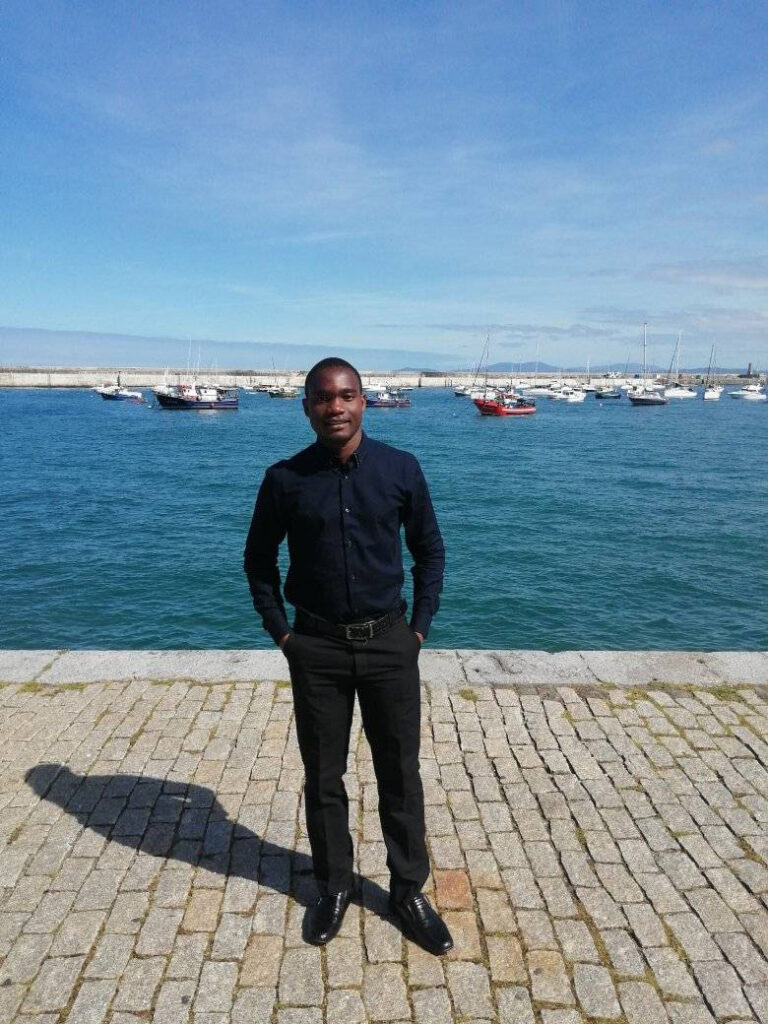
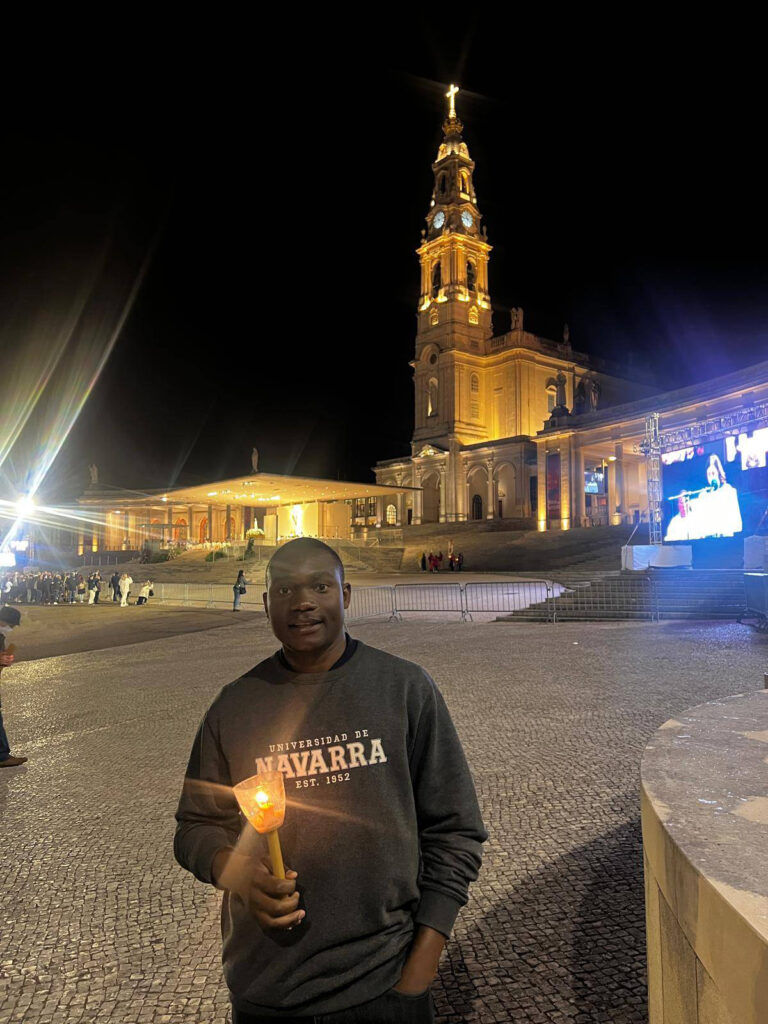
"My priestly vocation has been a true work of God."

Nataniel's vocation to the priesthood originated in the most unexpected situation, since his father belonged to the Kimbanguist religion, an African religious current originating in Angola, founded in 1921 by Simão Tocoknown as the prophet Kimbangu.

This faith combines elements of Christianity, especially Protestantism, with traditional African practices and beliefs. Kimbanguists believe in a supreme God, the importance of prophets and spiritual healing. They also promote unity, peace and social justice, and are distinguished by their emphasis on the fight against oppression and racial discrimination. Religion has a strong influence in Angola and other parts of Africa. However, a providential path led Nataniel to embrace the Catholic faith and, over the years, to feel a call to the priesthood.

Today he is in Rome, studying for his bachelor's degree in theology and living in the Sedes Sapientiae International Seminarthanks to a grant from the CARF Foundation.

Religion in the family

Nataniel is the second of five brothers and sisters, and comes from a family that is not strictly Catholic, but had a religious experience that marked his life. His father is a military man, and although he does not practice much, in his family the religion that was practiced was kimbanguista. On the other hand, his mother, Isabel, who was a hairdresser, was baptized in the Catholic Church but ended up converting to Protestantism. This was Nataniel's reality until 2012.
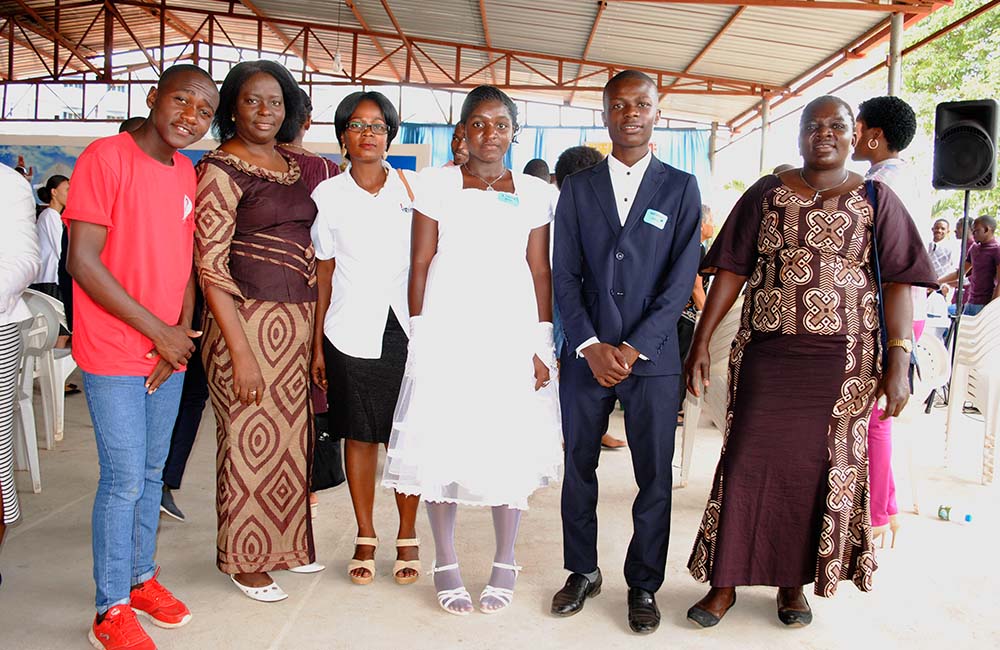
Nataniel con sus hermanas y su madre

The mother's reconversion

The change began when Nataniel's mother decided to return to the Catholic Church. "She gave us the order that we would no longer attend any other church, and we started going to church every Sunday." For Nataniel, it was a challenge. He had grown up participating in the Protestant church's Sunday school, where Bible quizzes were held, and what motivated him most to go was the chance to win prizes. Now, attending church, everything seemed strange and different. But he had no choice but to accompany his mother.

The discovery of the Catholic faith

By attending catechesis, Nataniel began to discover the teachings of the Church. He studied the Bible and Church history in greater depth, which strengthened his faith and gave new meaning to his life. In 2015, he joined the acolyte group, getting closer to the liturgy and the priest, and that same year he received baptism. "We can lose fame, youth, money, but the one thing that truly cannot be lost is Christ."
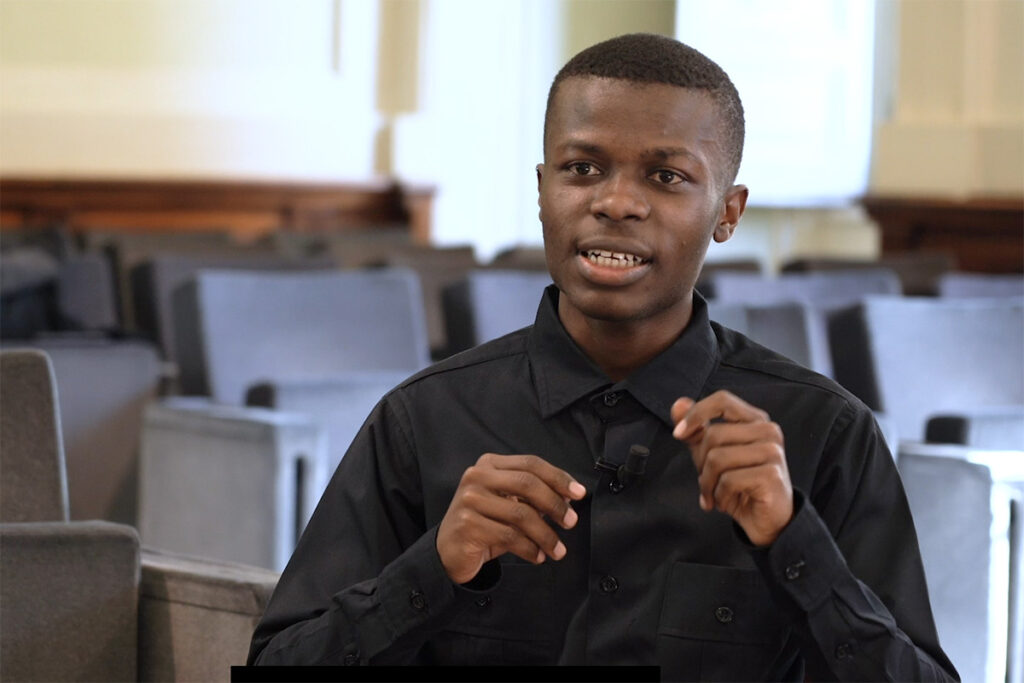
Priestly vocation

The year 2015 was key, not only because of his baptism, but also because he started high school. During that period, the idea of entering the seminary began to take shape in his heart. "Seeing the pastor carry out his ministry motivated me to follow in his footsteps. I felt in the depths of my being that my vocation was to be a priest, to give my life to the service of God and for the salvation of souls. I wanted to be an instrument of God in the midst of his people," he tells us joyfully.

The challenge of yes to Jesus

Nataniel was a bright boy in studies, he had received scholarships to study computer engineering in London or the United States, but in 2017 he makes the decision to share with his parents his desire to enter the seminary. "It was a difficult time, especially for my mother. She didn't understand why I wanted to take such a radical step in my life. For her, having her only male child take this path was hard to understand."

Over time, his parents, who had returned to the Catholic faith, began to open their hearts and understand their son's desire. Finally, in February 2018, Nataniel's parents accepted their son's decision to become a priest and on February 25 he entered the archdiocesan seminary of Luanda, a decisive step towards the dream of his vocation. "It was a moment of great joy and gratitude to God for allowing me to follow the path that I felt He had prepared for me."
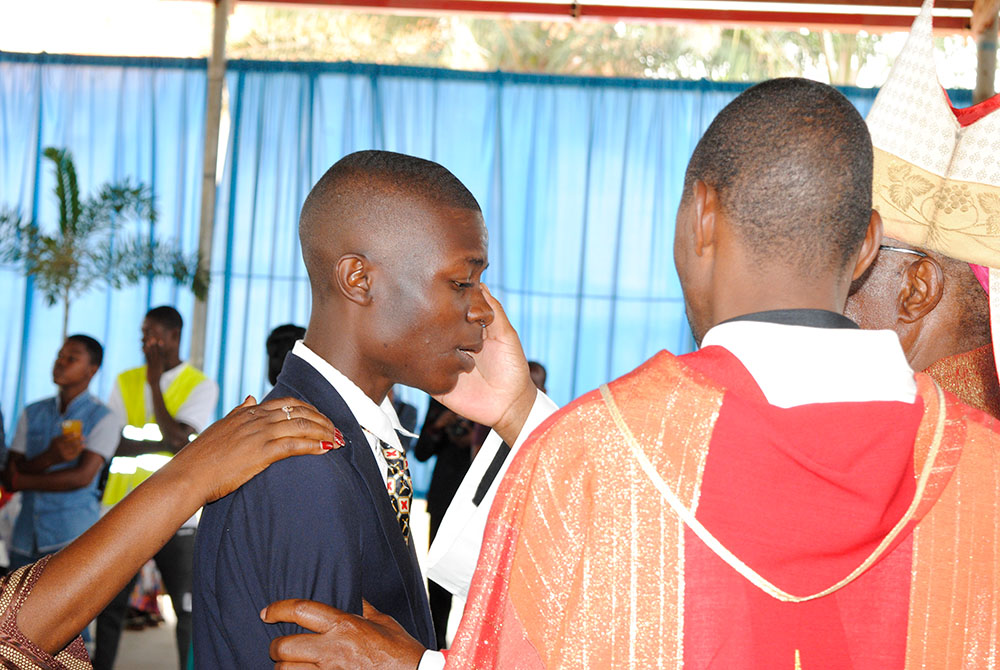
Nataniel recibiendo la bendición

A journey of faith

Today he sees how each step has led him to where he is, to this call to the priesthood that began in his heart in an unexpected way, but which has been confirmed and strengthened over the years. "My vocation was born in a diverse family context, it has been a true work of God."

He is deeply grateful to his parents for their understanding and for supporting him on this path. "My desire is to move forward, with faith and hope, dedicating my life to the service of God and his people."

Grateful to the benefactors

With this testimony, Nataniel wishes to express his deep gratitude to all the benefactors of the CARF Foundation for giving him the opportunity to continue his studies in Rome.

She is currently in her third year of Theology at the Pontifical University of the Holy Cross. "Thanks to your support, I am able to commit myself to the mission of Holy Mother Church to bring the Gospel of Our Lord Jesus Christ to all nations," he says.

"I pray every day for you so that the Lord, the Supreme and Eternal Good, from whom all blessings come, may continue to bless you and guide your steps towards the vocation to which we are all called, Holiness. Thank you very much!" he says with a smile.


Gerardo FerraraBA in History and Political Science, specializing in the Middle East.
Head of the student body at the Pontifical University of the Holy Cross in Rome.
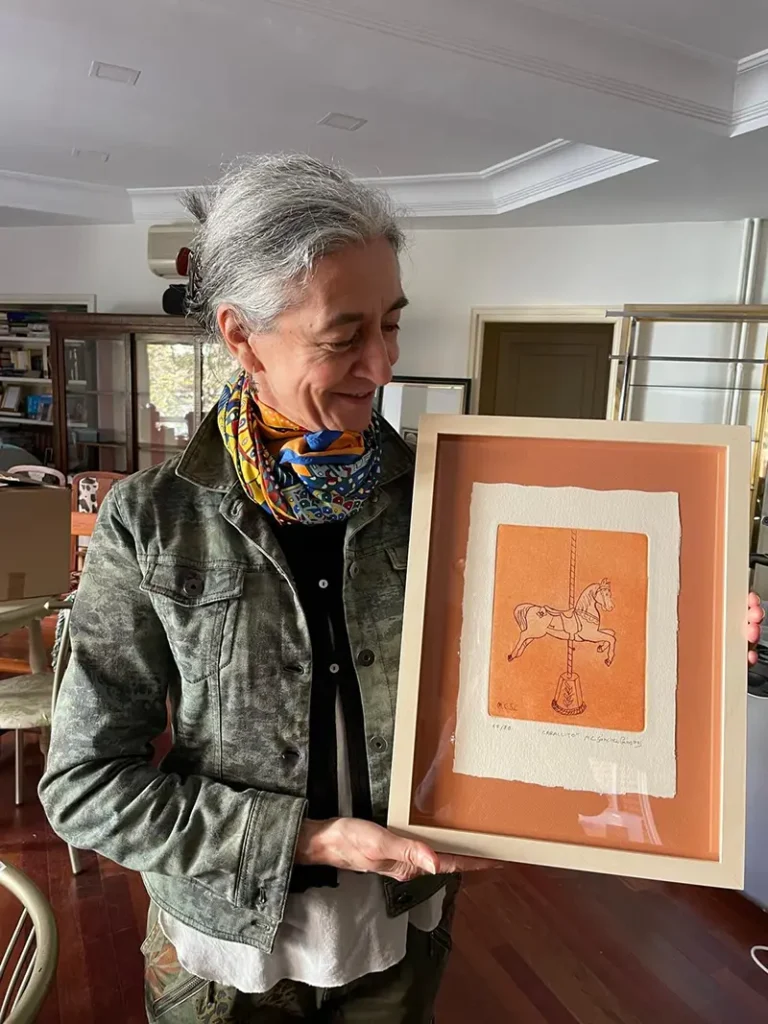
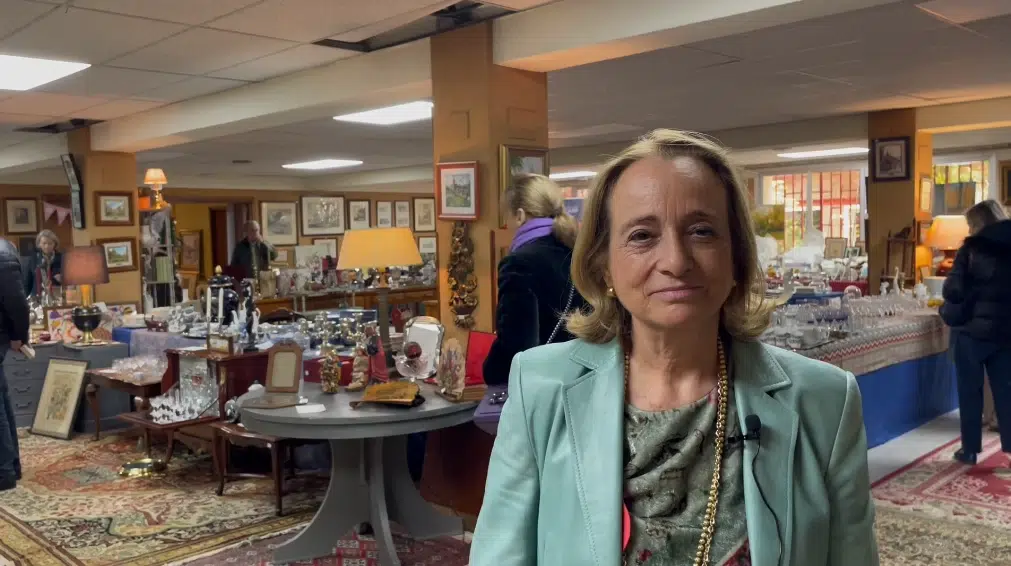
Solidarity market to support the formation of priests

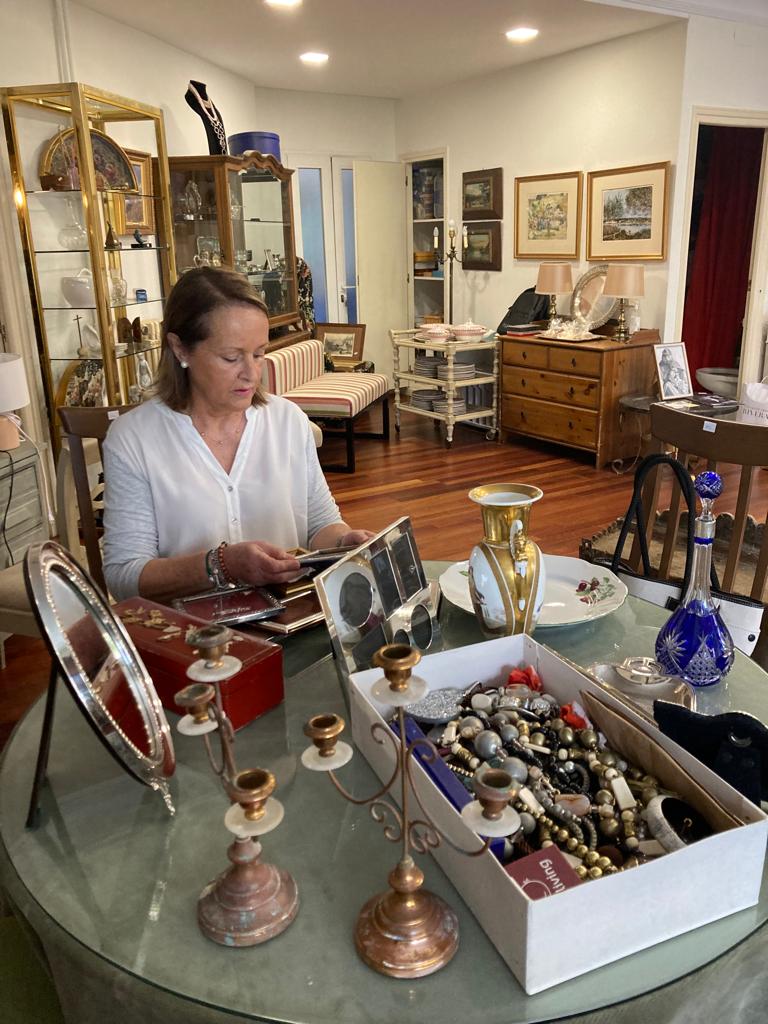
The CARF Foundation's charity flea market stirs hearts. This, at least, is what happened to Mercedes Castaño, a woman who happened to pass by the flea market by chance. She bought a raffle ticket for a print by a well-known artist. And she won. A luck that had never happened in her life. She was so excited that she wanted to learn more about the work of the CARF Foundation.

Nearly a thousand people visited the charity market

"Our guest had no idea what the CARF Foundation was or where the CARF funds were going. solidarity market. But she stopped by the store and bought a ballot. Now she is very excited and wants to know more about the destination of your small contribution: the financing of study and maintenance grants for the formation of seminarians, diocesan priests, religious men and women studying in Rome and Pamplona. And also, of course, to pay for one of our most precious icons: the sacred vessel backpacks"Carmen, one of the people in charge of the Board of Trustees of the CARF Foundation and of the charity market, tells us.

In its 28th edition, held from November 26 to 30 at the premises of the parish of St. Louis de los Franceses, at 9 Padilla Street, once again this year this flea market welcomed close to 1,000 people, and both Carmen and Rosana, presidents of the Patronato, were a bit worried about some changes that took place in the last dates of their organization.

Rosana, co-president of the Patronato de Acción Social.

50 volunteers

"We are delighted because I think that about a thousand people in total have passed at some point in the market, which this year has lasted fewer days than in previous editions. It has been a delight. In addition, we have had almost 50 volunteers, and some men too!", says Carmen.

But, above all, something that gives great satisfaction to all the people who collaborate in this charity market is that they are helping the formation of priests and seminarians.

As Rosana explains, this year they were a little worried because they had to change the days of the week on which the flea market is always organized. "It had worked very well for us to start on a Friday and finish on a Wednesday. This year, however, we opened on a Tuesday and finished on Saturday, because on Sunday the parish needed the space for their catechesis. But it was also a success. Saturday afternoon-evening, the fifty volunteers helped pick everything up. What a great help."

carmen mercadillo solidario fundacion carf carla restoy

For the formation of seminarians and priests

The charity market of the CARF Foundation, organized by the volunteers of the Patronato de Acción Social, is an annual event that is organized to raise funds for study grants for the formation of seminarians and diocesan priestsreligious men and women studying at the Pontifical University of the Holy Cross in Rome, and in the Ecclesiastical Faculties of the University of Navarra.

Every year, they offer for sale valuable objects and other more economical ones, always advised by a network of experts to help assess furniture, pictures, kitchenware, cutlery, etc. and thus set an appropriate price.

Vintage furniture and clothing

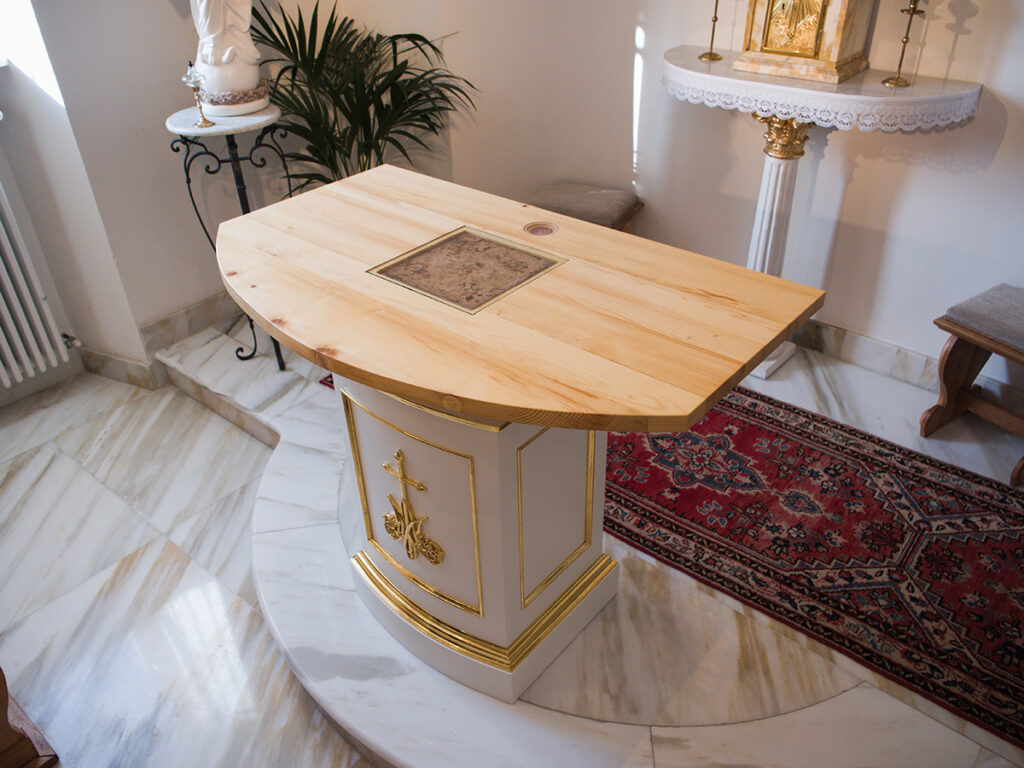
"This year has sold very well. furniture we have restored and painted thanks to a restorer who has left some beautiful wooden tables. They sold phenomenally well," says Carmen.

Vintage clothing is also a classic at the flea market. which sells very well. "But in addition to the models we put on sale, such as skirts, dresses, pants, jackets, coats, etc., we have a very good saleswoman who accompanies every lady and young person, and people are delighted. The baby clothes, hand-knitted by our collaborators, have also been a great success," says Rosana.

Influencer Carla Restoy

This year, the flea market had a very special guest: the influencer Carla Restoy, who, at only 28 years old, is revolutionizing social networks with his message about life, marriage and faith.

Carla thought the flea market was wonderful, especially because of its transcendental dimension: collaborate with study aids for the formation of priests and seminarians, as well as to defray the costs of the backpacks of sacred vessels that are given to seminarians prior to their ordination to the priesthood, when they return to their countries of origin. 

"Thank you all for contributing once again to the formation of seminarians, diocesan priests, religious men and women by buying a little something at our annual flea market. We have managed to raise about 35,000 euros. Thank you from the bottom of our hearts", concluded Carmen and Rosana, encouraging everyone not to miss the next date of the charity market.


Marta Santín, Journalist specializing in religious information

Paul from Malawi: "we need well-trained priests to help everyone".

The great cultural richness of Malawi is countered by the scarcity of means, especially in the diocese of Karonga, a young and small diocese in need of many priests. This is Paul's dream: to be well trained in Pamplona in order to return and serve effectively the diocesan church of his country.

This young African, 23 years old, resides in the Bidasoa international seminar and is studying theology at the University of Ecclesiastical Faculties of the University of Navarre. The bishop of the diocese of Karonga, in the north of Malawi, has sent him to Pamplona to receive a solid and integral formation so that, when he returns, he can put all the preparation he has acquired to work in the Church in his country.

Need for priests in Malawi

"The need of my diocese is to have more priests. There are very few of us and it is a young, new and small diocese, founded in 2010," Paul explains. For this reason, he is very excited about the complete preparation he is receiving in Pamplona. 

Your diocese needs not only well-trained priests, but also more missionaries to help the few who are not yet in the diocese. diocesan priestsThe diocese has only 19 diocesan priests and 28 seminarians.

Living conditions in Malawi

In his diocese there is also a shortage of health and education professionals. Paul explains, "We certainly need the help of these health facilities to improve the living conditions of Christians, but also of the entire population of the diocese. But we are grateful that the diocese has done all it can to help with new schools and some health centers, even though the demand is still very high." 

Had it not been for the help of the CARF Foundation and benefactors, Paul would not have had the opportunity to receive a complete formation as a priest that will do so much good for his people.

Coexistence between Christians, Muslims and African traditions

Certainly, your diocese has scarce economic means, but a great wealth in terms of coexistence. 

"Catholics in Malawi live in peace, celebrate their faith joyfully and demonstrate it culturally. Malawi is a very peaceful country, we live in harmony and cooperation with other Christians, Muslims and African traditions without killing each other. Religious expression is not a problem," he says happily. 

In this African country, Catholics have a higher percentage (17.2 %) than other Christian denominations; it should be remembered that there are many other groups of Christian confessions, because Great Britain colonized the country and the first Christians who evangelized were Protestants from England and Scotland. A few years later, the Catholic White Fathers from France went as missionaries, when Protestantism had already spread in the country.

The example of priests

The example of Catholic priests and missionaries in Malawi had a positive influence on Paul, as well as the strength of his environment. He comes from a large family of seven siblings with strong Catholic roots: four boys and three girls. Paul is the sixth. 

The departure of his mother to Heaven in 2014, when he was only 13 years old, caused him great sorrow. But this grief turned into hope and faith thanks to the support of her family and religious, an example that was decisive in helping her to move forward and shape her vocation.

"Lord, let me try."

He began to discern his vocation to the priesthood as a child, when he participated in the activities that took place in his school, in the minor seminary. But he did not know if he could carry out such a mission. 

"As a child I thought I could live like them, like the priests who took care of me and educated me. And I told the Lord: let me try, I'm going to give everything so that one day I can be a priest," he says. 
Finally, he entered the major seminary at the age of 19. In this vocational journey that he has undertaken, he hopes to alleviate the need of his diocese for well-trained priests, especially to reach out to the youth.

Reaching out to young people

"Young people are very influential in spreading the Gospel through the media, but also in the annual youth meetings and conferences that are organized to keep the faith and spread it; they gather in large numbers, which is very promising," Paul Benson proudly expresses. 

For him, young priests are able to understand what young people need by developing new approaches to explaining Catholic doctrine, giving arguments and thus being able to live and witness to the Catholic faith in Malawi.

What Europeans should learn from Africans

Africa has great challenges, but so does Europe, because Europeans must learn great virtues from African Catholics: "audacity and resilience to resist and keep the faith, the tradition itself; to proclaim the truth and help this broken generation, where many things are happening contrary to our Christian customs, among them, many sexual immoralities," Paul laments.

Thanks to the CARF Foundation

This is one of the reasons why he believes that the formation of a priest is paramount: "We must help everyone, those who believe and those who don't, those of one class and those of another. That is why we need priests who are well trained". 

With enthusiasm and joy he thanks the CARF Foundation for all it does for his academic studies. "Our formation is academic, spiritual and pastoral, and I am very happy for your help."


Marta Santín, journalist specializing in religion.


Benedikt's vocation: from carpenter to seminarian

The dream of his vocation has taken him to Rome to be trained as a priest at the Pontifical University of the Holy Cross and is in the first year of the first cycle of Theology.

Benedikt Aicher was born on April 26, 1999 in Rosenheim, Bavaria, Germany, about 90 kilometers from Marktl am Inn, where Josef Ratzinger, who later became Pope Benedict (Benedikt in German) XVI, was born.

This young German is based in Rome and is part of the institute. Work of Jesus High PriestThe FMA, a Catholic community dedicated principally to the sanctification of priests and the promotion of a life of service, prayer and apostolate. Its charism is centered on consecration to the Immaculate Heart of Mary and the pursuit of Christian perfection through the evangelical counsels of poverty, chastity and obedience.

A childhood marked by faith and family

Benedikt Aicher grew up with his two brothers in a small village in the Bavarian Alps, where family work, prayer and Christian values were fundamental. As a child, his parents taught him the importance of sacrifice and dedication to others, laying the foundations for a vocation that would later lead him to want to become a priest.

"Our parents taught us one thing in particular: to make sacrifices out of love for others. There was always a lot of work, so we soon had to help out. Since we had no sisters, housework was also a matter of course for us," she tells us.

The influence of his grandfather and Benedict XVI

Benedikt's Catholic heritage extends to his grandfather, who studied alongside St. John Paul II's successor, Pope Benedict XVI. This family legacy, along with the traditions of the Church, created an environment conducive for Benedikt to cultivate his faith from an early age.

"My parents received a profound Catholic influence from their own parents and from the Church. My father spent many years in a minor seminary. My grandfather also attended the seminary, along with Joseph Ratzinger, with the sincere desire to become a priest, but World War II interrupted his formation. When he returned from prison in France, he wanted to continue his studies, but because of what he had lived through, he could no longer find the peace he needed to study," Benedikt tells us.

From an early age, he and his siblings attended Mass every Sunday and were introduced by their parents to Catholic traditions. Thus, at home, they created an environment conducive to God's work.

"After my First Communion I told my mother: now I'll start being an altar boy and then I'll enter a monastery!" he tells us with a smile.

Discovering his vocation in the midst of doubts and dreams

Although Benedikt dreamed of becoming a carpenter, his heart was won over by God's call to the priesthood. During his youth, the Virgin Mary played a central role in guiding him to a life of prayer and dedication. At the age of fifteen, after some resistance, he finally accepted his vocation, taking concrete steps to enter the seminary.

"My vocation to the priesthood came as a child, but I also dreamed of becoming a carpenter. My uncle, who unfortunately is now in Heaven, was a Benedictine friar and worked as a carpenter in the monastery. When I was a child I wanted to train there with him, but with time this desire disappeared.

During his time at school, he was a very shy boy. At home, on the other hand, he made a lot of fuss. High school took him out of town, to the city. "My school still had Christian values. That, along with the protection of the Virgin Mary, saved me from many things. In fact, we never left home without praying with our mother before the statue of the Virgin and making the sign of the cross with holy water."

Although carpentry was something that appealed to Benedikt, there was another path for him. "I always liked to participate in the altar boys' group. It was my preference all the way. After a few years, my brothers and I became senior altar servers and we would lead the group according to our abilities. We also helped in other parish activities, such as Confirmation preparation. For many years, I played the tenor horn in the marching band. Halfinger Bläserkreis".

Discernment of vocation

The Virgin Mary always wanted to bring Jesus to him. "At the age of twelve, we began attending monthly Legionaries of Christ conferences, where we found spiritual nourishment. When I was fourteen, my brothers and I began to participate in a youth camp every two months, also spiritually accompanied by the Legionaries of Christ. Eventually, I became part of the organizing team, where I was mainly in charge of the economic tasks together with my older brother".

This period had a great impact on his faith life, as he was led to the Eucharist and Confession. At the age of fifteen he again felt the call to the priesthood. "It was brief and I rejected it firmly. In the following years, the intervals in which I felt this call became shorter and shorter and more intense."

The prayer groups he attended told him to pray for his future wife. Benedikt had not yet accepted his vocation, but he could not pray without adding: "And if you have another way for me, grant someone else a good wife," he says joyfully.

Jesus conquered his heart, and Benedikt gradually embraced that call to the priesthood.

The key role of the CARF Foundation in his formation as a seminarian

Today, Benedikt is a seminarian and studies theology at the Pontifical University of the Holy Cross thanks to the support of the CARF Foundation. With the help of benefactors, Benedikt has not only been able to receive quality training, but has also felt the spiritual and material support necessary to continue his mission of serving the Church.

Benedikt Aicher's story is a living example of how the faith, work and generosity of CARF benefactors can transform lives and strengthen the Church.


Gerardo Ferrara
BA in History and Political Science, specializing in the Middle East.
Head of the student body at the Pontifical University of the Holy Cross in Rome.
Advent: a time of hope and preparation. 6 keys to live it

The season of Advent marks the four weeks leading up to the ChristmasIt is an opportunity to reflect, reconnect with our faith and live the expectation of Christ made man with an open heart.

But how can we truly take advantage of this time without getting carried away by the distractions of consumerism, social commitments or everyday worries? Below, we share with you some keys to live Advent with depth and meaning.

The meaning of Advent

The word Advent comes from the Latin adventuswhich means coming. During these weeks, the Church invites us to prepare our hearts for two important events:

Advent is not only a countdown to Christmas, but a call to conversion and spiritual preparation. This is a time to pause, meditate and reorient our lives towards God.

Keys to live Advent with faith

1. Set aside a daily time for prayer

Take a few minutes each day to be alone with God. You can read the readings of the day, meditate on the biblical passages that announce the coming of Jesus, or pray the Holy Rosary. If you have an Advent calendar, use it to deepen the daily liturgy.

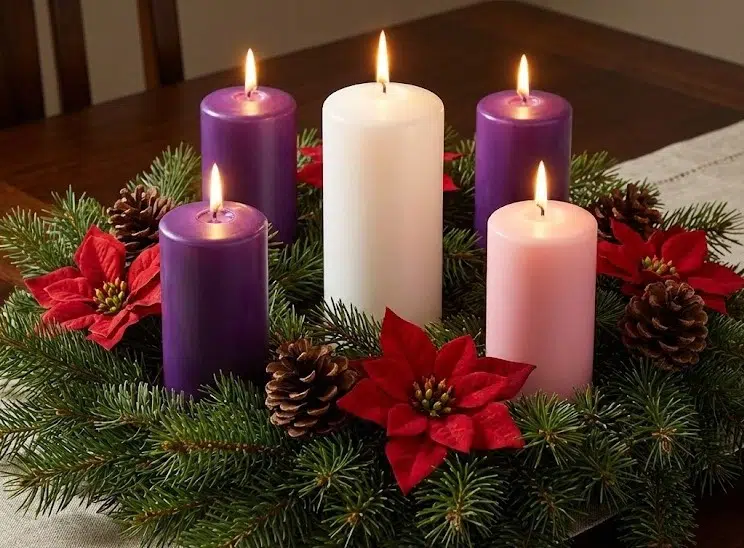
TipCreate a space at home for prayer with a candle or a picture of Jesus' birth. Lighting a candle each week of Advent can help you remember the meaning of waiting. Remember the Advent wreath.

2. Practice charity

Advent is a time to look beyond ourselves and share with others, especially those who need it most. Consider how you can be an instrument of love:

3. Live the liturgy

Attending Sunday Mass is essential to nourish our faith. During this time, pay special attention to the liturgical signs: the readings, the prayers and the color purple, which symbolizes penance and hope.

4. Reduce material distractions

It's easy to get caught up in the shopping, decorations or holiday dinners. While these elements have their place, make sure you don't lose sight of the true meaning of this time.

5. Approach the sacrament of Confession.

Advent is a perfect time to reconcile ourselves with God. Examine your conscience and receive the sacrament of Confession. Cleansing our hearts helps us welcome the Baby Jesus with peace and joy.

6. Cultivate hope

Advent reminds us that waiting makes sense because we are waiting for something great: God's love made flesh. Even in the midst of difficulties, this is an opportunity to renew our hope and trust that God never abandons us.

TipReflects on the virtues of Mary and St. Joseph, read about the characters of Bethlehem. They lived the wait with faith and humility. How can you imitate their example?

Conclusion

Advent is a time to pause and look at what is essential. Beyond lights, gifts and celebrations, we are invited to prepare our hearts for an encounter with Christ. Let this time transform us, bring us closer to God and make us true witnesses of his love.

May this Advent be for you and your family a journey filled with faith, hope, and charity, so that you may truly experience Christmas and the birth of Jesus!


Religious persecution and intolerance in the 21st century

The persecution The religious persecution suffered by many Christians has been provoked by public authorities, by non-Christian groups or by other Christians of different faiths throughout the history of the world. Christianity.

Perhaps part of the answer lies in the following reflections:

Pursuit

Persecutions of any kind are deplorable acts, especially those of a religious nature, because they limit the freedom of human beings in their relationship with God. Unfortunately, universal history has shown us that religious persecutions have their origin in ancient times.

In the case of the recent history of Spain, cited as a reference in numerous works, a detailed study published in 1961 by Antonio Montero Moreno, identified a total of 6,832 religious victims murdered in the Republican territory, of which 13 were bishops; 4,184, diocesan priests; 2,365, religious; and 283, nuns. In a study published in 2001, the researcher and priest Ángel David Martín Rubio lowered the total number of members of the clergy murdered during this period in the Republican zone to 6,733.

Intolerance

We know that intolerance is the inability to accept other people's ideas, beliefs or practices when they are different from one's own and that the intolerant person is characterized by maintaining his or her opinion, without paying attention to others.

We also know that when the emotional or passionate component is added, intolerance becomes fanaticism or that, when there is an excessive attachment to following fundamental texts to the letter out of their context, we fall into fundamentalism.

As human attitudes, all of them violate people's dignity, with the most common reasons being race, sex or religion.

Finally, we know that tolerance is an acquired habit and, therefore, a competence that humans can develop voluntarily, since our natural instinct would lead us down the path of intolerance and aggression.

We could deduce up to this point that the origin of the problem is personalThe "own" of each one of us, and that it depends on the education received in our family, social and cultural environment.

Francis also asked that "no one be considered a second-class citizen," especially Christians, who represent 1% of the population in the Muslim country, and the Yazidis, a minority persecuted by the Islamic State.

Consequences of religious persecution and intolerance 

According to the latest report of Aid to the Church in Need, presented at the end of 2014, a total of 55 countries in the world (28%), have suffered in the last two years a marked worsening or deterioration of religious freedom.

In 14 of the 20 countries that suffer persecution for professing the Catholic religion, it is linked to the islamism In the other 6, the persecution is linked to authoritarian regimes, most of them communist.

According to the report of the NGO Open Door (World Watch List WWL Report), more than 100 million Christians are persecuted in the world today.

Spain has had its own experience of this phenomenon: 1,523 martyrs beatified as a result of the religious intolerance of the 1930s, of whom 11 have already been canonized.

persecución religiosa siglo xxi

Warnings

Two observations are in order:

a) Pope Francis does so on the "false tolerance of those who want to force others to live privately and not publicly the ethical principles consistent with the truth found". (20 Jun.14).

In a word, he warns against wolves in sheep's clothing, who propose to remove crucifixes or religious symbols from public life or who, in the name of a false tolerance with other religions, promote the expropriation of the Cathedral of Cordoba, to give a simple example of the present time.

b) It is also good to warn about the false accusations of discrimination that the architects of the fallacy promote when they put on the same level of equality the dignity of the person and his behavior, accusing as discriminatory the censure that can be made of certain behaviors.

To exemplify this phenomenon we can say that when a child is censured for going out drinking and coming back in the early hours of the morning, his personal dignity is not being violated nor is he being discriminated against, only his behavior, which is educable and modifiable, is being censured.

If promiscuous behavior is censured, it is also not discriminated against because this behavior can be modified by the child, keeping intact his or her personal dignity, which must be treated with the utmost charity and understanding.

Action plan

Pope Francis stresses that "the problem of intolerance must be faced as a whole". "the good of the whole society is at risk and we all have to feel involved". (Oct 2013).

In a word, we cannot stand idly by, we have to act, we have to fight, with the instruments available, which for a Christian are, among others, prayer, being committed to just causes and active participation, otherwise the place, our place, will be taken by others.