On the day of the Our Lady of the RosaryOn October 7, the Church invites us to do something very special: to pray together the Holy Rosary. This prayer not only connects us with the most important moments of Jesus' life, but also gives us the opportunity to pray for those who need it most.
From the CARF Foundation we would like to invite everyone to use this powerful prayer, which St. Josemaría defined in The Way, in point 558, as follows: "The Holy Rosary is a powerful weapon. Use it with confidence and you will be amazed at the results.
The invitation focuses on uniting the Virgin Mary with priests and future vocations. By praying the Holy Rosary, we not only pray for our own needs and those of others, but we support those who give their lives to God. Today, more than ever, your prayer can be the impetus that future diocesan priests and religious need to advance in their formation journey.
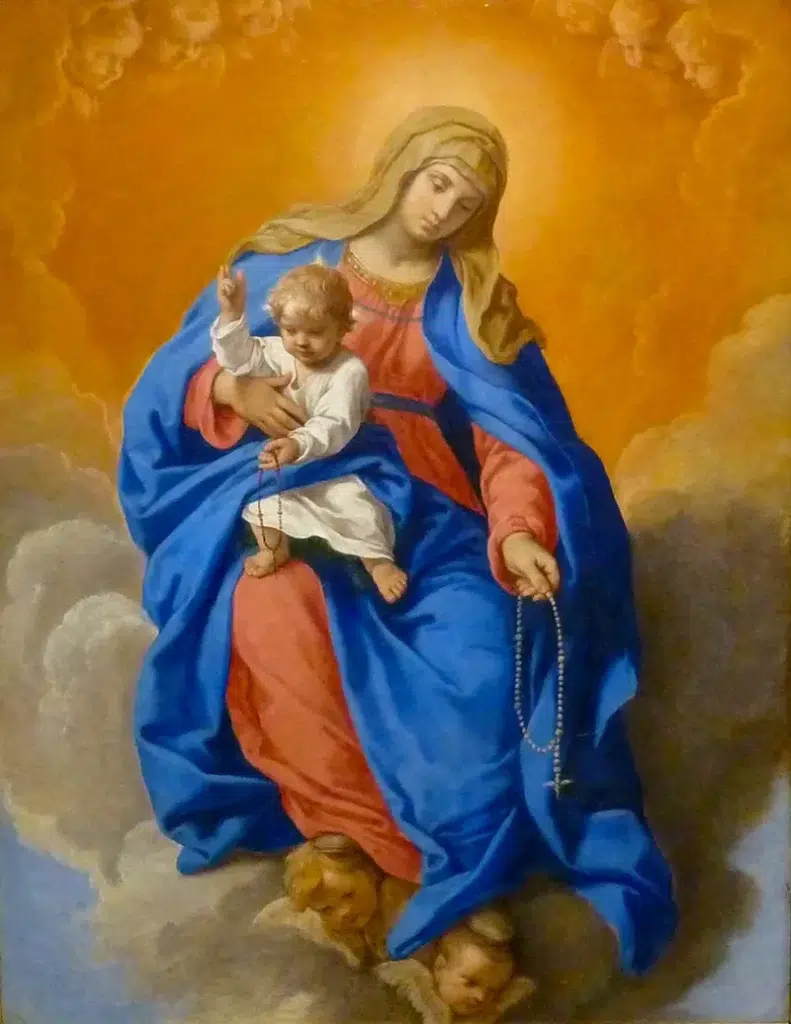
Origin of the Virgin of the Rosary
The Feast of the Virgin of the Rosary has its origins in the 16th century, linked to the Battle of Lepanto (October 7, 1571). At that time, Pope St. Pius V asked Christians to pray the Rosary to ask for the intercession of the Virgin Mary against the threat of the Ottoman Empire. After the victory of the Christian fleet, the Church attributed this triumph to the protection of the Virgin and established this feast in her honor. Initially called the Feast of Our Lady of Victories, it was later renamed by Pope Gregory XIII in 1573 as the Feast of the Virgin of the Rosary, reminding us of the power of this prayer and the constant protection of Mary.
On this significant date, the CARF Foundation invites you to join in prayer, praying the Holy Rosary for our priests and vocations. We ask Our Lady to protect and guide those who have generously responded to the call to serve God and the Church. As Pope Francis reminds us, "the Rosary is the prayer of the humble, of those who trust fully in the love of the Mother of God."
By praying the Rosary, we feel that we can come closer to the life of Jesus through Marywhose intercession is a way full of love and tenderness. She, with her maternal care, always guides us to her Son, listening to our petitions and presenting them before Him.
Liturgical and devotional evolution
The celebration was extended to the whole Church by Pope Clement XI in 1716 and definitively fixed on October 7 by St. Pius X in 1913. The Rosary was consolidated as a popular prayer, promoted by various religious orders and popes over the centuries, highlighting its role in the meditation of the mysteries of the life of Christ and the intercession of the Virgin Mary.
Popular and cultural events
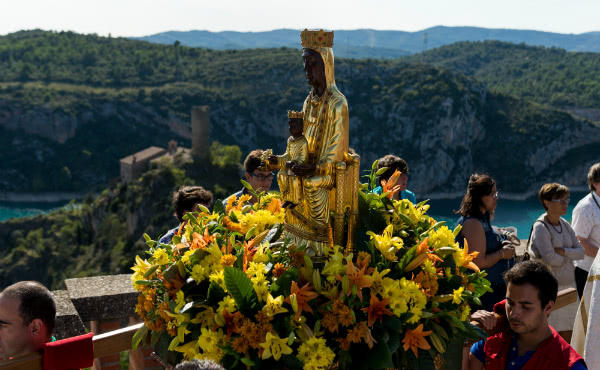
Nowadays, the feast of the Virgin of the Rosary is celebrated in various parts of the world with processions, solemn masses and cultural activities. In Spain, towns such as Torre Pacheco and Soto del Real commemorate this date with religious and festive events that reflect popular devotion. These celebrations range from parades and concerts to solidarity and cultural activities, showing the validity and deep-rootedness of this Marian tradition.
The Virgin of the Rosary is also the patron saint of numerous localities in Spain, such as Algámitas, Brenes, Burguillos, El Cuervo, Fuentes de Andalucía, La Lantejuela, Lora de Estepa, El Madroño, Marchena, Martín de la Jara, Los Molares, Las Pajanosas, El Rubio, Sanlúcar la Mayor, Santiponce, El Saucejo and Villanueva de San Juan. In these communities, devotion is manifested through brotherhoods, street altarpieces and other popular expressions that keep the tradition of the Rosary alive.
Spiritual significance
The feast of Our Lady of the Rosary not only commemorates a historic victory, but also invites the faithful to deepen their spiritual life through prayer and meditation. The Rosary is a tool for contemplating the mysteries of the Christian faith and strengthening one's personal relationship with God and the Virgin Mary.
In addition, this devotion has been a source of inspiration and consolation in times of difficulty, reminding believers of the importance of faith and constant prayer. The Virgin of the Rosary is seen as a guide and protector, interceding for the needs of the faithful and accompanying them on their spiritual journey.
Spiritual reflection
The feast of Our Lady of the Rosary invites the faithful to deepen their prayer and meditation on the mysteries of the faith. The Rosary, as a spiritual tool, offers a way to contemplate the life of Christ and to seek Mary's intercession for personal and community needs. In a world marked by challenges and changes, this devotion offers consolation and spiritual guidance.
In conclusion, the October 7 celebration in honor of Our Lady of the Rosary is an occasion to renew faith, remember history and strengthen community through prayer and devotion. It is a witness to Mary's enduring influence in the lives of believers and her role as intercessor and spiritual guide.
October 12, Virgen del Pilar of Zaragoza: what do we celebrate?
Patroness of the Hispanidad, of the city of Zaragoza and also of Mail and the Civil Guard. Thousands of pilgrims of all nationalities come to pray to the Virgin of Pilar in Zaragoza, where the Cathedral-Basilica is located.
Zaragoza, throughout the year, but especially during the festivities of the Pilar, is the city from where the national and universal union arises. Since Columbus opened the doors to the New World in 1492, Christian values have spread to the nations of America, Africa and Asia, now united by the solid pillar of a common past, a common language and a rich and diverse culture.
What is the history of the Virgen del Pilar?
As recorded in 13th century documents preserved in the cathedral of Saragossa, the story goes back to the period immediately following the Ascension.
In the year 40 AD, the Apostles had begun to fulfill the mission of preaching the Gospel. Each one seeking a part of the world.
The documents state that Santiago, "passing through Asturias, arrived with his new disciples through Galicia and Castile, to Aragon, the territory called Celtiberia, where the city of Zaragoza is located, on the banks of the Ebro.
The Apostle was seeing that that civilization was incredibly hard. It was very difficult to make the words of the Gospel reach those people, so James began to get discouraged when he saw that his efforts were not bearing fruit.
But on the night of January 2, 40 AD, Santiago, who was resting with his disciples by the river Ebro, in the Roman Caesaraugusta, which was the name given by Rome to the present Zaragoza, suddenly heard the voices of angels singing "Ave, Maria, gratia plena" and the Virgin appeared standing on a marble pillar".
The Blessed Virginasked the Apostle to build him a church there, with the altar around the pillar where he was standing, and promised that he would "This place will remain until the end of time so that the virtue of God may work wonders and marvels through my intercession with those who in their needs implore my patronage".
The Virgin disappeared and the pillar remained there. The Apostle James and the eight witnesses began to build a church on that site. But before it was finished, James ordained one of his disciples as a priest to serve it, consecrated it and gave it the title of Santa Maria del Pilar, before returning to Judea. This was the first church dedicated in honor of the Blessed Virgin.
Years later...
Pope Clement XII is aware of this devotion and establishes October 12 as the day on which the feast of the Virgin of the Pilar is celebrated.
On October 12, 1492, Christopher Columbus set his first foot in America and thus it became clear that there is a world beyond Hispania. For this reason, Our Lady of the Pillar is entrusted with the Hispanic world, because the evangelization of the new lands was placed under her mantle.
The devotion of the people is so deep among the Spaniards, and from such remote times, that the Holy See allowed the establishment of the Office of the Pillar in which the apparition of the Virgin is consigned as "an ancient and pious belief".
The city of Zaragoza and the basilica of Nuestra Señora del Pilar, its patron saint
On the banks of the Ebro River in Zaragoza stands the Basilica del Pilar. Its construction began in Renaissance times, it goes through the Baroque period and ends, in the 18th century, with neoclassical solutions.
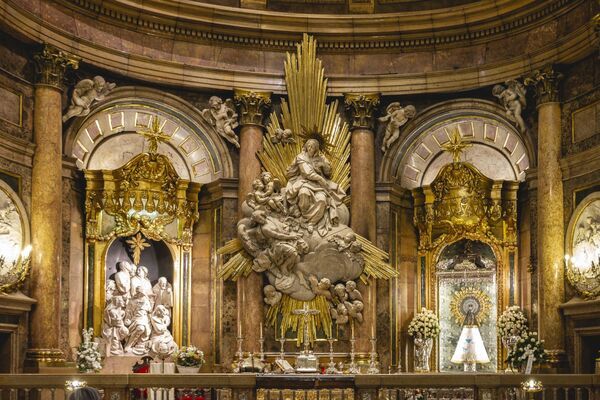
Inside the basilica is the Santa Capilla de Nuestra Señora del Pilar, a magnificent case that encloses the pillar where the Virgin of Pilar appeared to the Apostle Santiago and which visitors have venerated over the centuries. This pillar is covered in bronze and silver, and holds a statuette representing the Virgin of Pilar, with an imposing mantle and the child Jesus in her arms.
The image of the Virgin
The carving of the Virgin does not reach forty centimeters. Its lines are late Gothic, and from the way the tunic is buttoned, the belt with its buckle, the high waist and the shoes, it could be dated to the 15th century.
The figure of the Child holds a little bird in one hand and with the other hand he holds tightly to his Mother's mantle. It can be said that it does not follow the sculptural style of the Virgin, although it completes it.
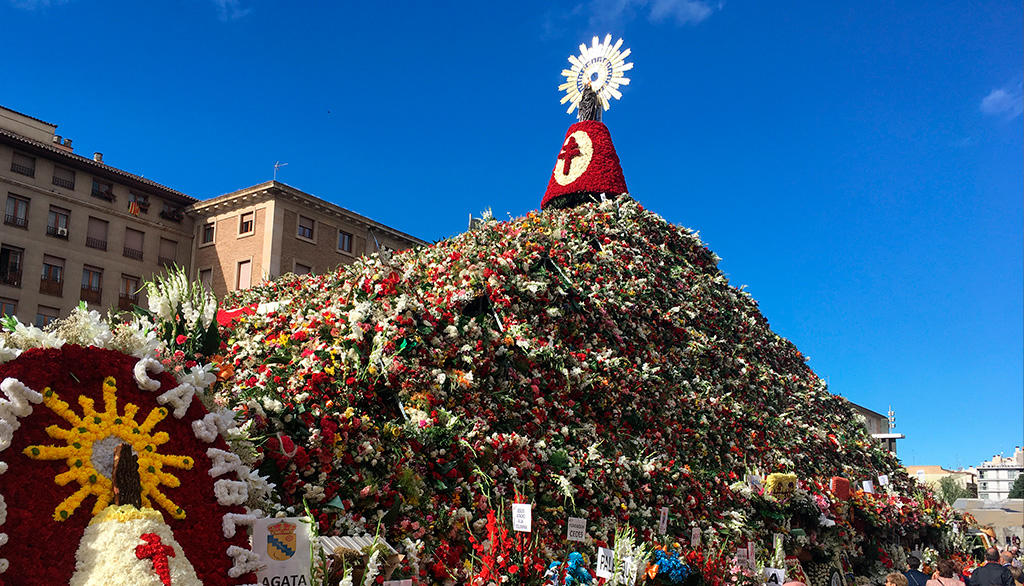
The whole is based on the Pilar, the smooth column of jasper covered with carved silver that except for the 2nd, 12th and 20th of each month, the Virgin of the Pillar, is not covered with mantle.
Some curiosities:
On the current importance of the Basilica
The Basilica of Our Lady of the Pilar in Zaragoza is the most visited monument in Spain in recent years pre-pandemic. The Basilica del Pilar is not only the main tourist attraction of Zaragoza and the icon of the city, but also the first Marian shrine in the world and an important pilgrimage destination, millions of people visit it annually.
It is a Basilica and also a Cathedral. Zaragoza was the first city in the world to have two cathedrals, the first, from the early twelfth century when the troops of Alfonso the Battler conquered the city, the second the Basilica del Pilar, since 1676 no less.
You can climb one of the four towers, for only 3 €. The elevator reaches 63 meters high and you can enjoy the best panoramic views of the city of Zaragoza from the viewpoint of one of the four towers of the Basilica of Pilar. You can also contemplate from there the majesty of the Ebro River and the Pyrenees. In addition, you can also access the highest part of the towers (which is about 80 meters high) after climbing a few steps.
From the history of the basilica of the Virgen del Pilar
In August 1936 the Basilica of Nuestra Señora del Pilar was bombed. During the Spanish Civil War by a Republican airplane, there were 4 bombs, one fell on the Ebro, another on the Plaza del Pilar and two inside the temple without any of them exploding or causing serious damage. Two of these bombs are exposed in the pillars of the temple and the hole, in the shape of a cross, left by the one that fell in the square was filled with marble.
On the artistic and cultural value of the Basilica of Our Lady of the Pillar.
Goya painted the dome of the basilica of the Virgen del Pilar in only 44 days.
The first Spanish film in history was shot at the Pilar in 1898.
The Basilica del Pilar is the only Christian building in the world with Taoist symbology. These are the symbols similar to those used in traditional Chinese medicine that adorn some parts of the temple and that feed the theory of Taoist influence in El Pilar. The Jesuit monks returned to Zaragoza after a period as missionaries in China and this may be their explanation.
"In those years, I entrusted my prayer to a simple image of the Virgin of Pilar, so that the Lord would grant me to understand what my soul was already feeling. Domina! -I used to say to her in Latin terms, not precisely classical, but embellished by affection.-I am not a woman, ut sit: Madam, let it be of me what God wants me to be.
St. Josemaría.
Our Lady of the Pillar in the life of St. Josemaria
In the childhood of St. Joseph Mary the Virgin of the Pillar has been a great companion and support. His parents, Aragonese by birth, instilled his devotion in him since he was a child. And this devotion accompanied him until the end of his life.
In the last years of his life, he was accompanied by a small image of the Virgin of Pilar that he kissed every morning when he woke up; and in his workroom, he kept another life-size representation of the Virgin of Pilar.
During the years he spent in Zaragoza, both in the seminary and studying law, his visits to the Virgin were daily. "As I had good friendships with several of the clergymen who looked after the basilica, one day I was able to stay in the church after the doors were closed. I made my way to the Virgin, with the complicity of one of those good priests now deceased. I climbed the few stairs that the children know so well and, approaching, I kissed the image of Our Mother. I knew that this was not the custom, that kissing the mantle was allowed exclusively to the children and the authorities (...)
(...)However, I was and I am sure that my Mother of the Pillar was happy that I skipped for once the established customs in her cathedral. I continue to treat her with filial love. With the same faith with which I invoked her in those times, around the 1920s, when the Lord made me guess what he expected of me: with that same faith I invoke her now (...). Under her protection, I remain always happy and secure". That prayer before Our Lady of the Pillar, asking her to see and be what God wanted for him, prepared the foundation of Opus Dei.
Domina, ut sit! Madam, let it be that... which you want
St. Josemaría celebrated his first solemn Mass in the chapel of El Pilar in Saragossa. When he moved to Madrid and then to Rome, he continued to visit Our Lady whenever he could. The last time was on April 7, 1970.
On June 23, 1992, after the recently celebrated beatification of the Founder of Opus Dei, the then prelate of the Work, Don Álvaro del Portillo, offered a mantle to Our Lady of the Pillar.
On the occasion of this feast, we offer a prayer to ask for her intercession: Blessed Virgin of the Pillar, pray for the Pope and the bishops, for priests and for all Christians, that we may be worthy to attain the promises of Our Lord Jesus Christ. Amen!
At the feet of the Virgin
"Now we understand the profound meaning of the Pillar. It is not, nor has it ever been, an occasion for sterile sentimentalism: it establishes a firm foundation on which a real and solid norm of Christian conduct is based. At the Pillar, as at Fatima and Lourdes, at Einsiedeln and Loreto, at the Villa de Guadalupe, and in those thousands of places that Christian piety has built and continues to build for Mary, the children of God are educated in the faith.
History takes us back to the apostolic beginnings, when evangelization, the proclamation of the Good News, began. We are still in that era. For the greatness and eternity of our Lord, two thousand years are nothing. James, Paul, John and Andrew and the other apostles walk with us. Peter sits in Rome, with the watchful duty of confirming all in the obedience of faith. Closing our eyes, we relive the scene recounted to us, as in a recent letter, by St. Luke: all the disciples, animated by the same spirit, persevered together in prayer, with Mary, the mother of Jesus," says St. Josemaría.
Our Lady of the Pillar is a sign of strength in faith, love and hope. With Mary, in the cenacle, we receive the Holy Spirit. He will not abandon his Church. Our Lady will multiply the number of Christians on earth, convinced that it is worthwhile to give one's life for the Love of God.
With the collaboration of: OpusDei.org
Pope Francis: dialogue and collaboration among believers
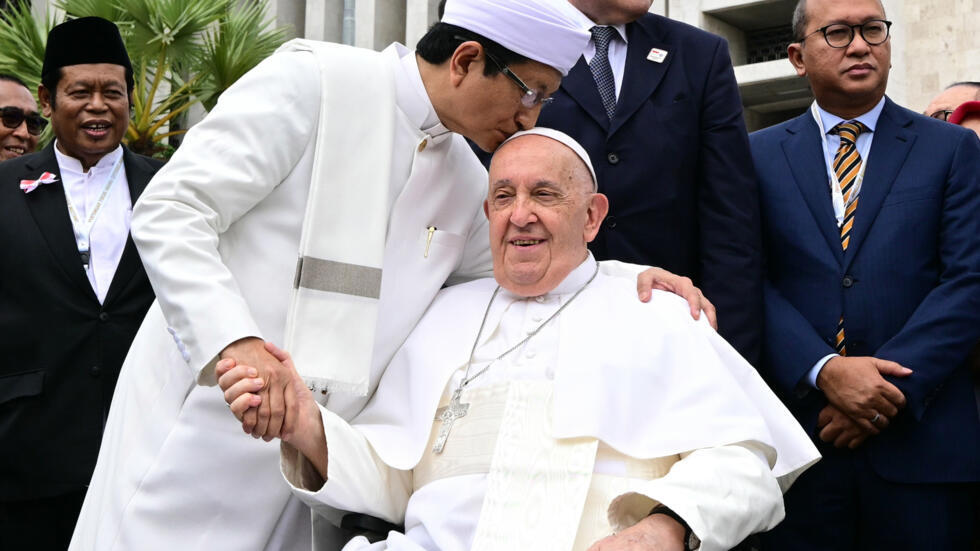
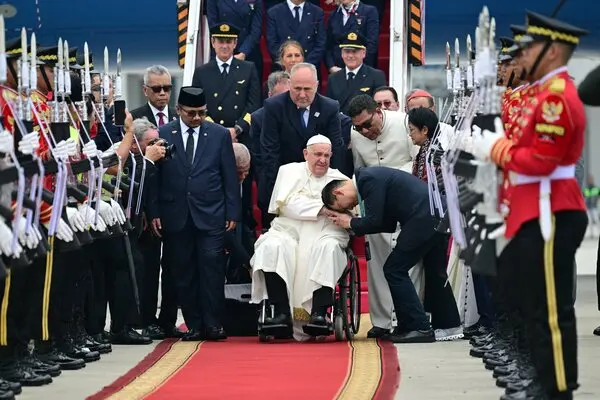
During his apostolic visit to Asia and Oceania, Pope Francis held an interreligious meeting in Jakarta, Indonesia (a country with a large Muslim majority, where there are only 10 % of Christians and 3 % of Catholics), in the Istiqlal Mosque (cf. Speech 5-IX-2024).
The building was designed by a Christian architect and is linked to the Catholic Cathedral of St. Mary of the Assumption by the "tunnel (subway) of friendship." There, Pope Francis praised nobility and harmony in diversityso that Christians can witnessing to their faith in dialogue with great religious and cultural traditions. The motto of his visit was "faith, fraternity, understanding".
Friendship and working together, according to Pope Francis
Encouraged the Pope Francis believers to continue with the communication - symbolized in that tunnel of friendship- I encourage you to continue on this path: that all of us, the people of the country, will be able to make a difference in the life of the country, all togetherby cultivating one's own spirituality and practicing one's own religion, we can to walk in the search for God and contribute to building open societiesThe "new generations of the Church, founded on mutual respect and mutual love, are capable of isolating rigidities, fundamentalisms and extremisms, which are always dangerous and never justifiable".
In this perspective, Pope Francis wanted to leave them two orientations. First, always see in depth. Because beyond the differences between religions - differences in doctrines, rites and practices - "we could say that the common root of all religious sensibilities is one: the search for an encounter with the divine, the thirst for the infinite that the Most High has placed in our hearts, the search for a greater joy and a life stronger than death, which animates the journey of our lives and impels us to go out of ourselves to meet God".
Pope Francis insisted on what is fundamental: "Looking deeply, perceiving what flows in the most intimate part of our life, the desire for fullness that lives in the depths of our heart, we discover that we are all brothers and sisters, all pilgrims, all on the way to Godbeyond what differentiates us".
A few days later Pope Francis would tell young people in Singapore: "all religions are a path to God". (Meeting13-IX-2024). This is so and it is fulfilled in the religions themselves and to the extent that they respect human dignity and do not oppose the Christian faith. This is not said, therefore, in reference to deformations of religion such as violence, terrorism, Satanism, etc.
On the other hand, Pope Francis also did not affirm that religions are equivalent to each other, or that they have the same value in the Christian perspective (cf. Decl. Nostra Aetate of the Second Vatican Council and the subsequent magisterium, cf. Dominus Iesusof 2000).
In fact, Catholic doctrine teaches that religions, along with elements of truth and goodness, have elements that need to be purified (see also the document of the International Theological Commission), The Christian and religions, 1996).
Secondly, Pope Francis invited to take care of the relationships among believers. Just as a subway passage connects, creates a link, "what really brings us closer is to create a connection between our differences, to cultivate bonds of friendship, of attention, of reciprocity".
Indeed, far from any relativism or syncretism, these links - as previous Popes have also insisted and practiced - "enable us to to work together, to walk together in the pursuit of some objective, in the defense of human dignity.in the fight against poverty, in the promotion of peace. Unity is born of personal bonds of friendship, mutual respect, mutual defense of the spaces and ideas of others".
In other words, it is "promoting religious harmony for the good of humanity"The joint declaration prepared for this occasion is along these lines (cf. Istiqlal joint statement).
"In it we assume with responsibility the great, and sometimes dramatic, crises that threaten the future of humanity, particularly wars and conflicts, unfortunately also fueled by religious instrumentalizations; but also the environmental crisis, which has become an obstacle to the growth and coexistence of peoples.
And against this backdrop, it is important that the values common to all religious traditions be promoted and reinforced, helping society to "eradicate the culture of violence and indifference".
Like a beacon of light
In Papua New Guinea (with a large Christian majority and a quarter of them Catholics), Pope Francis noted upon his arrival in the country: "To all who profess to be Christians," he said upon arriving in the country, "I strongly urge you never to reduce your faith to an observance of rites and precepts, but to make it consist in love, in to love and follow Jesus Christand can become lived cultureinspiring minds and actions, transforming themselves into a beacon of light to illuminate the journey.
In this way, faith will be able to help society as a whole to grow and to find good and effective solutions to its great challenges" (Meeting with the authorities at the APEL Haus, Port Moresby, 7-IX-2024).
The perfume of Christ
In East Timor (where the context is very diverse: a large majority of Catholics), he invited Catholics to take care of their identity first and foremost: "Do not cease to deepen the doctrine of the Gospel, do not fail to mature in the spiritual, catechetical and theological formationbecause all this is necessary for announce the Gospel in this culture of yours and, at the same time, purify it of archaic and sometimes superstitious forms" (Meeting with the Catholic hierarchy and pastoral collaborators in the cathedral of Dili, 10-IX-2024).
"Let us remember," Pope Francis added, "that with the perfumeIn the witness of a coherent Christian life, we must anoint the feet of Christ, which are the feet of our brothers and sisters in the faith, beginning with the poorest of the poor.
The most privileged are the poorest. And with this perfume we have to take care of them. The gesture that the faithful make when they meet you, priests, is eloquent here: they take the consecrated hand and bring it to their foreheads as a sign of blessing" (Ibid.).
Finally, in Singapore (located at the forefront of the economy and material progress, with few Christians, but alive and committed to fraternal dialogue between ethnic groups, cultures and religions) during the Mass he celebrated in the national stadium (Singapore Sports Hub, cf. Homily,12-IX-2024), Pope Francis stressed that. nothing is built without lovealthough some might think that this is a naïve statement.
[This text is a synthetic version of the one that will be published in the journal Omnes, October 2024].
What influenced Tolkien when writing The Lord of the Rings?
J.R.R. Tolkien J.R.R. Tolkien had three major influences. The first was the events of his own life, for example, the First World War. The second was the author's academic background; he was a linguist and the The Lord of the Rings was at first almost an excuse to overturn the languages Tolkien had invented.
The third influence is the values and themes proper to Catholicism, and the priests who marked the author's life. of the saga of The Lord of the Rings y who contributed to its formation. J.R.R. Tolkien was a fervent Catholic and that inevitably had to be reflected in his work. He was a devout Catholic since his conversion and throughout his life. He later formed a Catholic family and the eldest of his children was also a Catholic. priest.
Tolkien's childhood and conversion
John Ronald Reuel Tolkien was born in South Africa in 1892. His father, Arthur Tolkien, worked as a diamond merchant for the Bank of England. In 1895, Mabel Tolkien decided to go with her two sons on a visit to England. But in South Africa her father dies, leaving the family with no income.
Ronald was only 4 years old so his mother had to care for the young Tolkien and his brother on her own. After her husband died, the family moved to Birmingham. Soon after, Tolkien's mother decided to convert to Catholicism and with her her children.
It must be kept in mind what it meant to abandon the Anglican faith in England in the late 19th and early 20th centuries. This act was seen not only as a religious betrayal, but also as a betrayal of one's country, pThe Tolkien family was socially ostracized. And to make life more difficult for the future author, when he is 12 years old, his mother dies. He and his brother become orphans.
Father Francis Xavier Morgan will support them financially and spiritually from then on. Since these events, the life of J.R.R. Tolkien changes and religion and the figure of the priest become a fundamental part of their childhood.. Facts that inevitably forge their character.
Father Francis Xavier Morgan, Tolkien's tutor
This priest, who never wanted to lose his roots, and who always traveled to Spain whenever he could, came from a Spanish family with a significant background in the world of letters, the Böhl de Faber family. Francisco Javier Morgan Osborne was born in El Puerto de Santa María (Cádiz) in 1857. At the age of eleven
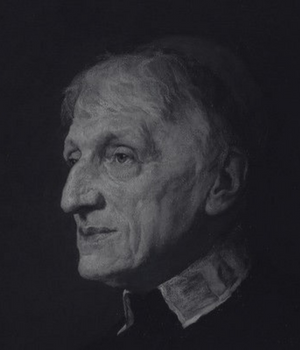
At the age of eleven was sent to study at the Birmingham Oratory School under the direction of the famed Cardinal John Henry Cardinal Newman.. After completing his studies, he began his religious career and joined the community of the Oratory. ordered, in March 1883.
For the rest of his life he was linked to this institution and its prestigious school, carrying out multiple tasks. During his early years he was personal assistant to the Cardinal himself, whom he represented in an audience with Pope Leo XIII..
. After Cardinal Newman's death in 1890, he took on a wide variety of tasks, from directing the prestigious Oratory choir to other bureaucratic activities. Above all, however, his vocation was manifested in his deep personal involvement with the Oratory parish and its parishioners, among whom he carried out numerous acts of mercy and philanthropy.
The figure of Father Morgan in Tolkien's life
Thus, among others, he took on the role of tutor to an orphan boy who was to become the famous philologist and writer J. R. R. R. Tolkien, although this task meant that for several years he could not return to Spain to visit his family.
The financial means that Mabel Tolkien had left for the children's upbringing were very meager, but father Francis secretly supplemented them with money from his share of the family business in Puerto de Santa Maria.
J.R.R. Tolkien, who referred to Father Morgan as his second father, obtained from him the financial resources that enabled him to study at King Edward's School and later at Oxford.
Also owed his religious training, a fundamental trait in the work of this author, as well as his taste for languages and in particular for the Spanish language.
In addition, several experts say Tolkien used him as inspiration for some of his characters. and that, thanks to him, the cultural tradition of his ancestors, particularly Fernán Caballero, reached the British author.
Morgan died in Birmingham in 1935, saddened by the difficult political and social situation that Spain was suffering in those moments prior to the outbreak of the Civil War.
Probably his most important legacy is that of having been a link between the Spanish Catholic and cultural tradition and such an outstanding figure as Cardinal Newman. and, in turn, of having transmitted all this to one of the most universal authors of the 20th century.
"Ten thousand difficulties do not make a doubt," said Newman, but overcoming them does make a saint.
Cardinal Newman's influence on The Life of Tolkien
Father Francis Xavier Morgan, was attached to St. Philip Neri Oratory in Birmingham founded by Cardinal John Henry Newman who was canonized in 2019. Today Newman is more relevant than ever, some of today's problems are similar to those of the Victorian England of his time: among others, the rational understanding of God, the need for the formation of the laity and the scrupulous search for moral truth.
. This was the understanding of Benedict XVI, who beatified him in 2010. Although he lived more than a century ago, Newman is a person who has much to say to the world today. His book on what a university is, for example, is a classic on education that continues to be discussed today. And it's not just an abstract discussion: Newman started a university in Dublin and a grammar school in England, and both endure to this day.
With a continuous work over 45 years, Newman brings about a great social change in the country. By the time of his death in 1890, it was already looking good for someone to become a Catholic. Conversion is a socially acceptable path thanks to Newman.
The miracle that made it possible to canonize John Herny Newman.
Mythology, properly understood, prefigures the Gospel.
Like other British Catholic authors, J.R.R. Tolkien owes a debt to Newman's thought and ideas. which, due to his biographical circumstances, were surely transmitted to him in a very direct way. Precisely Cardinal Newman's influence was decisive in Tolkien's decision to create a mythological universe with Catholic roots.
"Cardinal Newman defended, with respect to myths, that there are two revelations. One, the one contained in the Bible. And the other, to reach the Gentiles, through nature, which was reflected throughout history through the myths," explains Diego Blanco, an expert in Tolkien's work.
In this sense, Newman argued that mythology properly understood prefigures the Gospel. Thus Tolkien understood the need to create a mythology for non-Catholic England. and begins to write TheSilmarillionwhere the creation of a world with a unique God in which the most beautiful angel rebels is developed. The idea behind it is "to narrate in a mythological way in order to reach people's hearts without forcing people."White emphasizes through the narration of "a deep and spiritual battle that Tolkien always defended".
Newman has left an enormous legacy regarding his ideas, which facilitates the task of knowing in detail his thought.. Thus, for Newman, the role of the literature should never be to develop moral virtues, as this is something that should fall to the family and the Church. This intimate belief, undoubtedly shared by Tolkien, he demonstrated it through various facts such as the renunciation in his works of allegory.
The writer Graham Greene (1904-1991) defined Newman as the 'patron saint of Catholic novelists' in what amounts to a recognition of the heritage of the founder of the Oratory. by authors such as himself, Hilaire Belloc, G.K. Chesterton, Evelyn Waugh or J.R.R. Tolkien himself.
All have in common, among themselves and with Newman, the origin of their inspiration, based on their moral and intellectual foundations as convinced Catholics and fruit, in many cases, of experiences that had an enormous influence on their beliefs.
"The Lord of the Rings is, of course, a fundamentally religious and Catholic work, unconsciously at first, but then I became aware of it in revision." J.R.R. Tolkien's words to Jesuit Father Robert Murray.
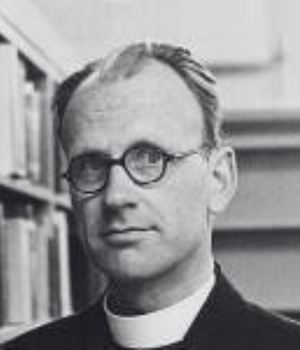
Jesuit Father Robert Murray, a friend of the Tolkien family.
Father Robert Murray had been a personal friend of J.R.R. Tolkien since 1944, when they were introduced by the author's aunt. At the time, Murray was a graduate student at Corpus Christi College in Oxford. In 1946, Murray joined the Catholic Church due in part to his relationship with the Tolkien family.
After graduating, Murray joined the Society of Jesus and was ordained in 1959. This Jesuit had the privilege of maintaining a close friendship with the writer, of reading and correcting, especially on theological questions, the manuscripts of The Lord of the Rings. And to maintain an abundant correspondence on the subject.
In one of these letters, Tolkien details to Father Murray that. The Lord of the Rings is a Catholic work in its foundation, without a doubt: "The Lord of the Rings is, of course, a fundamentally religious and Catholic work; unconsciously at first, but then I became aware of it in the revision," says the English author.
After being ordained to the priesthood on July 31, 1959, Robert Murray had his first Mass at the Oratory Church of Saint Aloysius in Oxford. Father Murray recalled that Tolkien and his son Christopher Tolkien were present that day. The Tolkien's friendship with the Jesuit lasted for years, until the last days of his life.
In August 1973 he had lunch with Tolkien, who died the following month, on September 2. On September 6, 1973 a requiem Mass for Tolkien was held at St. Anthony of Padua in Headington, Oxford.
The prayers and readings were chosen by his son John, who officiated at the Mass with the help of Robert Murray and the pastor, Monsignor Doran. On September 15, 1973, Tolkien's obituary was published in The Tablet, written by Father Robert Murray.
José Manuel Ferrández Bru J.R.R. Tolkien and Cardinal Newman: Children of the Same Light.
Tolkien. Letters from JRR Tolkien, Arte y Letra, 2006.
Jesuit.org.uk /profile/robert-murray-sj.
15S, Blessed Álvaro del Portillo: continuing his legacy
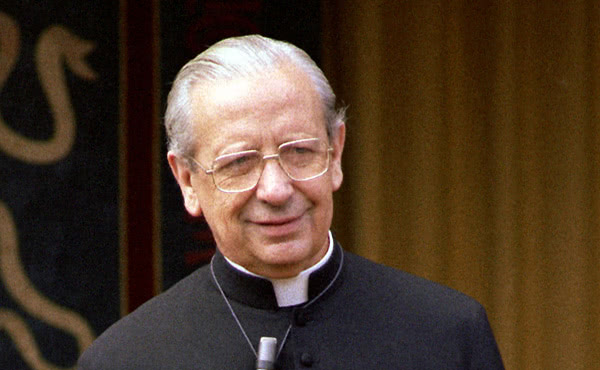
On September 15, we commemorated the day on which Blessed Álvaro del Portillo, successor of St. Josemaría Escrivá de Balaguer, assumed the office of prelate of Opus Dei in 1975. Two weeks later, on September 27, we celebrated his beatification in 2014, an official recognition of his holy life and tireless work for the Church. At the CARF Foundation we honor his legacy, want to understand his impact and offer an opportunity to support the formation of future priests.
Blessed Álvaro del Portillo, a man of faith and service
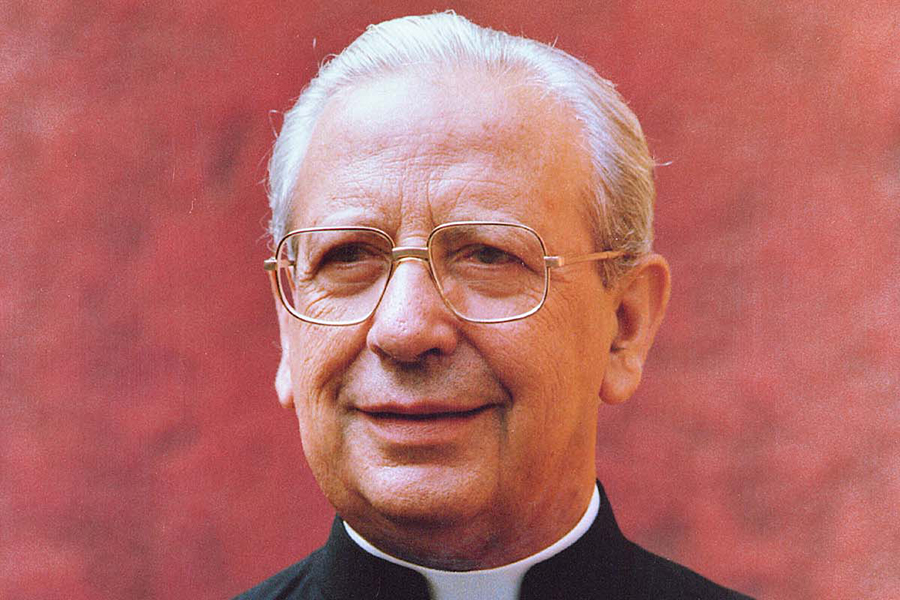
The Blessed Álvaro del Portillo was born in Madrid on March 11, 1914. Although he began his career as an engineer, his true vocation was to serve God. In 1944, he followed this call and was ordained a priest. Throughout his life, he maintained a close relationship with St. Josemaría Escrivá, whom he not only assisted as a close collaborator, but also as a faithful friend.
After the death of St. Josemaría in 1975, Don Álvaro was unanimously elected as his successor, assuming the responsibility of guiding Opus Dei into a new stage of growth and consolidation. On September 15 of that same year, he became the first successor of the founder of the Work, standing out for his humility and unwavering dedication.
Don Alvaro was known for his profound dedication to others. Far from seeking the limelight, his main desire was to serve with humility, guiding those around him towards a life closer to God. Pope Francis described him as a man who "loved and served the Church with a heart stripped of worldly interest." His focus was always on helping others to discover and fully live their vocation.
His legacy of service lives on today, especially in the work of the CARF Foundation. The values that Blessed Álvaro del Portillo promoted are the pillars that guide the CARF Foundation in its mission and support for the formation of priests. For Don Alvaro, the education of future priests was not only an academic question, but also a human, spiritual and pastoral one. He believed that priests should be well prepared in all aspects, so that they could be close shepherds, capable of guiding their brothers with humility and simplicity.
Today, the CARF Foundation continues this mission by providing the resources necessary for seminarians and diocesan priests from around the world to receive a comprehensive formation at prestigious universities in the following areas Rome y Pamplona. In doing so, the foundation is not only promoting the education of future priests, but is perpetuating Blessed Alvaro's commitment to the universal Church. The priests trained, with the support of the benefactors of the CARF Foundation, are prepared to work with love and dedication in dioceses around the world, as Blessed Alvaro would have wanted.
The Succession of Blessed Álvaro del Portillo
The election of Blessed Álvaro del Portillo as the successor of St. Josemaría Escrivá was a milestone full of spiritual significance. Over the years, Blessed Alvaro had worked side by side with St. Josemaría, sharing his vision and dedication to Opus Dei and the Church, which naturally prepared him to take over. However, when he received the news of his election on September 15, 1975, Blessed Álvaro was not able to take over. Blessed Álvaro del Portillo He did so with deep humility and a great sense of responsibility.
In lieu of celebrations, he asked for prayers from all the members of Opus Dei, expressing his willingness to serve by saying: "Before the tomb of our beloved Founder, all of us, Holy Father, renew our firm resolution to be faithful to his spirit and also offer our lives for the Church and for the Pope. These words reflect his character, always ready to serve the Church and the Pope.
For Blessed Álvaro del Portillo, it was essential that each person encounter God in the simplest and most ordinary aspects of his or her existence. During his lifetime, he promoted this message and strengthened the presence of Opus Dei in new countries, helping thousands of people to grow humanly and spiritually. It fell to him to consolidate the juridical path of the Work, as seen by its founder.
His ability to lead from humility and service made him a close and respected pastor, whose decisions were always oriented to the spiritual good of all who approached him. This approach, which guided his every decision, made him not only a true shepherd bishop, loved and respected by all those who knew him.
The beatification of Don Alvaro
The September 27, 2014 was a historic day not only for Opus Dei, but for the whole Church. In an emotional ceremony held in Valdebebas, Madrid, Alvaro del Portillo was beatified, officially recognized as a saint. The beatification was possible thanks to a miracle attributed to his intercession: the surprising recovery of a Chilean child, José Ignacio Uretawho, after suffering a cardiac arrest of more than 30 minutes, inexplicably recovered without sequelae. This fact, which was exhaustively investigated by the Church, became a clear sign of Blessed Alvaro's closeness and his continuous care from heaven.
The beatification ceremony was presided over by Cardinal Angelo Amato, representing Pope Francis, who underscored the crucial role of Blessed Alvaro as a model of "unwavering fidelity to the Church and her mission." Hundreds of thousands of faithful attended the event, many of them deeply moved by the recognition of the life and work of one who always lived with exemplary humility.
For many, the beatification of Don Álvaro was the celebration of a man who, through his simplicity, closeness and spirit of service, had touched countless lives. Throughout his life, Blessed Álvaro del Portillo not only helped to expand the Work, but also inspired many to live their faith joyfully, with their eyes fixed on God in their daily lives. This spirit of dedication, which characterized him so much, is still alive today in those who seek to follow his example and continue his mission of serving the Church with generosity and love.
The impact of Blessed Álvaro del Portillo on priestly formation
One of the most significant legacies left by Blessed Alvaro del Portillo was his firm commitment to the formation of priests. For him, priests should not only be good spiritual guides, but also people capable of accompanying everyone with closeness and humility. This human and spiritual approach remains key to the mission of Opus Dei and the CARF Foundation, which today strives to continue this work in 131 countries and more than 1,100 dioceses.
From the CARF Foundation, we give our benefactors the opportunity to participate in this important mission: to support the formation of the priests of today and tomorrow. The education that seminarians and diocesan priests receive not only prepares them academically, but also pastorally, so that they can be at the service of God and others. By supporting the missionYou are not only contributing with a donation, you are investing in the future of the Church.
Blessed Alvaro del Portillo is a model of total dedication to God and to the Church, and his life continues to inspire tens of thousands of people in many countries and projects, including the CARF Foundation with its work of helping in the formation of priests.
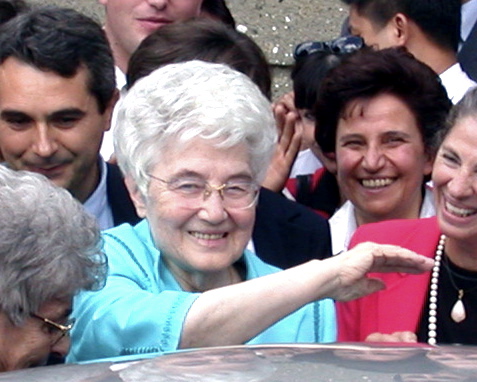
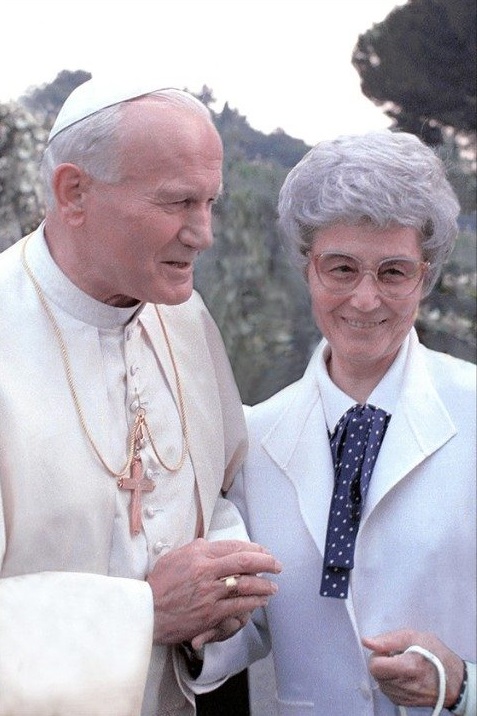
Chiara Lubich and the Jesus of the Fourth Word
Chiara is an indispensable reference in these difficult times in which many Christians feel discouraged because they are a minority in the midst of a pluralistic and complex society that seems to live with its back to God.
The importance of Chiara's texts
These Christians feel abandoned and nostalgic for a past time, supposedly idyllic, which they have not lived. They are overcome by sadness and resemble the bent-over woman in the Gospel (Lk 13:10-17), unable to lift her head up to heaven. These Christians, in need of regaining their joy that Christ brings usIt would be good for them to deepen and meditate on the texts of Chiara, a woman always attentive to the inspirations of the Holy Spirit. She knew very well that the Christian's strength never ceases to be borrowed, for our weakness becomes strength in Christ.
Chiara and the figure of Christ
One of my favorite texts by Chiara Lubich is an article written for the Zenit agency for Good Friday 2000. She was eighty years old at the time, although she could have written it at the beginning of her spiritual journey, for here we find one of the most characteristic features of her spirituality: meditation on Jesus forsaken.
In contrast to the expectations of those Christians attached to the supposed security lived in other times, Chiara presents the figure of a Christ stripped of his divinity on the cross in order to unite himself even more to man, to experience the anguish and helplessness of the human being at certain moments of his life. This is the meaning of the fourth word pronounced on the cross, "My God, my God, why have you forsaken me" (Mt 27:47).
Chiara and the wounded of life
I once read an explanation that did not convince me at all: Jesus had begun to pray a psalm containing these words and his exhaustion prevented him from continuing his prayer. It is possible that Jesus could have been praying that psalm, but it is certain that his words clearly express what he was feeling at that moment. For centuries insufficient attention has been paid to this fourth word, perhaps because some imagined it to be an unanswerable question.
Believers, on the other hand, know, as you recall ChiaraHe also points out that the Father resurrected and exalted his Son forever. In this regard, he further notes: "In Him, love was nullified, light was extinguished, wisdom was silenced. We were separated from the Father. It was necessary for the Son, in whom we all found ourselves, to taste separation from the Father. He had to experience God's abandonment so that we would no longer feel abandoned".
Hope at the feet of Christ
Chiara sees in this Jesus who cries out his abandonment many people who suffer physically, such as the blind, the mute or the deaf, but she also sees those who suffer in spirit: the disillusioned, the betrayed, the fearful, the timid, the disoriented... The latter are the wounded of life, an expression used on some occasions by St. John Paul II, and which I saw not long ago as the sign of a section in a bookstore in Lourdes. I think that those who are sick in spirit are much more numerous than the others, because in a society lacking in solidarity there are countless people who live in loneliness and helplessness.
In them Jesus is abandoned, for as Chiara says: "We can see him in every brother who suffers. By approaching those who resemble him, we can speak to them of Jesus forsaken.".
Sufferers have been sold the idea that their life is a failure and that nothing is worthwhile. But Jesus has suffered much more than all of them. Chiara reminds us that behind all the painful aspects of life there is the face of Christ. We could add that it is a concrete face with identity, even if it has very varied representations, and if his face is recognizable, so must be the face of our brothers and sisters because, as Chiara points out, each one of them is Him.
It is our task to transform pain into love, a task that humanly seems impossible, but it will be possible thanks to the strength and other gifts that the Spirit of Christ infuses us with..
John XXIII's idea of the Church as a sign and instrument of unity, which was the soul of the Second Vatican Council, was uniquely in tune with the charism of Chiara Lubich.
Chiara and her vision of youth
The evocation of the abandonment of Christ crucified leads me to relate Chiara to Olivier Clément, a well-known French Orthodox theologian. Both had a great admiration for Patriarch Athenagoras and had some personal meetings which they recorded in their writings. In the face of the political-social storms of the time, such as May '68, Athenagoras is not pessimistic or nostalgic for a supposedly better past, and assures Clément that these young protesters inspire him with compassion.
Although they do not realize it, they are completely abandoned young people and their cry is still a cry of orphans. The patriarch, a great expert in humanity, sees the student revolt as a call for help. For his part, Clément stresses that, despite the apparent triumph of nihilism, there is a great void in a protest movement that claims to be the heir of Marx, Nietzsche and Freud.
"Unlike the consumerist economy, based on a culture of having, the economy of communion is the economy of giving ...." Chiara Lubich.
Authentic Christian ecumenism
They believe, like so many others, in the transformation of structures, or perhaps not even in that, although they do not realize that the only creative revolution in history is the one born from the transformation of hearts. For her part, Chiara Lubich, witness of a turbulent era in which Christ is once again abandoned and replaced by hopeless utopias, finds in Athenagoras the heart of a father, a youthful spirit full of faith and hope.
He does not describe him as a separated brother, a very frequent expression in the post-conciliar period, because he is convinced that he belongs to the same house, to the same family. This is authentic ecumenism, in which differences have lost their color thanks to the sun of charity. So much so that the cry of Jesus abandoned on the cross is necessarily addressed to all Christians without exception. The encounter with the abandoned Jesus, present in so many brothers and sisters whom we cannot leave alone, is a good example of ecumenism.
Antonio R. Rubio PloGraduate in History and Law. Writer and international analyst. @blogculturayfe / @arubioplo