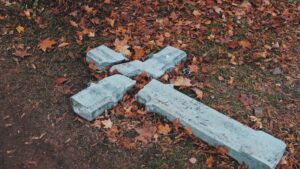
Christmas in 4 war-torn countries

Christmas is a time of love, renewal and peace. However, for millions of people living in countries devastated by wars and armed conflicts, these dates represent an additional challenge to believe in peace.

In places like Ukraine, Israel, Lebanon or Nigeria, Christmas traditions coexist with pain, uncertainty and the search for consolation. The work of diocesan or missionary priests becomes crucial in these contexts, offering a light of hope.

The CARF Foundation supports the integral formation of these priests, providing them with the necessary resources to serve in the future even in the most adverse conditions.
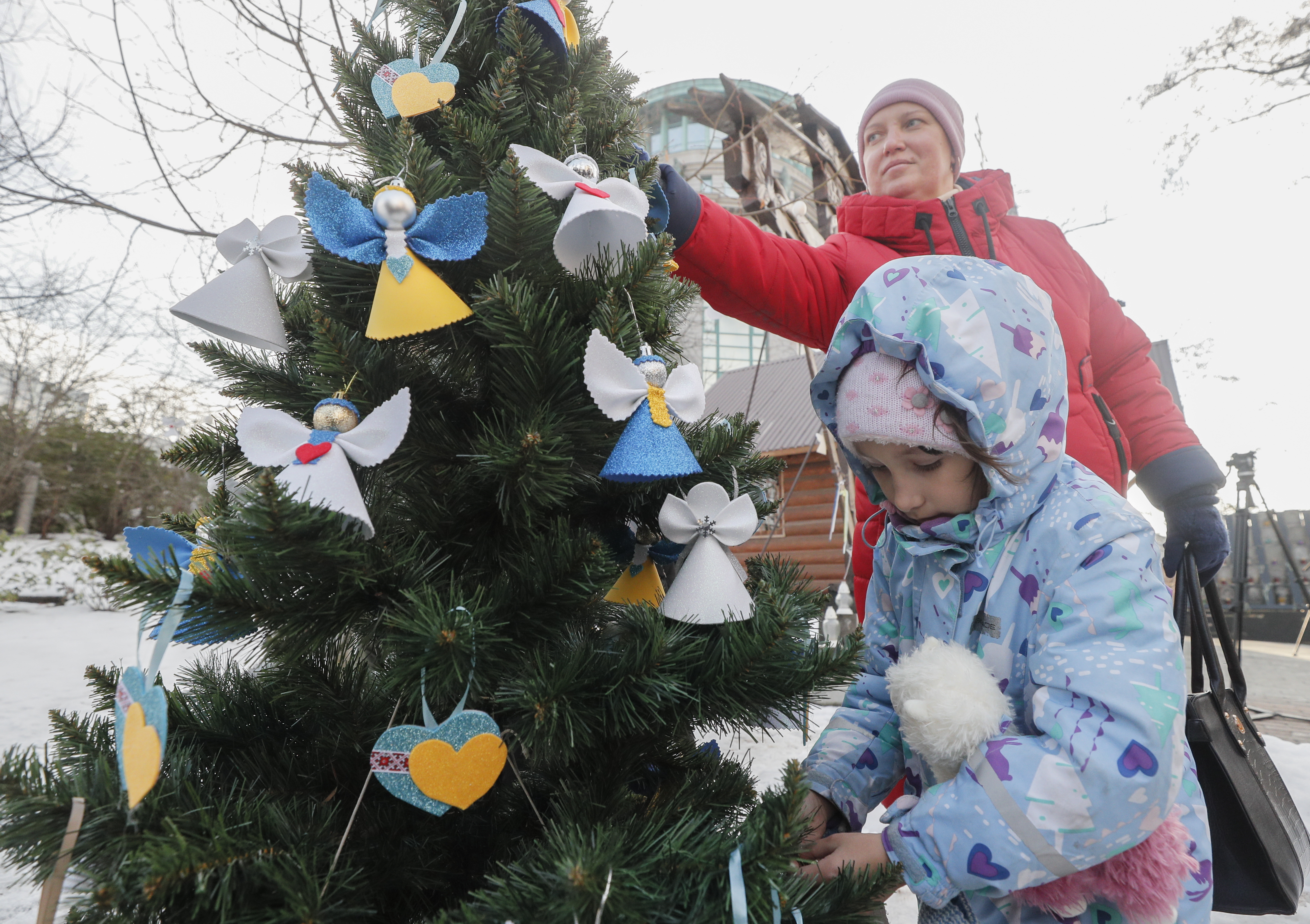
Christmas in Ukraine: a call of faith in the cold weather

In Ukraine, Christmas comes in the midst of a war that has displaced millions of people. Families, scarred by conflict, gather underground in shelters or in partially destroyed churches to celebrate the birth of Christ. Despite the peaceless circumstances, faith continues to be a source of strength and hope.

The Father Roman Ostrovskyy, vice-rector of the Greek Catholic seminary in KievHe firmly stated: "Faith helps us to carry on in the worst days," underlining how spirituality sustains Ukrainian Christians during these times of adversity (Vatican News).

The Church in Ukraine has not only been a physical, but also a spiritual refuge. In parishes, priests not only distribute food and clothing to those affected, but above all, they offer words of comfort and celebrate Mass that renews the hope of their communities. Their work not only sustains exhausted bodies, but also dejected souls.
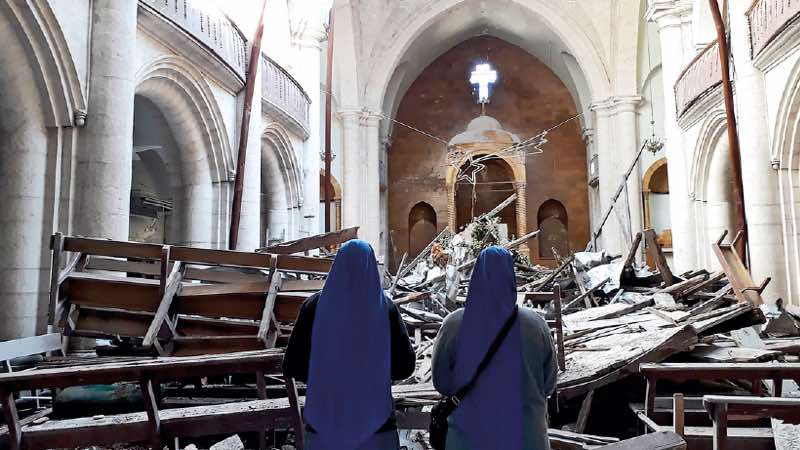
Christmas traditions under fire in Israel and Syria

Holy LandThe birthplace of Christianity is facing a Christmas marked by war tensions. In Gaza, Christians are a minority struggling to maintain their traditions. Churches organize vigils with scarce resources, and nativity scenes are often made of recycled materials due to scarcity.

"Despite all this great violence, we must not forget that the message of Christmas remains, perhaps at this moment even more important than ever. God becomes flesh out of love and communicates to us a new way of being in the world, which is that of giving one's life out of love, for others." (Cardinal Pizzaballa, Christmas message 2023).

In Israel, pilgrims are decreasing due to conflicts. However, the celebrations in Bethlehem, such as the Midnight Masscontinue to be a symbol of unity and perseverance. Training priests who can lead these celebrations in the midst of adversity is a mission in which the CARF Foundation plays a fundamental role.

In Gaza, Christian families decorate small trees and attend Mass in churches surrounded by soldiers. As St. Josemaría said, "as long as I have breath left, I will not cease to preach the primordial need to be a soul of prayer, always, on every occasion and in every way. in the most disparate circumstances, because God never abandons us. It is not Christian to think of divine friendship exclusively as an extreme resource." (Friends of God, 242).

Nigeria | Don Bosco Vocational Training Centre | Source: Manos Unidas.

The struggle for peace in Nigeria

Nigeria, a country plagued by religious conflict, always experiences a Christmas full of contrasts and resilience. In the north of the country, where attacks by extremist groups such as Boko Haram have forced the displacement of entire communities, churches are transformed into strongholds of faith. Despite threats and strict security measures, Christians attend Mass with an unwavering spirit, keeping their Christmas traditions alive.

Forgiveness and prayer are their weapons against hatred. Priests in the major conflict zone organize nightly vigils so that families can gather together in prayer in an environment of relative safety. These meetings not only offer a space to worship, but also a moment of comfort and hope in the midst of adversity.

Christmas in Nigeria is not only a time for celebration, but also for reaffirming faith and unity in a society deeply wounded by war. Christian communities demonstrate that the light of Christ's birth can shine even in the darkest placesbringing comfort and strength to those who need peace the most.
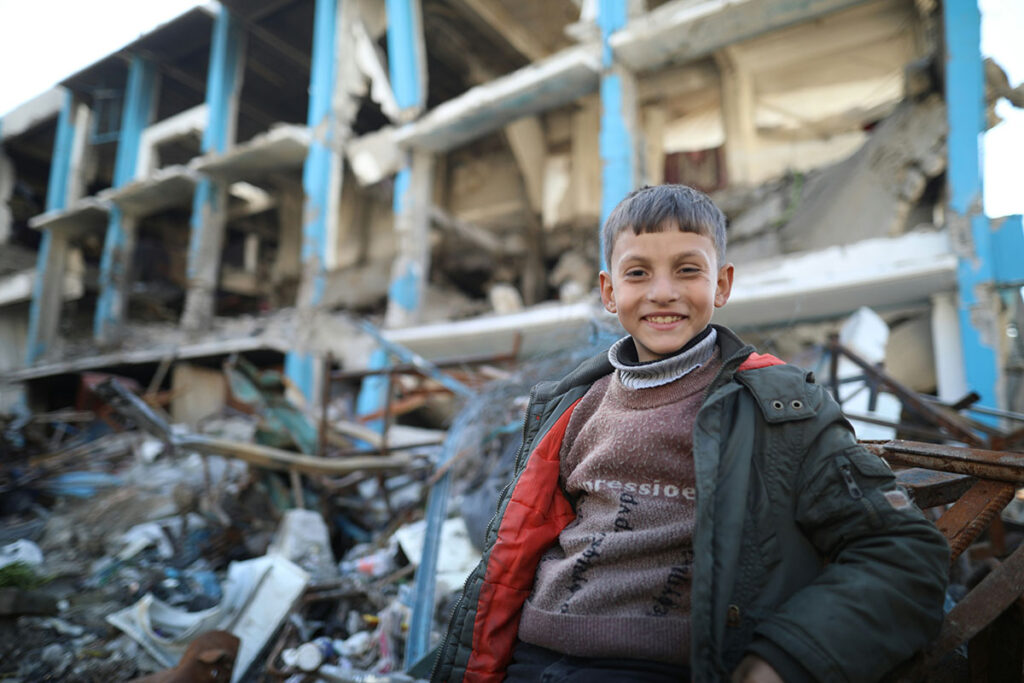
Photograph by khalid kwaik at Unsplash.

Christmas in Lebanon: hope amidst the rubble

Lebanon, a country deeply affected by the economic crisis and the aftermath of tragic explosions, celebrates Christmas with humility and patience. Many families decorate makeshift trees with recycled materials and prepare dinners with what little they have at their disposal, demonstrating that the true Christmas spirit transcends material adversity.

In Beirut, churches play a crucial role, organizing concerts, vigils and community activities that recall the profound meaning of these dates. "In the midst of suffering, Christmas invites us to be a light for others," said Pope Francis during his December 25, 2020 message at St. Peter's Basilica, referring to the call to open our hearts to those most in need.

Diocesan priests in Lebanon are active witnesses of this hope. Through their daily actions, they offer spiritual and material support, bringing a message of comfort and faith to communities facing uncertainty and need. Their work reinforces the importance of seeing Christ in others.
Cómo y qué orar por los sacerdotes

The integrating role of the CARF Foundation

In contexts such as these, the role of priests is fundamental. They not only preside at liturgical celebrations, but also provide emotional and spiritual support. The mission of the CARF Foundation is the integral formation of seminarians and diocesan priests.ensuring that they are prepared to serve in the most adverse conditions.

Each donation to the CARF Foundation contributes directly to covering the costs of this integral formation of underprivileged diocesan priests around the world. Thanks to this work, it is possible to bring Jesus' message of peace and hope to even the most war-torn areas.

How can we help countries at war?

Christmas, even in places saddened by the scourge of war, remains a beacon of hope. In countries at war, Christian communities find comfort in their faith, led by committed priests facing unimaginable challenges.

The CARF Foundation invites you to be part of this mission, helping to form those who bring the peace of Christ to the world. Your support can make a difference. The joy of man is in giving, not in receiving and this is the spirit of Christmas, a spirit that allows us to share with those who need it most.

The Meaning of Christmas: December 25

All these feelings will be real if we allow the Child Jesus to be born in our hearts and enlighten them. Because, as Benedict XVI said, "if we do not recognize that God became man, what is the point of celebrating Christmas? The celebration is empty.

Today we Christians are surrounded by a celebration that is often empty and consumerist, very different from the Catholic Christmas where we commemorate the birth of Jesus Christ, the Son of God, who "for us men and for our salvation came down from heaven, and by the power of the Holy Spirit was incarnated of Mary the Virgin and became man" (Nicene-Constantinopolitan Creed). Every year, the Church prepares for Christmas with the liturgical season of Advent, which lasts four weeks.

What is it and what is the meaning of Christmas?

With the meaning of the Catholic Christmas, the way of worshipping God has changed. The Christian goes from praying looking at the sky, to turn his eyes to the earth to notice the fragility of a little child sleeping in the straw of a manger. The infinite greatness of God becomes the fragility of a newborn child. Suddenly, two concepts such as divinity and childhood, until then very distant, are united in one person and in the same direction. The sense of Christmas is the revelation of the simplest, which tests the wisdom of the wise and learned.

Shepherds were the first to adore the Child in the manger; and they did so because they understood that an Infant God embraces their simplicity and their simplicity. Their faith has dreamed of a God like this one who lives among their flocks, who is one among them, suffering their same needs.

And, as they approach the cave, they discover that this God made child takes refuge in the lap of his Mother. It is this bond between the Child and the Mother that completes the mystery of the Christian Christmas. Because God ceases to be an abstract and distant being, to become a helpless, human God, who takes refuge in a Mother, advocate in our relationship with Him.

If we strip it of this original meaning, the meaning of Christmas ceases to have an authentic Christian imprint.

"Above all," he stressed, "we Christians must reaffirm with deep and heartfelt conviction the truth of Christ's Nativity in order to bear witness above all to the awareness of a free gift that is wealth not only for us, but for everyone. Benedict XVI.

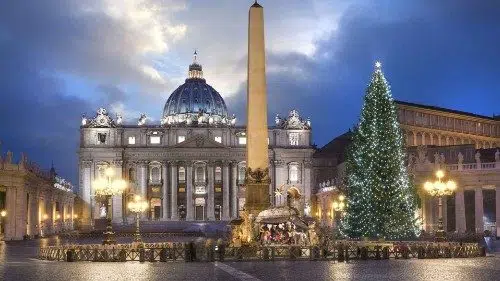
navidad plaza de san pedro

The Christmas tree in the Catholic tradition

The first feature of the Christmas tree is its ability to keep the leaves alive in winter that is why spruce or pine trees are used. "It was a symbol of eternity and the life of God that never passes away. Therefore, applying it to the life of God that never passes, applying it to the Son of God who comes with us at Christmas gives it that sense also of God who makes himself present in the midst of humanity," says D. Bernardo Estrada, Professor at the PUSC.

The first traces of tree decorations take us back to Germany where fruit was hung on the tree, reminiscent of the tree of life in paradise. Today, the Christmas tree is more than a decoration, it is a sign of joy for everyone.

In the words of St. John Paul II: "in winter, the evergreen fir tree becomes a sign of life that does not die [...] The message of the Christmas tree is, therefore, that life is 'evergreen' if it becomes a gift, not so much of material things, but of itself: in friendship and sincere affection, in fraternal help and forgiveness, in shared time and mutual listening".

"The Christmas tree and the gifts proper to these dates are a way of remembering that from the tree of the Cross come all good things... This is why the tradition of putting Christmas gifts for children under the tree has a Christian meaning: in the face of a consumerist culture that tends to ignore the Christian symbols of the Christmas holidays, let us prepare to celebrate the birth of the Savior with joy, transmitting to the new generations the values of the traditions that are part of the heritage of our faith and culture.". Benedict XVI.

sentido de la navidad

How to celebrate Catholic Christmas

Pope Francis recommends that to live the true meaning of the Christian Christmas, the first thing to do is to make room for the Child to be born. Some practical advice from the Holy Father is:

Play the nativity scene and explain it to the children, and pray there, reliving the scene. Make room in our hearts and in our days for the Lord. Let it be a feast of joy, of welcoming the Lord in the manger and in our hearts. Attend the Holy Mass. Receive the sacrament of Confession.

"Every Christian familyAs Mary and Joseph did, she can receive Jesus, listen to Him, talk to Him, be with Him, protect Him, grow with Him, and thus improve the world. Let us make room in our hearts and in our days for the Lord". Pope Francis.

2. Christmas should not be a celebration of excessive consumerism: give to those in need. Also to give time and affection to the family and to those close to us.

"May Holy Christmas never be a feast of commercial consumerism, of appearance, of useless gifts, or of superfluous waste, but may it be a feast of joy, of welcoming the Lord in the manger and in the heart." Pope Francis.

3. The meaning of Christmas is the feast of the poverty of God who emptied himself by taking the nature of a slave.

"This is the true Christmas: the feast of the poverty of God who emptied himself by taking the nature of a slave; of God who serves at the table; of God who hides himself from the intellectual and wise and who reveals himself to the small, simple and poor." Pope Francis.


Bibliography

Our Lady of Guadalupe and Saint Josemaría: filial love

The Virgin of Guadalupe She is one of the greatest treasures of our Catholic faith in Latin America. Her figure transcends time as a symbol of comfort, hope, and cultural unity. Her image, miraculously imprinted on Saint Juan Diego's cloak in 1531, holds mysteries that continue to fascinate believers and scientists alike.

virgen-de-guadalupe-san-josemaría-tilma

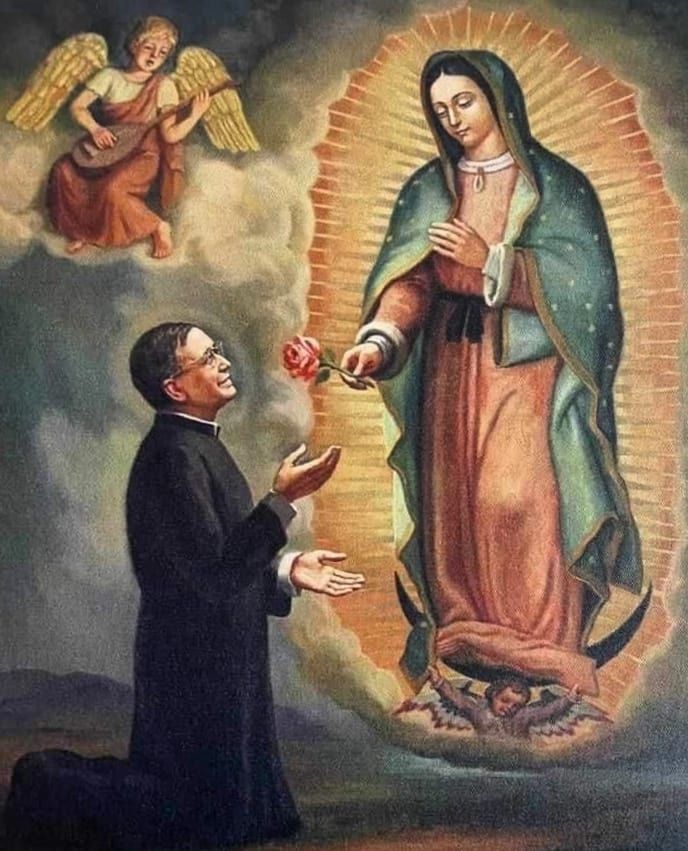
But before discovering the mysteries contained within the Juan Diego's cloak, we return to the 20th century to recall that, in May 1970, St. Josemaría Escrivá traveled to Mexico with a fervent desire: praying before the Virgin of Guadalupe in the old Basilica.

«I have come to see the Virgin of Guadalupe, and to see you as well,» she announced to her children in her first greetings. The deep devotion of St. Josemaría led him to spend hours in prayer before "la Morenita del Tepeyac," to whom he addressed words full of love:

"I offer you a future of love, with many souls..... Waves of souls, all over the world and at all times, determined to give themselves to your Son and to the service of others."

St. Josemaría and Our Lady of Guadalupe: a filial yearning

During his visit, he prayed for the Church, the Pope and Opus Dei with great and filial confidence. In a conversation with Cardinal Miguel Dario Miranda, he had even humorously expressed his desire: "when I am in front of her, they won't even take me out of the sanctuary with a crane".

Recalling the circumstances of that outburst of filial affection for Our Lady, Msgr. Javier Echevarría -who accompanied him on the trip, wrote twenty-five years later: "I would dare to assure him - I heard him say it on several occasions - that Our Lady forced him to undertake that penitential pilgrimage, because she wanted him to ask her intercession there, at the feet of that brown image, in favor of the world, of the Church, and of this small portion of the Church, which is Opus Dei.

Escrivá had a deep affection for the Guadalupana, reflected even in the details of his daily life. In his office in Rome always had a picture of her, witness to his countless prayers.

The impact of his devotion to Our Lady of Guadalupe was also reflected in the encounters he had with thousands of people during his stay in Mexico. In his catecheses, he transmitted his love for Our Lady and encouraged all her sons and daughters and the faithful to approach her with trust and generosity. This teaching continues to inspire members of Opus Dei and all those who seek to follow the path of holiness in daily life. daily life.

St. Josemaría did not promote an exclusive devotion to a particular Marian devotion, but he recognized in Our Lady of Guadalupe a special model of tenderness and divine closeness. He called it the Seat of Wisdom and our Hope.invoking her with confidence to ask for her intercession on behalf of all God's children.

St. Josemaría's relationship with our Lady of Guadalupe continues to be a source of inspiration. His filial trust and love for the Mother of God remind us that Mary is always ready to receive our petitions and to accompany us on our journey towards Christ.

Today, her example encourages us to pray with faith and to trust fully in Our Lady's maternal protection. ???????? But now let us enter into the mysteries of a miraculous tilma.

What is a tilma?

To understand the magnitude of the miracle of Guadalupe, it is important to know what a tilma is. It is a a mantle used by Mesoamerican Indians, made of maguey fiber.. This material, although resistant for daily work, has a limited useful life, generally not exceeding 20 years.

The tilmas were simple garments, used as a coat or to carry food. It is in this context that the story of the Virgin of Guadalupe begins, for it was in the tilma of a humble Indian, Juan Diego, that an image that defies all human explanation was captured.

The history of the Virgin of Guadalupe

In December 1531, just 10 years after the conquest of Mexico, an indigenous convert to Christianity named Juan Diego was on his way to Tepeyac to attend the Mass. On that hill, the Virgin Mary appeared to him for the first time, asking him to go to Bishop Zumárraga and request the construction of a temple in that place.

As expected, the bishop asked for proof of the apparitions. In response, in her last apparition, on December 12, at the top of the hill, where only plants especially resistant to inclement weather grew, the Virgin asked Juan Diego to pick the roses in bloom that she found there, in the middle of winter.

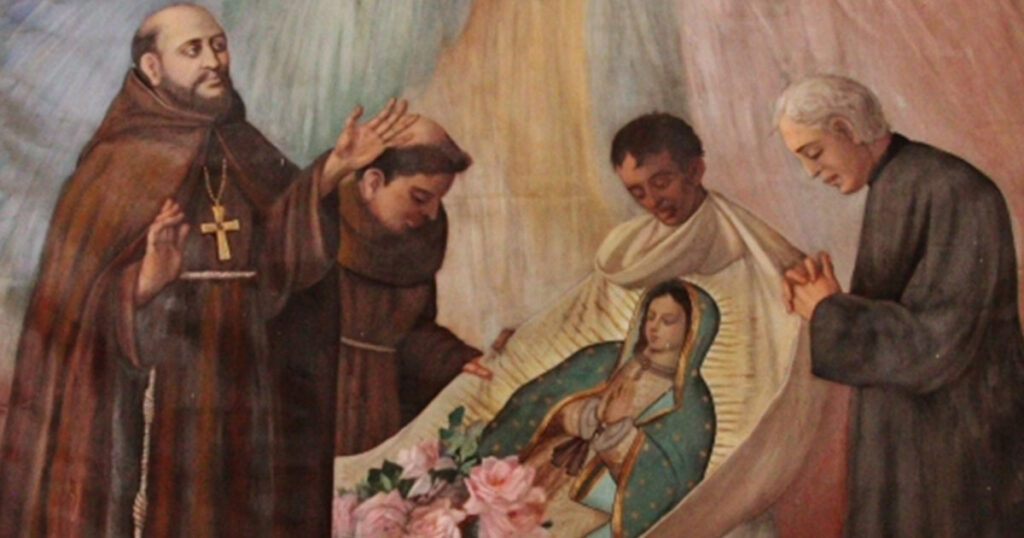
Juan Diego obeyed and, when he unfolded his tilma in front of the bishop, not only did the flowers fall, but an image of the Virgin Mary appeared drawn on the maguey fabric. This miracle marked the beginning of the Guadalupana devotion.

Seven mysteries of the tilma

The tilma of Juan Diego is not only a miraculous canvas; it is an enigma that has been the subject of numerous scientific studies. These are some of the mysteries that surround it:

1. Inexplicable durabilityDespite being made of maguey fiber, which should have disintegrated centuries ago, the tilma remains intact after almost 500 years. This defies natural laws and has been considered a miracle by the faithful, and an inexplicable fact by the scientific community that has studied the canvas.

2. The unknown origin of colorsThe pigments in the image do not correspond to any known pictorial technique. Scientists have confirmed that they are not of vegetable, animal or mineral origin, and no brush strokes are found.

3. Eye reflectionsThe Virgin's eyes, when enlarged, show tiny reflections that correspond to human figures, including Juan Diego and Bishop Zumárraga.

This detail, discovered with modern technology, is astonishing for its precision in the small space of the corneas. Through the process of digitizing computer images, the reflection of thirteen people in the eyes of the Virgin Mary was discovered according to the Purkinje-Samson laws.

The very small diameter of the corneas (7 and 8 mm) rules out the possibility of painting the figures on their eyes, especially considering the crude material on which the image is printed.

4. Stars on the mantleThe Virgin's mantle shows a star pattern that coincides with the constellations visible in the Mexican sky on December 12, 1531, the day of the last apparition.

5. Constant temperatureThe tilma maintains a constant temperature of 36.6º Celsius, similar to that of a living human body.

6. Resistance to damageIn 1921, an attack with dynamite near the tilma destroyed the altar, but the image remained completely intact and undamaged.

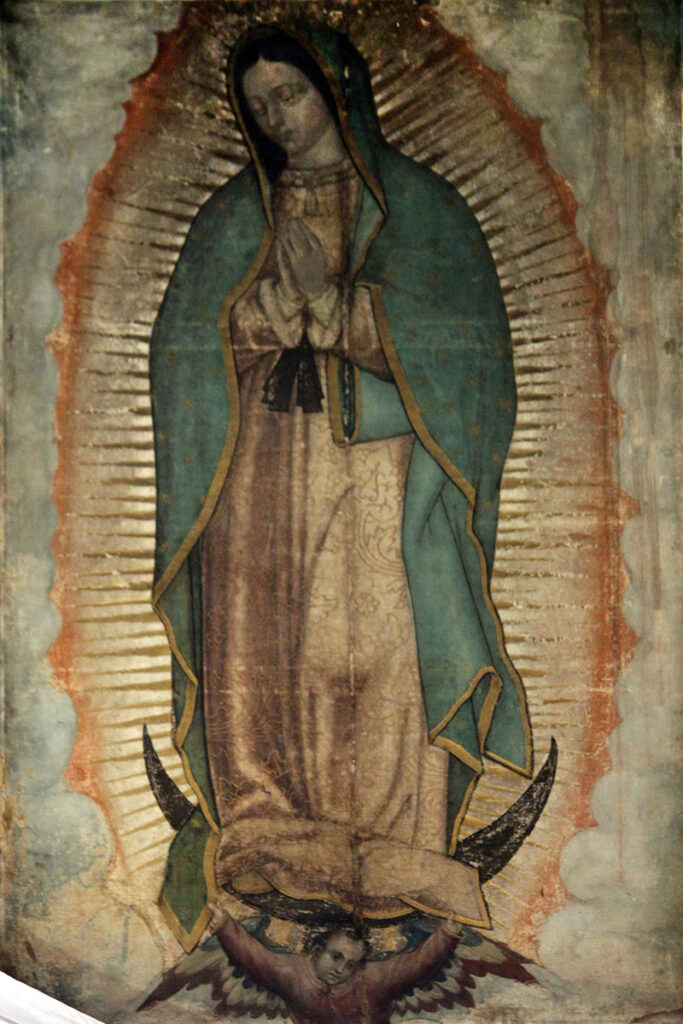
7. Cultural symbolismThe Virgin combines indigenous and Christian elements. For example, her dress has floral patterns representing mountains sacred to the Mexica, and her posture indicates humility and prayer, common in Catholic iconography. The features of her face are indigenous and she spoke to Juan Diego in her native dialect.

Tilma Virgen de Guadalupe
Tilma Virgin of Guadalupe.

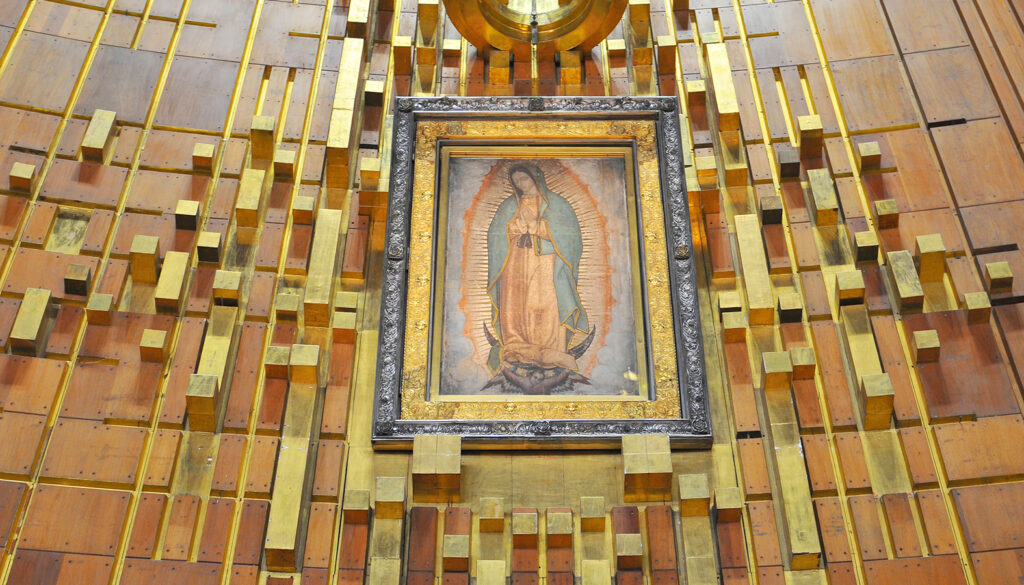
Today, this miraculous tilma is in the Basilica of Guadalupe in Mexico City, exposed for millions of pilgrims who come to contemplate it every year, especially during its feast day on December 12.

Our Lady of Guadalupe, Mother of America

In his homily of December 12, 1981, St. John Paul II emphasized the importance of the Virgin of Guadalupe in the cultural and religious identity of Mexico and Latin America, referring to her as a symbol of unity and evangelization, and also as fertile ground for the priestly vocations.

The Virgin of Guadalupe, as patroness of America, continues to encourage young people to respond courageously to Her call, offering them her maternal protection and constant intercession. Saint Juan Diego, canonized in 2002 and chosen as the messenger of this miracle, is an example of humility and service. His simple life reminds us that God works wonders through willing hearts.

As St. Josemaría teaches us, "To Jesus one always goes and returns through Mary". The Virgin Mary intercedes for each one of us.. His love and guidance strengthen priests in their mission to evangelize and serve. serve.

Mary always guides her children to Jesus, and especially those whom He calls to the priesthood. Her message of love and service, which transformed history in 1531, continues to be a source of strength for those who discern their vocation. Our Lady invites these young people to be a bridge between God and His people, just as St. Juan Diego was.

A devotion that transcends the centuries

Every December 12, her feast day, millions of pilgrims flock to the Basilica of Guadalupe, considered one of the most visited shrines in the world. But beyond numbers, devotion to the Virgin of Guadalupe is a testimony to God's love. Her image was not only a gift to the newly evangelized indigenous people, but also a universal call to faith and reconciliation.

And we end with one of St. Josemaría's petitions on the last day of his novena: "Lady, I surrender myself, I surrender myself totally: I no longer ask! I love the Will of your Son! We abandon ourselves, we rest, we love and accept his designs, fully accepting God's Will.

We know, Our Mother, that You will give us the means to carry on this path of charity and love, and to spread it throughout the world. (...)».


Solidarity market to support the formation of priests

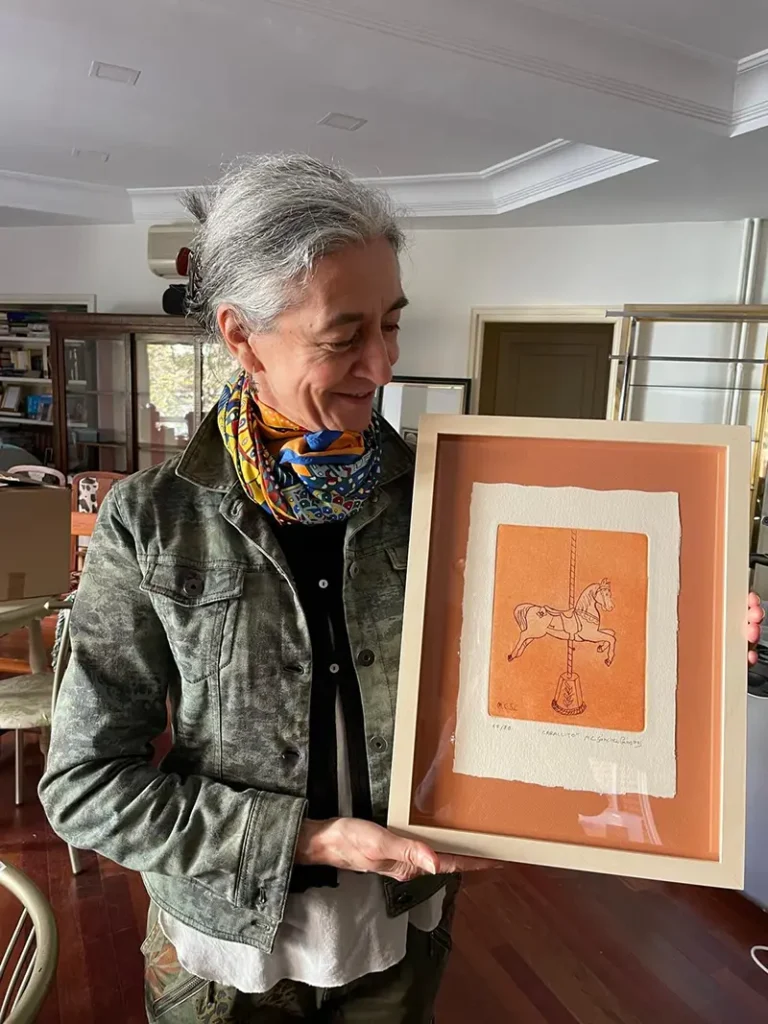
The CARF Foundation's charity flea market stirs hearts. This, at least, is what happened to Mercedes Castaño, a woman who happened to pass by the flea market by chance. She bought a raffle ticket for a print by a well-known artist. And she won. A luck that had never happened in her life. She was so excited that she wanted to learn more about the work of the CARF Foundation.

Nearly a thousand people visited the charity market

"Our guest had no idea what the CARF Foundation was or where the CARF funds were going. solidarity market. But she stopped by the store and bought a ballot. Now she is very excited and wants to know more about the destination of your small contribution: the financing of study and maintenance grants for the formation of seminarians, diocesan priests, religious men and women studying in Rome and Pamplona. And also, of course, to pay for one of our most precious icons: the sacred vessel backpacks"Carmen, one of the people in charge of the Board of Trustees of the CARF Foundation and of the charity market, tells us.

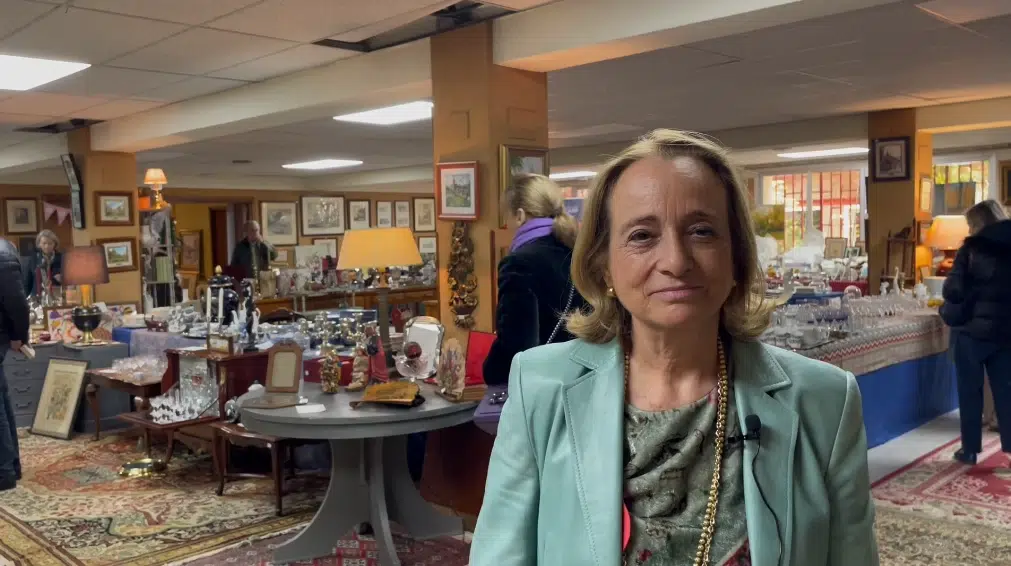
In its 28th edition, held from November 26 to 30 at the premises of the parish of St. Louis de los Franceses, at 9 Padilla Street, once again this year this flea market welcomed close to 1,000 people, and both Carmen and Rosana, presidents of the Patronato, were a bit worried about some changes that took place in the last dates of their organization.

Rosana, co-president of the Patronato de Acción Social.

50 volunteers

"We are delighted because I think that about a thousand people in total have passed at some point in the market, which this year has lasted fewer days than in previous editions. It has been a delight. In addition, we have had almost 50 volunteers, and some men too!", says Carmen.

But, above all, something that gives great satisfaction to all the people who collaborate in this charity market is that they are helping the formation of priests and seminarians.

As Rosana explains, this year they were a little worried because they had to change the days of the week on which the flea market is always organized. "It had worked very well for us to start on a Friday and finish on a Wednesday. This year, however, we opened on a Tuesday and finished on Saturday, because on Sunday the parish needed the space for their catechesis. But it was also a success. Saturday afternoon-evening, the fifty volunteers helped pick everything up. What a great help."

carmen mercadillo solidario fundacion carf carla restoy

For the formation of seminarians and priests

The charity market of the CARF Foundation, organized by the volunteers of the Patronato de Acción Social, is an annual event that is organized to raise funds for study grants for the formation of seminarians and diocesan priestsreligious men and women studying at the Pontifical University of the Holy Cross in Rome, and in the Ecclesiastical Faculties of the University of Navarra.

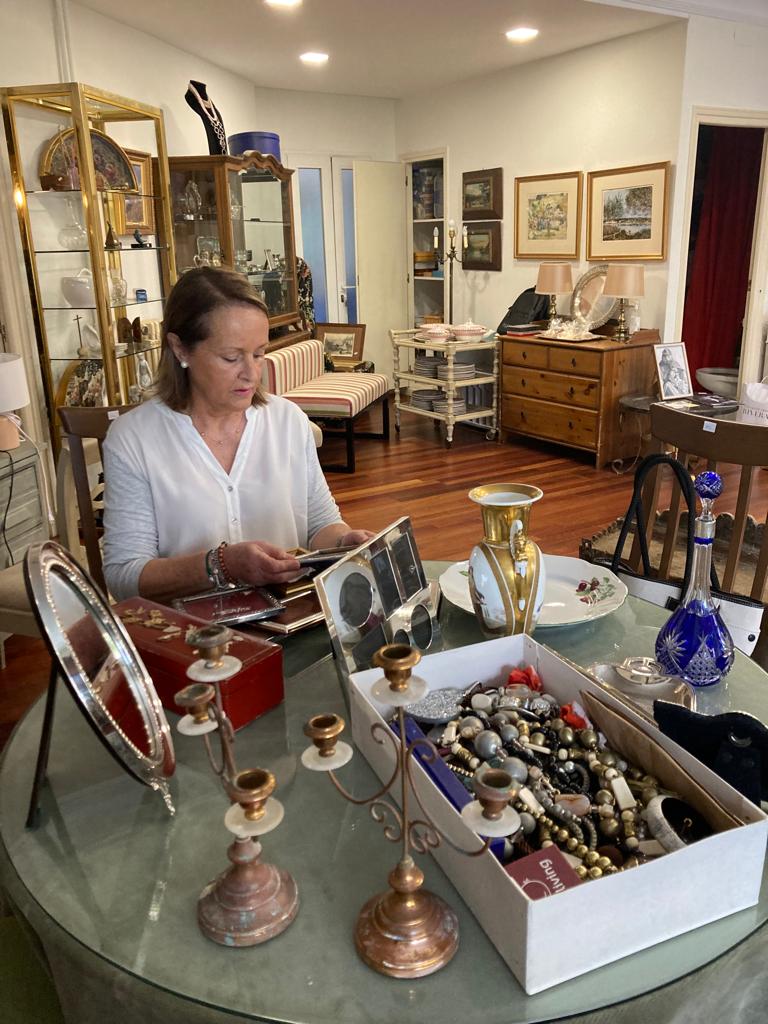
Every year, they offer for sale valuable objects and other more economical ones, always advised by a network of experts to help assess furniture, pictures, kitchenware, cutlery, etc. and thus set an appropriate price.

Vintage furniture and clothing

"This year has sold very well. furniture we have restored and painted thanks to a restorer who has left some beautiful wooden tables. They sold phenomenally well," says Carmen.

Vintage clothing is also a classic at the flea market. which sells very well. "But in addition to the models we put on sale, such as skirts, dresses, pants, jackets, coats, etc., we have a very good saleswoman who accompanies every lady and young person, and people are delighted. The baby clothes, hand-knitted by our collaborators, have also been a great success," says Rosana.

Influencer Carla Restoy

This year, the flea market had a very special guest: the influencer Carla Restoy, who, at only 28 years old, is revolutionizing social networks with his message about life, marriage and faith.

Carla thought the flea market was wonderful, especially because of its transcendental dimension: collaborate with study aids for the formation of priests and seminarians, as well as to defray the costs of the backpacks of sacred vessels that are given to seminarians prior to their ordination to the priesthood, when they return to their countries of origin. 

"Thank you all for contributing once again to the formation of seminarians, diocesan priests, religious men and women by buying a little something at our annual flea market. We have managed to raise about 35,000 euros. Thank you from the bottom of our hearts", concluded Carmen and Rosana, encouraging everyone not to miss the next date of the charity market.


Marta Santín, Journalist specializing in religious information

Advent: a time of hope and preparation. 6 keys to live it

The season of Advent marks the four weeks leading up to the ChristmasIt is an opportunity to reflect, reconnect with our faith and live the expectation of Christ made man with an open heart.

But how can we truly take advantage of this time without getting carried away by the distractions of consumerism, social commitments or everyday worries? Below, we share with you some keys to live Advent with depth and meaning.

The meaning of Advent

The word Advent comes from the Latin adventuswhich means coming. During these weeks, the Church invites us to prepare our hearts for two important events:

Advent is not only a countdown to Christmas, but a call to conversion and spiritual preparation. This is a time to pause, meditate and reorient our lives towards God.

Keys to live Advent with faith

1. Set aside a daily time for prayer

Take a few minutes each day to be alone with God. You can read the readings of the day, meditate on the biblical passages that announce the coming of Jesus, or pray the Holy Rosary. If you have an Advent calendar, use it to deepen the daily liturgy.

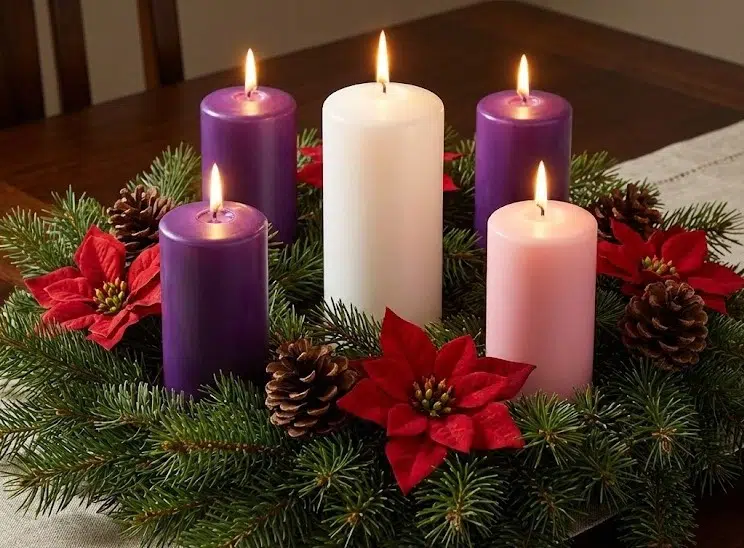
TipCreate a space at home for prayer with a candle or a picture of Jesus' birth. Lighting a candle each week of Advent can help you remember the meaning of waiting. Remember the Advent wreath.

2. Practice charity

Advent is a time to look beyond ourselves and share with others, especially those who need it most. Consider how you can be an instrument of love:

3. Live the liturgy

Attending Sunday Mass is essential to nourish our faith. During this time, pay special attention to the liturgical signs: the readings, the prayers and the color purple, which symbolizes penance and hope.

4. Reduce material distractions

It's easy to get caught up in the shopping, decorations or holiday dinners. While these elements have their place, make sure you don't lose sight of the true meaning of this time.

5. Approach the sacrament of Confession.

Advent is a perfect time to reconcile ourselves with God. Examine your conscience and receive the sacrament of Confession. Cleansing our hearts helps us welcome the Baby Jesus with peace and joy.

6. Cultivate hope

Advent reminds us that waiting makes sense because we are waiting for something great: God's love made flesh. Even in the midst of difficulties, this is an opportunity to renew our hope and trust that God never abandons us.

TipReflects on the virtues of Mary and St. Joseph, read about the characters of Bethlehem. They lived the wait with faith and humility. How can you imitate their example?

Conclusion

Advent is a time to pause and look at what is essential. Beyond lights, gifts and celebrations, we are invited to prepare our hearts for an encounter with Christ. Let this time transform us, bring us closer to God and make us true witnesses of his love.

May this Advent be for you and your family a journey filled with faith, hope, and charity, so that you may truly experience Christmas and the birth of Jesus!


Religious persecution and intolerance in the 21st century

The persecution The religious persecution suffered by many Christians has been provoked by public authorities, by non-Christian groups or by other Christians of different faiths throughout the history of the world. Christianity.

Perhaps part of the answer lies in the following reflections:

Pursuit

Persecutions of any kind are deplorable acts, especially those of a religious nature, because they limit the freedom of human beings in their relationship with God. Unfortunately, universal history has shown us that religious persecutions have their origin in ancient times.

In the case of the recent history of Spain, cited as a reference in numerous works, a detailed study published in 1961 by Antonio Montero Moreno, identified a total of 6,832 religious victims murdered in the Republican territory, of which 13 were bishops; 4,184, diocesan priests; 2,365, religious; and 283, nuns. In a study published in 2001, the researcher and priest Ángel David Martín Rubio lowered the total number of members of the clergy murdered during this period in the Republican zone to 6,733.

Intolerance

We know that intolerance is the inability to accept other people's ideas, beliefs or practices when they are different from one's own and that the intolerant person is characterized by maintaining his or her opinion, without paying attention to others.

We also know that when the emotional or passionate component is added, intolerance becomes fanaticism or that, when there is an excessive attachment to following fundamental texts to the letter out of their context, we fall into fundamentalism.

As human attitudes, all of them violate people's dignity, with the most common reasons being race, sex or religion.

Finally, we know that tolerance is an acquired habit and, therefore, a competence that humans can develop voluntarily, since our natural instinct would lead us down the path of intolerance and aggression.

We could deduce up to this point that the origin of the problem is personalThe "own" of each one of us, and that it depends on the education received in our family, social and cultural environment.

Francis also asked that "no one be considered a second-class citizen," especially Christians, who represent 1% of the population in the Muslim country, and the Yazidis, a minority persecuted by the Islamic State.

Consequences of religious persecution and intolerance 

According to the latest report of Aid to the Church in Need, presented at the end of 2014, a total of 55 countries in the world (28%), have suffered in the last two years a marked worsening or deterioration of religious freedom.

In 14 of the 20 countries that suffer persecution for professing the Catholic religion, it is linked to the islamism In the other 6, the persecution is linked to authoritarian regimes, most of them communist.

According to the report of the NGO Open Door (World Watch List WWL Report), more than 100 million Christians are persecuted in the world today.

Spain has had its own experience of this phenomenon: 1,523 martyrs beatified as a result of the religious intolerance of the 1930s, of whom 11 have already been canonized.

persecución religiosa siglo xxi

Warnings

Two observations are in order:

a) Pope Francis does so on the "false tolerance of those who want to force others to live privately and not publicly the ethical principles consistent with the truth found". (20 Jun.14).

In a word, he warns against wolves in sheep's clothing, who propose to remove crucifixes or religious symbols from public life or who, in the name of a false tolerance with other religions, promote the expropriation of the Cathedral of Cordoba, to give a simple example of the present time.

b) It is also good to warn about the false accusations of discrimination that the architects of the fallacy promote when they put on the same level of equality the dignity of the person and his behavior, accusing as discriminatory the censure that can be made of certain behaviors.

To exemplify this phenomenon we can say that when a child is censured for going out drinking and coming back in the early hours of the morning, his personal dignity is not being violated nor is he being discriminated against, only his behavior, which is educable and modifiable, is being censured.

If promiscuous behavior is censured, it is also not discriminated against because this behavior can be modified by the child, keeping intact his or her personal dignity, which must be treated with the utmost charity and understanding.

Action plan

Pope Francis stresses that "the problem of intolerance must be faced as a whole". "the good of the whole society is at risk and we all have to feel involved". (Oct 2013).

In a word, we cannot stand idly by, we have to act, we have to fight, with the instruments available, which for a Christian are, among others, prayer, being committed to just causes and active participation, otherwise the place, our place, will be taken by others.