Feast of the Sacred Heart of Jesus 2025

On the Feast of the Sacred Heart of Jesus we celebrate the liturgical solemnity of God's love: today is the feast of love, Pope Francis said a few years ago. And he adds "the Apostle John tells us what love is: not that we loved God, but that He loved us first. He waited for us with love. He is the first to love. St. John Paul II said that "this feast recalls the mystery of the Love that God harbors for men and women of all times".

When is the feast of the Sacred Heart of Jesus celebrated?

The whole month of June is dedicated to the Sacred Heart of Jesus, although its feast day is after the octave of Corpus Christi. This 2025 is celebrated on Friday, June 27.

During the feast, St. Josemaría invites us to meditate on the Love of God: "They are thoughts, affections, conversations that souls in love have always dedicated to Jesus. But to understand this language, to really know what the human heart and the Heart of Christ are, we need faith and humility.

Devotion to the Sacred Heart of Jesus

St. Josemaría emphasizes that as devotees we should keep in mind all the richness that is contained in these words: Sacred Heart of Jesus.

When we speak of human heart we do not refer only to feelings, we allude to the whole person who loves, who loves and treats others. A man is worth what his heart is worth, we can say.

The Bible speaks of the heart, referring to the person who, as Jesus Christ himself said, directs all of himself - soul and body - to what he considers to be his good. "For where your treasure is, there your heart will be also" (

In speaking of devotion to the Heart, St. Josemaría shows the certainty of God's love and the truth of his self-giving to us. In recommending devotion to the Sacred Heart of Jesus, he recommends that we direct ourselves entirely-with all that we are: our soul, our feelings, our thoughts, our words and our actions, our labors and our joys-to the whole of Jesus.

This is what true devotion to the Heart of Jesus is all about: knowing God and knowing ourselves, and looking to Jesus and turning to Him, who encourages us, teaches us, guides us. There is no room for more superficiality in devotion than that of a man who, not being fully human, does not succeed in perceiving the reality of God incarnate. Without forgetting that the Sacred Heart of Mary is always at his side.

Representación del Sagrado Corazón de Jesús con halo de luz, mostrando el corazón ardiente en su pecho y las heridas de la crucifixión en sus manos, sobre fondo oscuro.

What is the significance of the Sacred Heart?

The image of the Sacred Heart of Jesus reminds us of the central core of our faith: how much God loves us with his Heart and how much we, therefore, must love him. Jesus loves us so much that he suffers when his immense love is not reciprocated.

Pope Francis tells us that the Sacred Heart of Jesus invites us to learn "from the Lord who has made himself food, so that each one can be even more available to others, serving all those in need, especially the poorest families".

May the Sacred Heart of Our Lord Jesus Christ, which we celebrate, help us to keep our hearts full of merciful love for all those who suffer. Therefore, let us ask for a heart:

We can demonstrate our love by our works; this is precisely what devotion to the Sacred Heart of Jesus is all about.

The peace of Christians

On this feast, we Christians must resolve to strive to do good. There is much to be done to ensure that our earthly coexistence is inspired by love.

Even so, the pain will not disappear. In the face of these sorrows, we Christians have an authentic response, a response that is definitive: Christ on the Cross, God who suffers and dies, God who gives us his Heart, who opened a lance for love of all.

Our Lord abhors injustice, and condemns the one who commits it. But, as he respects the freedom of each individual, he allows them to exist.

His Heart full of Love for mankind made Him take upon Himself, with the Cross, all these tortures: our suffering, our sadness, our anguish, our hunger and thirst for justice. To live in the Heart of Jesus is to unite ourselves closely to Christ; it is to become God's dwelling place.

"He who loves me will be loved by my Father, our Lord announced to us. And Christ and the Father, in the Holy Spirit, come to the soul and make their dwelling in it," St. Josemaría.

Men, their lives and their happiness are so valuable that the Son of God Himself gives Himself to redeem them, to cleanse us, to elevate us. Who will not love his heart so wounded? asked a contemplative soul. And he would go on asking: who will not return love for love, who will not embrace a heart so pure," St. Josemaría Escrivá added.

Iglesia del Sagrado Corazón de Jesús en Roma

How did the feast come about? History of the Sacred Heart of Jesus

It was an explicit request of Jesus, who on June 16, 1675, appeared to her and showed his Heart to her. St. Margaret Mary Alacoque. Jesus appeared to her on several occasions and told her how much He loved her and all men and how much it grieved His Heart that men were turning away from Him because of sin.

During these visits, Jesus asked St. Margaret to teach us to love Him more, to have devotion to Him, to pray and, above all, to behave well so that His Heart would no longer suffer from our sins.

Later, St. Margaret with her spiritual director would spread the messages of the Sacred Heart of Jesus. In 1899, Pope Leo XIII published the encyclical Annum Sacrum on the consecration of the human race, which took place in the same year.

During his pontificate, St. John Paul II established that on this feast the World Day of Prayer for the sanctification of priests should also be celebrated. Many groups, movements, orders and religious congregations, since ancient times, have placed themselves under his protection.

Rome is home to the Basilica of the Sacro Cuore (Sacred Heart) built by St. John Bosco at the request of Pope Leo XIII and with donations from the faithful and devotees from various countries.

Prayer to the Sacred Heart of Jesus in Catholic Devotionals

How to pray to the Sacred Heart of Jesus? We can get a prayer card or a picture of the Sacred Heart of Jesus and, before it, perform the family consecration to his Sacred Heart, in the following way:

Written by St. Mary of Alacoque:

"I, (say here your name), give and consecrate myself to the Sacred Heart of Our Lord Jesus Christ, my person and my life, my prayers, sorrows and sufferings, so as not to want to serve myself from any part of my being, but to honor, love and glorify Him. It is my irrevocable will to be all of Him and to do everything for His love, renouncing wholeheartedly all that could displease Him.

I take you, therefore, O Sacred Heart, for the only object of my love, the protector of my life, the security of my salvation, the remedy for my frailty and my inconstancy, the repairer of all the defects of my life, and my asylum at the hour of my death.


Bibliography

It is Christ who passesSt. Josemaría Escrivá.
ConfessionsSt. Augustine.
Letter, October 5, 1986, to Fr. R. P. Kolvenbach, M. R. KolvenbachSt. John Paul II.
Opusdei.org
Vaticannews.va

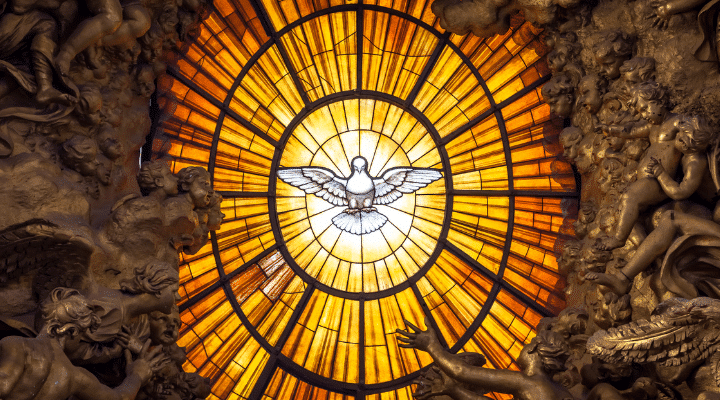
The sweet water of the Holy Spirit

Meeting with Catholic faithful in Bahrain

In the introduction to your speechhas told them that "it is beautiful to belong to a Church formed by the history of diverse faces, which find harmony in the one face of Jesus.". Taking foot of the geography and culture of the country, has spoken to them about the water that irrigates and makes fruitful so many desert areas. A beautiful image of Christian life as the fruit of faith and the Holy Spirit:

"Our humanity emerges to the surface, emaciated by many frailties, fears, challenges to be faced, personal and social evils of various kinds; but in the depths of our soul, deep inside, in the depths of our heart, flows serenely and silently the sweet water of the Spirit, which waters our deserts, reinvigorates what threatens to dry up, washes away what degrades us, quenches our thirst for happiness.

And it always renews life. This is the living water of which Jesus speaks, this is the source of new life that he promises us: the gift of the Holy Spirit, the tender, loving and revitalizing presence of God in us."

Pope Francis.

Christians, responsible for the living water of the Holy Spirit

In a second moment, the Pope stops at a scene from the Gospel according to St. John. Jesus is in the temple in Jerusalem. The feast of Tabernacles is celebrated, in which the people bless God, thanking him for the gift of the land and the crops and remembering the Covenant. The most important rite of that feast was when the high priest took water from the pool of Siloam and poured it outside the walls of the city, in the midst of the jubilant songs of the people, to express that from Jerusalem would flow a great blessing for all peoples (cfr Ps 87, 7 and especially Ez 47, 1-12).

In this context Jesus, standing up, cries out: "Whoever thirsts, let him come to me and live, and out of his belly shall flow rivers of living water." (Jn 7:37-38). The evangelist says that he was referring to the Holy Spirit that the Christians would receive in Pentecost. And Francisco observes: "Jesus dies on the cross. At that moment, it is no longer from the temple of stones, but from the open side of Christ that the water of new life will flow, the life-giving water of the Holy Spirit, destined to regenerate all humanity, freeing it from sin and death".

Expertos Fundación CARF

Pope Francis' trip to the Muslim kingdom of Bahrain. Source VaticansNews.

The gifts of the Holy Spirit

From there, the Pope points out three great gifts that come with the grace of the Holy Spirit, and asks us to welcome and live: joy, unity and 'prophecy'.

Source of joy

First of all, the Holy Spirit is a source of joy. With it comes the certainty of never being alone, because he accompanies us, consoles us and sustains us in difficulties; he encourages us to achieve our greatest desires and opens us to wonder at the beauty of life. It is not a question," observes Peter's successor, "of a momentary emotion. It is even less about that kind of consumerist and individualistic joy present in some of today's cultural experiences.

On the contrary, the joy that comes from the Holy Spirit comes from knowing that, when we are united to God, even in the midst of our fatigues and 'dark nights', we can face everything, even pain, mourning and death.

And the best way to preserve and multiply that joy," says Francis, "is to give it. From the EucharistWe can and must spread this joy, especially among young people, families and vocations, with enthusiasm and creativity.

Unit source

Secondly, the Holy Spirit is the source of unity because it makes us children of God the Father (cf. Rom 8:15-16) and therefore brothers and sisters to one another. For this reason, selfishness, divisions and murmuring among us make no sense. The Holy Spirit - the Pope points out - inaugurates the one language of love, breaks down the barriers of mistrust and hatred, and creates spaces of welcome and dialogue.

It frees us from fear and gives us the courage to go out to meet others with the disarming power of mercy. The Spirit is capable of forging unity, not in uniformity but in harmony.amidst a great diversity of people, races and cultures.

And, Francisco stresses, "this is the strength of the Christian community, the first witness that we can give to the world (...) Let us live fraternity among ourselves (...), valuing the charisms of all"..

espiritu-santo-iglesia

Source of 'prophecy

Finally, the Holy Spirit is the source of prophecy. In the history of salvation we find many prophets whom God calls, consecrates and sends as witnesses and interpreters of what He wants to say to the people. Often the words of the prophets are penetrating. Thus, Francis points out, they They "call by name the evil projects that nestle in people's hearts, call into crisis the false human and religious securities, and invite to conversion".

Well, all Christians have this prophetic vocation. Since the baptismThe Holy Spirit has made us prophets. "And as such we cannot pretend that we do not see the works of evil, stay in a quiet life so as not to get our hands dirty."

On the contrary -he adds- every Christian must sooner or later become involved in the problems of others, bear witness, bring the light of the Gospel message, to practice the beatitudes in everyday situations, which lead us to seek love, justice and peace, and to reject all forms of selfishness, violence and degradation.

And he gives the example of concern for prisoners and their needs. "For in the treatment of the least (cf. Mt 25:40) is found the measure of the dignity and hope of a society.".

In short, and this is Francis' message, Christians are called - also in a time when conflicts abound - to bring joy, to promote unity (beginning within the Church) and to get involved with things that are not going well in society. For all this we have the light and strength of grace that comes from the Holy Spirit.

As a fruit of Christ's self-giving, the Spirit makes us children of God and brothers and sisters among ourselves so that we may spread the message of the Gospel throughout the world, which is good news for all, while at the same time inviting us to work for the good of all.


Mr. Ramiro Pellitero IglesiasProfessor of Pastoral Theology at the Faculty of Theology of the University of Navarra.

Published in Church and new evangelization.

"Witnesses of mercy and hope": Teachings of Pope Francis

April 21 will go down in history as a date of profound significance for the Catholic Church. On that day, the world received the news of the death of Pope FrancisThe first Jesuit and Latin American pontiff, who strongly marked the course of the Church in the 21st century. In a coincidence that many have interpreted as providential, that same day saw the publication of a book titled "Witnesses of mercy and hope. The teachings of Pope Francis for the 21st century."written by Spanish theologian Ramiro Pellitero.

Published by St. Paul's, this volume offers a profound and systematic exposition of the thought of Pope Francis from a theological and pastoral perspective. It is a work intended for both specialists and the general public who wish to understand in depth the keys to a pontificate that has left an indelible mark on the recent history of the Church.

Download 1st chapter: Witnesses of mercy and hope. The teachings of Pope Francis for the 21st century.

A spiritual testament in life

The publication of this book on the same day of the pope's death has given the work an almost testamentary character. Although it was not written by the pontiff himself, Witnesses of mercy and hope rigorously reflects his great intuitions and priorities: a Church on the move, centered on mercy, committed to the poor and called to heal the wounds of the world.

Ramiro Pellitero, professor of Theology at the University of Navarra and author of multiple essays on ecclesiology, presents in this volume a clear, profound and well-documented synthesis of the magisterium of Pope Francis. Through its pages, readers will be able to explore the ideas that have animated the encyclicals, exhortations, speeches and gestures of the Argentine pontiff during his pontificate.

Cardenal José Tolentino de Mendoça

Prologue by Cardinal José Tolentino de Mendonça

The work has a valuable prologue by Cardinal José Tolentino de Mendonça, Prefect of the Dicastery for Culture and Education, who highlights the theological and pastoral value of the book. In his words, the Portuguese cardinal underlines that this volume "is not only a reading of Francis' thought, but an invitation to live it, to incarnate it in the daily commitment of believers with Christian hope".

Tolentino, recognized for his spiritual sensitivity and his ability to build bridges between faith and contemporary culture, also points out the timeliness of the publication, which coincides with the need to preserve and deepen the legacy of Pope Francis: "The teaching of Francis does not end with his earthly life; it lives on in every gesture of mercy, in every word of comfort, in every courageous decision of those who seek to renew the Church from the Gospel".

Testigos de misericordia y esperanza

Montage made by ChatGPT of the book Witnesses of mercy and hope.

A reference work for our time

Structured in thematic chapters, Witnesses of mercy and hope addresses central issues of Francis' thought: mercy as the core of the Christian message, the role of the poor as evangelizing subjects, integral ecology as an expression of justice, ecclesial reform as a path of conversion, and synodality as a style of a Church that listens, discerns and walks together.

The author places special emphasis on the pastoral character of Pope Francis: a style of government that favors encounter, closeness and tenderness. Far from proposing an abstract or academic theology, Francis has wanted to speak to the heart of people, especially those who suffer. The book faithfully captures this dimension, showing how Francis exercised his Petrine ministry in a profoundly evangelical spirit.

A providential tribute

The coincidence between the publication of the book and the death of Pope Francis has been received with emotion by many sectors of the Church. Not a few see in it a providential homage: a written summary of his legacy that reaches the world just as the Pope is returning to the Father's house. The very title of the book - Witnesses of mercy and hope - perfectly sums up the spirit of Francis and the message he leaves to humanity.

Now available in religious bookstores and digital platformsThis book is an indispensable reading for those who wish to deepen their understanding of the spiritual richness of Francis' pontificate and continue to make his legacy bear fruit in the Christian communities of the world.

A legacy that continues

The death of Pope Francis marks the end of an era, but not the end of his influence. His thought, his gestures and his example will continue to illuminate the path of millions of believers. Books such as Ramiro Pellitero's help to preserve and transmit this legacy, and offer tools to live the Gospel today with audacity, compassion and hope.

With this publication, the Church not only looks back with gratitude, but prepares to move forward, inspired by one of the most significant pontificates of our era.

Leo XIV: two priests from Peru speak about him

Father Erick Vílchez is a Peruvian who personally knew the Pope Leo XIV. When he was a seminarian and was training to be a priest, he attended the episcopal ordination of Robert Francis Prevost as master of ceremonies. He belongs to the territorial prelature of Chota, suffragan of the archdiocese of Piura.

"I have known Pope Leo XIV since he was Apostolic Administrator of the Diocese of Chiclayo. As those who know him have stated, I always saw him as a very close person, with a great capacity for dialogue, who knows how to listen, smiling and very obedient. He has a lot of strength. But above all I would emphasize his deep love for the Church."emphasizes Don Erick.

But what he remembers most fondly was the day he participated as master of ceremonies in the episcopal ordination of Leo XIV on December 12, 2014.

Erick's first encounter with the Pope Leo XIV The first time I spoke with Monsignor Robert, when he had just arrived in Chiclayo, I introduced myself and told him: "Monsignor, we are in charge of the liturgy, we are here to serve". I remember that with his simplicity and with a smile he answered me: "Well, just in case, I am very obedient. So let's prepare in the best way". There, I saw that closeness, his simplicity of that then Monsignor Robert, now Holy Father", declared Erick.

An agreement with the University of Navarra

Don Erick was formed and studied at the seminary of St. Toribio de Mogrovejo in Chiclayo (Peru) when Monsignor Robert Francis Prevost Martinez was bishop of the diocese. He was ordained in 2019 at the age of 26. He is currently studying for a Licentiate in Dogmatic Theology at the Ecclesiastical Faculties of the University of Navarra.

The seminar has a agreement with the Faculty of Theology of the University of Navarra for the affiliation of the theological quadrennium of the seminary. This agreement was endorsed by a decree of the Congregation for Catholic Education on seminaries and institutes of study, which is renewed every five years.

On May 8 last year, the company was awarded the baccalaureate exam of four seminarians of Santo Toribio with the visit of the Prof. Félix María Arocenaof the University of Navarra.

In a prison in Chiclayo

Erick also recalls that he met Bishop Prevost in a prison in Chiclayo to assist prisoners and celebrate the sacraments in prison. "In some conversations I had with him, he insisted that we must be formed with a missionary mentalityWe need to value the sense of mission, starting with our own, with those closest to us," he points out.

This Peruvian priest is hopeful that the new Pope Leo XIV, who has dual American and Peruvian nationality, will encourage many young Peruvians to consider returning to the Catholic Church and others to join the Catholic Church. deepen their vocationwhether to become a priest, for religious consecration or as a lay person, celibate or in a vocational marriage commitment.

I am very excited!

"The Pope is always the Pope, but we are very happy to have a Peruvian Pope, I feel very excited," exclaims Erick.

Don Christian, Canon Law student in Navarra, Spain

Christian Munayco Peves is another Peruvian priest, a native of Cañete, who has just finished his degree in Canon Law at the University of Navarra. He belongs to the diocese of Ayacucho in the highlands of the Peruvian Andes. He completed his philosophical-theological studies at the San Martin de Porres Major Seminary in Lima and concluded them at the Juan XXIII Higher Institute of Theological Studies.

He was ordained a priest on the feast of St. Josemaría Escrivá, June 26, 2021. Christian tells how he met Leo XIVMy archbishop was twice elected president of the bishops' conference. That meant that I was constantly coming to the bishops' conference to meet and discuss matters. In the corridors of the conference I remember meeting the man who is now the Holy Father. We exchanged a cordial greeting, but not beyond that. Of those few experiences, I can say that he is an affable, friendly person, of few words, but above all extremely simple and close".

The missionary spirit of Leo XIV

For him, Pope Leo XIV has been a shepherd in constant communion and communication with his faithful, and his visit to Peru only recognizes that God can be followed and served outside our own lands, with a missionary spirit of service, abnegation and personal oblivion.

He also says that, among his fellow Peruvians, knowing that the Pope knows his territory very well, "we appreciate it with great courage, his stance of always confronting with the truth, realities and circumstances that have demanded his defense and listening, on issues concerning social order, charity and justice".

The Pope and the youth

For this priest, who comes from a deeply Catholic family that guided him on the path of his vocation, the election of a Peruvian Pope will stir the conscience of the young people of Peru to consider their vocation: "Undoubtedly, this election is a living and effective testimony that one can be happy in the midst of the world, serving and working in God's enterprise, saving souls.

The environment in which Pope Leo worked-both as an Augustinian religious and as a bishop- was always in the midst of young people, the same people who, since their election, have been called to rethink with greater interest their closeness to the Church and the parish, to reconsider that, in parallel to the life and professional work that each one of them carries out, one can be a saint, with that patent restlessness of knowing that many times God asks for more, because he knows more, and because he wants more from those he loves", he affirms.

"Do not be afraid!"

For him, the first words of the Holy Father on Sunday in the Regina Coeli to young people: Do not be afraid, accept Christ's invitation! We refer with special affection to the words of St. John Paul II, also at the beginning of his pontificate.

"Therefore, it is a message of hope.We cannot be afraid to experience a life that, for purely human reasons, tends to go against the designs and proposals of love and forgiveness outlined by Jesus.

Faced with this dissonance, God counts on us to be co-redeemersto carry with him the cross of human logic, which often tries to diminish the value and validity of his message. Therefore, the message of "not being afraid" invites us to bet on the truth, even though its defense entails the offensive of suffering, exclusion, or injustice, but behind it opens a huge door to heaven," Christian explains.

Erick Vilchez y

Testimony of priestly life

This young priest believes that today, to care for vocations in general, and in Peru in particular, the answer is: with a true witness of priestly life. "For this reason, I cannot fail to thank the Spanish missionary priests who, leaving their homelands, promoted priestly vocations in my parish. They were faithful witnesses and credible models that opting for the priesthood was a decision that led to happiness".

For Don Christian, the papal election has been very joyful news for all Peruvians.It has not only awakened overflowing and gratifying emotions, but has also given us back our enthusiasm for the things of God, and that important spiritual sense of identification and belonging to our local Church".

Pope speaks of unity

He is also struck, with a deep sense of hope, by the fact that the Pope has spoken of unityThe Church, in the midst of a world divided by hatred, political calculations, wars of arms, but also by wars of a spiritual nature that try to divide the Church, is a world divided by hatred, political calculations, wars of arms, but also by wars of a spiritual nature that try to divide the Church.

"We trust that, assisted by the Holy Spirit, and united to our prayers, the Church will go in the right direction, because it has a good shepherd whose goal is to ensure that each of his sheep not only walk in the good fold, but above all that they do not get lost. I want to take this opportunity to thank the CARF Foundation for allowing many of us priests to be trained to serve with better academic means the people that God entrusts to us", concludes Christian Munayco Peves.


Marta Santínjournalist specializing in religion.

What is the Rosary and why is Our Lady of the Rosary important?

The Holy Rosary is a Marian prayer that takes on even more meaning during the month of May, the month dedicated to Our Lady. Praying it throughout the month (and throughout life!) is an act of love and gratitude to Mary, our Mother, who always guides us to her Son, Jesus Christ.

Another important date is also worth noting, the October 7, day dedicated to the Feast of the Virgin of the Rosary. As St. Josemaría Escrivá used to say: "The Rosary is a powerful weapon that we Christians have to confront evil.

Offering it for priests and vocations is especially valuable and is in line with the prayers Pope Leo XIV has asked of us. At the CARF Foundation (learn about our work to help seminarians and priests) we understand the importance of these prayers to support the mission of the integral formation of seminarians and diocesan priests and religious men and women without financial resources throughout the world. Each Hail Mary is an act of faith that can transform lives, supporting those who have given their lives to the service of God and his Church.

Virgen María

How to pray the rosary: a practical guide

From the CARF Foundation we would like to invite you to join us in prayer by offering the Holy Rosary in a special way for our priests and for the vocations that will build the future of the Church. It is an opportunity for us to place in the hands of our Mother those who are already serving, and those who are in the process of formation. Follow these simple steps and offer each mystery with a heart full of faith:

  1. Persevere: "By the sign of the Holy Cross, deliver us from our enemies, O Lord our God. In the name of the Father, and of the Son, and of the Holy Spirit. Amen.
  2. Pray a My Lord Jesus ChristAsk for forgiveness for our sins. You can also ask for the strengthening of all priests and for the challenges they face in their mission.
  3. In every mystery, before starting it meditates briefly on its contentsDepending on the day of the week, we will pray a different one. And offer it for someone or something special. To pray the corresponding mystery, begin with an Our Father and ten Hail Marys. Repeat this cycle five times, one decade of Hail Marys for each mystery, completing the contemplation of the five mysteries of the day.
  4. At the end, a Gloria after each decade, giving thanks for all the help we are asking for. End the mystery with this prayer: Mary, Mother of Grace, Mother of mercy and mercy, defend us from our enemies and protect us now and at the hour of our death. Amen.
  5. After the five mysteries, you can recite the lauretan litanies.
  6. At the end ofIf you wish, end the Rosary with the recitation of a Salve.

The mysteries of the Rosary: a path of prayer for our priests

As we pray the Holy Rosary, we reflect on the joyful, luminous, sorrowful and glorious mysteries. Each of these moments invites us to reflect on the life of Jesus and Mary, and gives us the opportunity to offer our prayers for those most in need.

Misterios gozosos

Joyful Mysteries: Monday and Saturday

The joyful mysteries invite us to reflect on the first years of Jesus' life and the joy of his coming into the world: the annunciation or incarnation of the Son of God; the visitation of Mary to St. Elizabeth; the birth of the Son of God in Bethlehem; the purification of our Mother and the presentation of her son in the temple; and the child lost and found in the temple.

Misterios dolorosos

Sorrowful Mysteries: Tuesday and Friday

The painful mysteries They fill us with hope by reminding us of all the sufferings, self-giving and love of Jesus before the resurrection and the victory of Christ over death: the prayer in the Garden of Olives; the scourging of the Lord tied to the pillar; the crowning with thorns; the cross on the road to Calvary; and the death of Jesus on the cross.

As we pray these mysteries we ask Mary to continue to inspire new priestly vocations, especially in these times when the world needs committed and very holy priests. Through her intercession, may the young people hear God's call and feel strengthened to dedicate their lives to the service of the Church and others.

Misterios luminosos

Luminous mysteries: Thursday

The luminous mysterieswhich were created by St. John Paul IIhighlight some moments of Jesus' public life, such as his baptism; the miracle of the wedding at Cana; the preaching and proclamation of the kingdom of God; the transfiguration of the Lord; and the institution of the Eucharist.

As we pray these mysteries, we can pray for priests who are already serving, that they may continue to lead their communities with good humor, wisdom and compassion.

Misterios gloriosos

Glorious Mysteries: Wednesday and Sunday

With the mysteries glorious we rejoice in the triumph of Jesus over death and sin, over evil and the devil. We will meditate on his surrender on the cross that redeems us and with his resurrection opens the gates of heaven; the ascension of the Lord to heaven; the coming of the Holy Spirit upon the apostles and his mother Mary; the Assumption into heaven body and soul; and the coronation as queen and mistress of all creation.

Prayer for priestly vocations and for diocesan priests is an act of love on this feast; a gesture of faith that strengthens those who dedicate their lives to the service of God and a commitment to the future of our Church.

Why Our Lady of the Rosary is important

The feast of the Virgin of the Rosary, celebrated every October 7, is one of the most significant Marian commemorations in the Catholic liturgical calendar. This celebration not only honors the Virgin Mary under the invocation of the Rosary, but also commemorates historical and spiritual events that have deeply marked Christian devotion.

Table of contents summary

How to pray the rosary: a practical guide

The mysteries of the Rosary: a path of prayer for our priests

Joyful Mysteries: Monday and Saturday

Sorrowful Mysteries: Tuesday and Friday

Luminous mysteries: Thursday

Glorious Mysteries: Wednesday and Sunday

Why Our Lady of the Rosary is important

St. John Paul II and his family

St. John Paul II had a great affection for his parents. Admittedly, this kind of devotion is not common, as some people would find such a photograph nostalgic and sad. Karol Wojtila, on the other hand, kept his parents present until his departure for heaven.

Emilie Kaczorowska, the mother of St. John Paul II

Emilia always presented similarities with her son Karol, with a square and massive face, big eyes and a protruding nose. The daughter of poor artisans, her life was painful, for she soon became a motherless child. She was a woman of strong faith and ardent piety, with a special inclination to Marian devotions. She never enjoyed good health, but the birth of Karol gave her the strength and joy of seeing a healthy and robust child grow up, in contrast to a daughter who six years earlier had died at birth. Emilia had found in a young military man, who would become a captain, the ideal partner for the adventure of starting a family.

He was attracted not only by his good manners and courtesy but also by his deep piety. Stationed in the garrison of the small town of Wadowice, Captain Wojtyla had a modest salary and led a somewhat routine life. He spent many hours away from home, although he arrived home in time to share a peaceful family life, in which prayer and meditation played a prominent role, but also readings in the history and literature of Poland, the homeland that had regained its independence in 1918. As one of the pope's biographers put it, that home was a little Nazareth.

Words of St. John Paul II about his mother: "She was an exceptional woman... I owe my first religious education to her".

Padres de Karol

Photograph of Karol Wojtyla's parents on his wedding day.

Karol Wojtyła (father)

He was always a man of deep faith and discipline, whose life forever marked his son, the future St. John Paul II. He was a retired Austro-Hungarian military officer and later a Polish officer. After the death of his wife Emilia, he took on the rearing of Karol alone, instilling in him Marian devotion, love of prayer and fortitude in the face of adversity.

An austere but affectionate man, he took him to daily Mass and taught him to pray on his knees, even in times of Nazi occupation. His sudden death in 1941 left the young Karol an orphan at the age of 21, but his example of silent piety and dedication to God became the spiritual foundation of his vocation. John Paul II would always remember his father as his "first spiritual guide," the one who showed him that "holiness is not a luxury, but a duty"..

John Paul II's reflection on his father: "My father was a man with a great interior life... With him I learned to pray.".

san Juan Pablo II en brazos de su padre y su madre

The emptiness he experienced in his early years

At the age of nine, young Karol, familiarly known as Lolek, will witness the death of his mother. He is forty-five years old and has been the victim of nephritis. His father, who was fifty in 1929, was forced to retire from the army to take care of his young son.

There is also an older son of twenty-three years, Edmund, who some time before had gone to nearby Krakow to study medicine. This son, stationed in various hospitals, will make frequent visits to the family home to find his father and brother. However, in 1932, when he was only twenty-six years old, Edmund died of scarlet fever. He had caught it from a sick woman whom he had endeavored to cure. Such was his generous and energetic character and his passionate dedication to his vocation as a doctor.

On the road to his vocation to the priesthood

Both Karol, father and son, stay in the Wadowice home. The father prepares the meals, takes care of the cleaning and supervises the child's homework. In addition, in that house many rosaries are prayed, a way to get closer to the heavenly Mother. in the absence of the earthly mother. The son first attends a municipal school, and then the city high school. He is an outstanding student in many subjects, especially in religion, and will also be a hard-working soccer goalkeeper, who wins the sympathy of his classmates, among whom there are many Jews.

Before World War II, about a third of the city's population was Jewish. The young Karol will be impressed by the extreme care Jews put into their religious rites, which sometimes contrasts with empty Christian churches and routine piety. Many years later, when visiting the synagogue in RomeAs pope, he will affirm that "the Jews are our elder brothers in the faith".