Confirmation unites the Church more intimately and enriches it with a special strength of the Holy Spirit, and thus those who receive it are obliged to spread and defend the faith through word and deed, as true witnesses of Christ.Catechism of the Catholic Church, 1285.
Why do we receive Confirmation?
The Sacrament of Confirmation, together with the sacrament of the Baptism and the sacrament of the Eucharist make up the whole of the the sacraments of Christian initiation. These are sacraments whose reception is necessary for the fullness of the grace we receive and are intended for all Christians, not just a select few.
It is conferred when the candidate has reached the use of reason, there is no obligatory age, but its character of initiation must be taken into account. To receive Confirmation, prior instruction, a true intention and the state of grace are required.
The term indicates that this sacrament ratifies the baptismal graceIt strengthens our relationship with the Church and gives us a special strength from the Holy Spirit to defend the faith and confess the name of Christ.
The power of the Holy Spirit
Confirmation, like Baptism, imprints on the Christian's soul a spiritual sign or indelible character; this is why this sacrament can only be received once in a lifetime. Catechism of the Catholic Church, 1302-1305.
Like every sacrament, Confirmation is the work of God, who is concerned that our life be shaped in the image of his Son, to make us capable of loving like him, infusing us with the Holy Spirit.
This Spirit acts with his power in us, in the whole person throughout life. When we welcome him into our hearts, Christ himself becomes present and takes shape in our lives.
What are the effects?
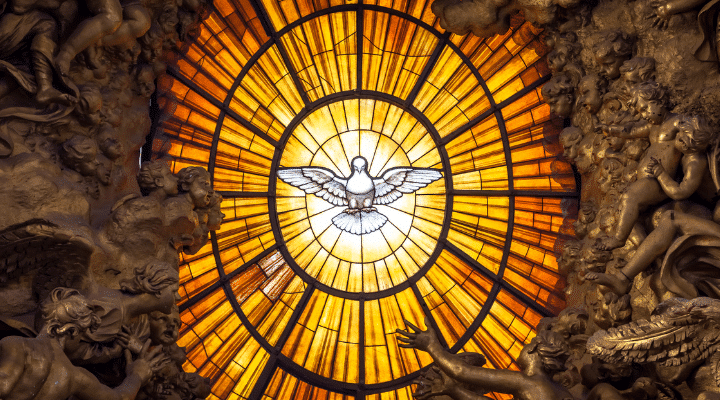
The effect of the sacrament of Confirmation is the special outpouring of the Holy Spirit, as it was once granted to the Apostles on the day of Pentecost. Pope Francis tells us that it is the Spirit who moves us to come out of our selfishness and to be a gift to others.
For this reason,Confirmation confers growth and depth to baptismal grace
It introduces us more deeply into the divine filiation. Grant a special power of the Holy Spirit in our lives to spread and defend the faith by word and deed as true witnesses of Christ, to confess the name of Christ boldly and to never be ashamed of the cross.
Increase in us the gifts of the Holy Spirit. It unites us more firmly to Christ because it grants us the special strength of the gifts of the Holy Spirit.
It makes our bond with the Church more perfect. It unites us more strongly to the members of the Mystical Body of Christ, which is the Church. Thinking of the Church as a living organism, composed of people who walk together in community with the bishop, who is the original minister of confirmation and who links us to the Church.
Who can receive it?
"Confirmation is received only once, but its spiritual strength is sustained over time and encourages spiritual growth with others." Pope Francis.
Every baptized person, not yet confirmed, can and should receive the sacrament of Confirmation. The sacraments of Baptism, Confirmation and Eucharist form a unity, therefore, the faithful have the obligation to receive this sacrament in a timely manner, for Without Confirmation and the Eucharist, the sacrament of Baptism is certainly valid and efficacious, but Christian initiation remains incomplete.
In other cultures this sacrament is administered immediately after Baptism and is followed by participation in the Eucharist, a tradition that emphasizes the unity of the three sacraments of Christian initiation.
In the Latin Church this sacrament is administered when "the age of reason" has been reached. However, in danger of death, children must be confirmed even if they have not yet reached the age of reason.
There is a preparation for the sacrament that helps to feel part of the Church of Jesus Christ. Each parish is responsible for the preparation of the confirmands.
To receive Confirmation it is necessary to be in a state of grace. It is advisable to go to confession and make a good examination of conscience before the sacrament. In this way, to be purified in attention to the gift of the Holy Spirit.
It is necessary to prepare oneself with a more intense prayer to the Holy Spirit in order to receive his strength and graces with docility and availability. For Confirmation, as for Baptism, it is advisable that the candidates seek the spiritual help of a sponsor.
Sacrament Liturgy
"It is necessary to receive the Holy Spirit in recollection and prayer." Pope Francis.
The rite has several liturgical gestures that express the depth of this sacrament of Christian initiation. Before receiving the anointing that confirms and reinforces the grace of baptism, the candidates are called to renew the baptismal promises and make profession of faith.
After a prayerful silence, the Bishop extends his hands over the confirmands and invokes the outpouring of the Spirit upon them. The Spirit enriches the members of the Church with his gifts, thus building unity in diversity.
Consecration of Holy Chrism
It is an important moment that precedes the celebration, but in a certain way is part of it, is the consecration of the holy chrism.
It is the bishop who, on Ash Wednesday, during the Chrism Mass, consecrates the holy chrism for his entire diocese. The holy chrism is composed of olive oil and balsam and the anointing of the confirmandi with it is a sign of his consecration.
With the renewal of the promises of Baptism and the profession of faith by the confirmands, the liturgy of the sacrament begins. The Bishop extends his hands over all the confirmands, a gesture which, since the time of the Apostles, is the sign of the gift of the Spirit. The bishop thus invokes the outpouring of the Spirit:
"Almighty God, Father of our Lord Jesus Christ, who didst regenerate, by water and the Holy Ghost, these thy servants, and didst deliver them from sin: hear our prayer and send upon them the Holy Spirit the Paraclete; fill them with the spirit of wisdom and understanding, with the spirit of counsel and might, with the spirit of knowledge and godliness; and fill them with the spirit of thy holy fear. Through Jesus Christ our Lord."Ritual, 25.
Anointing with oil
Through the anointing with oil on the forehead, the confirmand receives "the mark", the seal of the Holy Spirit.. The anointing of the holy chrism after a sacrament is the sign of a consecration. A visible sign of the invisible gift we are receiving.
Those who are anointed participate more fully in the mission of Jesus Christ and in the fullness of the Holy Spirit that he possesses, so that their whole life may give off Christ. the anointing of the perfumed oil or chrism, which indicates how the Spirit enters into the deepest part of us, beautifying us with so many charisms.
Thus, the sacrament is conferred with the anointing of the holy chrism on the forehead and pronouncing these words: "Receive by this sign the gift of the Holy Spirit". An indelible character that configures us more fully to Jesus and gives us the grace to spread the good odor of Christ throughout the world.
"Receive by this sign the gift of the Holy Spirit."Paul VI, Apostolic Const. Divinae consortium naturae.
Kiss of peace
It concludes the rite of the sacrament. It signifies and manifests ecclesial communion with the bishop and with all the faithful. This incorporation into the ecclesial community is manifested in the sign of peace with which the rite concludes. The Bishop says to each confirmand: "Peace be with you".
These words remind us of Jesus' greeting to his disciples on Easter night and express the union with the Pastor of that particular church and with all the faithful. Moment that we remember during the
"Apostle is the Christian who feels grafted into Christ, identified with Christ, by Baptism; enabled to fight for Christ, by Confirmation; called to serve God by his action in the world, by the common priesthood of the faithful, which confers a certain participation in the priesthood of Christ, which - being essentially distinct from that which constitutes the ministerial priesthood - enables one to take part in the worship of the Church, and to help men on their way to God, by the witness of word and example, by prayer and atonement. St. Josemaría Escrivá, Christ Is Passing By, 120.
Meaning of the sacrament in the Bible
Thus, it possesses an intrinsic unity with Baptism, although it is not necessarily expressed in the same rite. With it, the candidate's baptismal patrimony is completed with the supernatural gifts characteristic of Christian maturity.
In the Old Testament, the prophets announced that the Spirit of the Lord would rest upon the expected Messiah "The Spirit of the Lord Yahweh is upon me, because Yahweh has anointed me. To preach good news to the poor he has sent me." Isaiah 61 1-2
Then God says to all the people, "I will infuse my spirit in you and cause you to conduct yourselves according to my precepts." Ezekiel 36:27.
The Baptism of Jesus was the sign that he was the one who was to come, the Messiah, the Son of God. Having been conceived by the work of the Holy Spirit, his whole life and his whole mission are realized in total communion with the Holy Spirit that the Father gives him "without measure".
At several points in the New Testament, Jesus promised this union with the Spirit. He did so first on the day of Easter and then on the day of Pentecost.
Filled with the Holy Spirit, the Apostles begin to proclaim the wonders of God and Peter declares that this outpouring of the Spirit is the sign of the messianic times. The Acts of the Apostles recounts that those who believed in the apostolic preaching and were baptized received in turn the gift of the Holy Spirit through the laying on of hands and prayer.
It is this imposition of hands that has been rightly considered by Catholic tradition as the primitive origin of the sacrament of Confirmation, which perpetuates in the Church the grace of Pentecost.
"Don't just speak to the Paraclete, hear Him!"St. Josemaría Escrivá.
Baptism and Confirmation. Catechesis of Pope Francis
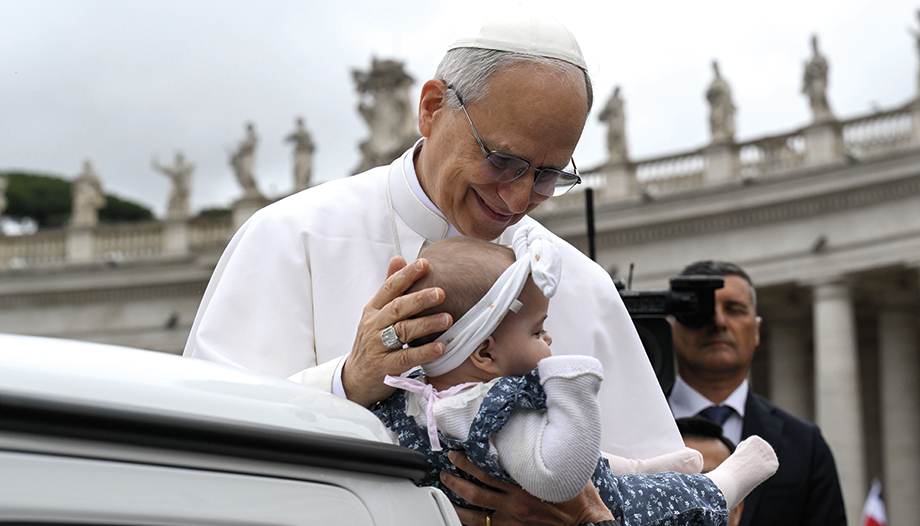
Header photo: Justin McLellan, Catholic News Service (CNS) Vatican City.
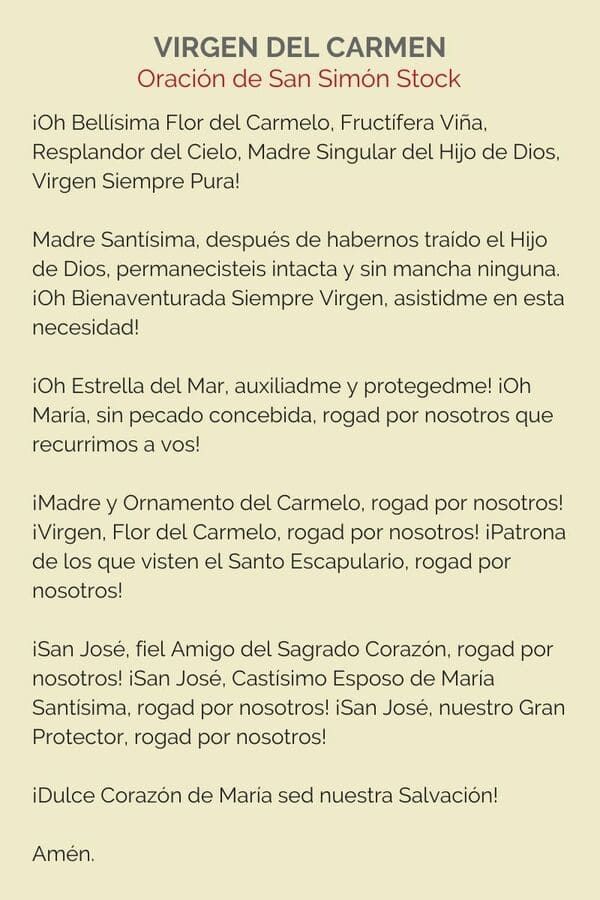
Virgen del Carmen, July 16: traditions in her honor
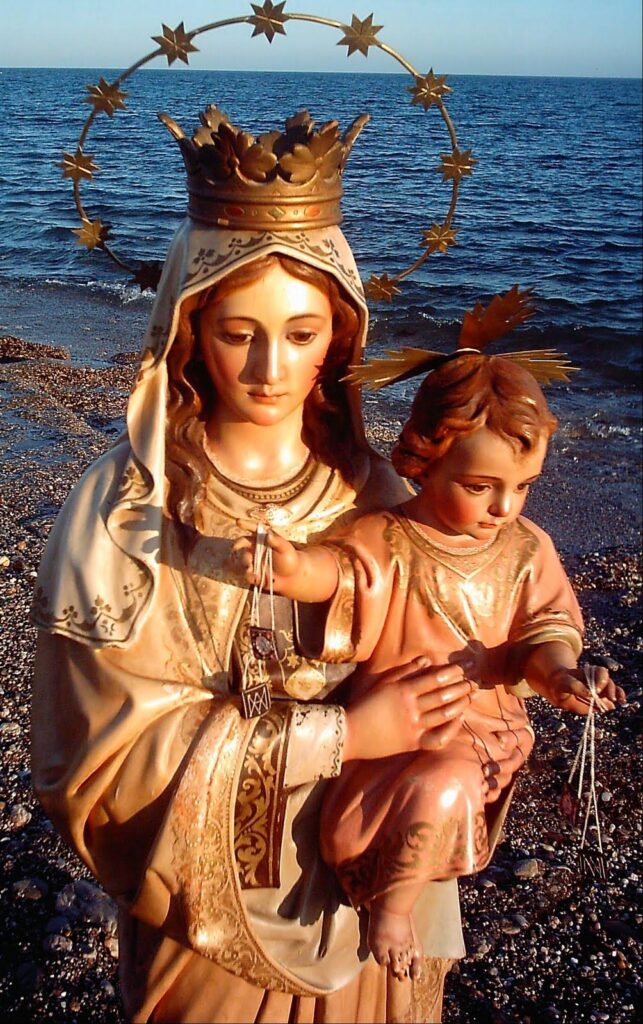
The Virgin of Mount Carmel is one of the most beloved and venerated invocations in the Catholic Church. Her feast day, celebrated every July 16, stands out for its customs and traditions that vary in each region, but share a deep love and devotion to this Marian invocation. She is venerated as the patron saint of sailors and her influence extends across continents and cultures.
St. Josemaríathe founder of Opus Dei, had a deep devotion to Our Lady of Mount Carmel. In one of his homilies, he said: "Let us go to Our Lady of Mount Carmel with complete confidence, for under her mantle we find refuge and protection". This testimony resounds in the hearts of many of the faithful who see in Our Lady of Mount Carmel a protective Mother.
History and origin of the devotion
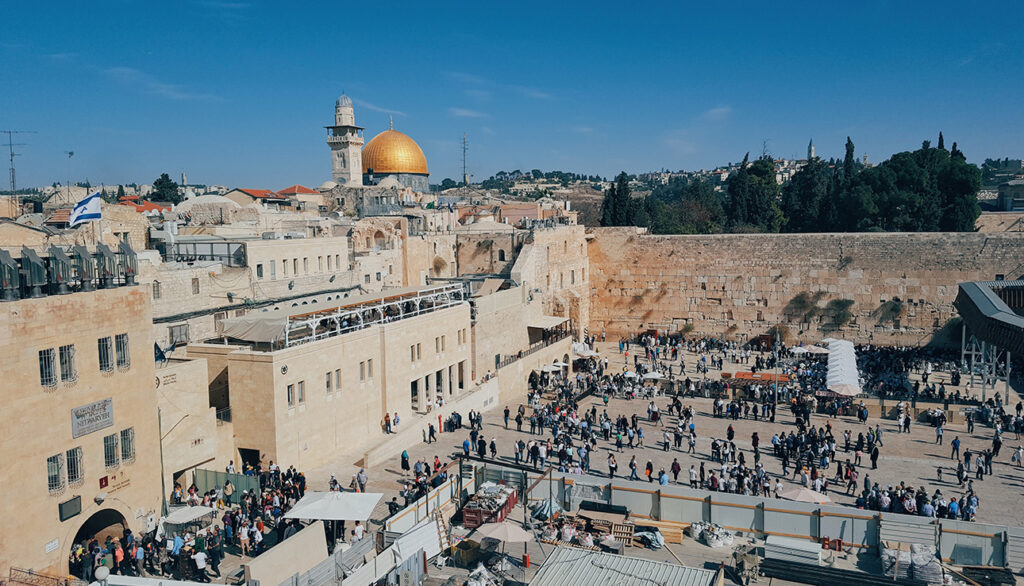
The devotion to Our Lady of Mount Carmel has its roots on Mount Carmel in Holy Landwhere the first Christian hermits are said to have lived. These hermits, inspired by the prophet Elijah, worshipped Mary as the Carmel Flower. The Carmelite order, founded in the 12th century, adopted Our Lady of Mount Carmel as its patroness and spread her devotion throughout the world.
Today, Pope Francis has also spoken about the importance of Our Lady of Mount Carmel, highlighting her role as guide and protector of sailors and fishermen. In a general audience, he commented, "Our Lady of Mount Carmel is a star that guides those who seek peace and security in their faith."
Protector and patroness of sailors
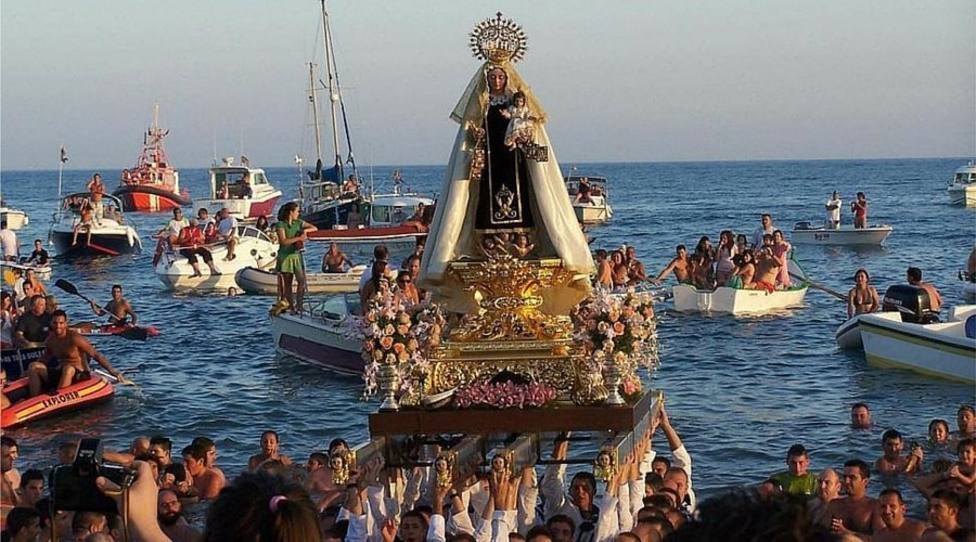
The Virgen del Carmen is venerated as the patron saint of sailors, a devotion that has deep roots and a rich history. Every July 16, in various coastal towns, maritime processions are held in honor of the Virgin. These festivities are not only a show of faith, but also a tradition that unites entire communities in an act of devotion and hope.
The maritime processions are impressive spectacles where the boats are decorated and carry the image of the Virgin along the coast, symbolizing her constant protection over the sailors.
The maritime procession is accompanied by the blessing of the waters and is a much awaited event in the life of the fishing communities, where, for example, several localities in the province of Cadiz celebrated with great fervor and participation. The same happens in many other places, but as an example we can mention the love of Galicia by the Virgen del Carmen.
Drivers, carriers, armed forces, police, firefighters, prison services, even a multitude of countries - throughout Latin America, Spain and Italy - have entrusted themselves to the protection of Our Lady of Mount Carmel.
The scapular, faith and protection
The history of the Virgin of Mount Carmel is also linked to the scapulara symbol of protection and Marian devotion. On July 16, 1251, Our Mother appeared to St. Simon Stock, superior general of the Carmelites, and gave him the scapular, promising her protection to those who wore it with faith, and said: "Whoever dies with it will not suffer eternal fire".
Pope Pius XII alludes to this fact when he says: "It is not a matter of little importance, but of the attainment of eternal life in virtue of the promise made, according to tradition, by the Blessed Virgin".
Also recognized by Pius XII, there is a tradition that Our Lady, to those who die with the Holy Scapular and expiate their sins in Purgatory, with her intercession will make them reach the heavenly homeland as soon as possible, or, at the latest, on the Saturday following their death. The scapular of Carmel is a sacramental.
Today, the use of the scapular is a very widespread devotion among the devotees of the Virgin of Mount Carmel. This small garment, reminiscent of the Carmelite habit, is worn around the neck and symbolizes that yoke which Jesus invites us to carry, but which Mary helps us to carry. Those who wear it commit themselves to live a life of prayer, devotion to the Blessed Virgin Mary and commitment to the Church.
Recent Popes have demonstrated a deep devotion to the Scapular, reflecting their love and faith in this powerful intercessor. St. John Paul II lived it throughout his life. "It was no secret that he wore the scapular all his life and spoke of it as an expression of his particular love for the Virgin Mary," (Fr. Miceal O'Neill, Carmelite).
How to prepare for the party?
The novenas in honor of Our Lady of Mount Carmel are common in many Catholic parishes. Where missions are also organized to visit the sick and needy, bringing the consolation and blessing of the Virgin.
If you are going to pray the novena on your own, start with a novena calendar to Our Lady of Mount Carmel that includes daily readings, prayers and reflections that bring you closer to the spirituality of this Marian devotion. The novena to Our Lady of Mount Carmel is an opportunity to strengthen your faith, pray for your personal intentions and prepare to celebrate the feast of Our Lady of Mount Carmel with devotion, and never forget to pray for priests and their holiness.
Participating in this novena to Our Lady of Mount Carmel will allow you to arrive on July 16 with a renewed heart full of hope. Take this opportunity to deepen your relationship with Our Lady of Mount Carmel and prepare to live the feast in a meaningful way.
Celebrate with us the feast of Our Lady!
July 16 is much more than a date on the calendar: it is a day of deep devotion and celebration in honor of the Virgin Mary. Virgin of Carmen. On that day, Catholics from all over the world unite in churches, where solemn Masses become a moment of union in prayer to ask for the protection and guidance of the Virgin of Mount Carmel.
Throughout the day, floral offerings are made, processions and liturgical events that fill the streets and churches with an atmosphere of faith and hope. Therefore, July 16 is an opportunity to reflect, celebrate and act. We invite you to unite your prayer to a concrete action through your support to the CARF Foundation. Your donation is a tangible way to live your faith, extending the love of Our Lady of Mount Carmel to those who need it most.
In the words of St. Josemaría, "Our Lady of Mount Carmel is a mother full of mercy who calls us to follow her Son with generosity and love. He also affirmed that "few Marian devotions are so deeply rooted among the faithful and have so many blessings from the Popes.
This July 16, celebrate with us leaving your mark helping to sow the world of priests and the smile of God on Earth. Happy feast of Our Lady of Mount Carmel!
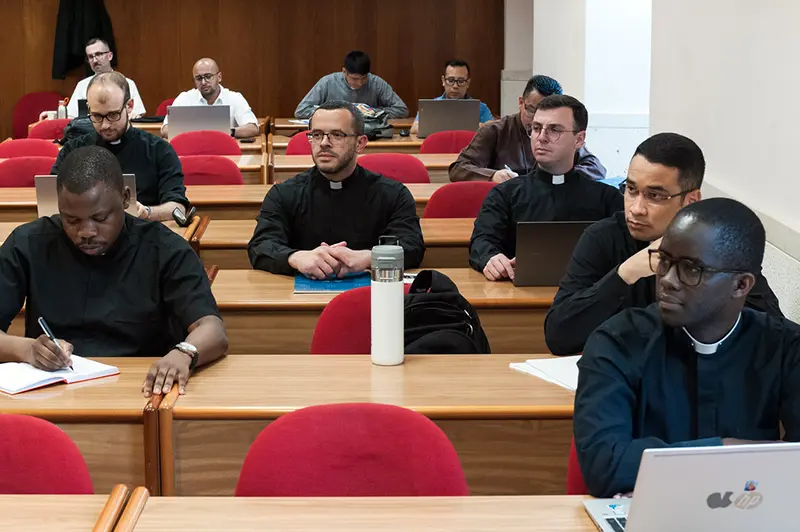
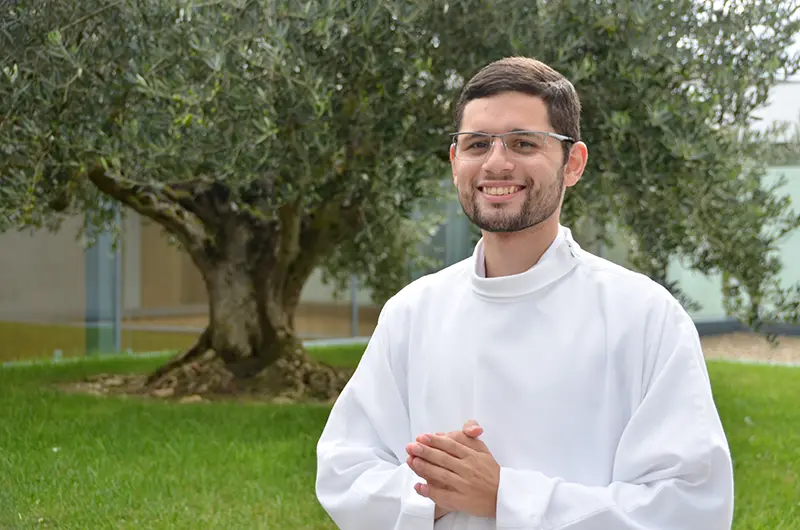
During the path to the priesthood, seminarians are not only formed in the study of theology or in the spiritual life. They also prepare themselves to exercise a key and profoundly human task: accompanying, serving and caring for people in their life of faith. This is called pastoral ministry: an experience that not only enriches their formation, but also allows them to experience what their future ministry as priests will be like.
At the CARF Foundation, we accompany hundreds of seminarians from all over the world who, thanks to the help of our benefactors, receive an integral formation. An essential part of this formation is precisely to leave the classroom and the oratory or chapel of the seminary to meet people where they are. But what does this task really mean, what is its function in the seminary, is it just another practice or something essential?
Part of the heart of the priest's ministry
The word comes from the Latin term pastorwhich means shepherd of the sheep. In the Church, this evangelical image refers to the care of God's people, just as Jesus Christ, the Good Shepherd, did. To live pastoral care, therefore, is nothing other than to to go out to meet people, guide them, listen to them, accompany them and offer them the nourishment of faith..
For a seminarian, this aspect of formation is as important as the study of Philosophy, Theology or Liturgy. Through it, the future priest learns to:
To know closely the reality of the Church and the world.
To accompany concrete people, with their stories, wounds and hopes.
Develop a special sensitivity to serve, without judging or imposing.
To discern with greater clarity if his vocation is truly to be a director of souls.
A moment of encounter and joy in the path of formation and service.
It is not an academic exercise: it is a meeting
Serving others in these non-academic periods (Easter or summer) is not part of an academic exercise, nor of a professional rehearsal. It is a real encounter with the other. For this reason, from the first years of the seminary, the formators propose to the seminarians various activities in parishes, schools, hospitals, residences, prisons or in the university environment. There, always accompanied by experienced priests, the young men learn to live what will later become their daily tasks.
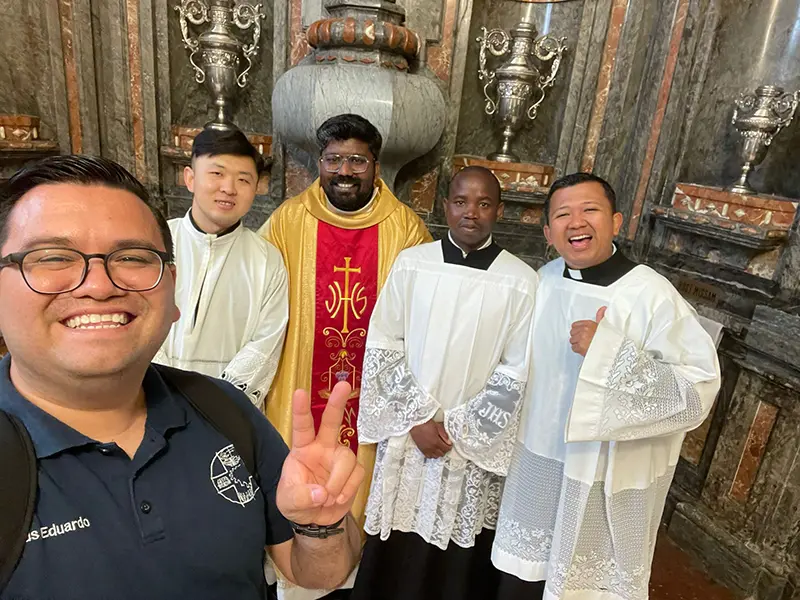
Many seminarians residing in international houses such as the Bidasoa International Seminary (Pamplona) or Sedes Sapientiae (Rome) do their internships on weekends and vacations. In spite of the academic requirements of the ecclesiastical faculties of the University of Navarra or of the Pontifical University of the Holy CrossThey dedicate this time to serve wherever they are needed: giving catechesis, visiting the sick, organizing activities for young people or collaborating in the Sunday liturgy.
Learning to be a shepherd, from the beginning
A seminarian does not wait to be ordained to learn to be a pastor. Training starts now. In these real experiences he discovers the multiple dimensions of the priest: consolation for those who suffer, patience with those who doubt, the joy of hidden service, attentive listening to those who seek meaning in their lives.
It is also a key moment of personal and spiritual maturation. Service "tests" vocational motivations, purifies the seminarian's heart and helps him grow in humility and generosity. As he himself cannot yet administer sacraments, its role is focused on accompanying, listening and servingwithout pretensions, from the simplicity of testimony.
Testimonials that speak of life
Many seminarians who receive training grants thanks to the benefactors of the CARF Foundation share their experiences and knowledge. moving testimonies of his life experience. An African seminarian recently recounted how, during his visits to a hospital, he learned to "see Christ in every bed, in every face, in every wound". Another, from America, explained that in catechesis with children he had discovered "the pure joy of transmitting the faith with simple words, but full of truth."
These experiences leave a deep impression. They not only confirm the vocation, but also open the heart to love. A love that will be the basis of future priestly ministry: close, available, cheerful and dedicated.
Stages in the seminar
Training is developed progressively. In the first years, the activities are simpler and are always carried out with accompaniment. As the seminarian advances in his formation, he is entrusted with more responsibilities and is invited to become more directly involved in the life of the community.
In the last years of formation, many seminaries live this custom for a year or for a more intense stage of parish insertion. When the seminarian is ordained deacon, he can now preach, baptize, celebrate weddings and accompany the faithful with greater freedom. This stage is crucial to prepare him for the total dedication that priestly ordination entails.
Thank you for making this possible
This service role is part of the deep and realistic apprenticeship that prepares seminarians to become priests after the heart of Christ. Thanks to the generosity of the benefactors of the CARF Foundation, hundreds of young men from all over the world not only receive a first-rate academic formation, but are also able to live these experiences that transform their vocation into a concrete and joyful dedication.
Accompanying them on this path is an investment of hope and future for the universal Church. Because where there is a seminarian who learns and gives himself without measure, there will be a faithful community that one day will have a well-formed, close and generous priest.
What is the scapular of Our Lady of Mount Carmel?
The danger with any external sign is that it remains precisely only external, however, it is crucial for us to live interiorly what the scapular represents. The Blessed Virgin Mary in her invocation of Mount Carmel (Mount Carmel) is the perfect example of what it means to follow Christ.
What is it and what is it for?
The word scapular derives from the Latin "scapularium"."scapula"which can be translated as "back" or "shoulder" and "shoulder". "-ario"which is used to indicate relationship or belonging.
This term is used to refer to a garment used by religious orders as a monastic vestment or a piece of devotion.
Origin and existing types
Originally the scapular was an apron worn by the monks during work, so as not to soil the tunic.
Scapular of Our Lady of Mount Carmel in Carmelite habit fabric.
Monastic Scapular
It consists of a strip with an opening through which the head is inserted and which hangs over the chest and back. This scapular is a piece of the habit still used today by the Carmelites as a symbol of the yoke of Christ.
Over time, religious orders such as the Franciscans, Dominicans, Augustinians and Carmelites, gave the laity who sought to participate in their spirituality, a sign of union and belonging. Certain elements of the habits of each order became a symbol of identity. Among the Carmelites, the scapular, reduced in size, was established as the sign of belonging to the order and an expression of its spirituality.
Devotional Scapular
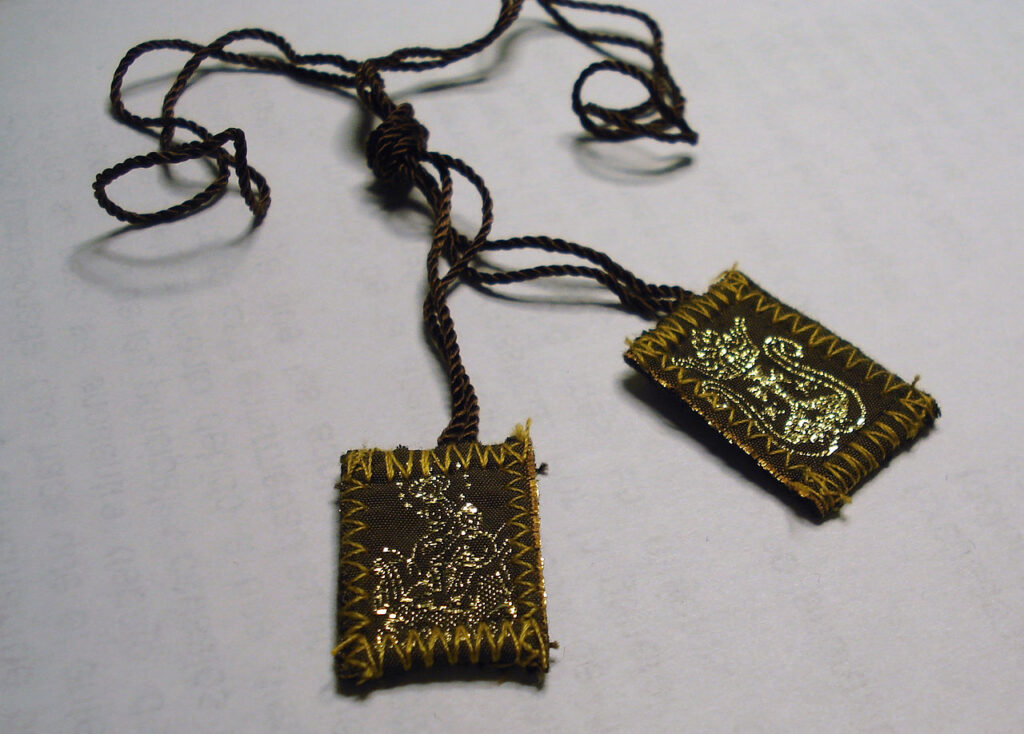
Therefore, the devotional scapular is derived from the monastic one, but it is much smaller. It is composed of two pieces of cloth that are joined by ribbons so that it can be hung around the neck and fulfill its devotional purpose.
The best known devotional scapulars are the scapulars of the Virgin of Carmen (brown), of the Virgin of Mercy (white), of the Passion (red), of the Immaculate Conception (blue), of the Trinity (white), of the Our Lady of Sorrows (black) and St. Joseph (purple).
Many of these have been approved and indulged by the Church. They are intended to remind those who wear them of the duties and ideals of the corresponding order.
How should the scapular be worn?
Scapulars consist of a cord worn around the neck with two small pieces of cloth. One is placed on the chest and the other on the back and is usually worn under clothing.
In the case of the Discalced Carmelite nuns, the scapular continues to be part of their clothing, which, as determined by their founder Saint Teresa of Jesus, is poor and austere, made of brown cloth, composed of the habit itself, strap, headdress, veil and white cloak worn on certain occasions. (Rule, 1991: 89).
For them, to wear the Carmelite scapular means to manifest their belonging to their order and their commitment to reverence the virtues of the Virgin Mary. (Ibid., 1991: 65).
The first time the Presentation of the Holy Scapular to St. Simon Stock is depicted is in the painting of Thomas of Vigil preserved in the convent of Corleone (Sicily) in 1492.
Spiritual meaning of the scapular
The scapular is a sign of Mary's maternal love and protection and of her call to a life of holiness and sinlessness. For this reason, wearing the scapular is a response of love to the Blessed Virgin Mary. who came to give us the gift of his mercy. We should use it as a reminder that we wish to imitate her and live in grace under her protective mantle.
The maternal love and protection of the Virgin Mary
Maternal protection is represented in the Bible by a mantle or cloth. We see how the Blessed Virgin Mary, when Jesus is born, wraps him in a mantle.. Mother always tries to shelter her children.
Wrapping in her mantle is a maternal sign of protection and care. The Blessed Virgin Mary covers us of our spiritual nakedness representing this embrace by means of the scapular.
We belong to the Blessed Virgin Mary.
The scapular becomes the symbol of our consecration and belonging to the Virgin Mary. To recognize her mission of Mother over us and to surrender ourselves to her in order to let ourselves be guided, taught and molded by her and in her heart. In this way we can be his instruments for the extension of the Kingdom of God.
"May the scapular be your sign of consecration to the Immaculate Heart of Mary, which we are particularly in need of in these dangerous times" (Pope Pius XII , 1950).
The scapular also symbolizes that yoke that Jesus invites us to bear, but which the Blessed Virgin Mary helps us to carry..
"Take my yoke upon you and learn from me, for I am patient and humble of heart, and so you will find relief. For my yoke is easy, and my burden is light." (Mt 11:29 30).
The scapular of Our Lady of Mount Carmel
The Carmelite scapular is a devotion born in the XII century. Nowadays, it is made of two little squares of brown fabric joined by cords, which have on one side the image of Our Lady of Mount Carmel, and on the other the Heart of Jesus, or the coat of arms of the Order of Carmel.
This small garment is reminiscent of the Carmelite habit, which is why it is made of cloth. The people who wear it commit themselves to live a life of prayerdevotion to the Blessed Virgin Mary and commitment to the Church.
After the Second Vatican Council, a new impetus was given to the scapular of Our Lady of Mount Carmel because it was recognized as "a sacred sign, after the model of the sacraments, by means of which effects are obtained, especially spiritual ones, which are obtained through the intercession of the Church." (Second Vatican Council -SC 60). Since then, the Carmelite scapular is a sacramentalIt is a sign that helps us to live a holy life and to increase our devotion. It does not communicate graces as do the Christian sacraments, but disposes us to the love of the Lord and to repentance if received with devotion.
The use of the scapular of Our Lady of Mount Carmel is a widespread devotion among popes. John Paul II lived it throughout his life. "It was no secret that he had worn the scapular all his life and spoke of it as an expression of his particular love for the Virgin Mary." (Fr. Miceal O'Neill, Carmelite).
The Blessed Virgin Mary wants to reveal the scapular to us in a special way. In the apparitions of Fatima, Lucia, today Sister Mary of the Immaculate Heart, reports that, in the last one, Our Lady appeared dressed in the Carmelite habit and with the scapular in her hand. And she recalled that her true children would wear it and that they would wear it with reverence. Also that those who consecrate themselves to her should wear it as a sign of their consecration.
The Promise of the Scapular of Mount Carmel
The Carmelite scapular is a manifestation of the protection of the Mother of God to her devotees. Since July 16, 1251, Our Lady of Mount Carmel appeared to St. Simon Stock, and said to him: "He who dies with the scapular shall not suffer eternal fire.". It is no small matter, said Pius XII, to attain eternal life by virtue of the promise made by the Blessed Virgin.
Many Popes, saints and theologians have explained that this promise means that whoever has devotion to the scapular and wears it, will receive from the Blessed Virgin Mary at the hour of death, the grace of perseverance in the state of grace or the grace of contrition. It means that Our Lady, as dispenser of graces, will help us to die in a state of grace, without grave sin or to die having had an authentic repentance.
Sabbath Privilege
This privilege is based on a bull that was proclaimed by Pope John XXII, also recognized by Pius XII, after the promise of the Blessed Virgin Mary made during an apparition.
In his bull called Sabatina, Pope John XXII affirms that those who wear the scapular will be quickly freed from the pains of purgatory on Saturday. (the day the Church has dedicated to Our Lady) following her death, through the special intercession of the Blessed Virgin Mary.
Conditions for the Sabbath privilege can be realized:
Let them wear the scapular faithfully.
Observe chastity according to the state of life.
Pray daily to the Blessed Virgin Mary. Seek communion with her through prayer.
Participate frequently in the sacraments of the Church, in the Eucharist and in the confession.
Pope Paul V confirmed in an official proclamation that the Sabbath privilege could be taught to all believers.
The advantages of the Sabbath privilege were confirmed by the Sacred Congregation of Indulgences on July 14, 1908.
Imposition of the scapular
Any priest can impose the scapular on a devotee who requests it. There are many Christians who ask the priests for the scapular. carmelites to be imposed with a short prayer.
It must be blessed by a priest and imposed by him while he prays: "receive this blessed scapular and ask the Blessed Virgin that, by her merits, you wear it without any stain of sin and that she protect you from all evil and lead you to eternal life".
Pope St. John Paul II wrote regarding the scapular: "It is a sign of the Blessed Virgin's continuous protection, not only throughout life, but also at the moment of transition to the fullness of eternal glory."
The scapular unites us to Mary
As a sign of consecration to Mary, the Mother of God, it was and continues to be very important. The use of the scapular is a commitment to live the virtues of Mary.
Through the scapular of Our Lady of Mount Carmel, the Carmelite family wishes to share God's gifts and, in a particular way, Mary's maternal love, with all those who wish to be included.
Mary takes charge of the body of Christ: the Church, just as she wrapped her son in swaddling clothes at his birth.. The scapular is a symbol that expresses Mary's protection for the person who wears it. A mother helps a child to grow: Mary helps us to be what God knows we can be, and a mother teaches her child by example. In Canaan, she tells us, "Do whatever he tells you." (John 2:5).By looking at it we learn what it means to be a follower of Christ.
It is a reminder of Mary's commitment to us and our commitment to Mary. It is a reminder of her constant presence in our lives and her interest in us. She is truly a mother and a sister who leads and guides us to Christ in whom we find salvation. He is with us in life and in death: "Pray for us now and at the hour of our death".
"Lord, grant that all those who wear the scapular with devotion, may also be clothed with the virtues of Mary to enjoy her untiring protection."
Figueroa, M. Antonia. The scapular: insignia of Marian devotion.
Marcelo del Niño Jesús (1929). Instructions on the devotion to the scapular of Our Lady of Mount Carmel.
Hearts.org
St. Thomas the Apostle: the disciple who doubted
The Church joyfully celebrates the feast of St. Thomas, one of the twelve apostles chosen by Jesus. His martyrdom is celebrated on July 3. His figure, often associated with doubt, contains an admirable spiritual depth and a courageous witness of faith that took him to the ends of the known world. His life reminds us that sincere doubt, when it seeks the truth, can be a path to the strongest faith.
Who was St. Thomas?
St. Thomas, also called Didymus - which means twin in Greek - was a Jew and probably a native of Galilee, like most of the apostles. Although the Gospels do not give much information about his life before meeting Jesus, his name appears in all the lists of the twelve apostles.
He was chosen by Jesus to be part of the intimate group of disciples who would accompany him during his public life. He is mentioned in key moments of the Gospel, especially in the Gospel of St. John, where he reveals his passionate, honest and deeply human personality.
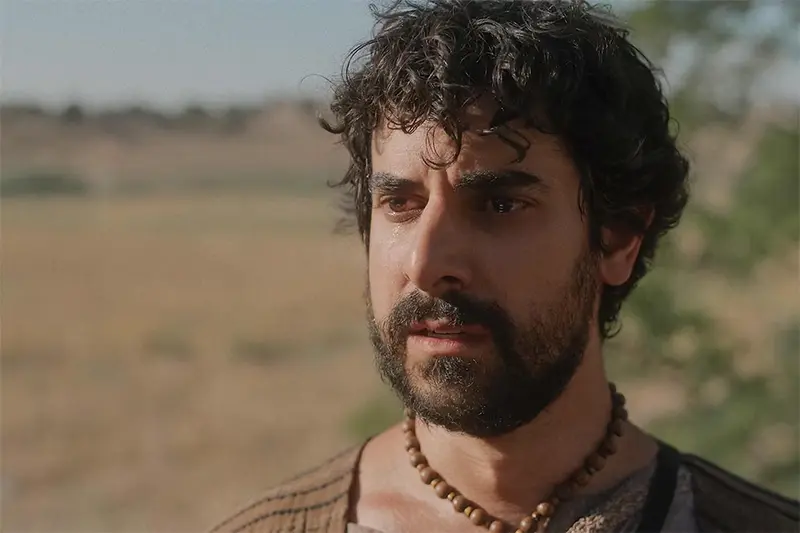
An expression of faith and emotion: the apostle Thomas, as depicted in the series The Chosen.
The disciple who sought to understand
St. Thomas is remembered above all for his reaction to the announcement of the Resurrection of Christ. When the other apostles told him that they had seen the risen Lord, he responded with the famous phrase: "Unless I see in his hands the mark of the nails, and put my finger into the hole of the nails and my hand into his side, I will not believe" (Jn 20:25).
However, this doubt is not born of hostile rebellion or mistrust, but of a sincere desire to understand and confirm the truth. Eight days later, when Jesus appears again, this time with Thomas present, he invites him to touch his wounds. The apostle's reaction is one of the most beautiful professions of faith in the Gospel: "My Lord and my God!" (Jn 20:28).
With this exclamation, St. Thomas not only acknowledges the resurrection of Christ, but also his divinity. It is a key moment, for Jesus responds with a phrase addressed to all those who would come after him: "Because you have seen me, you have believed; blessed are those who, without seeing, believe" (Jn 20:29).
Missionary to the ends of the earth
After Pentecost and the outpouring of the Holy Spirit, Thomas, like the other apostles, went out to proclaim the Gospel. According to the strongest Christian tradition - both in patristic sources and in the living tradition of the Church in the East - St. Thomas brought the faith as far as India.
Various ancient testimonies, such as those of St. Ephrem, St. Jerome and the historian Eusebius of Caesarea, affirm that Thomas preached in the region of Parthia (present-day Iran) and then traveled to the southwest coast of the Indian subcontinent, to the region of Kerala. There, he founded Christian communities that have survived to this day and are known as the Christians of St. Thomas.
During his mission, he courageously evangelized, performed miracles and baptized numerous converts. It is said that he even reached the court of the king. Gondofares and converted many in the region of present-day Pakistan and India. His preaching was fruitful, but also provoked the rejection of those who opposed Christianity.
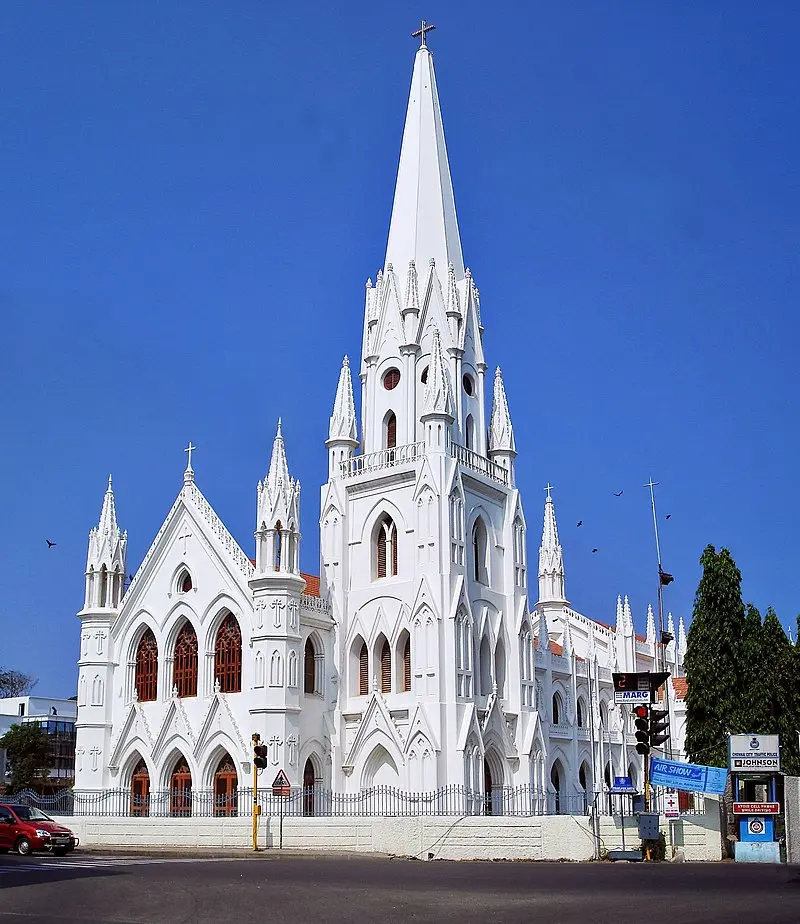
Basilica of St. Thomas, built over the tomb of the apostle, in Chennai, India.
His martyrdom and legacy
St. Thomas died a martyr's death, probably around 72 A.D., in Mylapore, near Chennai (formerly Madras), in India. According to tradition, he was pierced by a spear while praying in a cave, symbol of the same instrument with which a soldier had pierced Christ's side.
His tomb in India became a place of pilgrimage from the first centuries. Today, in Mylapore, stands the Basilica of St. Thomas, one of the few Catholic temples built on the tomb of an apostle (the others are in Rome and Santiago de Compostela).
His figure is especially venerated in the Eastern Churches and in the Catholic communities of South Asia, which proudly preserve a living faith rooted in the witness of this apostle.
Why do we celebrate St. Thomas on July 3?
For many centuries, the Latin Church celebrated the feast of St. Thomas on December 21. However, after the reform of the liturgical calendar in 1969, his memory was moved to July 3. This date coincides with the transfer of his relics to Edessa (present-day Urfa, Turkey) in the 4th century, an important event for the Syriac Church and for the expansion of Eastern Christianity.
Celebrating St. Thomas on July 3 allows us to rediscover his role as a witness to the resurrection, as a missionary apostle and as a model of a faith that is strengthened by humbly seeking the truth.
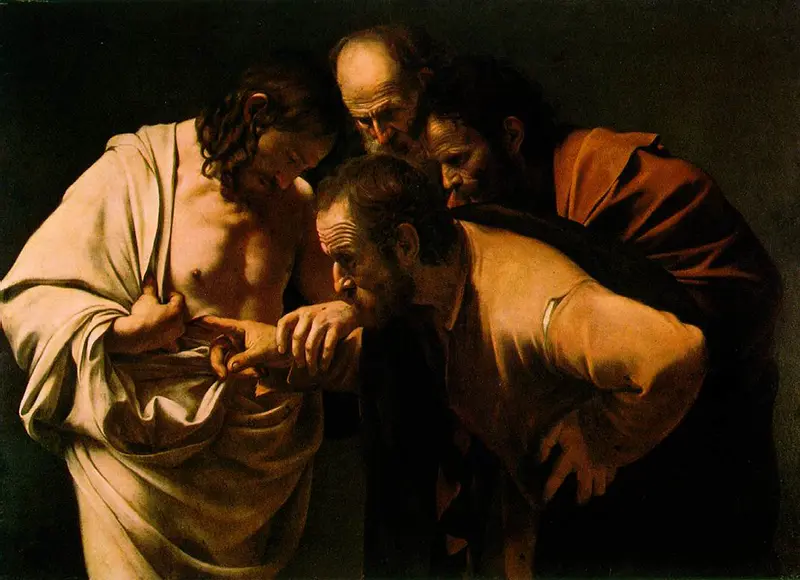
The Unbelief of St. Thomas (1601-1602) by Caravaggio, a masterpiece that captures the moment of doubt.
An apostle for those who doubt
The figure of St. Thomas is especially close to those who live moments of uncertainty, questions or doubts in faith. His story shows us that doubt is not a sin, but a stage that, if well lived, can lead to a more mature faith.
Jesus does not reject St. Thomas because of his unbelief, but goes out to meet him. And Thomas, in recognizing Christ, makes a confession of faith that no other apostle had ever made with such clarity.
Like Thomas, we too are called to move from the desire for proof to the joy of faith. In the Christian life, we do not always see in order to believe, but we do believe in order to see with the eyes of our heart and soul.
At the CARF Foundation We promote the integral formation of seminarians and diocesan priests who, like St. Thomas, want to take the faith to the ends of the earth. Many of them, like him, come from distant countries and will return to evangelize, strengthen Christian communities and be living witnesses of Christ's love. Celebrating St. Thomas is also an occasion to redouble our prayer for vocations and to support this mission with generosity.
Gospel of the day
Thomas, one of the twelve, called Didymus, was not with them when Jesus came. The other disciples said to him:
-We have seen the Lord!
But he answered them:
-If I do not see on his hands the mark of the nails, and I do not put my finger in that mark of the nails and put my hand in the side, I will not believe.
And after eight days his disciples were inside again, and Thomas with them. Although the doors were locked, Jesus came and stood in the midst and said:
-Peace be with you.
He then said to Tomas:
-Bring your finger here and look at my hands, and bring your hand and put it in my side, and do not be unbelieving but believing.
Tomas answered and said to him:
-My Lord and my God!
Jesus replied:
-Because you have seen me you have believed; blessed are those who have not seen but have believed.
Bibliography:
Gospel according to John: Jn 11:16; Jn 14:5; Jn 20:24-29.
Synoptic Gospels (lists of the Twelve Apostles): Mt 10:2-4; Mk 3:16-19; Lk 6:14-16.
Catechism of the Catholic ChurchCCC 642-644: Testimonies of the Apostles on the Resurrection.
Eusebius of Caesarea, Ecclesiastical HistoryBook III and IV (4th century): References to the mission of St. Thomas in Parthia and India.
St. Jerome, De viris illustribusChapter 3: Information on the evangelization of Thomas.
San Gregorio de Nazianzo, Orationes33, 18: Mention of the sending of Thomas to India.
St. Ephrem of Syria, Hymns about the ApostlesHymn 42: Exalts the preaching of Thomas in Eastern lands.
Roman Liturgical Calendar (updated after Vatican Council II)Fixing of the feast of St. Thomas the Apostle on July 3.
Roman Martyrology (typical ed. 2001), p. 336: Memoria litúrgica y breve nota hagiográfica sobre el apóstol.
St. Thomas Basilica (Santhome), Mylapore, IndiaTradition and veneration of the place of his martyrdom and burial.
Catholic Encyclopedia (ed. 1912), article "St. Thomas": Historical and patristic synthesis of the life and mission of the apostle.
Bishop Ocáriz: "The manager creates the conditions for others to work well and grow".
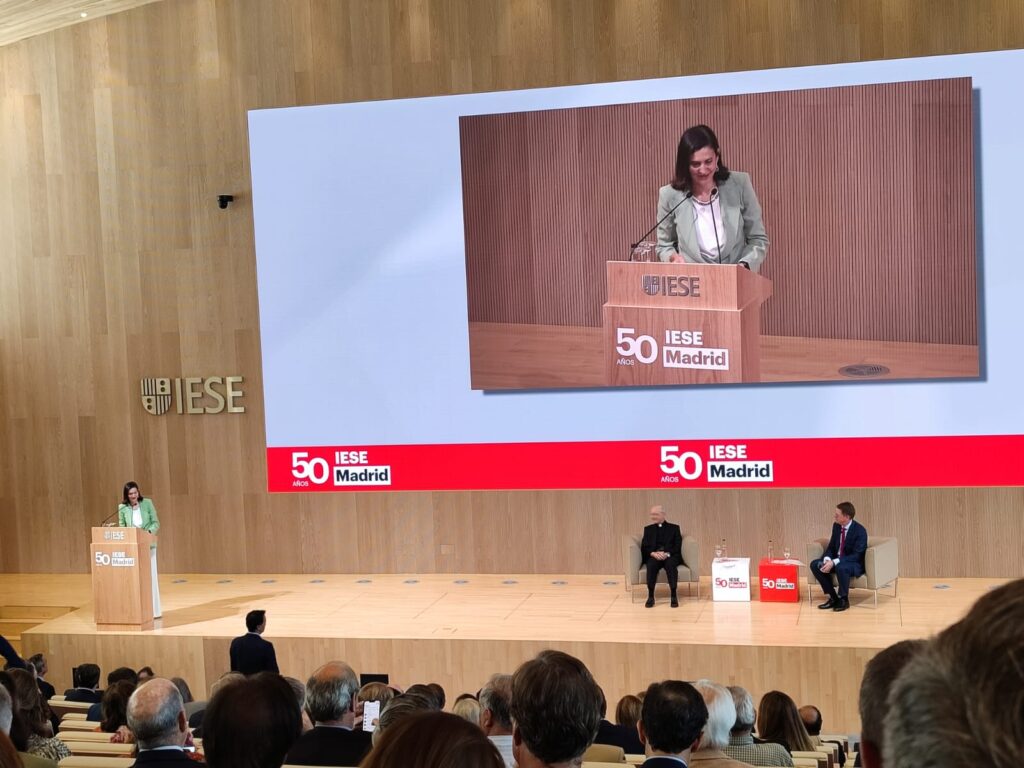
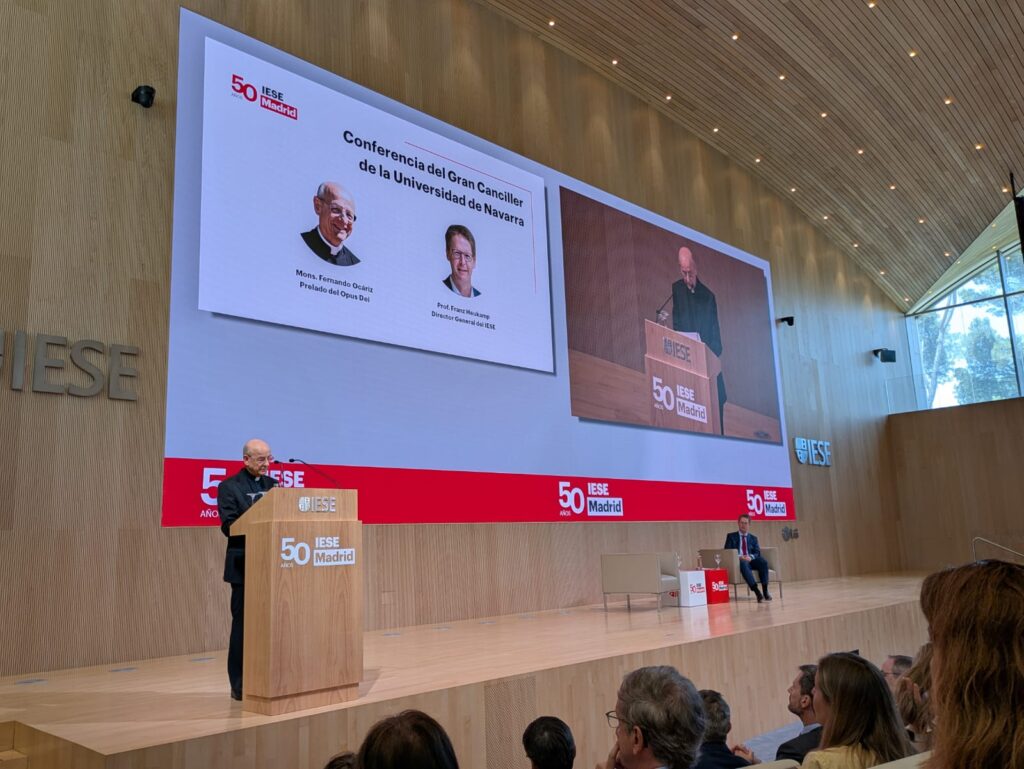
"It gives me great pleasure and pride to be with you on the occasion of the 50th anniversary of IESE's activities in Madrid. It is a source of profound joy to see the development of an educational initiative that has helped many people to grow professionally and to discover the profound (human, social and Christian) meaning of work, a subject dear to our hearts. St. Josemaría.
You have built one of the most prestigious business schools in the world, so judging by the external results you have done a good job. I would like to encourage you that, together with your external successes supported by the rankings of business schools In order to achieve the most significant internal successes, you should also point to other internal successes that are of even greater value to each of you from God's perspective. These internal successes, which are compatible with successes and failures from a business point of view, are the fruit of a job well done out of love.
For these internal successes, it matters not only what we do and with what results, but also how we work and why. It is through these internal successes that the impact of this school will reach even further.
Reality and human value of work
As St. Josemaría said, "Work, all work, is a witness to man's dignity, to his dominion over creation. It is an occasion for the development of one's own personality. It is a bond of union with other beings, a source of resources to support one's own family, a means of contributing to the improvement of society in which one lives and to the progress of all humanity" (St. Josemaría, Christ Is Passing By, no. 47).
St. Josemaría speaks here about the why of work in general. For you, the reason for your work is reflected in IESE's mission: You develop leaders who aspire to have a profound, positive and lasting impact on individuals, businesses and society through professional excellence, integrity and a spirit of service.
Truly, if you fulfill this inspiring purpose well, you will reach the very heart of society. You will improve the world from within. For the noble purpose you pursue can be lived out in all your activities, not just those with the highest strategic value that you take on at IESE from the top. All work can have great value from the inside.
In the same natural order, "the dignity of work depends not so much on what is done as on the person who does it, who, in the case of man, is a spiritual, intelligent and free being" (St. John Paul II, Discourse, July 3, 1986, n. 3).
The natural dignity of work, then, is rooted in the spiritual dignity of the human person, and it will be greater or lesser according to the greater or lesser quality or goodness that work has as a spiritual action. Now, this quality or goodness depends essentially on freedom: on love - not as passion or sentiment - but as dilectio (On the existential choice of the ultimate end, as an act of freedom, cf. C. Fabro, Riflessioni sulla liberta, Maggioli, Rimini 1983, pp. 43-51; 57-85).
As you have already seen in your Juan Antonio Pérez LópezIn our company, it is about fostering in ourselves and in the people we manage the transcendent motives: the interest in serving customers well, the human connection with people, the commitment to the company's purpose. This is in large part what stimulates us to serve more and better. And that can be done while also achieving the strategic results that companies need and while enabling the right people to develop the right competencies.
And although it may seem an exaggeration, St. Josemaría said: "It should not be forgotten, therefore, that the dignity of work is founded on Love. Man's great privilege is to be able to love, thus transcending the ephemeral and the transitory. He can love other creatures, that is, a you and an I full of meaning. And he can love God, who opens for us the gates of heaven, who constitutes us members of his family, who authorizes us to speak to him also from face to face, face to face".
In other words, we are made for Love and work is one of the platforms on which Love can grow within ourselves and in society. This is a good part of the Christian's vocation in the world, in society.
"For this reason, man should not limit himself to making things, to constructing objects. Work is born of love, it manifests love, it is ordered to love" (St. Josemaría, Christ Is Passing By, no. 48).
I recently came across an inspiring story that appeared many years ago in Forbes magazine that illustrates that human connection, that love manifested through work. It was written by an ER nurse in an American hospital who witnessed an amazing act of leadership:
"It was about 10:30 p.m. It was about 10:30 p.m.. The room was a mess. I was finishing up work on the chart before I went home. The doctor I loved working with was training a new doctor, who had done a very respectable and competent job, telling him what he had done well and what he could have done differently. Then he put his hand on the young doctor's shoulder and said, 'When you were done, did you see the young cleaning man who came in to clean the room?' The young man looked at him blankly.
The older doctor said, 'His name is Carlos. He's been here for three years. He does a fabulous job. When he comes in, he cleans the room so fast that you and I can see our next patients quickly. His wife's name is Maria. They have four children. He then named each of the four children and gave the age of each. The older doctor continued, 'He lives in a rented house about three blocks from here in Santa Ana. They came from Mexico five years ago. His name is Carlos,' he repeated. Then he said, 'Next week I'd like you to tell me something about Carlos that I don't already know. OK? Now let's go check on the rest of the patients.
The nurse was amazed: "I remember standing there writing my nursing notes, stunned, and thinking, I just witnessed awesome leadership."
Sometimes we can lose sight of that human tone when we think of work from the perspective of competing with other companies for more profit instead of thinking about serving people with attention and care, with love. Obviously, companies cannot lose sight of strategy or profit, which is a sign of a quality service provided in a responsible and efficient manner. But just as important as economic results, if not more so, is to serve with love for work and love for people.
Its supernatural value: the sanctification of work
"For a Christian, these perspectives are enlarged and broadened. For work appears as a participation in the creative work of God, who, in creating man, blessed him by saying to him: 'Be fruitful and multiply and replenish the earth and subdue it, and have dominion over the fish of the sea and over the birds of the air and over every living thing that moves upon the earth' (Gen I, 28). Because, in addition, having been taken up by Christ, work is presented to us as a redeemed and redemptive reality: it is not only the sphere in which man lives, but also the means and path of holiness, a sanctifying and sanctifying reality" (St. Josemaría, Christ Is Passing By, no. 47).
What does it mean to sanctify from work?
Let us consider two fundamental aspects, linked together, on which the founder of Opus Dei insisted on innumerable occasions. In the first place, it is clear that the supernatural dimension of work is not something juxtaposed to its natural human dimension: the order of Redemption does not add something foreign to what work is in itself in the order of Creation; it is the very reality of human work that is elevated to the order of grace; sanctifying work is not "doing something holy" while working, but precisely making work itself holy.
The second aspect, inseparable and, in a certain sense, a consequence of the previous one, is that sanctified work is sanctifying: man not only can and must sanctify himself and cooperate in the sanctification of others and of the world while working, but precisely through his work, doing it humanly well, serving people out of love for God. This Christian spirit in the performance of work must prepare the world to better recognize God and thus also contribute to sustainability, peace and social justice. It is necessary," recalls Leo XIV, "to strive to remedy the global inequalities which trace deep furrows of opulence and destitution between continents, countries and even within societies" (Leo XIV, Speech to the diplomatic corps, 16-V-2025).
And, as St. Josemaría explained, there is a necessary relationship between the sanctification of professional work and the reconciliation of the world with God: "To unite professional work with the ascetic struggle and with contemplation-something that may seem impossible, but which is necessary to help reconcile the world with God-and to convert this ordinary work into an instrument of personal sanctification and apostolate. Is this not a noble and great ideal, for which it is worthwhile to give one's life? Instruction19-III-1934, n. 33).
We can live this noble and great ideal at work, whatever it is; always have this perspective of serving society, "A world to change", as you say in your advertising. I like to see that in your purpose you speak of a leadership that is good for people, companies and also for society as a whole. Companies can do a lot of good for society, although it is also true that not everything that society needs can be achieved through companies, since they are limited by the need to offer a limited and specific service and to generate profits, which is part of their purpose.
Responsible states, communities and families are also needed. In your formation, strive to reach the whole person, also in his or her spiritual dimension, so that from these well-formed persons we may contribute to serve society in all its dimensions. This is the fruit of the sanctification of your work well done out of love. To transform the world, we have to start with ourselves and make room for God in our lives, and concretely in our work.
There are some well-known words of the Founder of Opus Dei that contain a very brief and essential delimitation of the concept of sanctification of work, in the form of practical advice: "Give a supernatural motive to your ordinary professional work, and you will have sanctified your work" (St. Josemaría, Camino, n. 359). It is not a matter of doing things differently, but of doing the same things in a different way, with a supernatural motive that stimulates us to put in more effort and more love.
In other words, the activity of working becomes holy when it is carried out for a supernatural motive. But this affirmation should not be understood as a kind of "morality of intentions alone"; it is not a question, in classical terms, of giving primacy to the finis operantis as independent of the finis operis, which would be deprived of its own relevance. The finis operantis is the motivation of the person working, which may be motivated by various intentions. The finis operis is what we are trying to achieve with our activity, which may be to serve the client, to complete a report, to achieve a goal. To serve effectively with our work it is not enough to have good intentions, but to get to the concrete facts. To serve, to serveas St. Josemaría used to say.
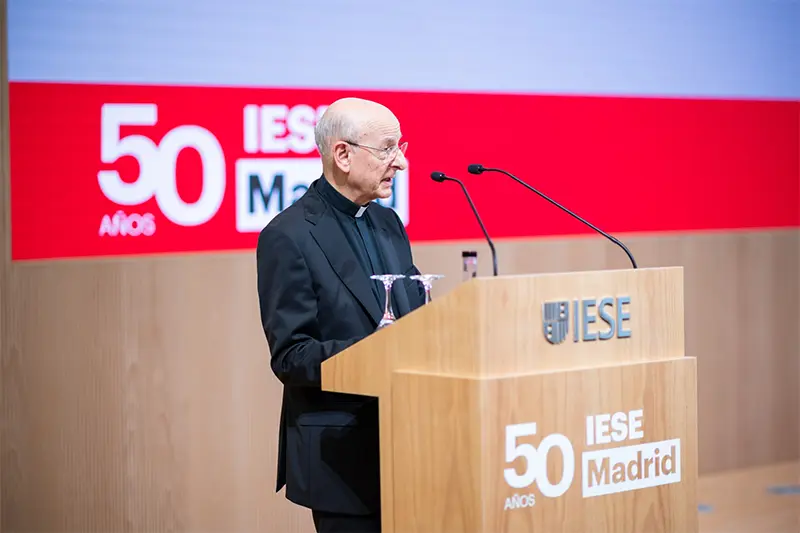
Msgr. Fernando Ocáriz, Opus Dei prelate, during his speech on the occasion of IESE's 50th anniversary in Madrid.
The supernatural order assumes and elevates this human reality, so that work is holy if it is "born of love, manifests love, is ordered to love" and if this love is that "charity of God that has been poured into our hearts, by the Holy Spirit that has been given to us" (Rom 5, 5). When we live that unity of life of which St. Josemaría spoke so much, the charity of God is poured out in all the activities of our work: reports, calls, small details completed with love. The finis operantis penetrates and informs from within the finis operis of all our actions.
Work is holy, is sanctified, when it is governed and informed by God's love for God and for others. This is the substance of that "supernatural motive" that is sufficient to sanctify work; and it is even better to understand that this "intention" tends per se to the human perfection of the work itself: "We cannot offer the Lord something that, within the poor human limitations, is not perfect, without blemish, carried out with attention to the smallest details: God does not accept shoddy work. You shall not present anything defective, Holy Scripture admonishes us, for it would not be worthy of him (Lev. XXII, 20). Therefore, the work of each one of us, that labor that occupies our days and energies, must be a worthy offering to the Creator, operatio DeiIt is the work of God and for God: in a word, an accomplished, impeccable task" St. Josemaría, Friends of God55: cf. nn. 58 and 6).
But working with perfection is not to be confused with the perfectionism that can come from pride and lack of order. We must work well within reason, knowing that we have many occupations that demand our attention, to which we must also bring the love of God.
Sanctified work is not only work by God and for God, but it is, at the same time and necessarily, God's work, because it is God who sanctifies; it is He who first loves and makes our love possible through the Holy Spirit, of whom our charity is a participation. In order that God may work in us and through our work (so that our work may be work of God)We need to open spaces in our day to God, spaces for prayer and listening - at home, in the office, in the street, in the church - to achieve that unity with God that allows God to enter into all our actions.
Sanctifying work, in an objective, external, structural sense (for example, finance or accounting), is inseparable not only from sanctifying with work (in the day to day, through the concrete effort to achieve goals of service to people), but also from sanctifying oneself in work (growing in love), which is the necessary and immediate consequence of sanctifying work in its subjective aspect (as an action of the person).
Certainly, unsanctified subjective work can cooperate in the sanctification of the world, to the extent that it contributes to the establishment of social, economic, etc., structures that are naturally effective and just, which is an indispensable part of the ordering of these structures according to God. Think here, for example, of the Sustainable Development Goals of the United Nations.
However, only a subjective work that is sanctified and, therefore, sanctifying for the one who performs it, necessarily cooperates not only in shaping a just world, but also in informing it with the charity of Christ, in sanctifying it. Naturally, this sanctification of the world from within requires not one but many persons who sanctify their work and sanctify themselves in their work in all professions.
St. Josemaría also affirmed this with the expression "the divine paths of the earth have been opened. We need many men and women who want to walk these paths to elevate the world from within, not through organized and perhaps ideological campaigns, which can be polarizing, but through the interior growth of each person in his or her own place, open to others and thus welcoming the grace of God who wants to spread faith, hope and charity around us.
The particular relevance of managerial work
You have a great purpose ahead of you, that of educating business leaders who will create the context in which many others will work and develop as people through their work. It is a great responsibility to prepare people with so much responsibility.
Many times they will not have clear recipes on how to interpret a problem or solve a situation. In general, managerial work involves a set of activities, such as foreseeing, organizing, coordinating and controlling the development and results of an organization's activity.
Faced with such a complex and variable reality, it is understandable that, when theorizing about the nature or analyzing the practice of managerial work, more or less diverse interpretations arise (cf., for example, G. Scalzo and S. García Álvarez, El Management como práctica: una aproximación a la naturaleza del trabajo directivo, in "Empresa y humanismo", XXI (2018) pp. 95-118).
That is why the education of a manager does not only require memorizing principles or collecting marketing, finance, strategy or accounting tools, but reaching a prudential understanding that is normally acquired only with a long and well-digested experience.
The responsibility of a manager requires the exercise of prudence, which is the virtue most appropriate to the work of governance. We can recall a well-known affirmation of St. Thomas Aquinas: "let the wise teach us, let the saints pray for us, let the prudent govern us". Through the case method sessions, your students learn to exercise prudence, to ask themselves the key questions, to go deeper into arguments, to understand others' points of view without prejudice, and to change their minds.
In its most general expression, prudent action requires sufficient knowledge of the past (the precedents of matters), attention to the circumstances delimiting the present matter, and foresight of future effects of possible decisions.
"Prudence, besides being the perfecting habit of this kind of activity (praxis), is the only intellectual virtue whose object is moral, i.e., it acts as a kind of bridge between both dimensions that allows to reconcile thought and action", (G. Scalzo and S. García Álvarez, cit. P. 112.). By exercising prudent leadership, participants in your programs will grow as individuals, morally and intellectually, and will be able to create environments in which others will grow, thus contributing to the betterment of society.
Other characteristics of a good managerial job, it seems to me, are openness and flexibility. Open-mindedness, to learn from experience and study. Openness to understand the changes that are required in new times. Openness to welcome and value suggestions or explanations from others, without rushing or admitting prejudices. Knowing how to listen. Openness not to arbitrarily cut initiatives, but to promote and channel them. Openness to grasp and accept opportunities for change; in particular, openness of mind to change one's mind: as St. Josemaría used to say, "we are not like the rivers that cannot be turned back.
Finally, openness of heart, to understand and love others. This openness leads us to accept others as they are, without judgment or prejudice, and at the same time we can challenge them to be better. It consists of being a bridge also for people who think differently. You can work very well with people of other faiths or without faith, and who follow lifestyles that you do not share, but people who usually always have a good background, on which you can build a friendship and a common project within the company.
As far as flexibility is concerned, it is obvious that it is opposed to rigidity, but it is not opposed to strength. It is the ability to accept and decide on necessary or desirable exceptions. In this context, I think it is also interesting to mention the importance of promoting the inner freedom of employees at all professional levels, giving the reason for what is commanded. The idea is that they want to do their job well in order to serve better. In the same vein, good management work avoids excessive control and excessive detail when ordering something. The micromanagement as a way of directing creates puppets, not mature people with their own criteria.
We should also mention the importance of knowing how to delegate, taking into account the circumstances of individuals and environments. I am reminded of what St. Josemaría wrote in a broader context: "The same means cannot be used with everyone. In this too, it is necessary to imitate the behavior of mothers: their justice is to treat unequal children unequally" (St. Josemaría, Letter 29-IX-1957, n. 25).
Some, the younger ones, need follow-up and feedback to gain as soon as possible the experience they need to do their job well. Others, more mature ones, need coaching through which they learn to make their own decisions. And there comes a time when they can work without any monitoring, because the manager can delegate to them with full confidence and without worries. But both need the trust, closeness and friendship of their managers.
The managerial activity usually requires to channel towards a common purpose elements and actions that are diverse in themselves. It is necessary, then, a sufficient capacity of synthesis, that maintaining the attention that distinguishes the diverse elements of the matter, manages to unite them in a common final dimension. Here enters what many call the purpose of the company, which includes paying attention to its many stakeholdersstakeholders- so that the managerial activity at the same time unifies the efforts of all.
The particular relevance of managerial work lies, as is obvious, in the fact that the effectiveness of other people's work, their personal growth through work, and the culture and tone of the company depend to a large extent on this work. Hence a peculiar aspect of managerial responsibility. The position of manager is not a privilege but a service and a responsibility, which consists of creating an effective context for the work of others. Therefore, a manager must foster the inner disposition that pushes one to resolutely undertake one's duties.
You educate these managers here not only through classes and teamwork, but also by creating a tone of a job well done - including many different aspects: well-tended gardens, clean blackboards, well-prepared classes with striking and clear closings - and of joy and human closeness, of caring for people.
In short, that tone of friendship in which everyone realizes that they really matter, that they are loved, explains the openness and joy that you see in your school and at alumni reunions.