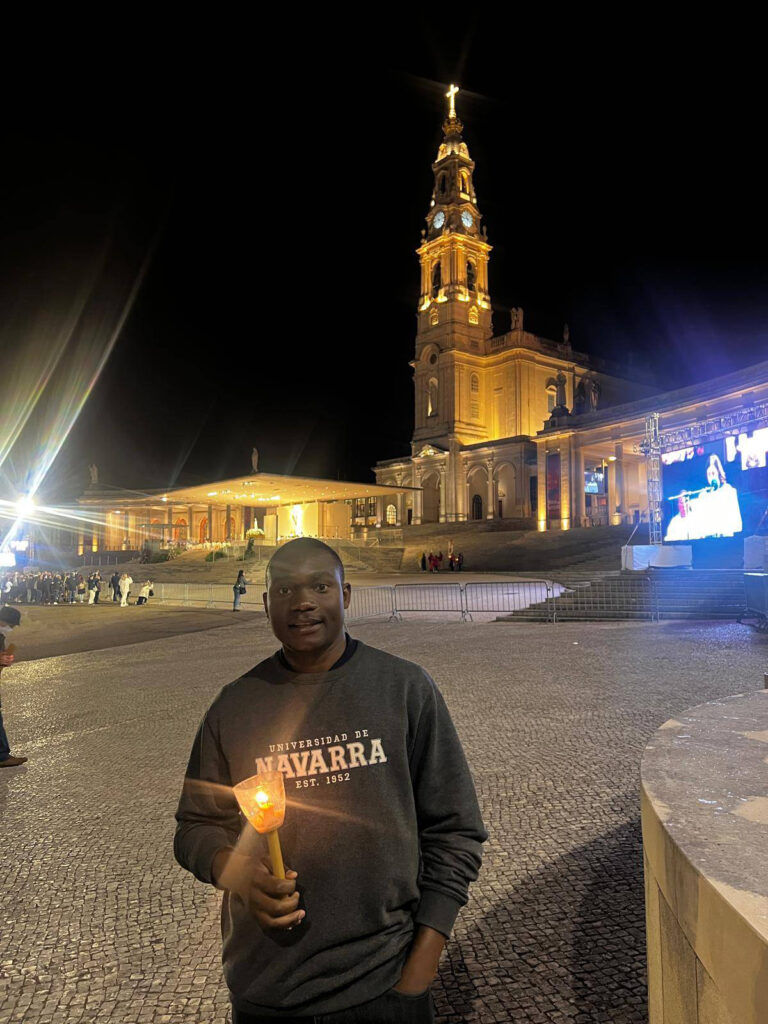
Pablo López: "Those who evangelize in networks see the disproportion between work and fruits".

The priest Pablo Lopez has extensive experience in digital platforms such as ".Young Catholics» and «Hallow", followed by hundreds of thousands of young people; in the case of the latter, millions of users. From them, evangelizing on social networks is part of their objectives.

It has just published How to talk about God in the networksa practical guide for communicating the spiritual in the digital sphere. Rather than offering magic recipes, it invites questions, inspires reflection and opens deep dialogues that transcend the transience of social networks. In a world dominated by immediacy and ephemeral content, the challenge of speaking about God on social networks becomes a unique opportunity.

- How did the idea of relating God to a social network like Instagram, which is often associated with superficiality, come about?

It was a proposal from the publishing house and, from the beginning, I loved the project, since I dedicate part of my pastoral work to evangelizing in social networks and I verify its effectiveness on a daily basis. My interest in this field was born in the pandemic, trying to accompany young people in the distance.

- You mention that the book is not a magic recipe, but an invitation to rethink how we communicate the sacred. What common mistakes do those who try to talk about spirituality on social media make?

One mistake is to focus on finding followers and trying to make publications. clickbait, known in Spanish as cibercebo or ciberanzuelo to get you to click. Evangelizing requires speaking from the heart and experience, and there are things that cannot be fit into 'easy' formats. 

You have to reach people's hearts and that is what the Holy Spirit does. Anyone who evangelizes on social networks sees the disproportion between their work and the fruits that are produced. I remember a girl who had been treating herself for seven years for severe anorexia, including hospital admissions. She phoned me to tell me that she had been cured by praying with the contents of the channel. She got over it all by praying. Then he joined a religious order. Her parents are non-believers and are amazed at the change. 

- Do you talk about these kinds of stories in the book?

Yes, the play is full of shocking anecdotes. For example, a girl in the 2nd year of high school in a town in Extremadura became pregnant and her friends encouraged her to have an abortion. She contacted us when her son was born to thank us: the meditations of the application had encouraged her to be brave and face the consequences. She told us how her son was the greatest gift of her life. 

There are people who tell you that thanks to a video they have not committed suicide; another who thanks to a song has asked forgiveness from his mother after a long time; and, of course, many people who return to confession after years or decades.  

- In your experience working on platforms such as Catholic Youth and Hallow, what strategies have proven most effective in connecting with young people through digital?

First of all, you have to be consistent and offer a variety of content and formats. At Hallow we do one audio a day, but we also offer songs, tips short articles, commentaries on the liturgical season, interviews or podcasts. In short, it is necessary to do everything so that each one can engage with what he/she likes the most or what best suits his/her circumstances. 

There's no need to go through the motions. It is worthwhile to make things short and attractive, not long and dense. Just as homilies cannot be 15 minutes long, it is better to make them 5 minutes long and have a story that people can remember afterwards and make it easier for them to come back. 

Well, the same with social networks, it has to be short, otherwise people will move on to another one. reelSo it's essential to start with a groundbreaking beginning. For example, one of our videos starts like this: "Hello, my name is Krishna, I was born and raised in the Hare Krishna community and I have gone from smoking joints constantly to going to Mass every day.

- You talk about the importance of seeding questions rather than simply adding content. What kind of questions do you think are best suited to inspire reflection in the audience?

The key is not so much the type of questions, but rather that when you leave open questions you invite the listener to continue thinking on their own. Also, open-ended questions generate a lot of interaction in the comments or people who write to you privately.

- Finally, as a priest and someone with a sizeable digital audience, how do you balance the use of social media with the time needed for prayer and personal reflection?

Well, thank God, I don't have to spend a lot of time editing videos, I can spend half an hour or so a day: 10 minutes on Instagram, the more 20 (I never go to see anyone's stories, or to see the reels nothing). If I spend more time on it I know I would be wasting my time and I'm much more offline than it seems, I do sports every day and a fun pastoral activity (laughs).

However, I recognize that teamwork is key. I have two collaborators who dedicate more time to it than I do. 

The book How to talk about God in the networks
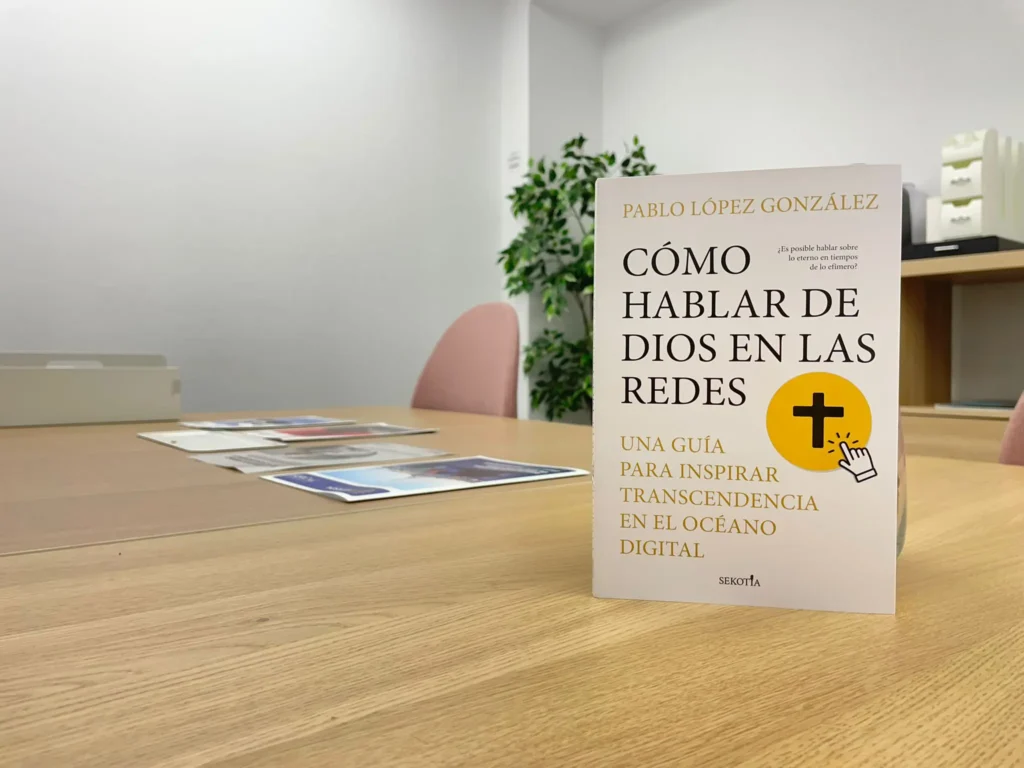
A guide to inspire transcendence in the digital ocean

In a world of instant connections and ephemeral content, talking about God on social networks can seem a challenge. However, these spaces, where everything seems transitory, can be the new pulpit for the eternal. Social media need not be just a showcase for the superficial; when used well, they can be a bridge to the transcendent and serve to evangelize.

This practical guide explores how to communicate the spiritual in the digital realm in a way that resonates in the hearts of those who, though distracted, are searching for meaning and depth. Pablo Lopez offers strategies for the divine message to not only compete in the speed of the feedbut to make it memorable, relevant and transformative.

It is not about adding content, but about sowing questions, inspiring reflections and opening a dialogue about universal truths that do not expire. Because even if our stories disappear in twenty-four hours, the human yearning for the eternal remains, waiting for answers.

About Pablo López González, priest

Pablo Lopez, priest since 2016, he has dedicated his ministry to youth and family ministry. Prior to his ordination, he worked as a teacher, specializing in physical education and psycho-pedagogy. After studying theology, he earned a doctorate in Sacred Scripture from the University of Navarra.

Passionate about sports, he is actively working on the digital platform Young Catholicswhich has more than 400,000 followers on social networks. In addition, he collaborates daily with an audio in the application Hallowwhich has surpassed 14 million downloads, and participates in the Instagram account "Se buscan rebeldes", as well as in several podcasts and radio programs.


Bibliography:
Omnes, signed by Javier García Herrería.

The Christian family: concept and importance

The Church celebrates five years since the publication of the Apostolic Exhortation Amoris Laetitia on the beauty and joy of family love. On the same day Pope Francis will inaugurate the year dedicated to her, which will end on June 26, 2022, on the occasion of the 10th World Meeting in Rome with the Holy Father.

The first of all

Both the great human offspringand each of the familias who were to compose it, is one of the natural instruments willed by God to cooperate in his creative mission.

God's will to count on the family in his saving plan will be confirmed with the fulfillment of the divine plan. When Jesus is born, in Nazareth, of Mary, by the work of the Holy Spirit. And God provides for his Son a family, with an adoptive father, Joseph, and with Mary, the virginal Mother. The Lord wanted that, also in this, the way in which He wishes to see His children born and grow up, the human beings, be reflected:.

"What does the simple and admirable life of the Holy Family teach us?" To this question suggested by St. Josemaría, we can answer with words from the Catechism, pointing out that the Christian family, in the image of Jesus' family, is also a domestic church. because it manifests the united and familial nature of the Church as the family of God.

That of Nazareth is the model in which all those of the world can find their solid point of reference. and a strong inspiration says Pope Francis

The importance 

Every family has a sacred entityand deserves the veneration and solicitude of its members, of civil society and of the Church. Both by its natural and supernatural mission, by its origin, by its nature and by its end, the dignity of the Christian family is great.

The home must be the first and foremost school where children learn and live human and Christian virtues. The good example of parents, siblings and other components is reflected in the configuration of the social relationships that each of the members establishes. The family reality establishes rights and duties.

At the time of the life of society, it is particularly urgent to reinstilling a sense of Christianity or in the heart of so many homes. The task is not a simple one, but it is an exciting one. To contribute to this immense task, which is identified with that of giving a Christian tone to society, each one of us must begin by "sweeping" our own house.

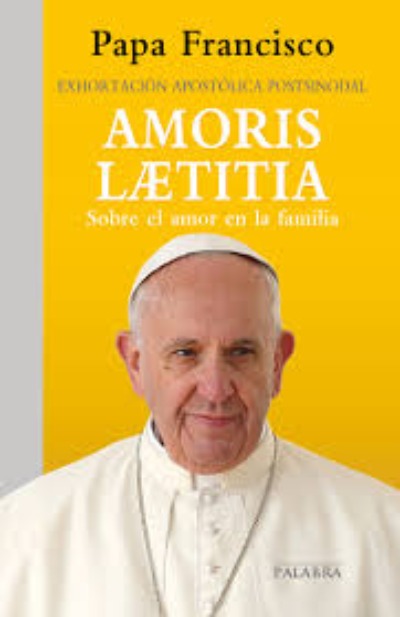
amoris-laetitia-papa-francisco (1)

Amoris laetitia is the second post-synodal apostolic exhortation of Pope Francis, signed on March 19, 2016 and made public on April 8 of the same year.

The year of Amoris Laetitia

This is why Pope Francis has launched this initiative, which aims to reach every home in the world through different proposals. It arises from the experience of the pandemic. It has highlighted the central role of the Christian home as a domestic Church and the importance of the community bonds between them, which make the Church a "family of families". AL 87.

Bishops' Conferences, Dioceses, Parishes, Ecclesial Movements, Family Associations, but especially Christian families from all over the world are invited to participate and are the protagonists with new proposals.

The Pope also recalled that, in imitation of the Holy Family, "we are called to rediscover the educational value of the family nucleus, which must be based on love that always regenerates relationships, opening horizons of hope.".

This feast "presents us with the ideal of conjugal and family love, as was emphasized in the Apostolic Exhortation Amoris laetitia".

Amoris Laetitia summary

  1. "To make you experience that the Gospel is joy that fills the heart and the whole of life" (AL 200). A family that discovers and experiences the joy of having a gift and being in turn a gift for the Church and society, "can become a light in the darkness of the world" (AL 66). And today's world needs this light!
  2. Announce that the sacrament of marriage is a gift and has in itself a transforming force of human love. For this, it is necessary that pastors and families walk together in a pastoral co-responsibility and complementarity among the different vocations in the Church (cf. AL 203).
  3. Make families the protagonists of pastoral care. This requires "an evangelizing and catechetical effort aimed at them" (AL 200), since a Christian family also becomes a missionary family.
  4. Raising awareness among young people of the importance of formation in the truth of love and self-giving, with initiatives dedicated to them.
  5. Broadening the outlook and action of the pastoral ministry to become transversal, to include spouses, children, young people, the elderly and situations of family fragility.

"Christian family life is a vocation and a path to holiness, an expression of the 'most beautiful face of the Church' (Gaudete et exsultate 9)."


The Pope recalls the importance of making peace. On the feast of the Holy Family, Pope Francis invites us to follow the model of Nazareth and gives some advice for a healthy environment: "if you argue, make peace the same day, the cold war the next day is very dangerous".

Recommendation for living 

The Pontiff has recommended a series of actions so that the family can experience a sincere communion and live deeply this year Amoris Laetitia

  • Maintain "deep and pure affections".
  • To prevail "forgiveness over discord". Never end the day without making peace
  • May "the daily hardness of life be softened by mutual tenderness and by serene adherence to the will of God".

In this way, Francisco pointed out, "the family is open to the joy that God gives to all those who know how to give with joy"But she also "finds the spiritual energy to open herself to the outside world, to others, to the service of her brothers and sisters, to collaboration in the construction of an ever new and better world; capable, therefore, of being the bearer of positive stimuli; evangelizing by the example of her life".

He also restated the three words that must always prevail: permission, thanks and apology. "Permission not to be invasive in the lives of others, then thanks, thanks for all the help and services we provide; thanks always, but gratitude is the blood of the noble soul, and then the most difficult to pronounce: apology". Because, as the Pope said: "we always do ugly things and someone can feel offended".

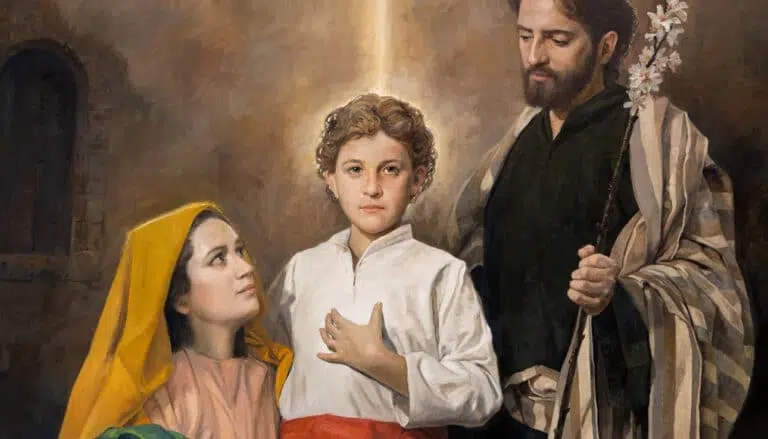
sagrada-familia-cristiana

Bibliography:

The Meaning of Christmas: December 25

All these feelings will be real if we allow the Child Jesus to be born in our hearts and enlighten them. Because, as Benedict XVI said, "if we do not recognize that God became man, what is the point of celebrating Christmas? The celebration is empty.

Today we Christians are surrounded by a celebration that is often empty and consumerist, very different from the Catholic Christmas where we commemorate the birth of Jesus Christ, the Son of God, who "for us men and for our salvation came down from heaven, and by the power of the Holy Spirit was incarnated of Mary the Virgin and became man" (Nicene-Constantinopolitan Creed). Every year, the Church prepares for Christmas with the liturgical season of Advent, which lasts four weeks.

What is it and what is the meaning of Christmas?

With the meaning of the Catholic Christmas, the way of worshipping God has changed. The Christian goes from praying looking at the sky, to turn his eyes to the earth to notice the fragility of a little child sleeping in the straw of a manger. The infinite greatness of God becomes the fragility of a newborn child. Suddenly, two concepts such as divinity and childhood, until then very distant, are united in one person and in the same direction. The sense of Christmas is the revelation of the simplest, which tests the wisdom of the wise and learned.

Shepherds were the first to adore the Child in the manger; and they did so because they understood that an Infant God embraces their simplicity and their simplicity. Their faith has dreamed of a God like this one who lives among their flocks, who is one among them, suffering their same needs.

And, as they approach the cave, they discover that this God made child takes refuge in the lap of his Mother. It is this bond between the Child and the Mother that completes the mystery of the Christian Christmas. Because God ceases to be an abstract and distant being, to become a helpless, human God, who takes refuge in a Mother, advocate in our relationship with Him.

If we strip it of this original meaning, the meaning of Christmas ceases to have an authentic Christian imprint.

"Above all," he stressed, "we Christians must reaffirm with deep and heartfelt conviction the truth of Christ's Nativity in order to bear witness above all to the awareness of a free gift that is wealth not only for us, but for everyone. Benedict XVI.

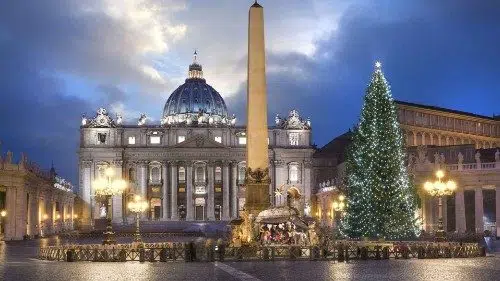
navidad plaza de san pedro

The Christmas tree in the Catholic tradition

The first feature of the Christmas tree is its ability to keep the leaves alive in winter that is why spruce or pine trees are used. "It was a symbol of eternity and the life of God that never passes away. Therefore, applying it to the life of God that never passes, applying it to the Son of God who comes with us at Christmas gives it that sense also of God who makes himself present in the midst of humanity," says D. Bernardo Estrada, Professor at the PUSC.

The first traces of tree decorations take us back to Germany where fruit was hung on the tree, reminiscent of the tree of life in paradise. Today, the Christmas tree is more than a decoration, it is a sign of joy for everyone.

In the words of St. John Paul II: "in winter, the evergreen fir tree becomes a sign of life that does not die [...] The message of the Christmas tree is, therefore, that life is 'evergreen' if it becomes a gift, not so much of material things, but of itself: in friendship and sincere affection, in fraternal help and forgiveness, in shared time and mutual listening".

"The Christmas tree and the gifts proper to these dates are a way of remembering that from the tree of the Cross come all good things... This is why the tradition of putting Christmas gifts for children under the tree has a Christian meaning: in the face of a consumerist culture that tends to ignore the Christian symbols of the Christmas holidays, let us prepare to celebrate the birth of the Savior with joy, transmitting to the new generations the values of the traditions that are part of the heritage of our faith and culture.". Benedict XVI.

sentido de la navidad

How to celebrate Catholic Christmas

Pope Francis recommends that to live the true meaning of the Christian Christmas, the first thing to do is to make room for the Child to be born. Some practical advice from the Holy Father is:

Play the nativity scene and explain it to the children, and pray there, reliving the scene. Make room in our hearts and in our days for the Lord. Let it be a feast of joy, of welcoming the Lord in the manger and in our hearts. Attend the Holy Mass. Receive the sacrament of Confession.

"Every Christian familyAs Mary and Joseph did, she can receive Jesus, listen to Him, talk to Him, be with Him, protect Him, grow with Him, and thus improve the world. Let us make room in our hearts and in our days for the Lord". Pope Francis.

2. Christmas should not be a celebration of excessive consumerism: give to those in need. Also to give time and affection to the family and to those close to us.

"May Holy Christmas never be a feast of commercial consumerism, of appearance, of useless gifts, or of superfluous waste, but may it be a feast of joy, of welcoming the Lord in the manger and in the heart." Pope Francis.

3. The meaning of Christmas is the feast of the poverty of God who emptied himself by taking the nature of a slave.

"This is the true Christmas: the feast of the poverty of God who emptied himself by taking the nature of a slave; of God who serves at the table; of God who hides himself from the intellectual and wise and who reveals himself to the small, simple and poor." Pope Francis.


Bibliography

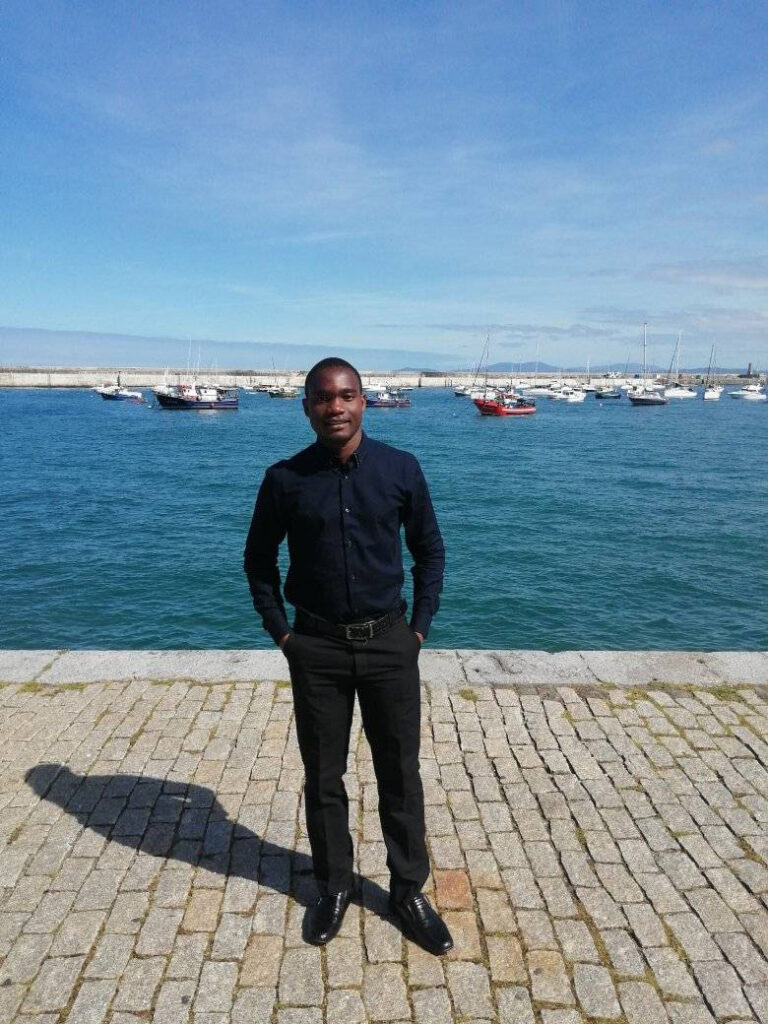
Paul from Malawi: "we need well-trained priests to help everyone".

The great cultural richness of Malawi is countered by the scarcity of means, especially in the diocese of Karonga, a young and small diocese in need of many priests. This is Paul's dream: to be well trained in Pamplona in order to return and serve effectively the diocesan church of his country.

This young African, 23 years old, resides in the Bidasoa international seminar and is studying theology at the University of Ecclesiastical Faculties of the University of Navarre. The bishop of the diocese of Karonga, in the north of Malawi, has sent him to Pamplona to receive a solid and integral formation so that, when he returns, he can put all the preparation he has acquired to work in the Church in his country.

Need for priests in Malawi

"The need of my diocese is to have more priests. There are very few of us and it is a young, new and small diocese, founded in 2010," Paul explains. For this reason, he is very excited about the complete preparation he is receiving in Pamplona. 

Your diocese needs not only well-trained priests, but also more missionaries to help the few who are not yet in the diocese. diocesan priestsThe diocese has only 19 diocesan priests and 28 seminarians.

Living conditions in Malawi

In his diocese there is also a shortage of health and education professionals. Paul explains, "We certainly need the help of these health facilities to improve the living conditions of Christians, but also of the entire population of the diocese. But we are grateful that the diocese has done all it can to help with new schools and some health centers, even though the demand is still very high." 

Had it not been for the help of the CARF Foundation and benefactors, Paul would not have had the opportunity to receive a complete formation as a priest that will do so much good for his people.

Coexistence between Christians, Muslims and African traditions

Certainly, your diocese has scarce economic means, but a great wealth in terms of coexistence. 

"Catholics in Malawi live in peace, celebrate their faith joyfully and demonstrate it culturally. Malawi is a very peaceful country, we live in harmony and cooperation with other Christians, Muslims and African traditions without killing each other. Religious expression is not a problem," he says happily. 

In this African country, Catholics have a higher percentage (17.2 %) than other Christian denominations; it should be remembered that there are many other groups of Christian confessions, because Great Britain colonized the country and the first Christians who evangelized were Protestants from England and Scotland. A few years later, the Catholic White Fathers from France went as missionaries, when Protestantism had already spread in the country.

The example of priests

The example of Catholic priests and missionaries in Malawi had a positive influence on Paul, as well as the strength of his environment. He comes from a large family of seven siblings with strong Catholic roots: four boys and three girls. Paul is the sixth. 

The departure of his mother to Heaven in 2014, when he was only 13 years old, caused him great sorrow. But this grief turned into hope and faith thanks to the support of her family and religious, an example that was decisive in helping her to move forward and shape her vocation.

"Lord, let me try."

He began to discern his vocation to the priesthood as a child, when he participated in the activities that took place in his school, in the minor seminary. But he did not know if he could carry out such a mission. 

"As a child I thought I could live like them, like the priests who took care of me and educated me. And I told the Lord: let me try, I'm going to give everything so that one day I can be a priest," he says. 
Finally, he entered the major seminary at the age of 19. In this vocational journey that he has undertaken, he hopes to alleviate the need of his diocese for well-trained priests, especially to reach out to the youth.

Reaching out to young people

"Young people are very influential in spreading the Gospel through the media, but also in the annual youth meetings and conferences that are organized to keep the faith and spread it; they gather in large numbers, which is very promising," Paul Benson proudly expresses. 

For him, young priests are able to understand what young people need by developing new approaches to explaining Catholic doctrine, giving arguments and thus being able to live and witness to the Catholic faith in Malawi.

What Europeans should learn from Africans

Africa has great challenges, but so does Europe, because Europeans must learn great virtues from African Catholics: "audacity and resilience to resist and keep the faith, the tradition itself; to proclaim the truth and help this broken generation, where many things are happening contrary to our Christian customs, among them, many sexual immoralities," Paul laments.

Thanks to the CARF Foundation

This is one of the reasons why he believes that the formation of a priest is paramount: "We must help everyone, those who believe and those who don't, those of one class and those of another. That is why we need priests who are well trained". 

With enthusiasm and joy he thanks the CARF Foundation for all it does for his academic studies. "Our formation is academic, spiritual and pastoral, and I am very happy for your help."


Marta Santín, journalist specializing in religion.


Advent: a time of hope and preparation. 6 keys to live it

The season of Advent marks the four weeks leading up to the ChristmasIt is an opportunity to reflect, reconnect with our faith and live the expectation of Christ made man with an open heart.

But how can we truly take advantage of this time without getting carried away by the distractions of consumerism, social commitments or everyday worries? Below, we share with you some keys to live Advent with depth and meaning.

The meaning of Advent

The word Advent comes from the Latin adventuswhich means coming. During these weeks, the Church invites us to prepare our hearts for two important events:

Advent is not only a countdown to Christmas, but a call to conversion and spiritual preparation. This is a time to pause, meditate and reorient our lives towards God.

Keys to live Advent with faith

1. Set aside a daily time for prayer

Take a few minutes each day to be alone with God. You can read the readings of the day, meditate on the biblical passages that announce the coming of Jesus, or pray the Holy Rosary. If you have an Advent calendar, use it to deepen the daily liturgy.

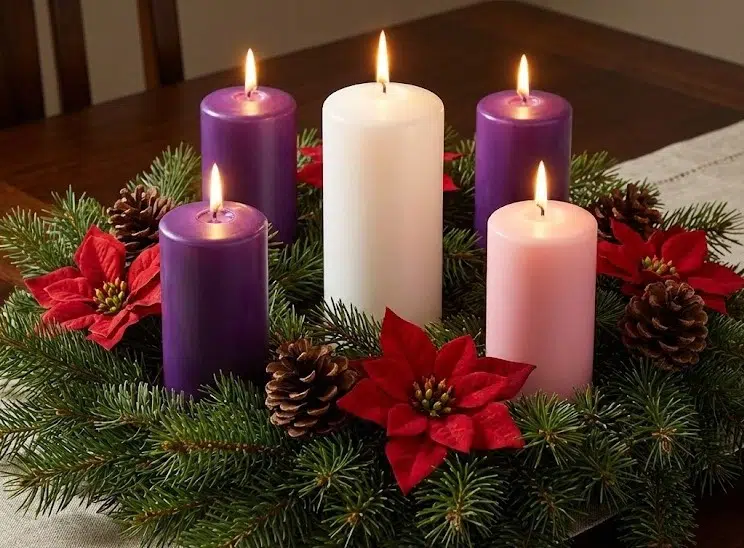
TipCreate a space at home for prayer with a candle or a picture of Jesus' birth. Lighting a candle each week of Advent can help you remember the meaning of waiting. Remember the Advent wreath.

2. Practice charity

Advent is a time to look beyond ourselves and share with others, especially those who need it most. Consider how you can be an instrument of love:

3. Live the liturgy

Attending Sunday Mass is essential to nourish our faith. During this time, pay special attention to the liturgical signs: the readings, the prayers and the color purple, which symbolizes penance and hope.

4. Reduce material distractions

It's easy to get caught up in the shopping, decorations or holiday dinners. While these elements have their place, make sure you don't lose sight of the true meaning of this time.

5. Approach the sacrament of Confession.

Advent is a perfect time to reconcile ourselves with God. Examine your conscience and receive the sacrament of Confession. Cleansing our hearts helps us welcome the Baby Jesus with peace and joy.

6. Cultivate hope

Advent reminds us that waiting makes sense because we are waiting for something great: God's love made flesh. Even in the midst of difficulties, this is an opportunity to renew our hope and trust that God never abandons us.

TipReflects on the virtues of Mary and St. Joseph, read about the characters of Bethlehem. They lived the wait with faith and humility. How can you imitate their example?

Conclusion

Advent is a time to pause and look at what is essential. Beyond lights, gifts and celebrations, we are invited to prepare our hearts for an encounter with Christ. Let this time transform us, bring us closer to God and make us true witnesses of his love.

May this Advent be for you and your family a journey filled with faith, hope, and charity, so that you may truly experience Christmas and the birth of Jesus!


Religious persecution and intolerance in the 21st century

The persecution The religious persecution suffered by many Christians has been provoked by public authorities, by non-Christian groups or by other Christians of different faiths throughout the history of the world. Christianity.

Perhaps part of the answer lies in the following reflections:

Pursuit

Persecutions of any kind are deplorable acts, especially those of a religious nature, because they limit the freedom of human beings in their relationship with God. Unfortunately, universal history has shown us that religious persecutions have their origin in ancient times.

In the case of the recent history of Spain, cited as a reference in numerous works, a detailed study published in 1961 by Antonio Montero Moreno, identified a total of 6,832 religious victims murdered in the Republican territory, of which 13 were bishops; 4,184, diocesan priests; 2,365, religious; and 283, nuns. In a study published in 2001, the researcher and priest Ángel David Martín Rubio lowered the total number of members of the clergy murdered during this period in the Republican zone to 6,733.

Intolerance

We know that intolerance is the inability to accept other people's ideas, beliefs or practices when they are different from one's own and that the intolerant person is characterized by maintaining his or her opinion, without paying attention to others.

We also know that when the emotional or passionate component is added, intolerance becomes fanaticism or that, when there is an excessive attachment to following fundamental texts to the letter out of their context, we fall into fundamentalism.

As human attitudes, all of them violate people's dignity, with the most common reasons being race, sex or religion.

Finally, we know that tolerance is an acquired habit and, therefore, a competence that humans can develop voluntarily, since our natural instinct would lead us down the path of intolerance and aggression.

We could deduce up to this point that the origin of the problem is personalThe "own" of each one of us, and that it depends on the education received in our family, social and cultural environment.

Francis also asked that "no one be considered a second-class citizen," especially Christians, who represent 1% of the population in the Muslim country, and the Yazidis, a minority persecuted by the Islamic State.

Consequences of religious persecution and intolerance 

According to the latest report of Aid to the Church in Need, presented at the end of 2014, a total of 55 countries in the world (28%), have suffered in the last two years a marked worsening or deterioration of religious freedom.

In 14 of the 20 countries that suffer persecution for professing the Catholic religion, it is linked to the islamism In the other 6, the persecution is linked to authoritarian regimes, most of them communist.

According to the report of the NGO Open Door (World Watch List WWL Report), more than 100 million Christians are persecuted in the world today.

Spain has had its own experience of this phenomenon: 1,523 martyrs beatified as a result of the religious intolerance of the 1930s, of whom 11 have already been canonized.

persecución religiosa siglo xxi

Warnings

Two observations are in order:

a) Pope Francis does so on the "false tolerance of those who want to force others to live privately and not publicly the ethical principles consistent with the truth found". (20 Jun.14).

In a word, he warns against wolves in sheep's clothing, who propose to remove crucifixes or religious symbols from public life or who, in the name of a false tolerance with other religions, promote the expropriation of the Cathedral of Cordoba, to give a simple example of the present time.

b) It is also good to warn about the false accusations of discrimination that the architects of the fallacy promote when they put on the same level of equality the dignity of the person and his behavior, accusing as discriminatory the censure that can be made of certain behaviors.

To exemplify this phenomenon we can say that when a child is censured for going out drinking and coming back in the early hours of the morning, his personal dignity is not being violated nor is he being discriminated against, only his behavior, which is educable and modifiable, is being censured.

If promiscuous behavior is censured, it is also not discriminated against because this behavior can be modified by the child, keeping intact his or her personal dignity, which must be treated with the utmost charity and understanding.

Action plan

Pope Francis stresses that "the problem of intolerance must be faced as a whole". "the good of the whole society is at risk and we all have to feel involved". (Oct 2013).

In a word, we cannot stand idly by, we have to act, we have to fight, with the instruments available, which for a Christian are, among others, prayer, being committed to just causes and active participation, otherwise the place, our place, will be taken by others.