Jesus Christ, High and Eternal Priest: self-giving love

Each year, the Thursday after Pentecostthe Church celebrates a singular liturgical feast: the feast of Jesus Christ, High and Eternal Priest. It is not just another liturgical remembrance, but a profound invitation to contemplate the very heart of the Christian mystery: Christ who offers himself to the Father for the salvation of the worldand which associates the priests of the Church with this sacrifice.

What is celebrated on this holiday?

This feast is centered on Christ in his priestly dimensioni.e., as mediator between God and mankind (cf. 1 Tim 2:5). He does not celebrate a particular moment of his life (such as Christmas or Easter), but rather his eternal priestly beingaccording to the order of Melchizedek (cf. Heb 5:6).

Jesus was not a priest like those of the Jewish temple. He is the perfect priest because it offered not animal sacrifices, but their own body and blood in obedience and love to the Father. As the Letter to the Hebrews says: "Christ came as High Priest of the good things to come... not by the blood of goats and calves, but by his own blood he entered once for all into the sanctuary and obtained eternal redemption" (Heb 9:11-12).

This feast was established in the liturgical calendar by some bishops -especially in Spain and Latin America- in the 20th century, and was approved by the Congregation for Divine Worship in 1987. Since then, it has been adopted by many dioceses around the world.
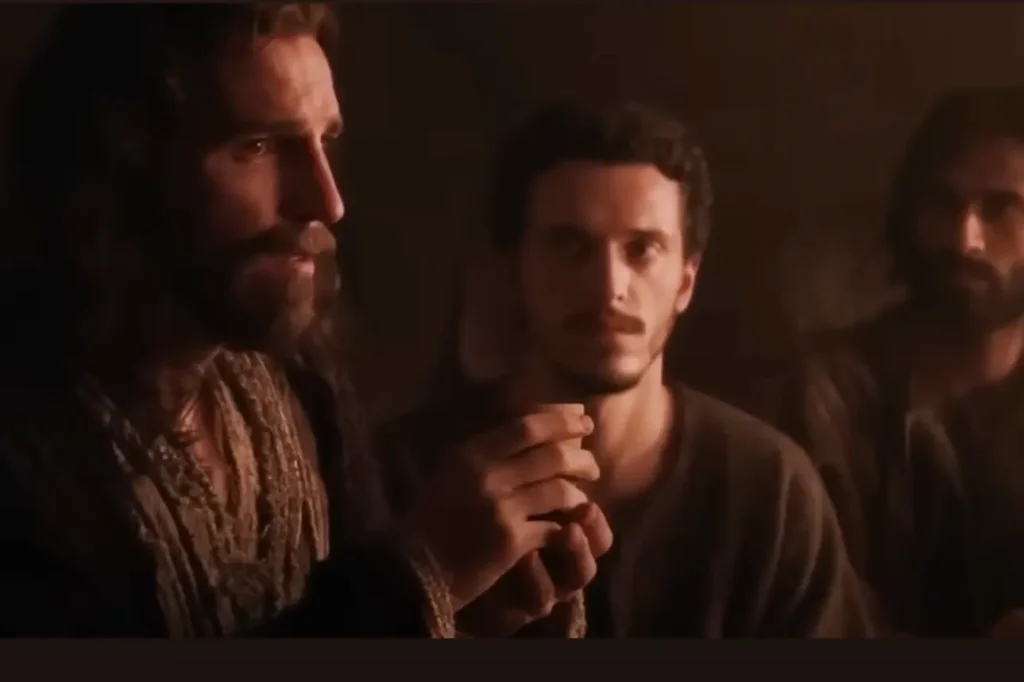
Escena de la película "La Pasión de Cristo" mostrando a Jesús en la Última Cena, sosteniendo el pan mientras instituye la Eucaristía, con sus discípulos observando en silencio.

The only sacrifice and the only priest

The Church teaches that Christ is at the same time priest, victim and altar. He is not only the one who offers, but also the one who the one who deliversChrist, the eternal priest, by the oblation of his body, accomplished once for all, brought to completion the work of human redemption" (Preface proper to the Mass of this feast).

At the Last Supper, he sacramentally anticipated the sacrifice he would consummate on the cross. Since then, each Mass is a real and sacramental actualization of this unique sacrifice.. It is not repeated, but is made present, by the power of the Holy Spirit.

Therefore, when priests celebrate the Eucharist, act "in persona Christi Capitis". (in the person of Christ the Head), not as mere delegates or representatives. It is Christ himself who acts through them.

Feast of Christ and his priests

This festival is also a privileged occasion to praying for priests. They have been configured with Christ the Priest to continue his mission. In the words of St. John Paul II: "The ministerial priesthood shares in the unique priesthood of Christ and has the task of making present in every age the sacrifice of redemption" (Letter to Priests, Holy Thursday 1986).

Today more than ever, priests need our closeness, our affection and our prayers. Their mission is beautiful, but also demanding. They are instruments of Christ's love, but they are not exempt from difficulties, fatigue and temptations.

This festival, therefore, is also a call to renew our love and support for our pastors. It is also a day for calling for new priestly vocations. The Church needs men who, in love with Christ, are ready to spend their lives in the service of the Gospel.

Contemplating Christ the Priest in order to follow him closely

To contemplate Christ as High and Eternal Priest is to contemplate his Heart, his surrender, his obedience to the Father and his compassion for mankind. He became a priest in order to intercede for us without ceasingAs Hebrews says: "He is able to save those who draw near to God through him, since he always lives to make intercession for them" (Heb 7:25).

In a world marked by self-sufficiency, haste, and superficiality, looking to Christ the Priest is a call to live a spirituality of dedication, intercession and silent service. Christ does not impose himself: he offers himself. He does not demand: he gives himself. He does not exhibit Himself: He gives Himself to the extreme.

For the lay faithful, this feast is also a reminder that all the baptized share in Christ's priesthood. St. Peter says it clearly: "You are a chosen race, a royal priesthood, a holy nation, a people for God's own possession" (1 Pet 2:9).

This common priesthood of the faithful is lived in daily offering, in prayer, in charity, in the witness of life. Every Christian is called to offer his life as a spiritual sacrifice pleasing to God (cf. Rom 12:1).
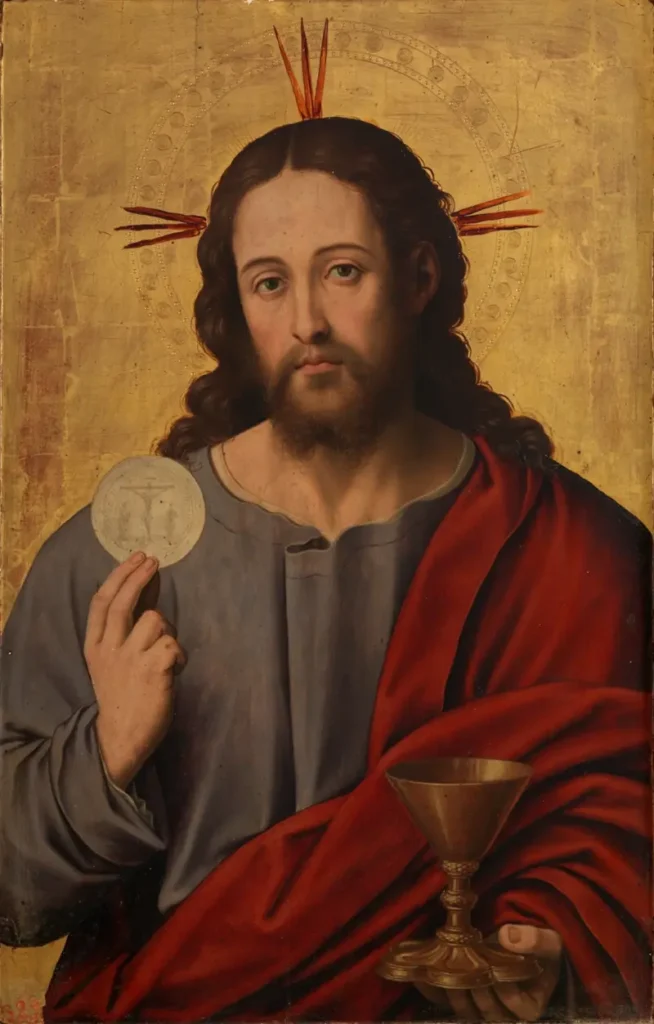
Pintura renacentista de Cristo sosteniendo una gran hostia consagrada en su mano izquierda y un cáliz dorado en su mano derecha, con fondo dorado y halo radiante, representando su papel como Sumo y Eterno Sacerdote.

A party to look at the altar... and at the sky

The Feast of Jesus Christ, High and Eternal Priest, invites us to look at the altar with renewed faithand to recognize that Christ himself is at work there. It reminds us that salvation does not come from our works, but from Christ's sacrifice.. And that this sacrifice is eternal, always living, always effective.

It is a profoundly Eucharistic, profoundly priestly and profoundly ecclesial feast. It is an opportunity to thank Christ for his self-giving, to pray for those who have been called to represent him sacramentally, and to offer ourselves with him to the Father for the good of the world.

18 quotes from St. Josemaría about priests

1. What is the identity of the priest? That of Christ. All Christians can and should be not only priests, but also priests. alter Christus but ipse Christus, other Christs, Christ himself! But in the priest this is given immediately, in a sacramental way. (Loving the Church, 38).

2. We priests are asked to have the humility to learn to be unfashionable, to be truly servants of the servants of God (...), so that ordinary Christians, the laity, may make Christ present in all areas of society. (Conversations, 59).

A priest who lives the Holy Mass in this way - adoring, atoning, impetrating, giving thanks, identifying himself with Christ - and who teaches others to make the Sacrifice of the Altar the center and root of the Christian's life, will truly demonstrate the incomparable greatness of his vocation, that character with which he is sealed, which he will not lose for all eternity (Loving the Church, 49). (Loving the Church, 49).

4. I have always conceived my work as a priest and pastor of souls as a task aimed at placing each one before the full demands of his life, helping him to discover what God, in concrete terms, is asking of him, without placing any limitation on that holy independence and that blessed individual responsibility which are characteristic of a Christian conscience. (Christ Is Passing By, 99).

5. The value of piety in the Holy Liturgy!

I was not at all surprised by what someone told me a few days ago about an exemplary priest who died recently: what a saint he was!

-Did you treat him a lot," I asked.

-No," he replied, "but I saw him celebrate Mass once. (Forge, 645).

6. I do not want -as I am aware- to fail to remind you again that the Priest is "another Christ". -And that the Holy Spirit has said: "nolite tangere Christos meos". -do not want to touch "my Christs". (Camino, 67).

7. The professional work, so to speak, of priests is a divine and public ministry, which demands the whole activity to such an extent that, in general, if a priest has time left over for other work that is not properly priestly, he can be sure that he is not fulfilling the duties of his ministry. (Friends of God, 265).

8. Christ, who ascended the Cross with his arms wide open, with the gesture of an Eternal Priest, wants to count on us, who are nothing, to bring to "all" men the fruits of his Redemption. (Forge, 4).

9. Neither to the right nor to the left, nor to the center. I, as a priest, try to be with Christ, who on the Cross opened both arms and not only one of them: I freely take from each group that which convinces me and makes me have a welcoming heart and arms for all humanity. (Conversations, 44).

10. That priest friend worked thinking of God, holding on to his paternal hand, and helping others to assimilate these mother ideas. That is why he used to say to himself: when you die, everything will be all right, because He will continue to take care of everything. (Furrow, 884).

11. That priest friend of ours convinced me. He spoke to me about his apostolic work, and assured me that there are no unimportant occupations. Beneath this field of roses," he said, "is hidden the silent effort of so many souls who, with their work and prayer, with their prayer and work, have obtained from Heaven a torrent of rains of grace that makes everything fruitful. (Furrow, 530).

12. Live the Holy Mass!

-It will help you to consider the thought of a priest in love: "Is it possible, my God, to participate in Holy Mass and not be a saint?

-And he continued: "I will stay every day, fulfilling an ancient purpose, in the Sore of my Lord's Side!

-Cheer up! (Forge, 934).

To be a Christian - and in a particular way to be a priest, remembering also that all the baptized participate in the royal priesthood - is to be continually at the Cross (Forge, 882). (Forge, 882).

14. Let us not become accustomed to the miracles that take place before us: to this marvelous wonder that the Lord descends every day into the hands of the priest. Jesus wants us to be awake, so that we may be convinced of the greatness of his power, and so that we may hear his promise anew: venite post me, et faciam vos fieri piscatores hominumIf you follow me, I will make you fishers of men; you will be effective, and you will draw souls to God. We must trust, therefore, in these words of the Lord: get into the boat, take up the oars, hoist the sails, and launch out into the sea of the world that Christ gives us as our inheritance. (Christ Is Passing By, 159).

If it is true that we drag personal miseries, it is also true that the Lord counts on our mistakes. It does not escape his merciful gaze that we men are creatures with limitations, with weaknesses, with imperfections, inclined to sin. But he commands us to struggle, to recognize our defects; not to be cowed, but to repent and to foster the desire to be better. (Christ Is Passing By, 159).

15. Priest, my brother, always speak of God, for if you are his, there will be no monotony in your conversations. (Forge, 965).

16. The guardianship of the heart. -Thus prayed that priest: "Jesus, may my poor heart be a sealed garden; may my poor heart be a paradise, where You live; may the Angel of my Guardian guard it, with a sword of fire, with which He purifies all the affections before they enter me; Jesus, with the divine seal of your Cross, seal my poor heart". (Forge, 412).

17. When he gave Holy Communion, that priest felt like shouting: "Here I give you Happiness! (Forge, 267)

18. In order not to scandalize, in order not to produce even the shadow of suspicion that the children of God are lazy or useless, in order not to be a cause of disedification..., you must strive to offer with your conduct the just measure, the good disposition of a responsible man.... (Friends of God, 70).

Sources:


Priestly celibacy: history, meaning and challenges

Priestly celibacy has been, since the first centuries of Christianity, a reality deeply linked to the ordained ministry in the Latin Catholic Church. Although it is not a dogma of faith, celibacy has been assumed as a gift that strongly expresses the spiritual meaning of priesthood. But where does this practice come from, why is it maintained today, what challenges does it face?

A little history: biblical roots and ecclesial tradition

The practice of celibacy did not begin with the Church, but was assumed by her from very early on. Jesus himself lived celibate, and in his teaching appears the option for celibacy "for the sake of the Kingdom of heaven" (cf. Mt 19:12). St. Paul also refers to this ideal in his first letter to the Corinthians: "He who is unmarried is concerned about the things of the Lord, how to please the Lord" (1 Cor 7:32).

In the first centuries of Christianity, both married and celibate clerics lived together in ecclesial life. However, as early as the fourth century, the Councils of Elvira (c. 305) and Carthage (390) recommended perpetual continence for married clerics, that is, living as brothers once they had received holy orders. Over time, the discipline of obligatory celibacy was consolidated in the West, especially since the Second Lateran Council (1139), which established that only celibate men could be ordained.

In the Eastern Catholic Church, on the other hand, the possibility of ordaining married men has been maintained, although bishops are elected exclusively from among celibates.

The spiritual meaning of priestly celibacy

Celibacy is not simply a renunciation, but a positive choice for a greater love. As he wrote St. John Paul IICelibacy for the sake of the Kingdom is not an escape from marriage, but a particular form of participation in the mystery of Christ and of his spousal love for the Church" (John Paul II, Pastores dabo vobis, n. 29).

The priest, configured to Christ, Head and Spouse of the Church, is called to love with an undivided heart, giving himself totally to God and to the service of the people. Celibacy permits this radical self-giving, free from family ties, to be available to all.

Moreover, celibacy is an eschatological sign: it anticipates the future state of the redeemed in the Kingdom of heaven, where "they neither marry nor are given in marriage" (cf. Mt 22:30).

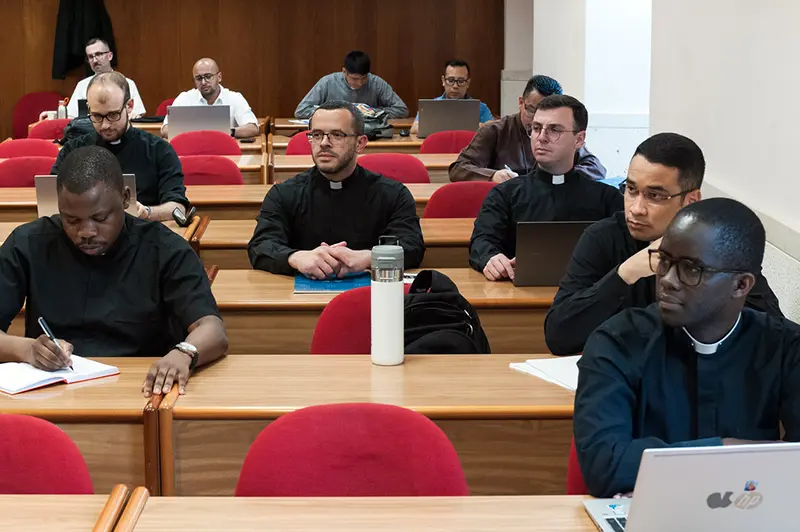
Jóvenes seminaristas y sacerdotes católicos asisten a clase en un aula universitaria, vestidos con la sotana negra o camisa clerical con alzacuellos. Están atentos, tomando notas o usando portátiles, como parte de su formación intelectual y espiritual para vivir plenamente su vocación y el compromiso del celibato sacerdotal.

Current challenges

In the contemporary world, celibacy is often misunderstood. In a hyper-sexualized culture focused on self-fulfillment, celibacy can seem like a burden or an unwarranted deprivation. In addition, the lack of positive testimonies and the scandals of some members of the clergy have caused some people to question its viability and desirability.

Even within the Church there are voices that propose its revision, especially in contexts where vocations are scarce. However, recent Popes have strongly reaffirmed its value. Benedict XVI affirmed: "Priestly celibacy, lived with maturity, joy and dedication, is a blessing for the Church and for society itself" (Light of the world, 2010).

And Pope Francis, although he opened a dialogue about the viri probati (married men of proven faith in remote areas), stressed that celibacy is "a gift" that should not be suppressed.

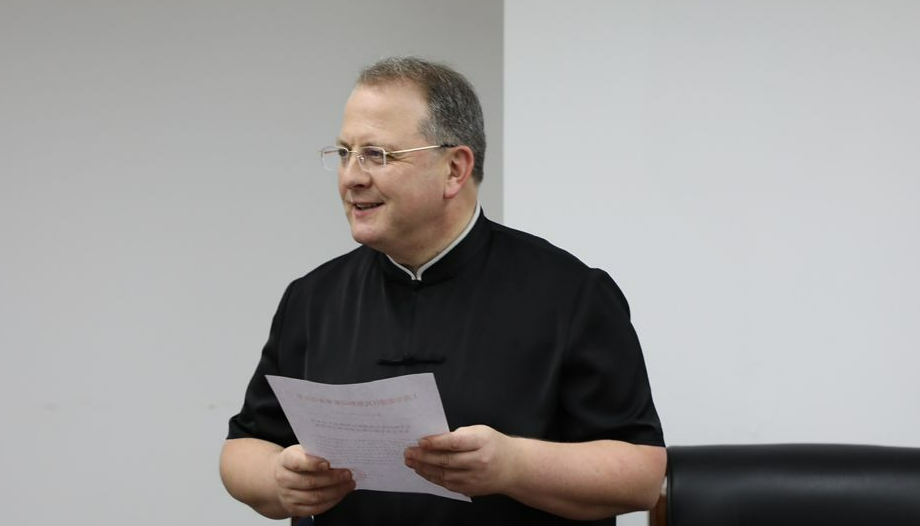
Un sacerdote sostiene unas hojas mientras parece explicar un asunto en un aula.

A call to love and freedom

Beyond the debate, priestly celibacy remains a prophetic sign, a witness that it is possible to live a full life, totally dedicated to God and to others. It is not an imposition, but a free choice that responds to a concrete vocation, accompanied by grace, formation and community.

In the CARF Foundation, we support seminarians and diocesan priests in their vocational journey, aware that celibacy is not lived in solitude, but with the help of God, of other brother priests and lay people, and of the whole Church that accompanies them. We pray for them and support them so that they may be faithful witnesses of Christ's love.

Sources and references


CARF Foundation.

Deacon: how is he different from a priest?

What is a deacon, what functions does he perform and how does he differ from a priest. We are going to explain it to you, and also answer some frequently asked questions: can they marry, do they celebrate Mass, are there different types? Read on to find out.

What is a deacon?

The word deacon comes from Greek diakonoswhich means "served" or "minister". In the Catholic Church, the diaconate is the first degree of the sacrament of Holy Orders, followed by the presbyterate (priests) and the episcopate (bishops). It is therefore an ordained minister, called to serve the people of God in the proclamation of the Word, the celebration of certain sacraments and charity.

The diaconate is not a modern invention. Already in the New Testament, specifically in the Acts of the Apostles (Acts 6:1-6), it is narrated how the Apostles chose seven men of good reputation, full of the Holy Spirit and wisdom, to be in charge of assisting widows and other tasks of service. Among them was St. Stephen, the first martyr of the Church.

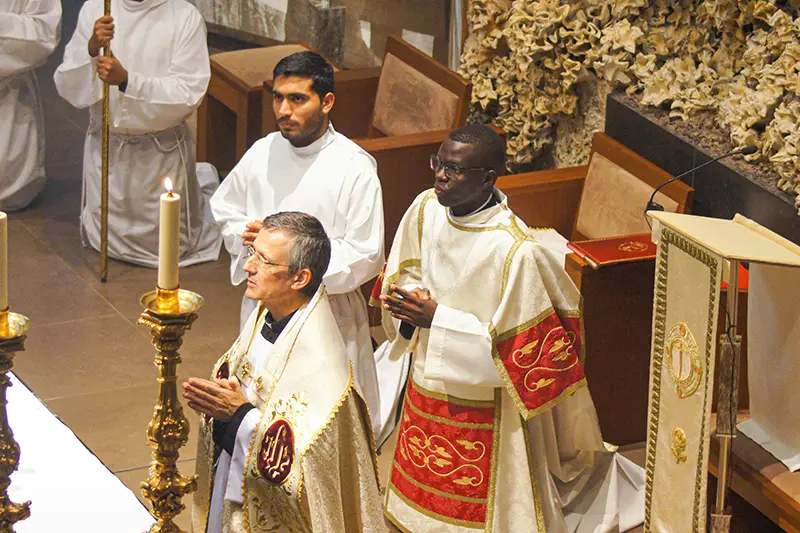
Sacerdote junto a un diácono y seminaristas de Bidasoa celebrando la Exposición al Santísimo

What functions does it perform?

Deacons are called primarily to service. Their threefold mission can be summarized in three areas: Word, Liturgy and Charity.

Service of the Word
They may proclaim the Gospel at Mass, preach the homily (if authorized by the presiding priest) and teach Christian doctrine. Many collaborate in catechetical formation, evangelization and accompaniment of Christian communities.

Service of the Liturgy
Although a deacon cannot consecrate the Eucharist, he can:

Charity Service
They are especially responsible for animating charity in their communities. They visit the sick, help the poor, accompany the marginalized, promote social works and collaborate with Caritas or other institutions. This charitable dimension is deeply linked to their apostolic roots.

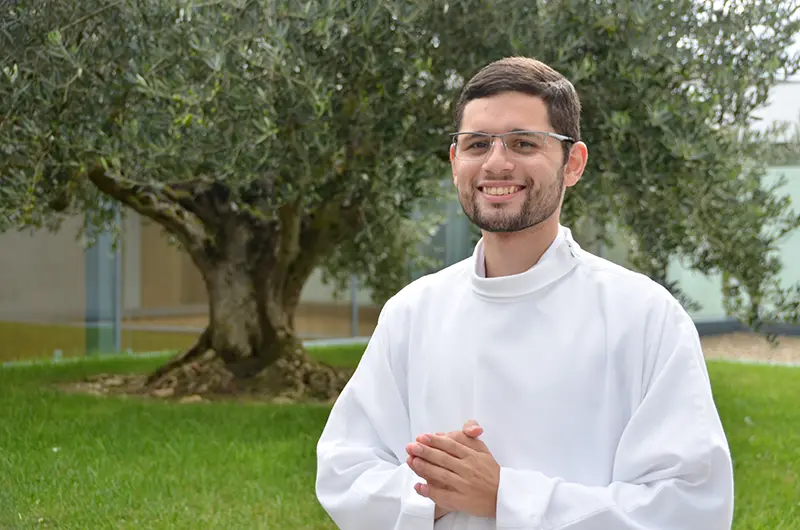
Diacono vestido con el alba blanca con las manos en posición de rezar

What is the difference between the two?

Although both the deacon and the priest have received the sacrament of Holy Orders, their functions, liturgical capacities and place in the ecclesial hierarchy are different.

AppearanceDeaconPriest
Degree of orderFirst degree of the sacred orderSecond degree of the sacred order
Celebration of the MassMay not consecrate or preside at the Eucharist.Can celebrate Mass and consecrate the Eucharist
Confession and AnointingCannot administer these sacramentsCan administer Confession and Anointing of the Sick
PreachingCan proclaim the Gospel and preach Can preach on a regular basis
Life statusMay be married, if permanent; celibate, if transitoryAlways celibate in the Latin rite
Subsequent ordinationCan be ordered if transientHe has already received the priesthood, no higher ordination except episcopate.

Can they get married?

This is one of the most frequently asked questions. The answer depends on the type:

Permanent deacon: is one who has been ordained with the intention of remaining in that ministry, without aspiring to the priesthood. In this case:

Transitory Deacon: is a seminarian who has received the diaconate as a preliminary step to the priesthood. In this case:

In summary: a married deacon cannot be a priest (at least in the Latin rite), and a celibate seminarian cannot marry after being ordained deacon.

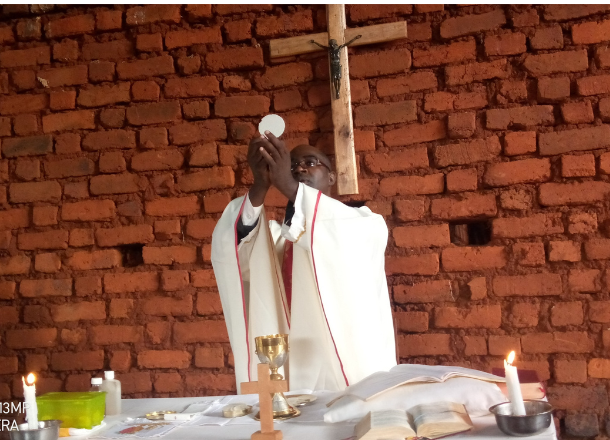
Sacerdote celebrando la Eucaristía
Celebrating Holy Mass in Tanzania.

Can they celebrate Holy Mass?

No. Although they participate in the Mass and have a visible liturgical role-for example, they proclaim the Gospel, elevate the chalice, give peace and communion, are unable to celebrate the Eucharist on their ownsince do not have the power to consecrate bread and wine. That power is reserved to priests and bishops.

Therefore, does not "celebrate Mass". in the strict sense. He can preside at liturgical celebrations without Eucharist, such as liturgies of the Word, funeral services, baptisms and marriages.

Why are they important in the Church?

They remind the entire Christian community that the fundamental vocation of the Church is service. They embody the example of Christ who "came not to be served but to serve and to give his life as a ransom for many" (Mt 20:28).

Especially in contexts where there is a shortage of priests, the presence of well-formed deacons is a great pastoral support. Moreover, their closeness to the concrete realities of the people - family, work, society - allows them to be effective bridges between the Church and the world.

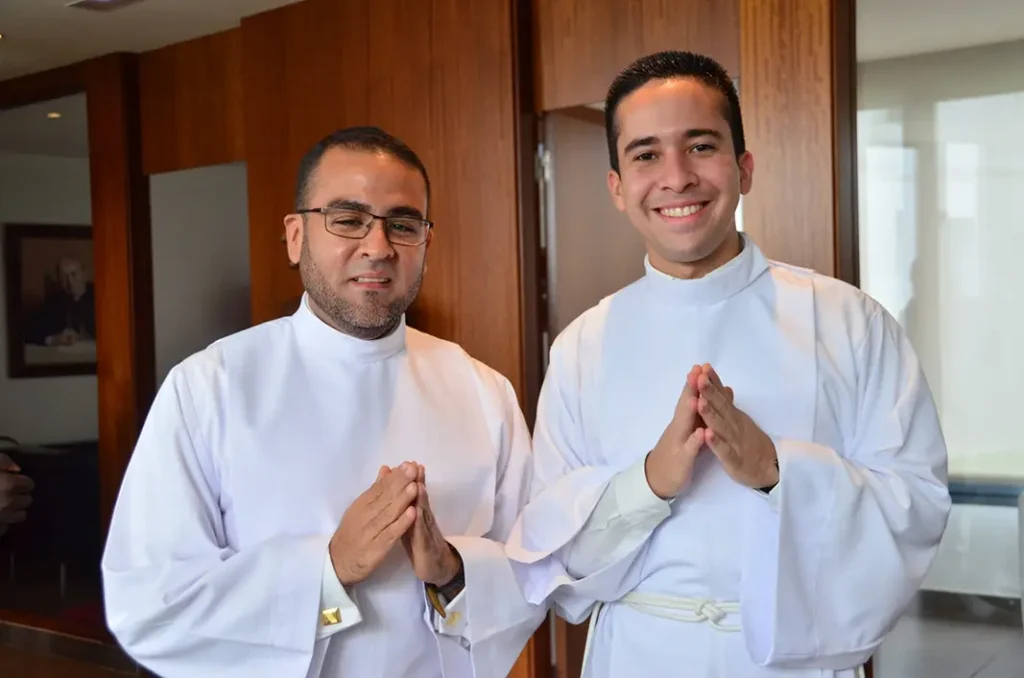
Dos seminaristas vestidos con el alba de diácono preparados para asisitir en una celebración litúrgica

Your training and the role of the CARF Foundation

Both permanent and transitory need solid training in theology, spirituality and pastoral care. In the case of future priests, the transitional diaconate is a key stage that marks the end of their seminary preparation.

The CARF Foundation collaborates with their training at centers such as the Pontifical University of the Holy Cross in Rome and the Ecclesiastical Faculties of the University of Navarre in Pamplona, among other institutions. Thanks to the benefactors, many seminarians from all over the world are able to prepare themselves adequately to exercise their ministry with fidelity, joy and dedication.

The diaconate is a precious ministry that enriches the life of the Church. They are not "half-priests," but ordained ministers with their own identity and mission: to serve the Word, the Liturgy and Charity. Some are on the way to the priesthood; others, like the permanent priests, are a living sign of Christ's service in the midst of the world.

From the CARF Foundation, we thank everyone for their generous dedication and encourage our benefactors to continue supporting the formation of vocations at all levels. Because a Church with well-formed servants is a Church that is more alive, holier and closer.

Bibliography

St. Joseph: a father's heart in Provence

Mount Bessillon belongs to the municipality of Cotignac, in Provence. This is where the June 7, 1660 the only apparition of St. Joseph that is recognized by the Church. It does not resemble other apparitions in which detailed messages are transmitted to a visionary. In fact, there is no message to convey.

The apparition of St. Joseph

The patriarch, alone has come to the aid of a thirsty young shepherd boyon a day very close to summer.

St. Joseph appears as a man of considerable stature who points out a huge rock to the shepherd and says: "I am Joseph, lift it up and you will drink". Gaspard gives him a look of disbelief, as he finds himself unable to lift it. But St. Joseph reiterates his order and the shepherd lifts it without too much effort.

He discovers a spring of fresh water below and drinks greedily, but when he looks up, he realizes he is alone. San JoseJesus' father, has barely broken the silence attributed to him in the Gospels.. Gaspard is the one who does not keep quiet and spreads the news around, so that sick people from all over come to the spring to be cured and relieved. Soon a provisional oratory was built on the site, and in 1663 the present chapel was inaugurated.

Current sanctuary of St. Joseph

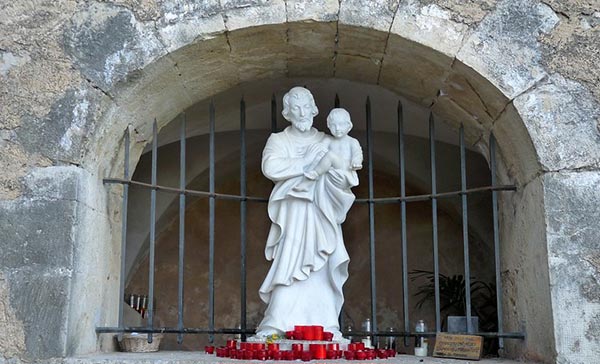
El actual Santuario de san José fue consagrado en 1663. En la fiesta de san José, desde 1661 en adelante acudían verdaderas muchedumbres al santuario del santo.

The present shrine of St. Joseph was consecrated in 1663. On the feast of St. Joseph, from 1661 onwards, large crowds flocked to the saint's shrine.

Since then, the chapel has withstood all the ravages of time, including those of the French Revolution, even if it had to be abandoned for some years. The chapel was somewhat forgotten during the 19th century and a large part of the 20th century, even if it was abandoned for a few years. every March 19, a pilgrimage would gather the people of the surrounding area to.

Finally, in 1975, the Benedictines of the Medea monastery in Algeria settled there, and the architect Fernand Pouillon built a new monastery next to the remains of the 17th century buildings. The work harmonizes the ancient and the modern.

The influence of Jacques-Bénigne Bossuet

Around the same time that this singular apparition of St. Joseph took place, France was consecrated to the holy patriarch by Louis XIV, at the request of his mother, Anne of Austria. Those were the times when the French Court stopped to listen to the sacred oratory of Jacques-Bénigne Bossuet, one of the most influential personalities of the Church at that time.

We have sometimes been given a view of Bossuet more akin to that of a treatise writer constructing a political theory of the French monarchy, and his deep spirituality and his great knowledge of Sacred Scripture and the Church Fathers have been forgotten..

Bossuet's word, like that of other palace preachers, was a seed thrown to interlocutors who seemed to have their hearts too much turned towards the demands of power and external prestige. But it is not up to the preacher to reap the fruits; it is God who gathers the harvest in his own time.

san jose corazón de padre
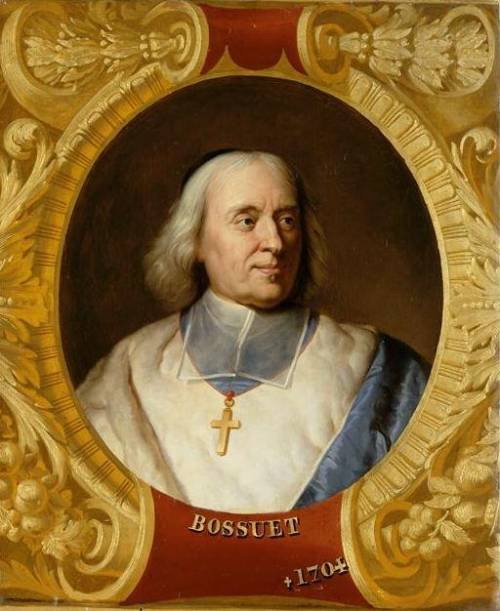
Prominent French clergyman, preacher and intellectual. Jacques-Bénigne Lignel Bossuet (Dijon, September 27, 1627 - Paris, April 12, 1704).

Bossuet made to Anne of Austria two panegyrics on St. Joseph, both on March 19, 1659 and 1661. In the first, St. Joseph is presented as the custodian of Mary and Jesus, and at the same time the fact that he knew how to keep all his life the secret that God had entrusted to him is highlighted. In the second, Bossuet starts from the biblical quotation that the Lord has sought a man after his own heart. (1 Sam 13:13). He refers to David, Joseph's ancestor, and the preacher praises the simplicity, detachment and humility of the patriarch. He affirms that his faith surpasses that of Abraham, model of perfect faith, because he had to guard a God who was born and grew in weakness. José resembles the moldable clay to which the potter gives the definitive contours. 

The paternity of St. Joseph

When these words were pronounced, Joseph was present in a village in Provence. He did not appear with power and majesty, he did not want to express that he had been too forgotten in 17 centuries of Church history.

On the contrary, St. Joseph's event was marked by discretion and service. He has cared for a young shepherd, as he cared for years for Jesus and Mary.. He has been a father once again. He reminds us that the paternity is always linked to service. This is the fatherhood that instills confidence, that which bases authority on guardianship and service, and not that of the father "lord of lives and property" of the past, which has contributed so much to the current discrediting of the father figure.

However, when the father is questioned or denied, fraternity becomes impossible. This is what happens in today's society, where the seed of individualism has grown. St. Joseph reminds us that the world needs fathers so that we all become brothers.

Antonio R. Rubio Plo, Degree in History and Law. Writer and international analyst @blogculturayfe / @arubioplo

Feast of the Sacred Heart of Jesus 2025

On the Feast of the Sacred Heart of Jesus we celebrate the liturgical solemnity of God's love: today is the feast of love, Pope Francis said a few years ago. And he adds "the Apostle John tells us what love is: not that we loved God, but that He loved us first. He waited for us with love. He is the first to love. St. John Paul II said that "this feast recalls the mystery of the Love that God harbors for men and women of all times".

When is the feast of the Sacred Heart of Jesus celebrated?

The whole month of June is dedicated to the Sacred Heart of Jesus, although its feast day is after the octave of Corpus Christi. This 2025 is celebrated on Friday, June 27.

During the feast, St. Josemaría invites us to meditate on the Love of God: "They are thoughts, affections, conversations that souls in love have always dedicated to Jesus. But to understand this language, to really know what the human heart and the Heart of Christ are, we need faith and humility.

Devotion to the Sacred Heart of Jesus

St. Josemaría emphasizes that as devotees we should keep in mind all the richness that is contained in these words: Sacred Heart of Jesus.

When we speak of human heart we do not refer only to feelings, we allude to the whole person who loves, who loves and treats others. A man is worth what his heart is worth, we can say.

The Bible speaks of the heart, referring to the person who, as Jesus Christ himself said, directs all of himself - soul and body - to what he considers to be his good. "For where your treasure is, there your heart will be also" (

In speaking of devotion to the Heart, St. Josemaría shows the certainty of God's love and the truth of his self-giving to us. In recommending devotion to the Sacred Heart of Jesus, he recommends that we direct ourselves entirely-with all that we are: our soul, our feelings, our thoughts, our words and our actions, our labors and our joys-to the whole of Jesus.

This is what true devotion to the Heart of Jesus is all about: knowing God and knowing ourselves, and looking to Jesus and turning to Him, who encourages us, teaches us, guides us. There is no room for more superficiality in devotion than that of a man who, not being fully human, does not succeed in perceiving the reality of God incarnate. Without forgetting that the Sacred Heart of Mary is always at his side.

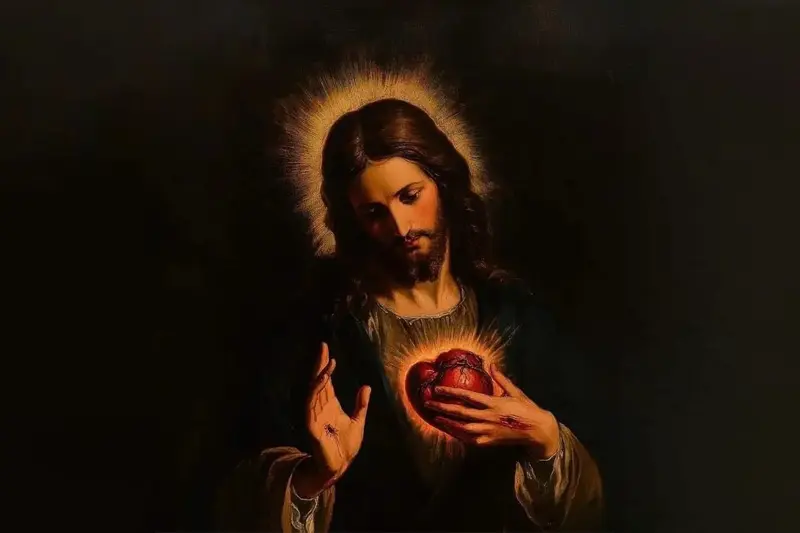
Representación del Sagrado Corazón de Jesús con halo de luz, mostrando el corazón ardiente en su pecho y las heridas de la crucifixión en sus manos, sobre fondo oscuro.

What is the significance of the Sacred Heart?

The image of the Sacred Heart of Jesus reminds us of the central core of our faith: how much God loves us with his Heart and how much we, therefore, must love him. Jesus loves us so much that he suffers when his immense love is not reciprocated.

Pope Francis tells us that the Sacred Heart of Jesus invites us to learn "from the Lord who has made himself food, so that each one can be even more available to others, serving all those in need, especially the poorest families".

May the Sacred Heart of Our Lord Jesus Christ, which we celebrate, help us to keep our hearts full of merciful love for all those who suffer. Therefore, let us ask for a heart:

We can demonstrate our love by our works; this is precisely what devotion to the Sacred Heart of Jesus is all about.

The peace of Christians

On this feast, we Christians must resolve to strive to do good. There is much to be done to ensure that our earthly coexistence is inspired by love.

Even so, the pain will not disappear. In the face of these sorrows, we Christians have an authentic response, a response that is definitive: Christ on the Cross, God who suffers and dies, God who gives us his Heart, who opened a lance for love of all.

Our Lord abhors injustice, and condemns the one who commits it. But, as he respects the freedom of each individual, he allows them to exist.

His Heart full of Love for mankind made Him take upon Himself, with the Cross, all these tortures: our suffering, our sadness, our anguish, our hunger and thirst for justice. To live in the Heart of Jesus is to unite ourselves closely to Christ; it is to become God's dwelling place.

"He who loves me will be loved by my Father, our Lord announced to us. And Christ and the Father, in the Holy Spirit, come to the soul and make their dwelling in it," St. Josemaría.

Men, their lives and their happiness are so valuable that the Son of God Himself gives Himself to redeem them, to cleanse us, to elevate us. Who will not love his heart so wounded? asked a contemplative soul. And he would go on asking: who will not return love for love, who will not embrace a heart so pure," St. Josemaría Escrivá added.

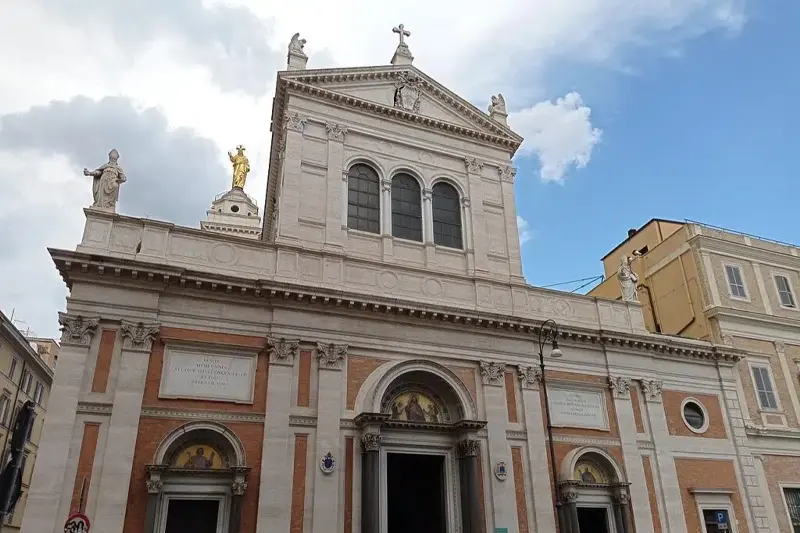
Iglesia del Sagrado Corazón de Jesús en Roma

How did the feast come about? History of the Sacred Heart of Jesus

It was an explicit request of Jesus, who on June 16, 1675, appeared to her and showed his Heart to her. St. Margaret Mary Alacoque. Jesus appeared to her on several occasions and told her how much He loved her and all men and how much it grieved His Heart that men were turning away from Him because of sin.

During these visits, Jesus asked St. Margaret to teach us to love Him more, to have devotion to Him, to pray and, above all, to behave well so that His Heart would no longer suffer from our sins.

Later, St. Margaret with her spiritual director would spread the messages of the Sacred Heart of Jesus. In 1899, Pope Leo XIII published the encyclical Annum Sacrum on the consecration of the human race, which took place in the same year.

During his pontificate, St. John Paul II established that on this feast the World Day of Prayer for the sanctification of priests should also be celebrated. Many groups, movements, orders and religious congregations, since ancient times, have placed themselves under his protection.

Rome is home to the Basilica of the Sacro Cuore (Sacred Heart) built by St. John Bosco at the request of Pope Leo XIII and with donations from the faithful and devotees from various countries.

Prayer to the Sacred Heart of Jesus in Catholic Devotionals

How to pray to the Sacred Heart of Jesus? We can get a prayer card or a picture of the Sacred Heart of Jesus and, before it, perform the family consecration to his Sacred Heart, in the following way:

Written by St. Mary of Alacoque:

"I, (say here your name), give and consecrate myself to the Sacred Heart of Our Lord Jesus Christ, my person and my life, my prayers, sorrows and sufferings, so as not to want to serve myself from any part of my being, but to honor, love and glorify Him. It is my irrevocable will to be all of Him and to do everything for His love, renouncing wholeheartedly all that could displease Him.

I take you, therefore, O Sacred Heart, for the only object of my love, the protector of my life, the security of my salvation, the remedy for my frailty and my inconstancy, the repairer of all the defects of my life, and my asylum at the hour of my death.


Bibliography

It is Christ who passesSt. Josemaría Escrivá.
ConfessionsSt. Augustine.
Letter, October 5, 1986, to Fr. R. P. Kolvenbach, M. R. KolvenbachSt. John Paul II.
Opusdei.org
Vaticannews.va

The full happiness of Guilherme Silva de Araujo

Happiness came to him through Padre Pio. And now he is studying theology and philosophy at the Pontifical University of the Holy Cross (PUSC), together with twenty Brothers from his congregation, the Servants of the Immaculate Heart of Mary, including seminarians and priests.

Guilherme was born on October 26, 2003 in Aracaju, the capital of the state of Sergipe, in northeastern Brazil, a city known for its warm climate, long beaches and peaceful atmosphere on the shores of the Atlantic Ocean. Today he lives in Rome and is in his second year of the philosophical biennium, and then he will begin the three-year period of theological studies at PUSC.

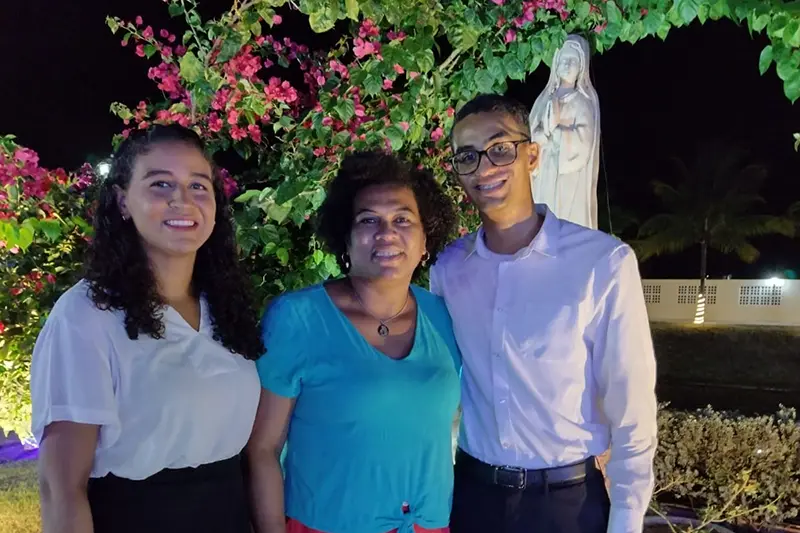
Guilherme Silva junto a su hermana y su madre

The origins of Guilherme Silva

Guilherme Silva de Araujo is a seminarian of the religious institute "Servants of the Immaculate Heart of Mary". He comes from a Catholic family, although he did not attend Mass every Sunday and prayed the rosary very little. He is the youngest at home; he has a sister who is four years older than he is.

His mother always saw to it that his sister and he received at least the initial sacraments and then gave them the freedom to choose whether or not they wanted to continue on the path of faith. For Guilherme, this was a very positive thing, at least until he was 14 years old, when his life began to change in a particular way.

Adolescence and some inner wounds provoked in him a distancing from God and a mistaken search for happiness.

At the age of 12 and during that period, he began to live certain negative experiences typical of adolescence, influenced mainly by unedifying friendships he had, especially at school. In addition to this, he had some inner wounds that he had carried with him for a long time, which led him to seek happiness in things he thought were good, but which in reality were not.

Little by little, she began to leave God aside. He only maintained a link with Him through pastoral work in his parish, where he collaborated as an assistant catechist. That was one of the few things he still did in the Church.

However, in the midst of all this, a deep sadness and a constant search for meaning in his life grew within him. He felt the need to find a "cause" for which to give up his existence.

Felicidad, amor, Dios, Guilherme Brasil

A spark of hope: Confirmation

At that time he started the Confirmation course, and he did it with good will, because he felt that it would lead him to something good. In fact, he lived many beautiful experiences during that year (we are talking about 2018, when he turned 15). In addition, he reconnected with a friend who often invited him to Sunday Mass.

In his parish there was a group of young people he very much wanted to join, but because of some difficulties - such as distance and schedule - it was difficult for him. However, after receiving Confirmation, he moved to a new neighborhood and was closer to the parish. A few weeks later, he began to participate in the youth group.

That changed his life in an incredible way! He met other young people who had the same desire as he did: to give their lives for a truly worthwhile cause, Jesus. They were few, but we had an immense thirst for something more.

True conversion

Guilherme began to know the lives of the saints, the Catechism of the Catholic Church, the tradition... All this helped him to leave behind the vices and to seek the virtues. He called this period of his life his conversion, although it was not only his own, but also that of his family.

In fact, they saw that he was no longer the same: "my friendships had changed, my arguments had changed, even the way I dressed. But, above all, there was an essential novelty in my life: prayer".

Prayer was what started my days, filled them and closed them. The happiness I was looking for was there!

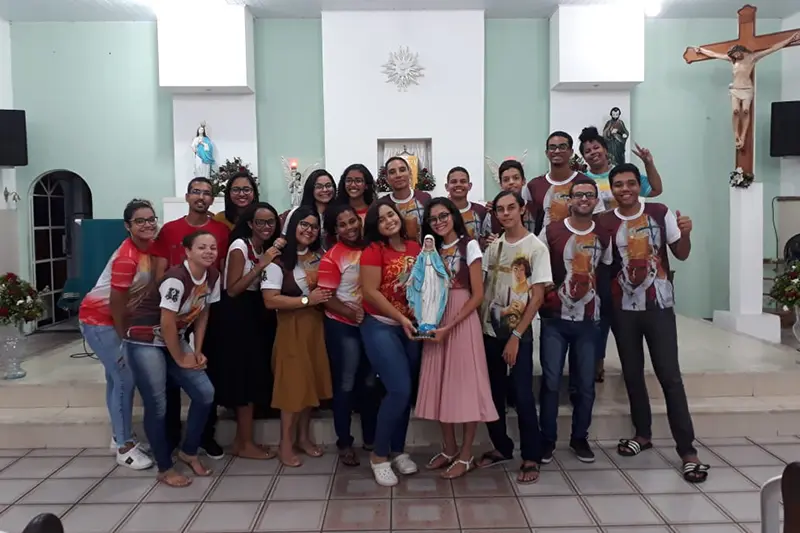
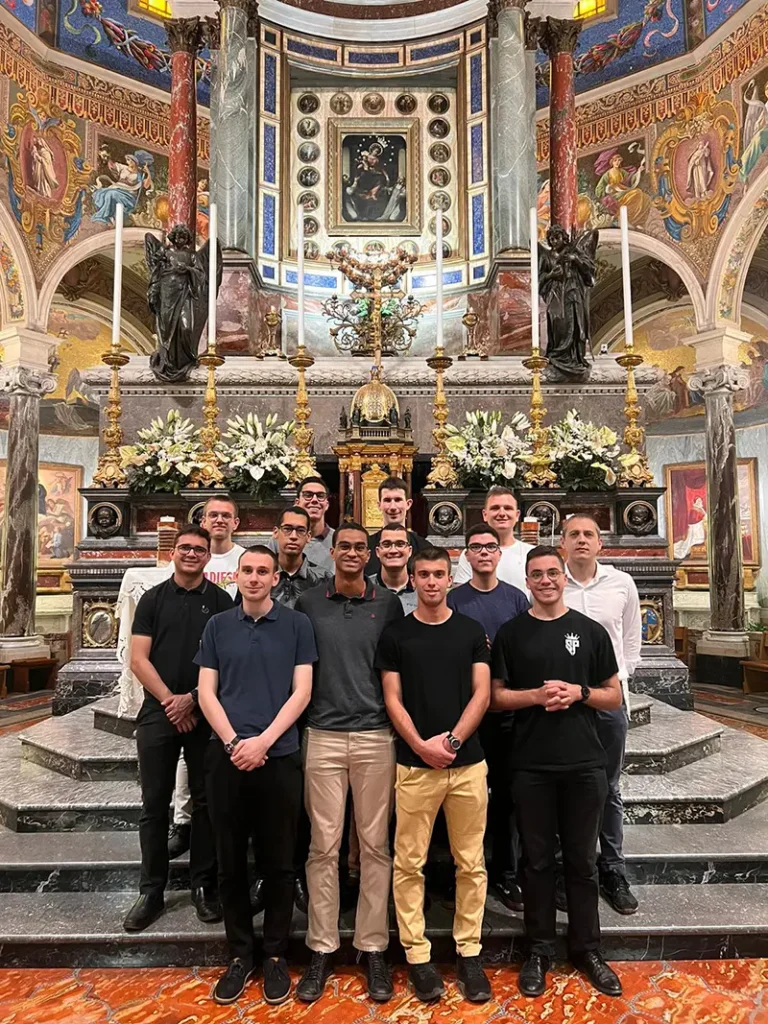
Guilheme posa junto a compañeros del seminario en una iglesia con el altar a la espalda

The yearning to love and the impact of St. Pio

Guilherme was lonely and longed for love: someone to love. So he began to ask God to allow him to find a young woman who was looking for the same thing he was: to be a saint. This was in 2019.

Some time later, in the youth group, they watched a movie about the life of St. Padre Pio. His life and his total surrender to God were like a blow to the depths of his being: "I was no longer the same. No matter how hard I tried to go on with my life as if nothing had changed, I couldn't".

There was a young woman who interested him very much, but after that "encounter" with Padre Pio, he no longer saw any point in pursuing that idea, or any other. What was burning in his heart was another desire: "I wanted to become a religious".

First steps: meeting the Community

Guilherme confided this desire to a friend who was part of the same youth group and who was already on a vocational journey. "Welcoming my open-heartedness, he invited me to the community of the Servants of the Immaculate Heart of Mary to participate in a celebration on October 13in honor of the apparition of Our Lady in Fatima.

There I went to confession and participated in Mass. Everything I experienced that day deeply touched my heart. I went back a few more times, but the community was very far from my home and, because of my lack of perseverance, I stopped going there for a year".

Firm decision: abandonment and total surrender

Guileherme's parish life was becoming more and more active and, in order to discern and nourish his vocation even more, in 2020 he entered the pastoral care of altar boys. At the end of that same year, he returned to the community, determined to resume the vocational journey with the Servants, and so it was.

In the meantime, he finished school and was accepted to the Federal University of his state. However, in order to have a year's experience within the community, he decided to give up his long-dreamed-of university place. From 2021 to August 2023 he was active in the community as a consecrated layman and "vocationed".vocation".

"I lived so many beautiful experiences: Marian missions, meetings with young people and children in the oratory... I met many people who enriched my life with their good examples, especially in the parishes through which I passed."

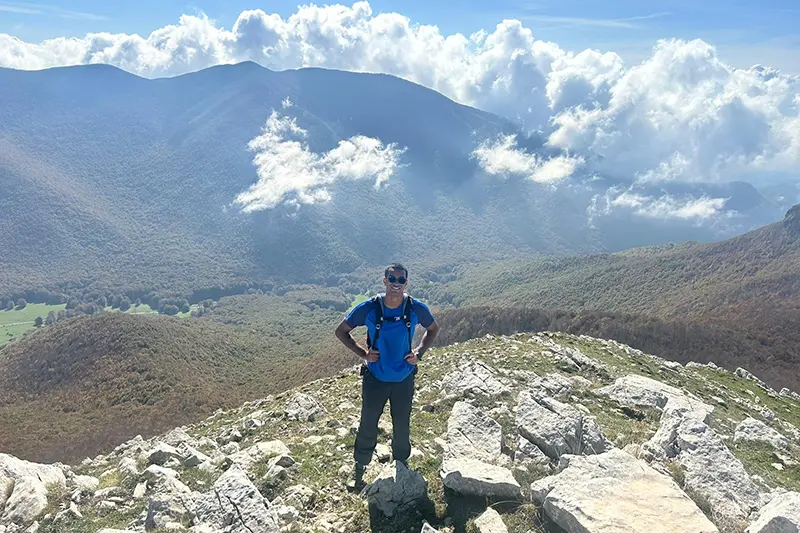
La felicidad de Guilheme Silva al contemplar la obra de Dios en la naturaleza

Arrival in Rome: formation, gratitude and fidelity

In August 2023 he arrived in Italy, entrusting his family and friends to the care of Jesus, in order to follow him more closely and begin his formation in the seminary. He is currently in his second year of postulancy and also in his second year of philosophy.

"Every day I am more grateful to the Lord for the grace of having received a particular calling, but even more so for having been able to respond to it."

Her vocational and conversion journey is driven by the infinite love that I receive from God every day, and also by the healing of so many wounds that He has allowed in my life. "I offer Him my existence daily, so that I may be an instrument of healing and a channel of grace for so many other people; so that they may discover how much love envelops them and who it is that loves them: Love! And this Love can only be responded to by loving".

Thank you to the benefactors of the CARF Foundation.

Guilhemer also wishes to express his sincere thanks to the benefactors of the CARF Foundation, who make it possible for him to continue his education at such a high quality university. "I assure them of my prayers every day, and ask them to keep me present in their prayers, so that I may remain steadfast and always faithful to God's holy designs."

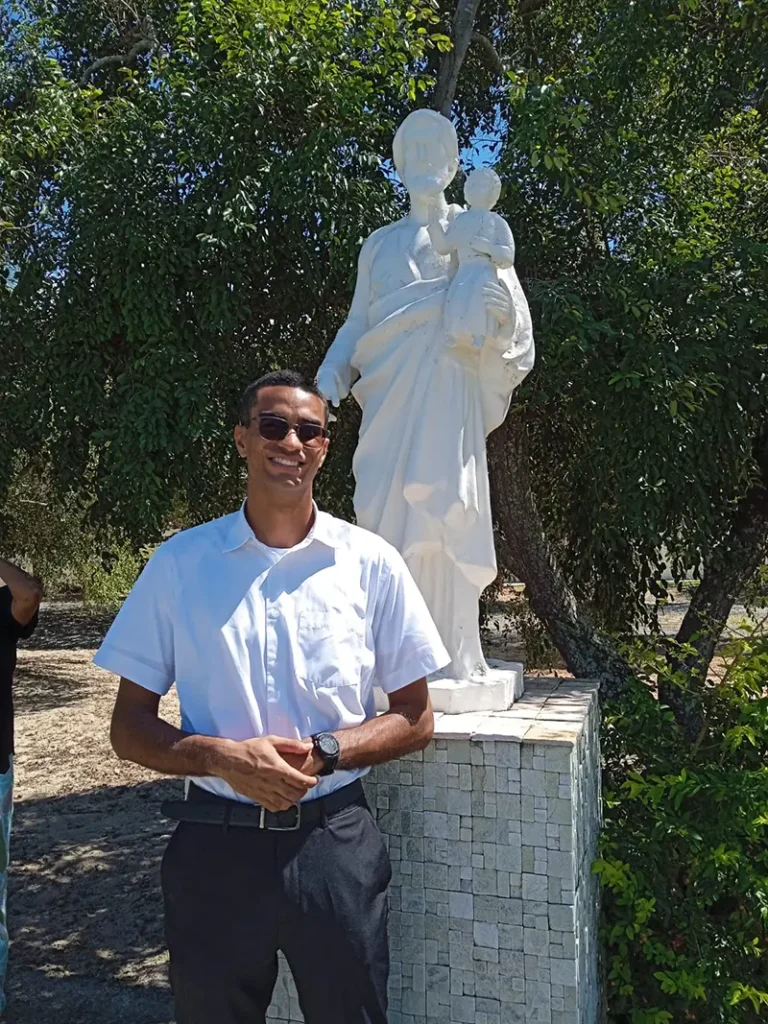
Guilheme Silva posa junto a una estatua

Gerardo FerraraDegree in History and Political Science, specialized in the Middle East. Head of the student body at the University of the Holy Cross in Rome.