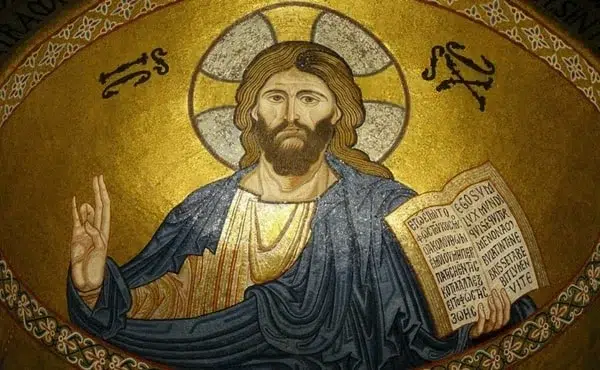
Today we must praise simplicity. It is a rare virtue that we want to appreciate in others, but perhaps we are not convinced that it is also very good for us. Some, due to their accumulated life experience, harbor a certain distrust of what is natural and simple; and, fearing they will be deceived when they encounter a simple person, they strive only to find out what that person is hiding.
The spiritual greatness of simplicity
Many people may consider simplicity to be useless in the struggle for life that we face every morning. I must confess that I am moved every time I meet a simple person who is «natural or spontaneous, uncomplicated in character, free of reserve or artifice,» as defined by the dictionary; and when faced with other human beings who are also simple and who, according to the dictionary, «in their dealings with others, do not assume an attitude of superiority in terms of status, intelligence, knowledge, etc., even if they are.».
The simple man enjoys the kindness of others, rejoices in the joy of those around him, and enjoys the sixth sense of discovering beauty and goodness around him. I see him as if he were always at God's side, thanking Him for creation.
The joy of those who discover God in simplicity
A sunset by the sea, a sunset viewed from the top of a mountain, a peaceful conversation with a friend... the simple man savors every detail. His simplicity opens the horizon of his spirit to the greatness of God, of the world, of all creation; the greatness of friendship, the greatness of the company of a loved one and the wonder of love that is enclosed in a grateful heart; the greatness of a spirit that rejoices with the joy of those around him...
Contemplating a landscape at sunset, evoking simplicity and spiritual connection with Creation.
In this rediscovery, the intelligence of simplicity finds a place for everything in the order of the universe. With simplicity, one enjoys conquering the moon; and no less joyful is smiling at a newborn baby, helping an elderly woman who is somewhat helpless to cross the street, comforting a grandchild who is suffering the first professional failure of his life, rejoicing with a neighbor over a lottery prize...
I don't know if we are still too influenced by Nietzsche's miserable dreams of greatness, with his superman in tow; a superman who is weak in intelligence and has feet of clay, the product of an evasive imagination.
Or perhaps it is our innate sense of tragedy that prevents us from discovering the value and flavor of ordinary things, leading us to unattainable dreams, sterile and useless dreams, so different from true and great human ambitions, and causing us to go through life without enjoying the simplicity of so many wonders.
Scripture expresses this graphically by showing us the prophet Elijah learning to discover God, not in the storm, nor in the hail, nor in the strong winds, nor in the earthquake, nor in the fire, but in “a gentle breeze,” the most ordinary and common thing, where no one would expect it. Christ thanks and rewards those who give a glass of water to the thirsty.
The simple man savors, has a palate for tasting the flavor of things, enjoys giving thanks—giving thanks is also a privilege of the intelligent—and receiving that small reward of life that is the simplicity of a smile.
Juan Ramón Jiménez expresses it in poetic prose: «What a smile the little girl had! With her tearful joy, she offered me two carefully chosen oranges. I took them gratefully and gave one to the weak little donkey as sweet consolation, and the other to Platero as a golden reward.».
It is not nostalgia for other times gone by, better times, childhood times. Simplicity is the gateway to understanding a future that begins at every moment. That future which the simple-minded embrace with open arms. Sometimes I think that the simple-minded hide a treasure: the eternity of God's love.
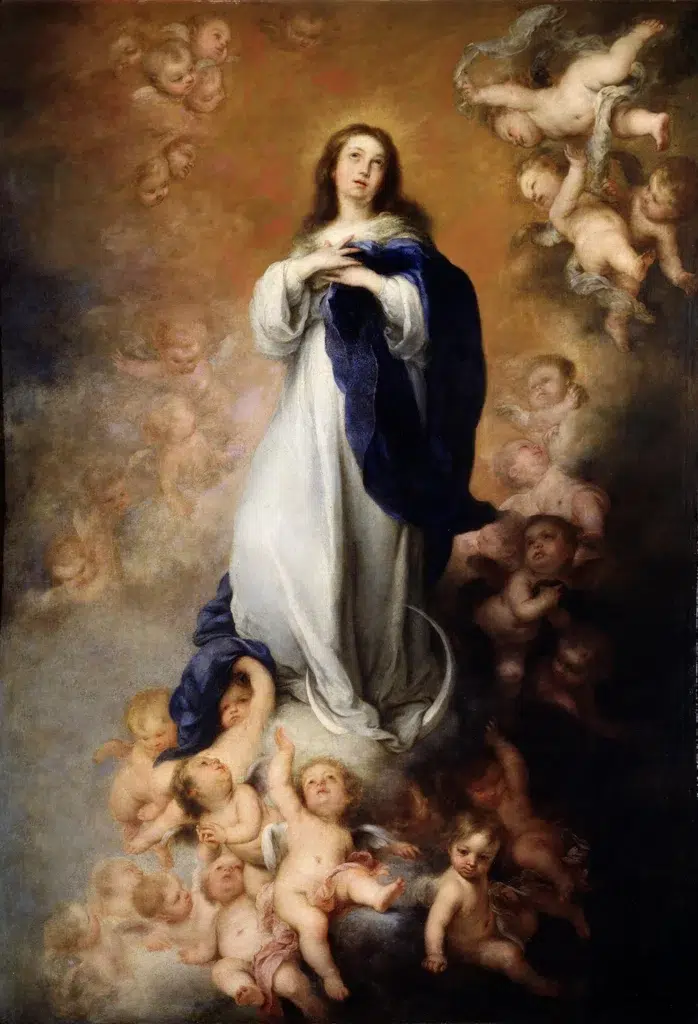
The Feast of the Immaculate Conception invites us every December 8 to contemplate Mary in the fullness of grace. It is a solemnity that has its roots in the tradition of the Church and, at the same time, looks forward: toward the redemption that Christ brings to the world and toward the mission that every believer is called to live.
In this mystery, the Church recognizes that God prepared Mary of Nazareth from the first moment of her existence to be the Mother of the Savior. A truth that illuminates the Annunciation, introduces us to the wait for the Advent season and renews the spiritual life of Christians. It is also a day of special significance for institutions such as the CARF Foundation, which seeks to spread a solid formation in the faith and promote vocations to the service of the universal Church.
A dogma that reveals the logic of God's love
The proclamation of the dogma of the Immaculate Conception on December 8, 1854, was not an improvised novelty. It was the solemn recognition of something that Christian piety, liturgy, and the Church Fathers had affirmed for centuries: that Mary was preserved from original sin from the moment of her conception, through the anticipated merits of Jesus Christ.
This truth expresses a profound logic of divine love: God acts first, prepares, cares for, and brings grace forward. The mystery of the Immaculate Conception shows that the history of salvation is not improvised, but responds to a plan where human freedom and God's initiative meet.
The solemnity of December 8 helps us to better understand Mary's unique mission. Being full of grace from the beginning, her freedom was fully oriented toward God. This does not mean an absence of struggle or automatism, but rather the fullness of a life entirely open to the divine will. She thus becomes a model of what God dreams for each person: an existence marked by grace and availability.
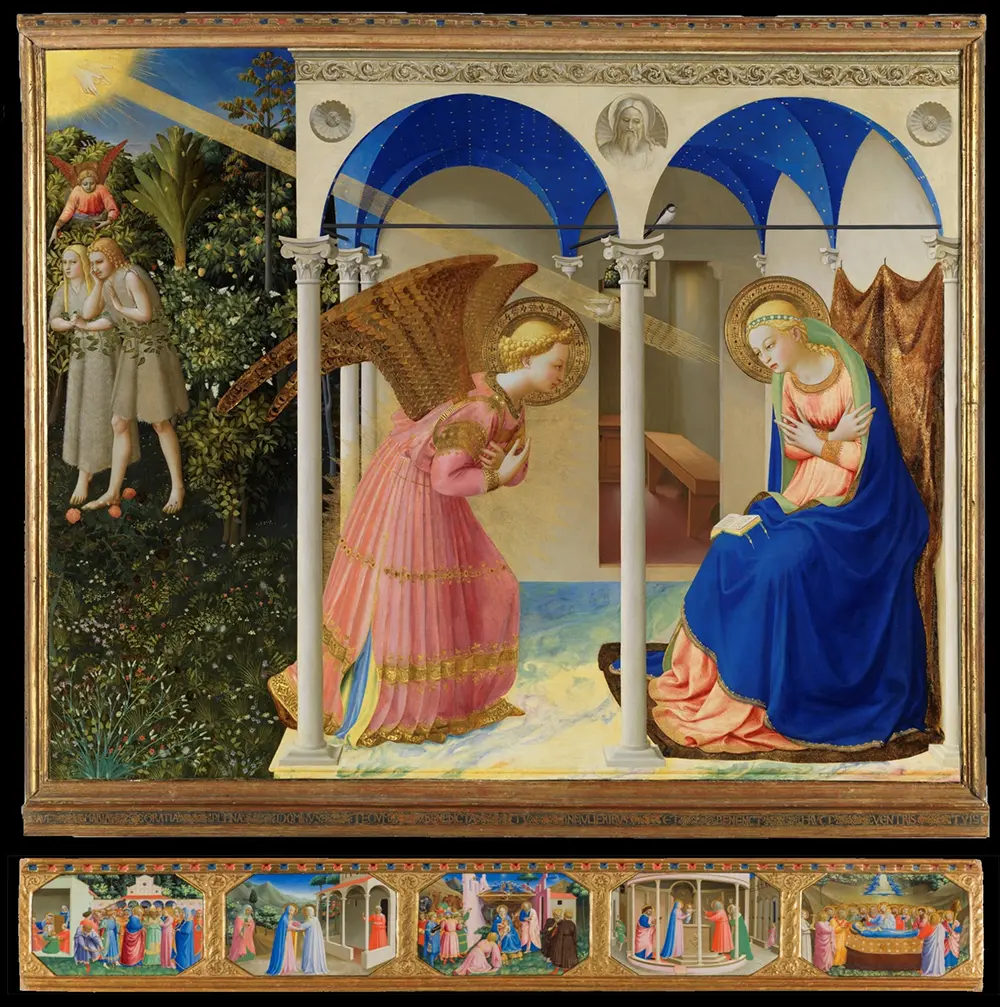
"The Annunciation" (c. 1426) by Fra Angelico. Saint Gabriel is depicted as the sublime messenger of the Incarnation of the Word.
The Annunciation: the moment when the Immaculate Virgin reveals her mission
When contemplating the Immaculate Conception, the gaze naturally turns to the Annunciation. There, the angel Gabriel He greets Mary with words that confirm the mystery: «Hail, full of grace, the Lord is with you.» Her fullness of grace is not a spiritual adornment, but the condition for the mission that God entrusts to her.
Mary's response—an unambiguous “yes”—is possible because her heart is not divided. Her complete freedom is the fruit of that divine preparation we celebrate on December 8. In this way, the Immaculate Conception illuminates God's entire plan: in Mary begins the new creation that Christ will bring to completion.
This perspective is especially valuable during Advent. As the Church awaits the coming of the Lord, she looks to Mary as a foretaste and model. In her, the future redemption already shines forth; in her, we already see what God can do when he finds an open heart.
A message for Christian life today
Celebrating the Immaculate Conception is not just about remembering a dogma.. It means embracing a message for daily life. Mary shows us that grace is not abstract: it transforms, sustains, and guides. Her life is an invitation to trust in God's action even when we do not understand all the details of the journey.
In a time marked by haste, superficiality, and the search for immediate certainties, the figure of the Immaculate Conception invites us to return to the center: to docility, listening, and openness to grace. Believers discover that true freedom is born when God occupies the first place.
Inspiration for the Church's Mission
The Immaculate Conception also inspires the Church's evangelizing mission. Mary, full of grace, is a source of hope and a model of dedication. That is why institutions dedicated to formation and priestly vocations—such as the CARF Foundation— find in this feast a shining example. The Church needs men and women who, like Mary, live in an attitude of availability, guided by grace and at the service of the mission.
The beauty of this mystery encourages us to continue building a holier Church, one that is closer and more capable of bringing the light of Christ to the world.
Table of Contents
«In Loreto, I am especially indebted to Our Lady.»
Josemaría Escrivá de Balaguer visited Loreto for the first time on January 3 and 4, 1948. But the reason why the founder of Opus Dei felt particularly indebted to Our Lady of Loreto was due to a very serious need that arose years later and was linked to the legal structure of the Work, for which he sought the protection of the Virgin Mary.
Account of the visits of the founder of Opus Dei to Loreto
«On the afternoon of January 3, Saint Josemaría and Don Álvaro del Portillo, Salvador Moret Bondía, and Ignacio Sallent Casas. They said the prayer in the courtyard of the House of Nazareth, inside the Shrine. Upon leaving the temple, the Father asked Don Álvaro:
—What did you say to the Virgin Mary?
«Do you want me to tell you?« And, at a gesture from the Father, he replied: "Well, I repeated what I always say, but as if it were the first time. I said to him: I ask of you what the Father asks of you.".
-I think what you said is very good. –St. Josemaría later told him. Repeat it many times.».
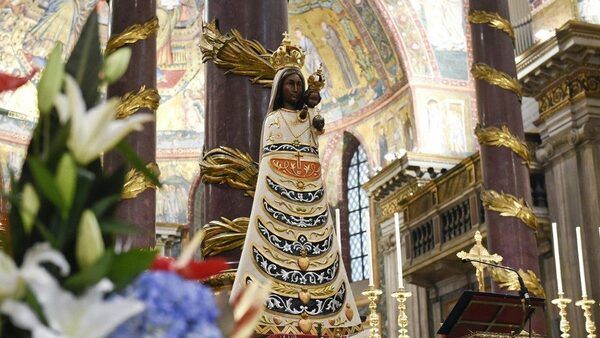
The feast of Our Lady of Loreto is celebrated on December 10. Photo: Vatican News.
The 1950s were years of great suffering for St. Josemaría, due to misunderstandings and conflicts. In the midst of these difficulties, he decided to go to Loreto to place himself under the protection of the Virgin Mary's mantle and caresses.
Consecration to the Most Sweet Heart of Mary: August 15, 1951
«On August 14, 1951, he decided to set out by road for Loreto," recounts writer Ana Sastre, "to be there on the 15th and consecrate Opus Dei to the Blessed Virgin. The heat was suffocating, and thirst would be felt throughout the journey. There was no highway. The road runs through valleys, climbs steeply up the Apennines, and descends in the last part until it reaches the Adriatic Sea.
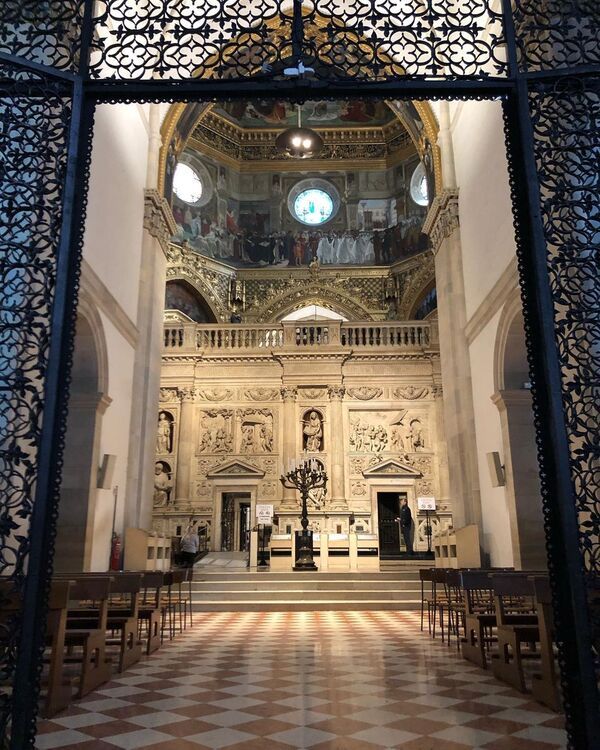
According to a centuries-old tradition, since 1294 the Holy House of Nazareth has stood on the hill of Loreto, beneath the transept of the basilica built later. It is rectangular, with walls about four and a half meters high. One wall is modern, but the others, without foundations and blackened by candle smoke, are, according to tradition, those of the House of Nazareth.
Its structure and the geological formation of the materials bear no resemblance to the characteristics of the ancient architecture of the area: it is perfectly analogous to the constructions that were built in Palestine twenty centuries ago: sandstone blocks, using lime as a binding agent.
The sanctuary stands on a hill covered with laurel trees, hence its name. They park in the central square and the priest quickly gets out of the car. For fifteen or twenty minutes, they lose sight of him among the crowds filling the basilica. Finally, he emerges, after greeting the Virgin Mary, smiling and cheerful. It is half past seven and they have to return to Ancona to spend the night.
«The next morning, before the sun rises, they return to the road. Despite the early hour, the sanctuary is packed. The Father dresses in the sacristy and advances toward the altar of the House of Nazareth to celebrate Mass. The small enclosure is crowded and the heat is stifling.
«Under the votive lamps, he wants to officiate the Liturgy with complete devotion. But he has not counted on the fervor of the crowd on this feast day: "While I was kissing the altar as prescribed by the rubrics of the Mass, three or four peasant women were kissing it at the same time. I was distracted, but I was moved.
I was also struck by the thought that in that Holy House—which tradition holds to be the place where Jesus, Mary, and Joseph lived—these words have been placed on the altar table: Here the Word became flesh. Here, in a house built by human hands, on a piece of the earth where we live, God dwelt" (Christ is Passing By, 12).
«During Mass, without any formula but with words full of faith, the Father performs the consecration of Opus Dei to the Lady. And then, speaking quietly to those beside him, he repeats it again on behalf of the whole of Opus Dei:
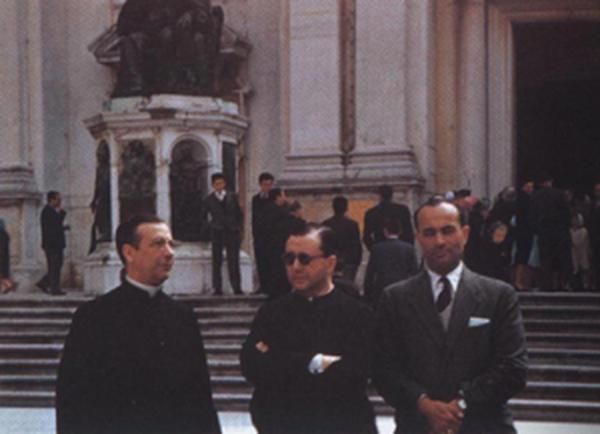
The founder of Opus Dei with Bishop Alvaro del Portillo in front of the Holy House.
An invocation to the Virgin Mary
"We consecrate ourselves and our lives to you; everything that is ours: what we love and what we are. To you we give our bodies, our hearts, and our souls; we are yours. And so that this consecration may be truly effective and lasting, we renew today at your feet, Lady, the commitment we made to God in Opus Dei. Instill in us a great love for Church and to Papa, and make us live fully submissive to all his teachings."(RHF 20755, p. 450).
The Father has left Rome Visibly tired. But when he returns, he seems renewed. As if every obstacle had just been pulverized in God's path. A few weeks ago, he suggested to his sons and daughters that they repeat an invocation to the Mother of Jesus over and over again. Sweetest Heart of Mary, make my journey safe!,Sweetest Heart of Mary, prepare a safe path for us!»
«The paths of Opus Dei will always be preceded by the smile and love of the Virgin Mary. Once again, the Founder has moved within the coordinates of faith. He provides the human means, but trusts in the decisive intervention from above. "God is the same as always. Men of faith are needed: and the wonders we read about in the Holy Scriptures will be renewed." Writing. Behold, the hand of the Lord is not shortened –The arm of God, his power, has not been diminished! (The Way, 586).
He went to the Holy House six more times: on November 7, 1953, May 12, 1955, May 8, 1960, April 22, 1969, May 8, 1969, and finally on April 22, 1971. On December 9, 1973, the eve of the feast of Our Lady of Loreto, she said, "All the images, all the names, all the invocations that the Christian people give to Saint Maria, I think they are wonderful. But in Loreto, I am especially indebted to Our Lady.".
The Legend of the Holy House of Loreto
The history of this Marian devotion revolves around the house where the Virgin Mary was born and lived with Jesus and Saint Joseph in Nazareth, Palestine.
The miracle: According to tradition, when the Crusaders lost control of Holy Land at 1291, The house was in danger of being destroyed. To save it, a group of angels lifted it into the air and carried it across the Mediterranean.
Basilica of the Holy House.
The story of the journey tells that the house first flew to Croatia (Trsat), then crossed the Adriatic Sea to Italy (Ancona), and finally landed in December 10, 1294, in a forest of laurels (lauretum in Latin, from which the name Loreto derives).
From the perspective of various modern studies, some suggest that the Byzantine noble family Angeli (a surname meaning angels) financed and organized the transfer of the stones from the Holy House by boat to save them, giving rise to the beautiful legend of the angelic flight.
Why is Loreto a Black Virgin?
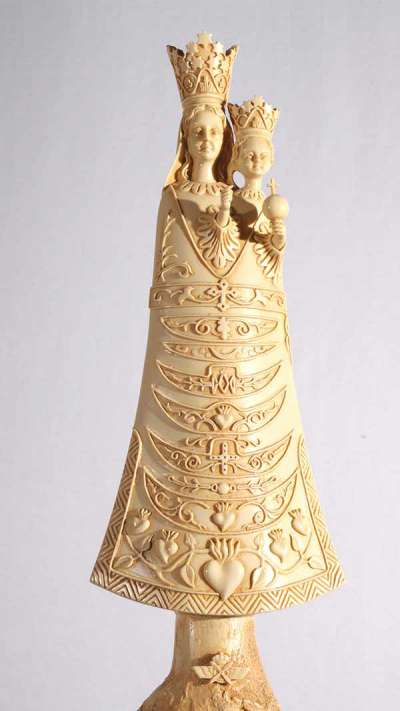
When you visit the shrine of Loreto or contemplate the images of many Marian devotions, Torreciudad, Montserrat... you notice that both the Virgin and the Child have dark skin. The most common cause of this very dark brown tone is that the wood took on this color over the years, mainly due to the smoke from candles and oil lamps inside the small Holy House.
In the case of Loreto, following a fire in 1921, a new image was carved using Lebanese cedar (a dark wood) and it was decided to retain the traditional black color that had made it so recognizable to pilgrims for centuries.
Loreto, patron saint of aviation
Due to the miraculous transfer of the Holy House from Palestine to Italy, the Pope Benedict XV proclaimed her the patron saint of universal aviation in 1920. In Spain, she is also the patron saint of the Air Force, the Sepla (Spanish Air Traffic Controllers' Association), and Space. Every December 10 is a big day at all Spanish air bases.
The Virgin of Loreto protects pilots and military personnel, but also air travelers and all flight personnel.
In Spain, devotion is closely linked to this stirring hymn, which is sung at military and religious ceremonies:
«Hail, Mother, Hail, Queen of Heaven, of beauty a star, of purity the radiance; source of the purest love, our hope is in her, Hail, Mother, Hail, Queen of Heaven.
If our wings break at the end of our flight, before we reach the ground, may your arms open with love. Hail, Mother, Hail, Queen of Heaven.
Celebrations in Spain
In addition to traditional military celebrations, there are also very popular religious and civil celebrations: December 10 itself, which is the official liturgical holiday. It is celebrated in many parishes dedicated to Our Lady of Lore (such as Barajas in Madrid or on hills near airports).
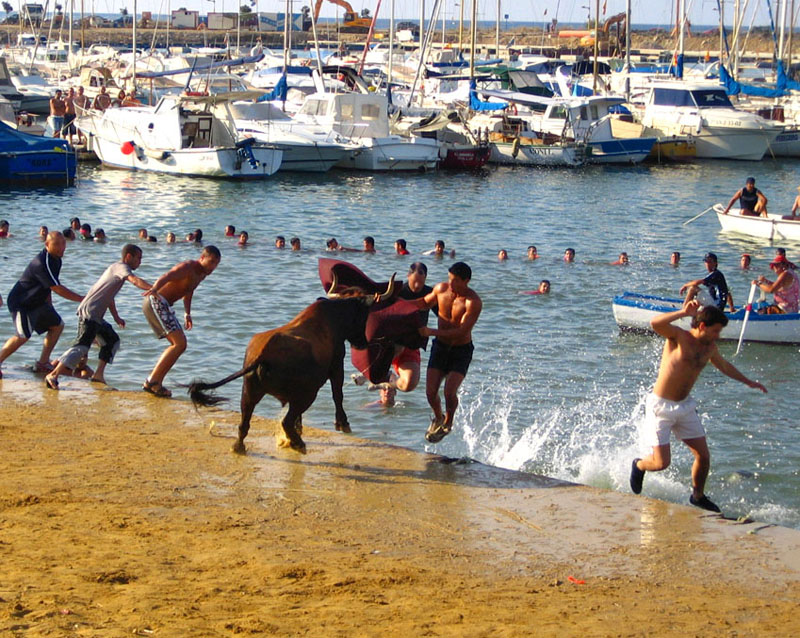
As notable popular festivals in Jávea and Santa Pola, towns in Alicante, the festivals in honor of the Mother of God of Loreto are very important. Interestingly, in Jávea they are celebrated at the end of August and beginning of September, with the traditional Bulls to the Sea.
Table of Contents
Saint Francis Xavier, life and mission of the giant of missions
Saint Francis Xavier He is one of the most prominent figures in the history of Christian evangelization, and each year his feast day reminds the Catholic Church that mission requires prior preparation, sending, and a truly universal vision.
His life, marked by total dedication, is naturally connected to the work carried out by institutions dedicated to priestly formation, such as the CARF Foundation. This relationship allows us to view his life not as an isolated historical episode, but as a living reference for the service that the Church provides throughout the world.
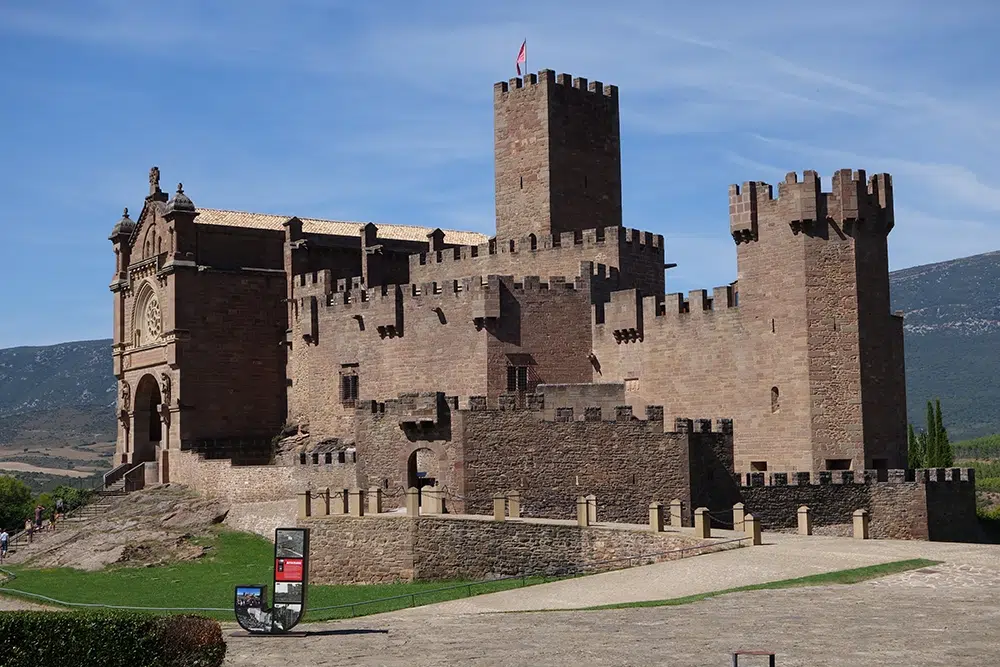
Javier Castle, in Navarre, is the place of his birth and one of the most striking places in his history.
The Life of Saint Francis Xavier
Francisco de Jasso Azpilicueta was born in 1506 in the Javier Castle, Navarre, into a noble family. From a young age, he stood out for his intellectual and athletic abilities, which opened the doors to the University of Paris, where he became a professor. There he experienced a decisive period for his vocation: his encounter with Íñigo de Loyola, his roommate and friend: Saint Ignatius.
At first, Francisco had no intention of orienting his life toward the religious life or missionary. His goal was to advance academically. However, Ignatius knew how to challenge him with a phrase that became a turning point: «What good is it to gain the whole world if you lose your soul?» Over time, that message transformed his priorities.
This inner change led him to join the founding nucleus of the Society of Jesus in 1534. That decision marked the beginning of a life devoted entirely to serving the Catholic Church throughout the world.
In 1541, at the request of the king of Portugal, the Society of Jesus was commissioned to send missionaries to the kingdom's Asian territories. Although Ignatius had initially considered other companions, circumstances led Francisco Javier to set sail for the East. He accepted without hesitation.
Map of the seven journeys of St. Francis Xavier between 1541 and 1552, with routes differentiated by colors indicating his travels through Africa, India, and Southeast Asia.
His arrival in Goa in 1542 marked the beginning of an unprecedented missionary period. Saint Francis Xavier traveled throughout India, Malacca, the Moluccas, and Japan, always with a clear approach: closeness to the people, learning languages, seeking cultural adaptation, and an attitude of constant listening. His dream was to reach China, but he died in 1552 on the island of Shangchuan, at the gateway to the continent.
His method, based on direct presence and understanding of the local context, laid the foundations for what the Church today recognizes as respectful and deeply human evangelization.
Javier understood that his vocation as a missionary was not an abstract idea, but a concrete task that required humility, study, and perseverance. His ability to move between different cultures, learn languages, understand societies, and love them meant that his inner fire (his love for Jesus Christ) led him to baptize more than thirty thousand people. It is said that sometimes he had to support one arm with the other because his strength failed him from administering the sacrament so often.
His apostolate also reached Europe through passionate and enthusiastic letters that inspired many other young people to become missionaries in the following centuries.
The mission of formation in the Church
One of the most important elements of his work was the training of catechists, the creation of Christian communities, and the preparation of local leaders who would ensure the continuity of the Catholic Church's evangelization. St. Francis Xavier knew that it was not enough to reach new territories: it was essential to train people capable of sustaining the faith in each community.
This emphasis makes his life a direct reference point for those who work today in the comprehensive training of priests. The CARF Foundation carries out work that also connects with the missionary vision of St. Francis Xavier: to train seminarians and diocesan priests with sufficient intellectual, human, and spiritual preparation to evangelize anywhere in the world.
Each year, the Foundation supports seminarians and priests from more than 130 countries, many of them from places where the Church is growing, where resources are scarce, or where pastoral challenges are great. This diversity reflects the universality that St. Francis Xavier embodied during his life as a giant of the missions.
Saint Francis Xavier is known as the man who transformed the missions into a global adventure. His eagerness to save souls led him to never stop, and he always sought to go further. For all these reasons, the Catholic Church named him Universal Patron of Missions (alongside Saint Thérèse of the Child Jesus, although for reasons different from hers).
Young people studying with the support of the CARF Foundation are trained for their home diocese and to serve the universal Church. They learn to engage in dialogue with different cultures, to understand complex social realities, and to support communities where, often, the priest is the only educational or social reference point.
Just as St. Francis Xavier knew that the mission needed well-trained people, the CARF Foundation helps parishes, dioceses, and mission territories to have solidly trained priests. All of these students return to their countries, where the figure of the priest is essential for education, spiritual guidance, community stability, and the transmission of the faith.
From a human perspective, which is difficult to explain, what is most striking about the life of Saint Francis Xavier was the sheer physical magnitude of his work. In the 16th century, without modern means of transportation, he traveled some 100,000 kilometers.kilometers (equivalent to circling the globe more than twice). It is rightly called the giant of missions.
If anything characterized the life of St. Francis Xavier, it was his global vision and his ability to break new ground. The mission of the CARF Foundation replicates his geographical adventure from its very essence: to create conditions for faith to reach where it is most needed, in an orderly, profound, and forward-looking manner.
Table of Contents
The communion of saints: a comforting truth of faith
On November 2, the Church's liturgy invites us to commemorate All Souls' Day. All Souls' Day. It reminds us that Christians can and should help the blessed souls in Purgatory, who eagerly await their complete purification there, longing to reach the house of Heaven; our cooperation allows those souls to arrive as soon as possible.
Also, God, in His mercy, grants us the possibility of being intercessors for one another. Not only does He make this possible through Baptism, but He also reminds us that we need others and are responsible for others. We need the gifts of others, and we must be givers ourselves. We are both sheep and shepherds at the same time. Each of us depends on others, and others depend on us to reach Heaven.
All of us who are baptized are united to Christ, and in Christ, to one another. And so we can help one another without death standing in the way. Let us examine this truth of our faith, so that we may trust more in the communion of saints: «Dear friends, how beautiful and comforting is the communion of saints! It is a reality that gives a different dimension to our whole life.
We are never alone! We are part of a spiritual community in which profound solidarity reigns: the good of each person benefits everyone, and, conversely, the common happiness radiates onto each person. It is a mystery that, to a certain extent, we can already experience in this world, in family, in friendship, and especially in the spiritual community of the Church.Benedict XVI, Angelus. November 1, 2009).
A resource with tradition: the saints of Heaven
On one of the walls of St. Peter's house in Capernaum, graffiti was discovered in which the early Christians invoke the apostle's intercession to obtain God's favor. This archaeological discovery in 1968 by an Italian group debunks the Protestant claim that the mediation of saints is a medieval invention of a superstitious church.
From the second half of the first century, Peter's house enjoyed a clear distinction from the others. When Christians ceased to be persecuted in the Roman Empire at the end of the fourth century, they built a pilgrims' home on the site and, later, a Byzantine church, the remains of which can still be seen today.
In the early days of the Church, veneration and recourse to the apostles and martyrs arose. Later, many others were added, including those «whose outstanding exercise of Christian virtues and whose divine charisms made them worthy of the pious devotion and imitation of the faithful» (Second Vatican Council, Lumen Gentium No. 50). The saints in Heaven are a treasure of the Church, a great help on our journey to Heaven, filling us with hope.
But they don't just protect us...
St. Augustine taught, «Let us not think that we are giving something to the martyrs when we celebrate their solemn days. They rejoice with us not so much when we honor them as when we imitate them.».
As Pope Francis pointed out, «the saints give us a message. They tell us: trust in the Lord, because the Lord does not disappoint. He never disappoints, he is a good friend always at our side. With their witness, the saints encourage us not to be afraid to go against the tide, or to be misunderstood and mocked when we speak of Him and the Gospel; they show us with their lives that those who remain faithful to God and His Word already experience the consolation of His love on this earth and then a hundredfold in eternity» (Francis, homily on the feast of All Saints, November 1, 2013).
That is why it is a Christian custom to read and meditate on the biographies of saints and their writings. With their lives and teachings, they show us the good and righteous path to find and love Jesus, who is the common denominator of all of them. They serve as our guides and speak to us in the intimacy of our hearts. Cultivating devotion to the saints, whichever ones we choose, will bring into our lives great friends in Heaven, who will pray to God and accompany us on our journey.
Become a patron of Cielo
The term patron originates from Gaius Maecenas, an advisor to the Roman emperor Augustus, who used his wealth to promote the arts, protecting and sponsoring poets, writers, and artists of his time. In our case, God desires and allows us to show solidarity among brothers and sisters if we live united with Jesus Christ. This is the reality of the communion of saints.
This solidarity extends to all who are baptized. Through Baptism, we become part of the Church, the mystical body of Christ, of which He is the head (cf. Colossians 1:18). This communion not only signifies “union with,” but also implies “communication of goods” among the souls in whom the Holy Spirit, the Spirit of Christ, dwells.
«Just as in a natural body the activity of each member benefits the whole, so too in the spiritual body that is the Church: since all the faithful form one body, the good produced by one is communicated to the others» (St. Thomas Aquinas, On the Creed, 1. c. 99).
Since Baptism makes us partakers of eternal life, of life with God, death does not interrupt that union with those who have died; it does not break the family of believers. «God is not the God of the dead, but of the living, for to him all are alive» (Matthew 22:32). Therefore, this month we focus our prayers on the deceased, on the souls in Purgatory.
«In this month of November, we are invited to pray for the deceased. Guided by faith in the communion of saints, try to entrust to God, especially in the Eucharist, your deceased relatives, friends, and acquaintances, feeling them close to you in the great spiritual company of the Church» (Pope Francis, Audience of November 6, 2019).
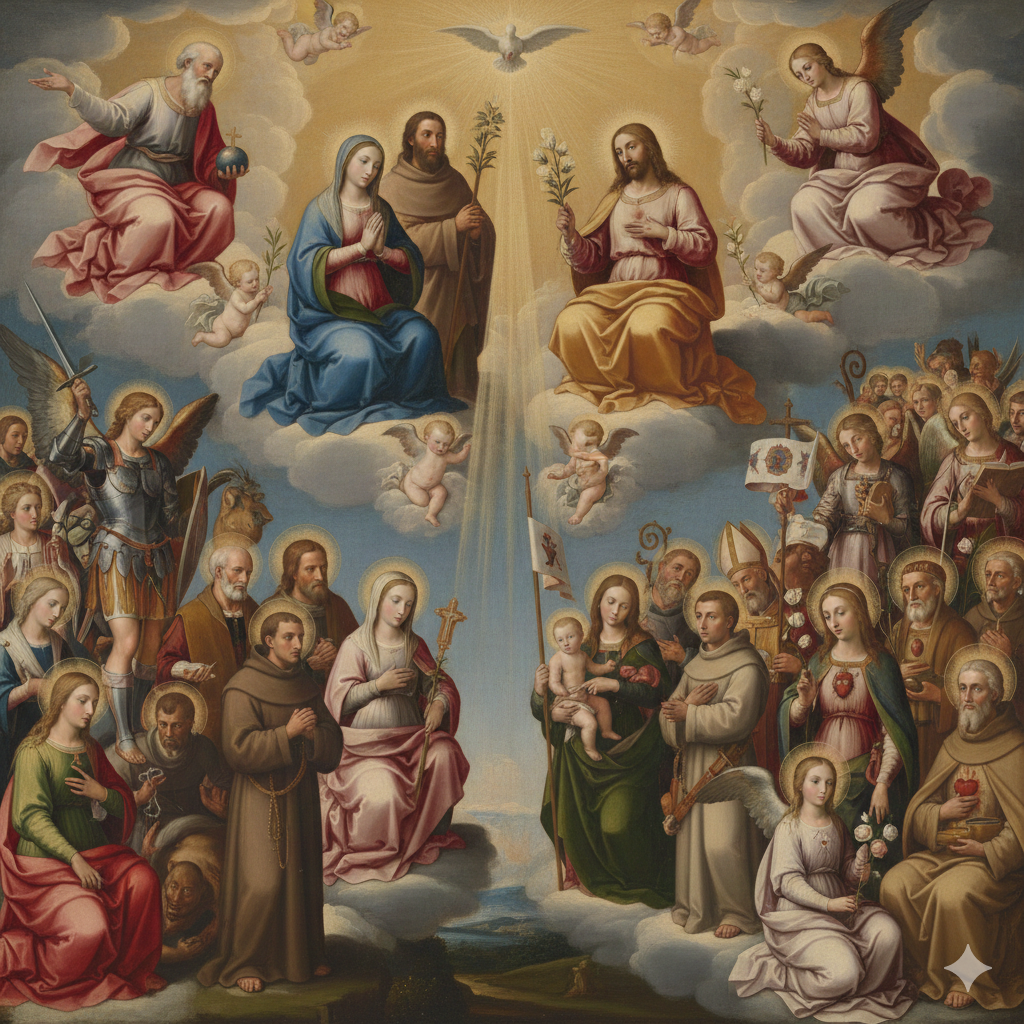
AI-generated image of the communion of saints in heaven.
The Church encourages us to intensify our help to those who have died, to sponsor them with the treasure of graces that Jesus gave to his Church and with our good works, which should be the main recipients of our patronage, so that they may be admitted into Heaven.
By God's goodness, we Christians who are pilgrims on earth can collaborate with Him. Through the communion of saints, with our prayers, we accelerate the process of purification of those souls, hastening their entry into Glory. How much we can help them!
A sentence with a turn
This solidarity is very pleasing to God because, in His mercy, He desires that the beloved souls in Purgatory reach Heaven as soon as possible. Therefore, praying for the deceased is one of the spiritual works of mercy that we must always practice, but especially in November. In a private revelation, Jesus said:
«I want you to pray for these blessed souls in Purgatory, for my divine Heart burns with love for them. I ardently desire their liberation, so that I may finally unite them with me completely! (...) Do not forget my words: "I was in prison and you visited me." Apply them to these blessed souls: it is Me whom you visit in them, with your prayers and your works on their behalf and for their intentions.».
«From the earliest times, the Church has honored the memory of the dead and offered prayers in suffrage for them, especially the Eucharistic sacrifice, so that, once purified, they may attain the beatific vision of God. The Church also recommends almsgiving, indulgences, and works of penance on behalf of the dead» (Catechism of the Catholic Church, no. 1032).
Is that how we do it? When we attend a funeral, do we pray intensely for the deceased? When we attend Mass, do we pray intensely for the deceased? Mass, Do we remember to pray for the deceased, at least at the moment when the liturgy provides for it, in the memento of the deceased, which is included in every Eucharistic prayer?
When we pass by a cemetery, do we lift our hearts to God, praying for the souls buried there? Out of pity for them, do we visit our deceased loved ones, to pray for them, tidy their graves, and bring them flowers as a sign of hope?
Does the illusion of “emptying” Purgatory, of God granting a general amnesty, move us to earn indulgences for the deceased, to offer any good work as a form of suffrage, to pray the Rosary imploring the Virgin, gate of Heaven, to help her children? We can also dedicate Mondays to praying for the souls in Purgatory, according to the custom of the Church...
«Our prayers for them can not only help them, but also make their intercession on our behalf effective.»(Catechism of the Catholic Church, no. 958). Prayers for the dead are “two-way” prayers. The souls in purgatory are closer to God than we are, and always will be; they are united with us through the communion of saints and they love us. They do not suffer in vain; although they cannot merit anything for themselves, they can do so for us. In this way they give glory to God, seeking to fill the hearts of men with God's love so that they may be saved.
They will encourage us to apply ourselves, to love God and others more, to hate sin—even venial sin—which causes so much pain, to love the cross of each day, to purify ourselves through the means Christ has left us: prayer, the sacraments, charity...
They tell us: "It is worth not going through these hardships that we go through, also for your years on earth." Hence arises devotion to the souls in Purgatory. So, when someone close to us dies, it is just as appropriate to pray for them as it is to ask them for help. Let us entrust ourselves to the souls in Purgatory, let us ask them for things.
The saints have been great devotees of this mutual aid. St. Alphonsus Maria de Liguori affirms that we can believe that the Lord makes our prayers known to the souls in purgatory, and if this is so, since they are so full of charity, we can be sure that they intercede for us (St. Alphonsus Maria de Liguori, The Great Means of Prayer, Chapter I, III).
Saint Thérèse of the Child Jesus often sought their help, and after receiving it, she felt indebted: «My God, I beg you to pay the debt I owe to the souls in purgatory» (Saint Thérèse of the Child Jesus, Last Conversations, August 6, 1897).
Saint Josemaría Escrivá also confessed his complicity with them: “At first, I felt very strongly the company of the souls in purgatory. I felt as if they were pulling on my cassock, asking me to pray for them and to entrust myself to their intercession. Since then, because of the enormous services they have rendered me, I have liked to speak about, preach, and instill in souls this reality: my good friends, the souls in purgatory.».
You win if others win
«None of us lives to himself, and none of us dies to himself» (Romans 14:7). «If one member suffers, all suffer together» (1 Corinthians 12:26). Everything that each person does or suffers in and for Christ benefits everyone. We can pray and work for others, known or unknown, near or far, and intercede before God for their sufferings, fears, ailments, illnesses, conversion, salvation...
The love that leads us to seek service, comfort, and material care is the same love that, with supernatural meaning, leads us to pray and offer small sacrifices for people who may be physically distant but are very close to the heart of Christ. It is real help, and effective love and affection.
In business, it is fashionable to sell the idea that the best deals are “win-win” deals. You win if others win too. In the communion of saints, this is certainly true. It is an incentive for our Christian life. God allows us to accompany others through the communion of saints. Furthermore, if we think of others, it becomes less difficult for us to overcome what is difficult for us and what we must do. Perhaps we would not do it for ourselves, but thinking of others, of the needs of the Church and the world, gives us the final push. We cannot fail them.
This is what St. Josemaría suggested: «Have you seen how easily little children are deceived? They don't want to take bitter medicine, but... come on! they are told, this spoonful is for daddy, this other one is for your grandmother... And so on, until they have swallowed the whole dose. The same goes for you» (St. Josemaría Escrivá de Balaguer, The Way, no. 899), which is so difficult for us.
In this way, we foster the awareness that we are never alone and never do things by ourselves. There is always someone praying and sacrificing for us. And with that help, we can do it. Everything that unites us to Christ, everything that comes from Him, is shared by all and helps us all.
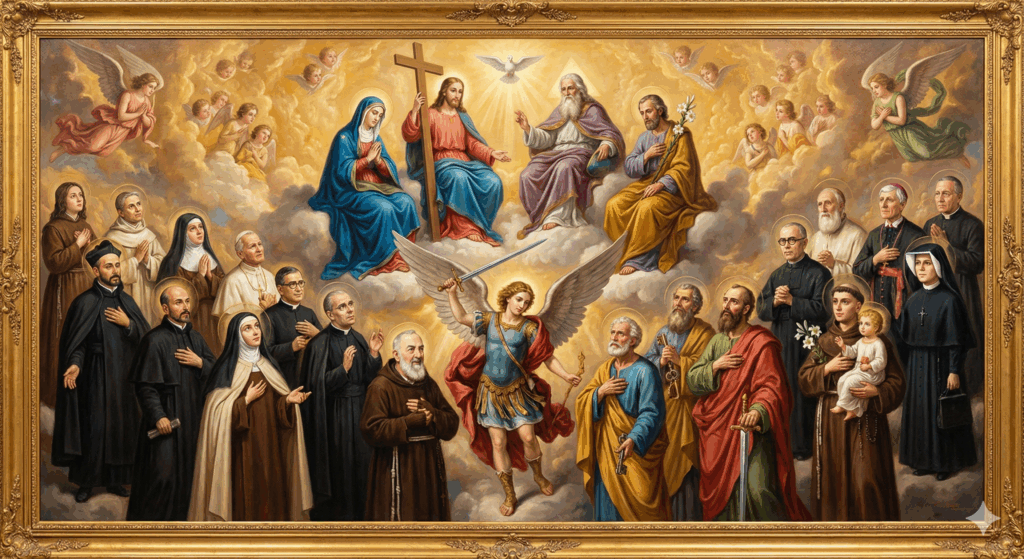
AI-generated image of the communion of saints in heaven and some well-known figures.
A special communion of saints: the family
St. Josemaría reminded married couples who visited him of this. «In my conversations with so many married couples, I insist that as long as they live and their children live, they must help them to be saints, knowing that none of us will be saints on earth. We will do nothing but struggle, struggle, and struggle. And I add: you, Christian mothers and fathers, are a great spiritual engine, sending your children God's strength for that struggle, to overcome, to be saints. Do not disappoint them!» (St. Josemaría Escrivá de Balaguer, The Forge, no. 692).
In Hebrew, the word used to refer to marriage is kidusshin, a word used to designate “holiness.” The Jews considered marriage to be sacred, and therefore used the term sanctification, a gift from the Spirit of God. God also shows his mercy through the family: he does not leave us out in the cold, but his plan of love is that man should be born and live in a family, in which each member, thanks to the love of the spouses for each other and for each child, is able to live in, from, and for love.
Husband and wife are God's co-workers: your family It must be introduced into God's family through your holy life of total dedication. You live in a special communion of saints with your spouse and your children. Such is God's interest that He blesses marriage with one of the seven sacraments. And it is also the devil's interest that the family be wrecked, as we see in these times.
To make this a reality in everyday life, it may be helpful to establish the custom of offering the good things of each day of the week for one of the members of the family. If it helps, in distributing the days, you can dedicate Saturday to your wife, since the Church especially remembers the Virgin Mary; Wednesday to yourself, since the Church remembers St. Joseph; Monday to deceased family members, for that reason; Sunday to the whole family in the broadest sense, because it is Trinity Sunday and it is normal to spend it with the family; ...apply the rest. You can repeat or combine them depending on the size of your family.
It's worth it.
When, by God's mercy, we arrive in Heaven one day, we will be able to contemplate the great good we did for many Christians and for the whole Church from our desk, kitchen, gym, living room... We will marvel at the potential of the communion of saints, and we will receive many thanks and give thanks for so much help. Therefore, let us not waste a single hour of work, a setback, a worry, or an illness. We can turn everything into grace and thus, united with Christ, enliven his entire mystical Body. And this month, let us do so more intensely for the souls in purgatory who so greatly need our help.
Alberto Garcia-Mina Freire
Table of Contents
Christ the King, Solemnity 2025
On the last Sunday of the liturgical year we celebrate the Solemnity of Christ, King of the Universe. We offer the text and audio of the homily that St. Josemaría preached on November 22, 1970, and a brief historical review of the origin of the feast.
Text and audio of the homily: on the feast of Christ the King, pronounced on November 22, 1970 by St. Josemaría.
History of the Solemnity of Christ the King
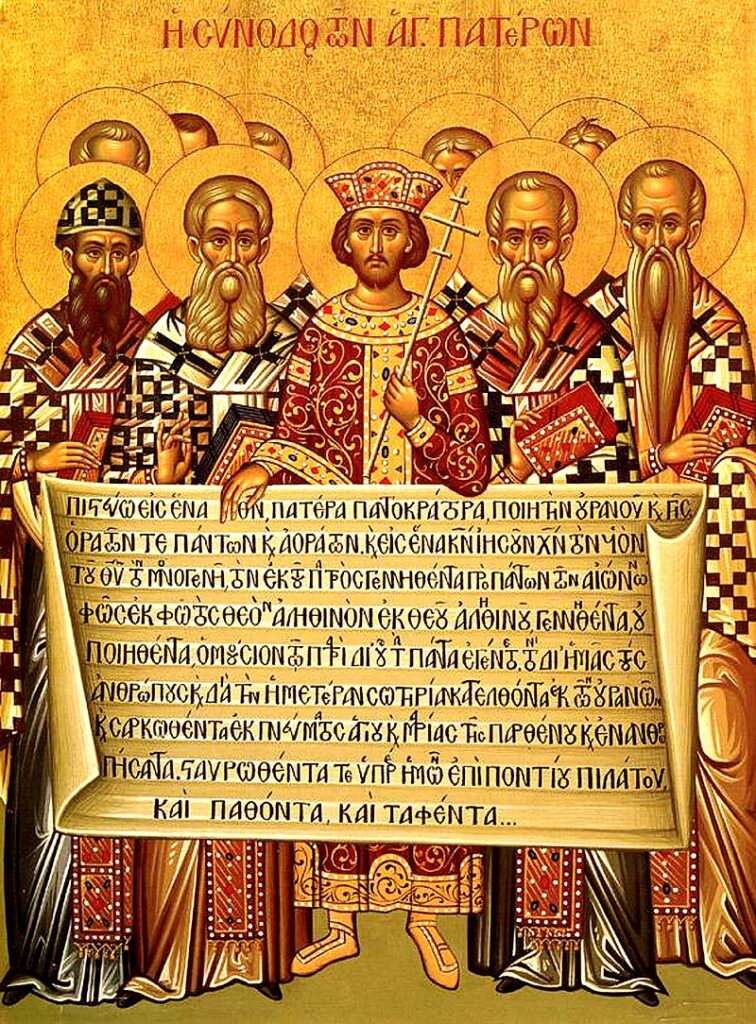
In 325, the first ecumenical council was held in the city of Nicaea, in Asia Minor. On this occasion, the divinity of Christ was defined against the heresies of Arius: «Christ is God, Light from Light, true God from true God». The council was convened by the Roman emperorConstantine I.
His main achievements were the settlement of the Christological question of the nature of the Son of God and his relationship to God the Father, the construction of the first part of the Nicene Symbol (the first uniform Christian doctrine), the establishment of the uniform observance of the date of Easter, and the promulgation of the first code of canon law.
In 1925, 1600 years later, Pope Pius XI proclaimed that the best way for civil society to obtain «just liberty, tranquility and discipline, peace and concord» is for men to recognize, publicly and privately, the kingship of Christ:
«For in instructing the people in the things of the faith,» he wrote, "the annual feasts of the sacred mysteries are much more effective than any teachings, however authoritative, of the ecclesiastical magisterium (...) and they instruct all the faithful (...) every year and perpetually; (...) they penetrate not only the mind, but also the heart, the whole man. (Encyclical Quas primas, December 11, 1925).
The original date of the feast was the last Sunday in October, i.e., the Sunday immediately preceding the All Saints' Day; But with the reform of 1969, it was moved to the last Sunday of the liturgical year, to emphasize that Jesus Christ, the King, is the goal of our earthly pilgrimage.
The biblical texts change in the three liturgical cycles, allowing us to fully grasp the figure of Jesus.
Christ the King, climax and end of the liturgical year
The Solemnity of Christ the King of the Universe, which closes the liturgical year, is a proclamation of the kingship of Jesus Christ. Instituted by Pius XI, this feast responds to the need to remember that, although his kingdom is not of this world, Christ possesses universal authority over all creation and over every human heart.
Jesus is King not by earthly power or political domination, but by his redemptive love and his surrender on the cross. His Kingdom is a kingdom of truth, justice, holiness and grace; a kingdom of love, peace and charity. As the liturgy teaches us, he is the "King of kings and Lord of lords" (Rev 19:16), whose throne is the cross and its crown of thorns.
To celebrate Christ the King is to recognize his sovereignty in our personal lives and in society, committing ourselves to building a world according to the values of his Gospel. It is to look towards the end of time, when "Christ will be all in all" (Col 3:11), and his Kingdom will be manifested in fullness.
Full text of St. Josemaria's homily Christ the King
The liturgical year comes to an end, and in the Holy Sacrifice of the Altar we renew to the Father the offering of the Victim, Christ, King of holiness and grace, King of justice, love and peace, as we will soon read in the Preface. All of you perceive in your souls an immense joy when you consider the holy humanity of Our Lord: a King with a heart of flesh, like ours; who is the author of the universe and of every creature, and who does not impose himself by dominating: he begs for a little love, showing us, in silence, his wounded hands.
Why, then, do so many ignore it? Why is that cruel protest still heard? nolumus hunc regnare super nos, Do we not want him to reign over us? On earth there are millions of men who face Jesus Christ in this way, or rather, with the shadow of Jesus Christ, because they do not know Christ, nor have they seen the beauty of his face, nor do they know the wonder of his doctrine.
Faced with this sad spectacle, I feel inclined to make amends to the Lord. Listening to this clamor that does not cease and that, more than voices, is made up of ignoble deeds, I feel the need to cry out loudly: oportet illum regnare!, it is fitting that He should reign.
Opposition to Christ
Many do not support Christ They oppose Him in a thousand ways: in the general designs of the world and of human coexistence; in customs, in science, in art; even in the very life of the Church! I do not speak -writes St. Augustine. of the wicked who blaspheme Christ. Rare indeed are those who blaspheme him with the tongue, but many are those who blaspheme him with their conduct.
Some people even resent the expression Christ the King: for a superficial matter of words, as if the reign of Christ could be confused with political formulas; or because the confession of the kingship of the Lord would lead them to admit a law. And they do not tolerate the law, not even that of the endearing precept of charity, because they do not wish to approach the love of God: they are ambitious only to serve their own selfishness.
The Lord has been pushing me to repeat, for a long time now, a silent cry: serviam!, I will serve. May he increase our eagerness to give of ourselves, to be faithful to his divine call - naturally, without apparatus, without noise - in the middle of the street. Let us thank him from the bottom of our hearts. Let us address to him a prayer of subjects, of children, and our tongues and palate will be filled with milk and honey, and we will taste like honeycombs when we speak of the Kingdom of God, which is a Kingdom of freedom, of the freedom that he won for us.
Christ, Lord of the world
I would like us to consider how that Christ, whom - gentle Child - we saw born in Bethlehem, is the Lord of the world: for by Him all beings in heaven and on earth were created; He has reconciled all things to the Father, restoring peace between heaven and earth, through the blood which He shed on the cross.
Today Christ reigns at the right hand of the Father: declared those two angels in white robes to the disciples who were astonished contemplating the clouds, after the Ascension of the Lord: Men of Galilee, why do you stand there looking up to heaven? This Jesus, who has gone up from you into heaven, will come in the same way that you have just seen him go up..
By Him kings reign, with the difference that kings, the human authorities, pass away; and the reign of Christ will remain for eternity, his kingdom is an everlasting kingdom and his dominion endures from generation to generation.
The kingdom of Christ is not a figure of speech, nor a rhetorical image. Christ lives, also as man, with that same body which he assumed in the Incarnation, which he resurrected after the Cross and subsists glorified in the Person of the Word together with his human soul. Christ, true God and true Man, lives and reigns and is the Lord of the world. Through him alone everything that lives is kept alive.
Why, then, does he not appear now in all his glory? Because his kingdom is not of this world, although he is in the world. Jesus had replied to Pilate: I am king. For this I was born, to bear witness to the truth; everyone who belongs to the truth hears my voice.. Those who expected a visible temporal power from the Messiah were mistaken: that the kingdom of God does not consist in eating and drinking, but in righteousness and peace and the joy of the Holy Spirit.
Truth and justice; peace and joy in the Holy Spirit. This is the kingdom of Christ: the divine action that saves men and that will culminate when history ends, and the Lord, who sits on the highest point of paradise, comes to judge men definitively.
When Christ begins his preaching on earth, he does not offer a political program, but says: do penance, for the kingdom of heaven is at hand.; He instructs his disciples to proclaim this good news, and teaches them to pray for the coming of the kingdom. This is the kingdom of God and his righteousness, a holy life: what we must seek first, the only thing truly necessary.
Salvation, preached by our Lord Jesus Christ, is an invitation addressed to all: it happens as it happened to a certain king who celebrated his son's wedding and sent his servants to call the guests to the wedding.. Therefore, the Lord reveals that the kingdom of heaven is in your midst.
No one is excluded from salvation if he or she freely complies with Christ's loving demands: to be born again, to become like children, in simplicity of spirit; to turn the heart away from everything that separates us from God. Jesus wants deeds, not just words. And a strenuous effort, because only those who struggle will be worthy of the eternal inheritance.
The perfection of the kingdom-the final judgment of salvation or damnation-will not be on earth. Now the kingdom is like a sowing, like the growth of the mustard seed; its end will be like the fishing with the sweep net, from which -drawn to the sand- will be drawn, for different lots, those who worked righteousness and those who executed iniquity. But as long as we live here, the kingdom is like leaven which a woman took and mixed with three bushels of flour, until the whole lump was leavened.
Whoever understands the kingdom that Christ proposes, realizes that it is worth risking everything to obtain it: it is the pearl that the merchant acquires at the cost of selling what he possesses, it is the treasure found in the field. The kingdom of heaven is a difficult conquest: no one is sure of reaching it, but the humble cry of the repentant man succeeds in opening its doors wide. One of the thieves who were crucified with Jesus pleads with him: Lord, remember me when you have come into your kingdom. And Jesus answered him, "Truly I tell you, today you will be with me in Paradise..
The kingdom in the soul
How great you are, O Lord and our God! You are the one who gives our lives supernatural meaning and divine efficacy. You are the cause that, for the love of your Son, with all the strength of our being, with soul and body, we can repeat: oportet illum regnare, while the song of our weakness resounds, because you know that we are creatures - and what creatures - made of clay, not only in our feet, but also in our hearts and heads. To the divine, we will vibrate exclusively for you.
Christ must reign, first of all, in our soul. But what would we answer if He were to ask: "How can you let me reign in you? I would answer that in order for Him to reign in me, I need His abundant grace: only in this way will every last heartbeat, every last breath, every least intense look, every most ordinary word, every most elementary sensation be translated into a hosanna to my Christ the King.
If we want Christ to reign, we must be coherent: we must begin by giving him our hearts. If we do not do so, to speak of the reign of Christ would be a mere lip service without Christian substance, an external manifestation of a faith that does not exist, a fraudulent use of the name of Christ, a fraudulent use of the name of the Lord. God for human compromises.
If the condition for Jesus to reign in my soul, in your soul, were to have a perfect place in us beforehand, we would have reason to despair. But Fear not, O daughter of Zion: behold thy King, who cometh sitting on a donkey.. Do you see? Jesus is content with a poor animal for a throne. I do not know about you, but I am not humiliated to recognize myself, in the eyes of the Lord, as a donkey: I am as a little donkey before thee; but I shall always be at thy side, because thou hast taken me by thy right hand., you lead me by the halter.
Think of the characteristics of a donkey, now that there are so few of them left. Not the old, stubborn, spiteful donkey that takes revenge with a treacherous kick, but the young donkey: ears stretched like antennae, austere in eating, hard at work, with a determined and cheerful trot. There are hundreds of animals more beautiful, more skillful and more cruel.
But Christ looked upon him, to present himself as king before the people who acclaimed him. For Jesus does not know what to do with calculating cunning, with the cruelty of cold hearts, with showy but hollow beauty. Our Lord values the joy of a young heart, the simple step, the voice without falsetto, the clear eyes, the attentive ear to his word of affection. Thus he reigns in the soul.
Reigning in service
If we let Christ reign in our soul, we will not become dominators, we will be servants of all men. Service. How I love this word! Serving If only we Christians knew how to serve! Let us entrust to the Lord our decision to learn how to carry out this task of service, because only by serving can we know and love Christ, and make Him known and make others love Him more.
How shall we show this to souls? By example: by our voluntary servitude to Jesus Christ in all our activities, because he is the Lord of all the realities of our life, because he is the only and ultimate reason for our existence. Afterwards, when we have given this witness of example, we will be able to instruct with the word, with doctrine. This is how Christ worked: coepit facere et docere, He taught first with works, then with his divine preaching.
To serve others, for Christ's sake, requires us to be very human. If our life is inhuman, God will not build anything in it, because ordinarily he does not build on disorder, on selfishness, on arrogance. We must understand everyone, we must live with everyone, we must forgive everyone, we must forgive everyone.
We will not say that what is unjust is just, that an offense against God is not an offense against God, that evil is good. But, in the face of evil, we will not answer with another evil, but with clear doctrine and good action: drowning evil in an abundance of good. Thus Christ will reign in our soul, and in the souls of those around us.
Some try to build peace in the world without putting the love of God in their own hearts, without serving the creatures for the love of God. How will it be possible to carry out a mission of peace in this way? The peace of Christ is the peace of the kingdom of Christ; and the kingdom of our Lord must be founded on the desire for holiness, on a humble disposition to receive grace, on a strenuous action of justice, on a divine outpouring of love.
Christ at the summit of human activities
This is achievable, it is not a useless dream, if only we men would decide to cherish in our hearts the love of God! Christ, our Lord, was crucified and, from the height of the Cross, he redeemed the world, restoring peace between God and mankind.
Jesus Christ remembers everyone: et ego, si exaltatus fuero a terra, omnia traham ad meipsum, If you place me at the summit of all the activities of the earth, fulfilling the duty of every moment, being my witness in what seems great and in what seems small, omnia traham ad meipsum, My kingdom among you will be a reality!
Christ, Our Lord, is still engaged in this sowing of salvation for mankind and the whole of creation, for this world of ours, which is good because it came good from the hands of God. It was Adam's offense, the sin of human pride, that broke the divine harmony of creation.
But God the Father, when the fullness of time had come, sent his only begotten Son, who - through the work of the Holy Spirit - took flesh in Mary, ever Virgin, to restore peace, so that, redeeming man from sin, adoptionem filiorum reciperemus, We were constituted children of God, able to participate in the divine intimacy: so that it would be granted to this new man, to this new branch of the children of God, to liberate the whole universe from disorder, restoring all things in Christ, who has reconciled them to God.
This is what we Christians have been called to do, this is our apostolic task and the eagerness that should eat at our souls: to make Christ's kingdom a reality, that there be no more hatred or cruelty, that we spread on earth the strong and peaceful balm of love.
Let us ask our King today to make us collaborate humbly and fervently in the divine purpose of uniting that which is broken, of saving that which is lost, of ordering that which man has disordered, of bringing to its end that which is lost, of reconstructing the concord of all creation.
To embrace the Christian faith is to commit oneself to continue among creatures the mission of Jesus. We must be, each one of us, alter Christus, ipse Christus, another Christ, the same Christ. Only in this way will we be able to undertake that great, immense, unending enterprise: to sanctify from within all temporal structures, bringing there the leaven of Redemption.
I never speak of politics. I do not think of the task of Christians on earth as the sprouting of a politico-religious current - that would be madness - not even if it has the good purpose of infusing the spirit of Christ in all the activities of men.
It is the heart of each person, whoever he or she may be, that must be put into God. Let us try to speak for every Christian, so that wherever he is - in circumstances that do not depend only on his position in the Church or in civil life, but on the result of changing historical situations - he may be able to give witness, by example and word, to the faith he professes.
The Christian lives in the world with full rights, because he is a man. If he accepts that Christ dwells in his heart, that Christ reigns, the saving efficacy of the Lord will be strongly felt in all his human activities. It does not matter that this occupation is, as it is often said, high o low; because a human summit can be, in the eyes of God, a lowliness; and what we call low or modest can be a Christian summit of holiness and service.
Personal freedom
The Christian, when he works, as is his duty, must not evade or circumvent the demands of the natural. If with the expression blessing human activities If it were to be understood as annulling or hiding its own dynamics, I would refuse to use those words.
Personally, I have never been convinced that the ordinary activities of men should bear, like a false sign, a confessional label. Because it seems to me, although I respect the contrary opinion, that there is a danger of using in vain the holy name of our faith, and also because, at times, the Catholic label has even been used to justify attitudes and operations that are sometimes not honestly human.
If the world and all that is in it - except sin - is good, because it is the work of God our Lord, the Christian, struggling continually to avoid offenses against God - a positive struggle of love - must dedicate himself to all that is earthly, side by side with other citizens; he must defend all the goods derived from the dignity of the person.
And there is one good that he should always seek especially: that of personal freedom. Only if he defends the individual freedom of others with the corresponding personal responsibility, will he be able, with human and Christian honesty, to defend his own freedom in the same way.
I repeat and will repeat unceasingly that the Lord has freely given us a great supernatural gift, divine grace; and another marvelous human gift, personal freedom, which requires of us - lest it become corrupted, turning into licentiousness - integrity, effective commitment to develop our conduct within the divine law, for where the Spirit of God is, there is liberty.
The Kingdom of Christ is one of freedom: here there are no other servants than those who freely put themselves in chains for love of God. Blessed slavery of love, which sets us free! Without freedom, we cannot correspond to grace; without freedom, we cannot give ourselves freely to the Lord, with the most supernatural reason: because we feel like it.
Some of you who listen to me know me from many years ago. You can attest that all my life I have been preaching personal freedom, with personal responsibility. I have searched for it and I search for it, all over the earth, as Diogenes searched for a man. And every day I love it more, I love it above all earthly things: it is a treasure that we will never appreciate enough.
When I speak of personal freedom, I am not referring with this excuse to other problems, perhaps very legitimate ones, which do not correspond to my office as a priest. I know that it is not my place to deal with secular and transitory matters, which belong to the temporal and civil sphere, matters that the Lord has left to the free and serene controversy of men.
I also know that the lips of the priest, avoiding all human banditry, must be opened only to lead souls to God, to his saving spiritual doctrine, to the sacraments instituted by Jesus Christ, to the interior life that brings us closer to the Lord, knowing that we are his children and, therefore, brothers and sisters of all men without exception.
Today we celebrate the feast of Christ the King. And I am not departing from my priestly office when I say that, if anyone were to understand the kingdom of Christ as a political program, he would not have deepened the supernatural finality of faith and would be one step away from burdening consciences with weights that are not those of Jesus, because its yoke is soft and its burden light.
Let us truly love all men; let us love Christ above all; and then we will have no choice but to love the legitimate freedom of others, in a peaceful and reasonable coexistence.
Serene, children of God
You will suggest, perhaps: but few people want to hear this, let alone put it into practice.. I know for sure: freedom is a strong and healthy plant, which acclimatizes poorly among stones, thorns or roads trampled by people. It had already been announced to us, even before Christ came to earth. Remember the second psalm: Why have the heathen raged, and the people plotted vain things? The kings of the earth have risen up, and the princes are gathered together against the Lord and against his Christ.. See? Nothing new.
They opposed Christ before He was born; they opposed Him, while His peaceful feet walked the paths of Palestine; they persecuted Him afterwards and now, attacking the members of His mystical and royal Body. Why so much hatred, why this preying on candid simplicity, why this universal crushing of the freedom of every conscience?
Let us break their bonds and shake their yoke away from us.. They break the gentle yoke, they cast off their burden, a marvelous burden of holiness and justice, of grace, of love and peace. They rage at love, they laugh at the helpless goodness of a God who renounces the use of His legions of angels to defend Himself. If the Lord were to admit compromise, if He were to sacrifice a few innocents to satisfy a majority of the guilty, they might yet attempt an understanding with Him.
But this is not God's logic. Our Father is truly Father, and is willing to forgive thousands of evildoers, provided there are only ten righteous ones. Those who are driven by hatred cannot understand this mercy, and strengthen themselves in their apparent earthly impunity, feeding on injustice.
He who dwells in the heavens will laugh at them, the Lord will mock them. Then he will speak to them in his indignation and fill them with terror in his wrath.. How legitimate is God's wrath and how just his anger, how great also his clemency!
I have been appointed by him king over Zion, his holy mountain, to preach his law. To me the Lord has said: You are my son, this day have I begotten you.. The mercy of God the Father has given us his Son as King. When he threatens, he is moved with tenderness; he announces his wrath and gives us his love. You are my son: he addresses Christ and he addresses you and me, if we decide to be alter Christus, ipse Christus.
Words cannot follow the heart, which is moved by the goodness of God. He tells us: you are my son. Not a stranger, not a servant kindly treated, not a friend, which would already be too much. Son! He gives us a free hand to live with Him the piety of a son and, I would dare to say, also the shamelessness of the son of a Father, who is incapable of denying Him anything.
That there are many who are bent on behaving unjustly? Yes, but the Lord insists: ask of me, I will give you the nations as an inheritance, and I will extend your dominion to the ends of the earth. Thou shalt rule them with a rod of iron, and shalt break them like a potter's vessel.. These are strong promises, and they are from God: we cannot conceal them. It is not in vain that Christ is the Redeemer of the world, and reigns, sovereign, at the right hand of the Father. It is the terrible announcement of what awaits each one, when life passes, because it passes; and to all, when history ends, if the heart is hardened in evil and despair.
However, God, who can always win, prefers to convince: Now, you kings, you rulers, understand this well; let yourselves be instructed, you who judge on earth. Serve the Lord with fear, and exalt him with trembling. Embrace the good doctrine, lest at last the Lord be angry with you and you perish from the good way, for his wrath is suddenly kindled.. Christ is the Lord, the King.
We proclaim to you the fulfillment of the promise made to our fathers, which God has fulfilled before our children by raising Jesus from the dead, as it is written in the second Psalm: You are my Son, this day have I begotten you.....
Now therefore, my brethren, know that through Jesus is offered to you the remission of sins and of all stains from which you could not be justified under the Mosaic law: whoever believes in Him is justified. See to it that what is spoken in the prophets does not fall upon you: make reparation, you who despise, be filled with dread and be desolate; for I am going to accomplish a work in your days, which you will not believe in no matter how much you are told about it..
It is the work of salvation, the reign of Christ in souls, the manifestation of God's mercy. Blessed are those who accept Him!. We Christians have the right to extol the kingship of Christ, for even if injustice abounds, even if many do not desire this reign of love, in human history itself, which is the scene of evil, the work of eternal salvation is being woven.
Angels of God
Ego cogito cogitationes pacis et non afflictionis, I think thoughts of peace and not of sadness, says the Lord. Let us be men of peace, men of justice, doers of good, and the Lord will not be for us Judge, but friend, brother, Love.
May the angels of God accompany us on this - joyful - walk on earth. Before the birth of our Redeemer, writes St. Gregory the Great, we had lost the friendship of the angels. Original guilt and our daily sins had distanced us from their luminous purity,.... But from the moment that we recognized our King, the angels recognized us as fellow citizens.....
And since the King of heaven has willed to take our earthly flesh, the angels no longer shrink from our misery. They dare not consider inferior to their own this nature which they adore, seeing it exalted, above them, in the person of the King of heaven; and they no longer have any inconvenience in considering man as a companion.
Mary, the holy Mother of our King, the Queen of our heart, take care of us as only she knows how. Compassionate Mother, throne of grace: we ask that we may know how to compose in our lives and in the lives of those around us, verse by verse, the simple poem of charity, quasi fluvium pacis, like a river of peace. For you are a sea of unfailing mercy: the rivers all go to the sea and the sea does not fill up.