Lent 2026: meaning, definition and prayers

"Every year, during the forty days of Great Lent, the Church unites herself to the Mystery of Jesus in the desert." Catechism of the Catholic Church, 540

What is Lent?

The meaning of Lent comes from Latin quadragesima, a liturgical period of forty days reserved for the preparation of Easter. Forty days in allusion to the 40 years that the people of Israel spent in the desert with Moses and the 40 days that Jesus spent in the desert before beginning his public life.

This is a preparation and conversion time to participate in the culminating moment of our liturgy, together with the entire Catholic Church.

In the Catechism, the Church proposes to follow the example of Christ in his desert retreat, in preparation for the Easter solemnities.. It is a particularly appropriate time for spiritual exercisesthe liturgies penitential, penitential pilgrimages as a sign of penitence, voluntary deprivations such as the fasting and the almsand the Christian communication of goods by means of charitable and missionary works.

This effort of conversion is the movement of the contrite heart, attracted and moved by the grace to to respond to the merciful love of God who has loved us first.

We cannot consider this Lent as just another season, a cyclical repetition of the liturgical season. This moment is unique; it is a divine help to be welcomed. Jesus passes by our side and expects from us - today, now - a great change. It is Christ who passes, 59.

When does Lent begin?

The imposition of ashes on the foreheads of the faithful on Ash Wednesday, is the beginning of this road. It constitutes a invitation to conversion and penance. It is an invitation to go through the Lenten season as a more conscious and intense immersion in the paschal mystery of Jesus, in his death and resurrection, through participation in the Eucharist and in the life of charity.

The time of Lent ends on Holy Thursdaybefore the Mass in coena Domini (the Lord's Supper), which begins the Easter Triduum, Good Friday and Glory Saturday.

During these days we look inside ourselves and we assimilate the mystery of the Lord being tempted in the desert by Satan and his going up to Jerusalem for his Passion, Death, Resurrection and Ascension to the Heavens.

We remember that we must convert and believe in the Gospel and that we are dust, sinful men, creatures and not God.

What better way to begin Lent? We renew faith, hope, charity. This is the source of the spirit of penance, of the desire for purification. Lent is not only an occasion to intensify our external practices of mortification: if we were to think that it is only that, we would miss its deep meaning in the Christian life, because these external acts are - I repeat - the fruit of faith, hope and love. It is Christ who passes, 57.

 
cuaresma miercoles de ceniza iglesia semana santa

How to live Lent?

Lent can be experienced through the sacrament of Confession, prayer and positive attitudes.

Catholics we prepare for the key events of the Holy Week through the pillars of the prayer, fasting and almsgiving. These guide us in our daily reflection on our own life while we strive to deepen our relationship with God and with our neighborno matter what part of the world the neighbor lives in. Lent is a time of personal and spiritual growth, a time to look outward and inward. It is a time of mercy.

Repentance and Confession

As a time of penitence, Lent is a season of it is a good time to go to confession. It is not obligatory, nor is there any Church mandate to do so, but it fits very well with the words of the Gospel that the priest repeats on Ash Wednesday.

"Remember that dust you are and to dust you shall return" "Convert and believe in the Gospel"

In these holy words there is a common element: the conversion. And this is only possible with repentance and a change of life.. Therefore, confession during Lent is a practical way of ask God's forgiveness for our sins and start over again.. The ideal way to begin this exercise of introspection is through an examination of conscience.

Penance

Penance, the Latin translation of the Greek word "metanoia" which in the Bible means the conversion of the sinner. Designates an entire all the interior and exterior acts aimed at the reparation of the committed sinand the resulting state of affairs for the sinner. Literally change of life, it is said of the act of the sinner who returns to God after having been far from Him, or of the unbeliever who attains faith.

Conversion

Converting is reconciliation with GodWe are to turn away from evil in order to establish friendship with the Creator. Once in grace, after confession and what it implies, we must set out to change from within everything that does not please God.

To concretize the desire for conversion, it is possible to do the following conversion workssuch as, for example: Attending the sacramentsto overcome divisions, to forgive and to grow in a fraternal spirit; practicing the Works of Mercy.

Fasting and abstinence

The Church invites its faithful to observance of the precept of fasting and abstinence of flesh, compendium of the Catechism 432

The fasting consists of eating only one meal a day, although it is possible to eat a little less than usual in the morning and evening. Except in case of illness. It invites to live the fast, to all the adults, until they are fifty-nine years old. Both on Ash Wednesday and Good Friday.

It is called abstinence to abstain from eating meat on Fridays of Lent. The abstinence can begin from the age of fourteen.

Care should be taken not to live fasting or abstinence as a minimum, but as a concrete way in which our Holy Mother Church helps us to grow in the true spirit of penance and joy.

Holy Father's Message for Lent 

Pope Francis proposes that "in this time of conversion we renew our faith, quench our thirst with the 'living water' of hope and pray for the salvation of our brothers and sisters".e receive God's love with an open heart which makes us brothers and sisters in Christ". (Rome, St. John Lateran, November 11, 2020, memorial of St. Martin of Tours)

In this journey of preparation for the night of Easter, in which, Francis reminds us, we will renew the promises of our Baptism, "to be reborn as new men and women":

  1. Faith calls us to embrace the Truth and to be witnesses, before God and before our brothers and sisters.
  2. Esperanza as "living water" that allows us to continue on our journey
  3. CharityThe life lived in the footsteps of Christ, showing care and compassion for each person, is the highest expression of our faith and our hope.

The Pope also emphasizes the great difficulties we are going through as humanity, especially in this time of pandemic, "in which everything seems fragile and uncertain" and where "to speak of hope could seem like a provocation". But Where to find that hope? Precisely "in the recollection and silence of prayer".

Prayers for Lent

Prayer with an open heart is the best preparation for Easter. We can read and reflect on the Gospel, we can pray the Via Crusis. We can turn to the Catechism of the Catholic Church and follow the liturgical celebrations with the Roman Missal. The important thing is that we encounter the unconditional love that is Christ.

"Lord Jesus, by your Cross and Resurrection you have set us free. During this Lent,

lead us by your Holy Spirit to live more faithfully in Christian freedom. Through prayer,

increase in charity and the disciplines of this sacred Season, bring us closer to You.

Purify the intentions of my heart so that all my Lenten practices may be for the good of my soul.

your praise and glory. Grant that by our words and actions,

we can be faithful messengers of the Gospel message to a world in need of the

hope of your mercy. Amen.


Bibliography:

OpusDei.org
Catechism of the Catholic Church
Catholic.net
Aciprensa
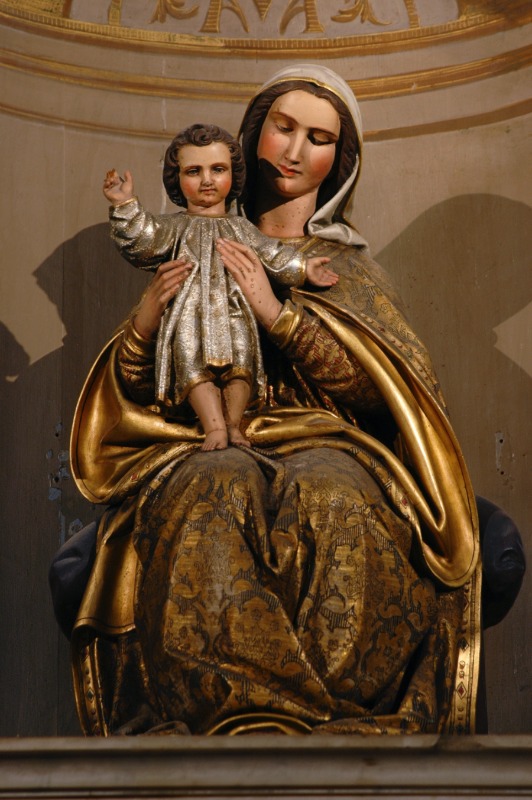
Mary's school

In the Mary's school we learn what we all need. She, as forerunner and mother of the Church, and at the same time as the first disciple, is the model and heart of Christian and ecclesial discernment.

Mary custody meditating

In the scandal of the manger (a feeding trough for animals), Mary learns that God wants to be close and familiar. That he comes in poverty and brings joy and love, not fear. And that he wants to become food for us. There she contemplates the beauty of God lying in a manger.

While others simply pass by and live, and some are amazed, the Virgin Mary kept - guarded, guarded - all these things, meditating on them in his heart (Lk 2:19; cf. also v. 51).

Interweaving events

Her attitude is the expression of a mature and fruitful faith. From the dark stable of Bethlehem, she gives birth to the Light of God in the world. As a foretaste of what is to come, Mary passes, already now, through the cross, without which there is no resurrection.

And so Mary, Francis finds, helps us to overcome the clash between the ideal and the real.

By guarding and meditating. One could say, as the Pope does later, that this happens in Mary's heart and prayer: because she loves and prays, Mary, before, during and after her prayer, is able to see things from God's point of view.

"First of all, Mary is a guardian, that is, she does not disperse. She does not reject what happens. She keeps everything in her heart, everything she has seen and heard. The beautiful things, like those that the angel had told her and those that the shepherds had told her. But also the difficult things to accept: the danger of becoming pregnant before marriage, now the desolate narrowness of the stable where she gave birth. This is what Mary does: she does not select, but guards. She accepts reality as it comes, she does not try to disguise it, to make up her life, she keeps it in her heart."

And then there is the second attitude. How does Mary guard? He does it meditating, interweaving the events:

"Mary compares different experiences, finding the hidden threads that unite them. In her heart, in her prayer She performs this extraordinary operation: she unites the beautiful and the ugly; she does not keep them apart, but unites them. And for this reason," the Pope says, "Mary is the Mother of Catholicity, because she unites, not separates. And so she captures the full meaning, the perspective of God.

Escuela de María
"...Mothers know how to protect, they know how to hold together the threads of life...", says Pope Francis.

The look of the mothers

Well, "this inclusive gaze, which overcomes tensions by keeping and meditating in the heart, is the gaze of mothers, who do not separate tensions, but guard them and thus life grows. It is the look with which so many mothers embrace the situations of their children. It is a concrete gaze, which does not lose heart, which does not become paralyzed in the face of problems, but places them in a broader horizon".

Mothers," she continues, "know how to overcome obstacles and conflicts, they know how to instill peace. They are able to transform adversity into opportunities for rebirth and growth. They do this because they know how to guard. Mothers know how to protect, they know how to hold together the threads of life, all of them.".

Today we need "people who are capable of weaving threads of communion, who contrast the too many barbed threads of divisions. And mothers know how to do that," says Francis.

The Pope insists on the capacity that mothers and women have for this: "Mothers and women look at the world not to exploit it, but to give it life: looking with the heart, they manage to keep dreams and concreteness together, avoiding the drift of aseptic pragmatism and abstraction".

She likes to emphasize that the Church is a mother and a woman. "And the Church is a mother, she is such a mother, the Church is a woman, she is such a woman."

And he deduces, as he has done on other occasions, this consequence, for the Church:

"That is why we cannot find the place of woman in the Church without reflecting her in the heart of a woman-mother. That is the place of woman in the Church, the great place from which other more concrete, more secondary places derive. But the Church is mother, the Church is woman".

And it ends with an exhortation for this new year: "...that, as mothers give life and women protect the world, let us all work to promote mothers and protect women".


Ramiro Pellitero Iglesias, Professor of Pastoral Theology at the Faculty of Theology at the University of Navarra.

The Chair of St. Peter and its celebration in the Church

Every February 22nd, the Catholic Church celebrates the feast of the Virgin Mary. Chair of St. PeterThe Pope's visit, a special occasion that highlights the Pope's role as successor of Peter and his mission to guide the faithful in faith and unity.

It is a day that invites us to look towards spiritual leadership with a renewed vision, reminding us that the Pope is a guide, but also a support in difficult times, someone who urges us forward in faith. The Chair of St. Peter reminds us of the importance of faith in our lives and in the community, showing us the way forward.

The celebration of the Chair of St. Peter becomes an opportunity to unite in prayer and strengthen our faith. The Chair symbolizes the teaching and guidance that the Pope offers to the Church and all the faithful.

The meaning of St. Peter's Chair

This day of the St. Peter's Cathedra invites us to remember our commitment to the teaching of the Church.

The word "cathedra" comes from the Latin cathedrawhich means chair or seat, and symbolizes the teaching authority of the bishop. In this context, the Chair of St. Peter represents Peter's role as the first bishop of Rome and the pope's responsibility as his legitimate successor.

Located in St. Peter's Basilica in Vatican City, RomeThis chair is a symbol of apostolic continuity and the unity of the Church. According to the Gospel of Matthew, Jesus said to Peter: "You are Peter, and on this rock I will build my Church" (Mt 16:18). With these words, Christ made clear Peter's mission as guide of the Church, a mission that is still alive today in the Pope and in his work of service.

The Chair of St. Peter is a constant reminder that the community of believers is united in faith. Praying for the PopePeter's successor and the Chair of St. Peter is a fundamental part of our spiritual life.

For more than two thousand years, the Church has maintained the apostolic succession of the apostles.The primacy of the apostles, ensuring the continuity of the mission entrusted by Christ to his apostles. Peter, on moving to Rome, established there the seat of the primacy, making the city the center of Christianity and a symbol of unity for all the faithful.

This celebration is a reminder that the Church continues to be a living institution, constantly renewing itself and finding in the figure of the Pope a point of reference for all Catholics.

The Chair of St. Peter offers us the opportunity to reflect on our role in the mission of the Church.

The Church and helping the faithful in their faith journey

Throughout history, the Church has been a beacon of spiritual help and guidance for millions of faithful around the world. Today, the figure of the Pope continues to play a crucial role in transmitting the Gospel and promoting peace and solidarity among Christians.

The Chair of St. Peter reminds us that the Church not only guides believers, but also sustains them with its teaching and support. It is a place where many people find refuge when life gets complicated, where they encounter a community that does not leave them alone and a faith that gives hope. As we celebrate this feast of the Chair of St. Peter, we reaffirm our faith and our commitment to the Church.

St. Josemaría Escrivá, founder of Opus Dei, emphasized the importance of communion with the Pope and prayer for his person and intentions. In his writings, he encouraged the faithful to pray for the Holy Father, recognizing in him the "sweet Christ on earth" and stressing the need to remain united to the successor of Peter in order to strengthen our faith and the unity of the Church. Prayer for the Pope is not only a tradition, but an act of support and communion with the universal Church.

Ser sacerdote en Bolivia Fundación CARF

Priests trained thanks to the CARF Foundation, a bridge between the Church and social aid

The priests trained thanks to grants from the CARF Foundation carry the teaching of the Church to all parts of the world. Thanks to their formation, they become messengers of the Gospel and living examples of help and communion with the Pope.

Its mission not only strengthens unity within the Church, but also provides support to communities in need through pastoral and social initiatives, as can be read in the testimonials they send us. They are priests who not only speak of faith, but who live it on a daily basis, in neighborhoods where poverty presses, in hospitals where loneliness weighs heavily and in prisons where hope seems to be running out. They are the feet and hands of the Church in the real world.

Today, this feast invites us to renew our commitment to the Church and to recognize the Pope's guidance as a beacon that orients us in the midst of the difficulties and challenges of the modern world. It is an opportunity to reflecting on our own participation in the mission of the Church and how, from our daily lives, we can contribute to the construction of a more united and supportive community.

A call to communion and prayer for the Church

On this day of celebration, all the faithful are invited to pray for the Pope and the Churchso that it may continue to be an instrument of unity and help for the world. The feast we celebrate is a reminder that, despite the challenges, the Church remains a pillar of hope and a point of reference for millions of people seeking spiritual guidance and support in their faith journey.

In a world that sometimes seems more divided than ever, remembering that the Church is a home for all restores our faith that unity is possible. It is time to strengthen our commitment to faith and community, because only together can we continue to build a Church that truly helps and accompanies all.

As we celebrate this feast, we reaffirm our faith in Christ's promise to be always with his Church and recognize the importance of remaining in communion with the Pope, successor of Peter, in order to be authentic witnesses to the Gospel in today's world.

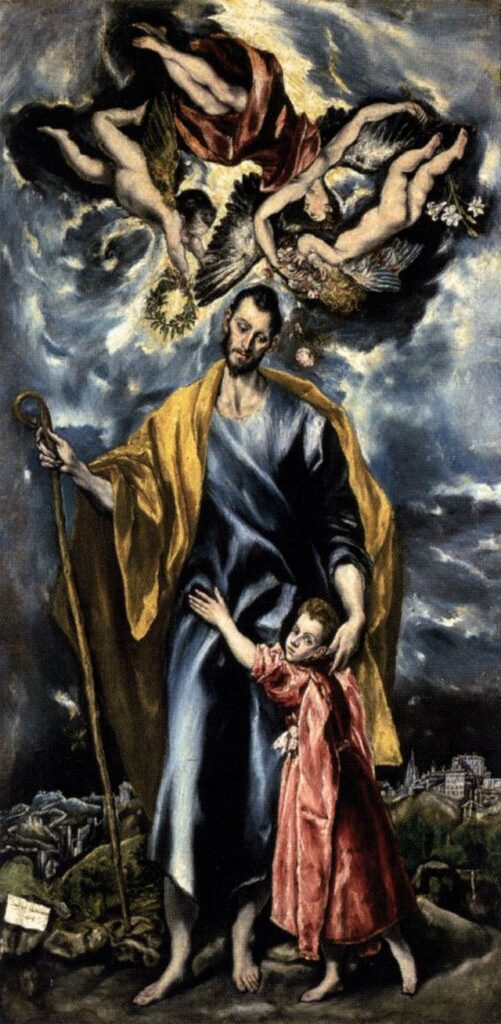
7 Sundays: St. Joseph, Father's Heart

What kind of father St. Joseph was and the mission God entrusted to him

This is what the Pope begins by explaining in your letter. St. Joseph was not what we would call today "biological father" of Jesus, but only his "legal father". However, he lived the paternity over Jesus and being the husband of Mary in an eminent way.

Many saints, from St. Irenaeus and St. Augustine to various Doctors of the Church, among them St. Teresa of Avila, have considered this to be the case. St. John Paul II.

By reading and meditating on Francis' letter, one can come to rediscover how St. Joseph is not only custodian of the Churchbut also of humanity, particularly of its most fragile part.those members who are most in need.

In any case, he is an important saint. Moreover, as Francis writes, "after Mary, Mother of God, no saint takes up so much space in the pontifical Magisterium as Joseph, her husband".

Why this letter now?

Francisco points out that, in addition to the 150th anniversary of the declaration of St. Joseph as patron saint of the universal Church, there are a "personal" reason: talk about what fills your heart (cf. Mt 12:34).

He also confesses in the introduction: "This desire has grown during these months of pandemic". Thus we learn about some of the thoughts and spiritual processes that have taken place in the Pope's heart during this period of the pandemic.

St. Joseph's help

Concretely, the Pope, as he has done on several occasions, underlines and thanks the witness of so many "common people, commonly forgotten, that (...) are writing today the decisive events of our history"; because work, hope and prayWe are always discreet, but subject to all of them.

To all of them and to us proposes the example and the help of St. Joseph: "Everyone can find in San Jose, the man who goes unnoticed, the man of daily presence, discreet and hidden,  an intercessor, a support and a guide in times of difficulty."

"St. Joseph reminds us that all those who are apparently hidden or in the 'second line' have an unparalleled protagonism in the history of salvation. To all of them is addressed a word of recognition and gratitude".

In his letter, Francis dedicates seven epigraphs to St. Joseph in the form of "titles".which could be equivalent to seven sentences of a short "litany of the father":

Beloved Father, in tenderness, in obedience, in welcome,
in creative courage, in the work, always in the shadows
.

Along with the historical and biblical "roots" of Saint Joseph (cf. Gen 41:55; 2 Sam 7, Mt 1:16,20), beloved father, and the foundations of his identity and his veneration on our part (his link with the incarnation of the Son of God and his role as St. Joseph, father of Jesus and spouse of Mary), the letter includes major themes of Francis' magisterium, with accents and expressions of his own.

san jose el greco corazón de padre

Father in tenderness, obedience and welcoming

"Jesus saw the tenderness of God in Joseph." (n. 2), which is to be expected of all good fathers (cf. Ps 110:13). Joseph taught Jesus, while protecting him in his weakness as a child, to "see" God and to turn to Him in prayer. For us, too, "it is important to encounter God's Mercy, especially in the sacrament of Reconciliation, having an experience of truth and tenderness" (Ibid.).

There God welcomes us and embraces us, sustains us and forgives us. Joseph also "teaches us that, in the midst of life's storms, we must not be afraid to yield the rudder of our boat to God." (Ibid.).

In a similar way to the Virgin Mary, Joseph also pronounced his "fiat" (go to) to God's plan. He was obedient to what God asked him to do.even if this manifested itself in dreams. And furthermore, what seems astonishing, "taught"obedience to Jesus. "In the hidden life of Nazareth, under the guidance of Joseph, Jesus learned to do the will of the Father" (n. 3). And this, passing through the passion and the cross (cf. Jn 4:34; Phil 2:8; Heb 5:8).

As St. John Paul II wrote in his exhortation Redemptoris custos (1989)on St. Joseph, "Joseph was called by God to serve directly the person and mission of Jesus through the exercise of his fatherhood.Thus he cooperates in the fullness of time in the great mystery of redemption and is truly '...'.minister of salvation'".

All of this went through the "welcome"Joseph, Mary and God's plan for her. Joseph assumed that plan, his paternityHe was a mysterious person, with personal responsibility, without looking for easy solutions. And these events shaped his inner life.

Father in his creative courage

Although God's plans exceed Joseph's expectations, he does not resign himself passively, but rather acts with strength. And so he gives us an example and supports us in welcoming ".creative courage"Our life as it is, even with its contradictory, unexpected and even disappointing side. Then St. Paul will say that "everything contributes to the good of those who love God". (Rm 8:28).

It is easy to suppose that these, those who truly love God, are the same ones who translate that love into concern for others. In fact, Francis writes, giving another very personal touch: "I wish to imagine that Jesus took from Joseph's attitudes the example for the parable of the prodigal son and the merciful father (cf. Lk. 15:11-32)" (Ibid.)..

The Pope points out that welcoming what we have not chosen in our lives, and acting with creative courage, are occasions that God uses to bring "to light". resources in each of us that we didn't even think we had" (n. 5). Specifically, José "I knew how to transform a problem into an opportunity, always putting trust in Providence first.".

How did God respond to this trust of St. Joseph?

For it is precisely by trusting in St. Joseph, as can happen with us, in what he could plan, invent, find. Thus, it could be deduced for our part, it is always Christian mission: an offer of trust from God who asks for our trust to do great things.

And just as he was the custodian of Jesus and his mother Mary, "St. Joseph cannot fail to be the Custodian of the Churchbecause the Church is the extension of the Body of Christ in history, and at the same time in the motherhood of the Church is manifested the motherhood of Mary". (cf. Catechism of the Catholic Church, nn. 963-970).

St. Joseph custodian of the Church

Indeed, and this letter could have been called "custodian of the Church". Francis, too, in an original way, encourages us to perceive that when we take care of the Church, we are taking care of Jesus and Mary.. Let us recall the function of "guardian and servant" that the Pope attributed to St. Joseph in his homily at the Mass at the beginning of the Petrine ministry (March 19, 2013).

And not only that, but coherently, those most in need are, by the will of Jesus (cf. Mt 25:40)also this "Child" that Joseph continues to care forEvery needy person, every poor person, every suffering person, every dying person, every foreigner, every prisoner, every sick person are '...'".the Childwhich Joseph continues to guard. That is why St. Joseph is invoked as protector of the indigent, the needy, the exiled, the afflicted, the poor, the dying." (Patris corde, n. 5).

This deepening of St. Joseph as custodian of the Church in and through, though not exclusively, the poorest of the poor is very interesting, suggesting no less that Maria identifies with them. This is not strange, one might think, since she is a mother of mercy and spouse of Christ who identifies with everything that affects and matters to him.

"From Joseph, the Pope proposes, we must learn the same care and responsibility: to love the Child and his mother; to love the sacraments and charity; to love the Church and the poor. In each of these realities is always the Child and his mother".


Mr. Ramiro Pellitero Iglesias, Professor of Pastoral Theology at the Faculty of Theology of the University of Navarra.

Published in Church and new evangelization.

14F, Valentine's Day, the celebration of love

Valentine's Day,???? Every February 14, millions of people around the world celebrate a date dedicated to love and friendship.

However, beyond the chocolates, flowers and cards, this holiday has a surprising origin dating back to the 3rd century. A priest named Valentine defied the orders of the Roman emperor to secretly unite young lovers in marriage.

Over time, its history was transformed to become one of the most popular celebrations of the year. In this blog article, we tell you about its true origin, its evolution and how it has reached our days.

The origin of St. Valentine: a martyr of love

Valentine's Day has its roots in the history of Valentine of Romea Christian priest of the 3rd century. At that time, Emperor Claudius II ruled the Roman Empire and, in an attempt to strengthen his army, he forbade marriages among young soldiers. He believed that unmarried men made better warriors, as they had no family to return to or be thought of on the battlefield.

However, Valentinus, convinced that love should be above these restrictions, began to perform marriages in secret. His work was soon discovered and, after being arrested, he was ordered to renounce his faith. Valentin refused and was condemned to death.

Finally, this priest His bravery and sacrifice made him a symbol of true love and a martyr who began to be venerated by the Catholic Church.

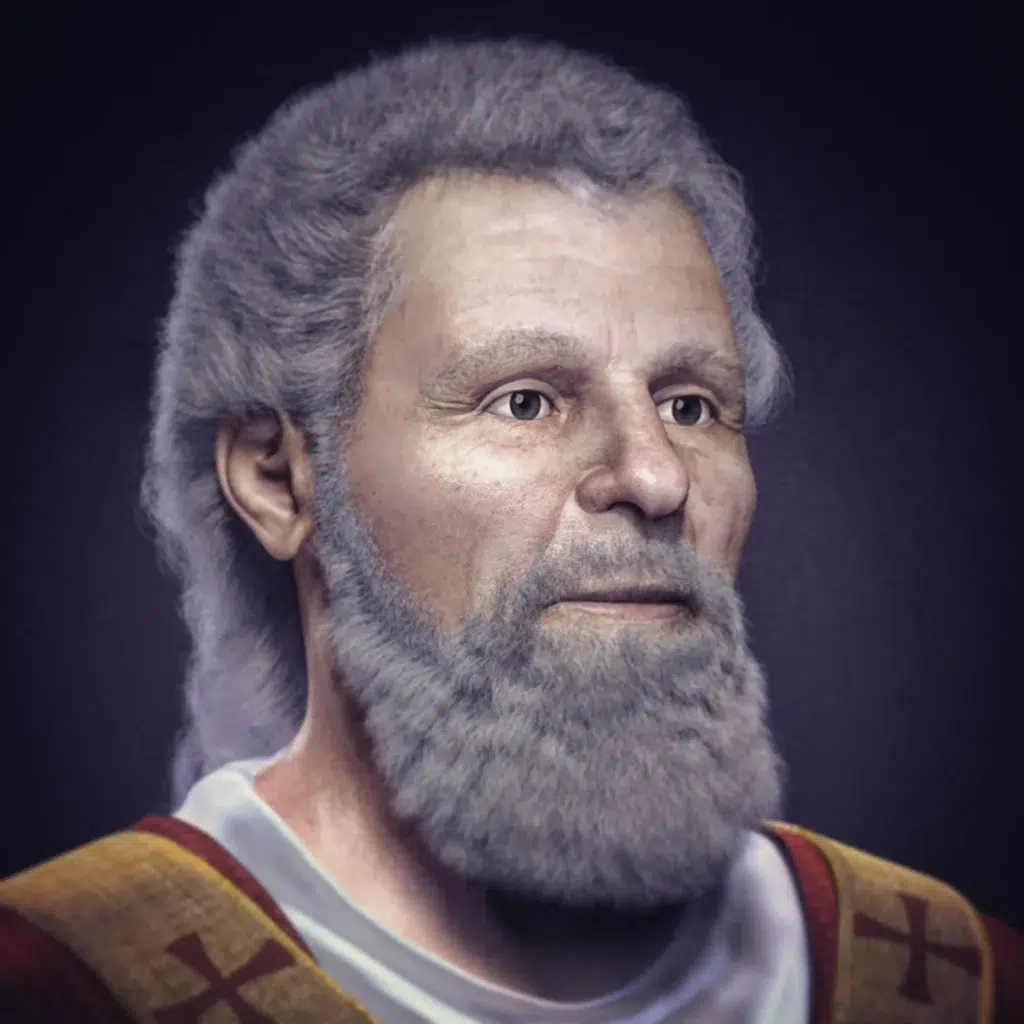
Valentine's Day, 3d facial reconstruction. | From Cicero Moraes - Own work, CC BY-SA 4.0,

Valentine's Day and the Catholic Church

Because of his story and his death in defense of love and friendship, St. Valentine was recognized as a martyr in the Catholic Church. In the 494, Pope Gelasius I officially established February 14, 494, as the date of as his feast day. However, this date also had an additional purpose: to replace the pagan celebrations of the LupercalesThe festival, an ancient Roman festivity that took place in mid-February and was dedicated to fertility and the god Faunus.

The Lupercales were unbridled celebrations in which young men drew lots for the name of a woman with whom they were to be paired during the festivity. Considering them inappropriate for the new Christian morality, the Church promoted the worship of St. Valentine as a model of pure and faithful love.

The evolution of Valentine's Day: from martyrdom to romantic love

Although St. Valentine was venerated for centuries, the connection with romantic love was strengthened in the Middle Ages. It is believed that the modern association with love was born in England and France during the 14th and 15th centuries.

One of the first writers to link Valentine's Day with romance was Geoffrey Chaucer, author of The Canterbury Tales. In his poem Parliament of birds (1382), mentions that February 14 was the day when birds chose a mate, which reinforced the idea that this date was linked to love.

Since then, the tradition of sending love messages on this date began to become popular. In the 17th century, handwritten letters became a common custom among lovers.

With the advent of the Industrial Revolution in the 19th century, Valentine's Day cards began to be mass-produced, giving rise to the commodification of this holiday.

san-valetin-amor-amistad-14-febrero
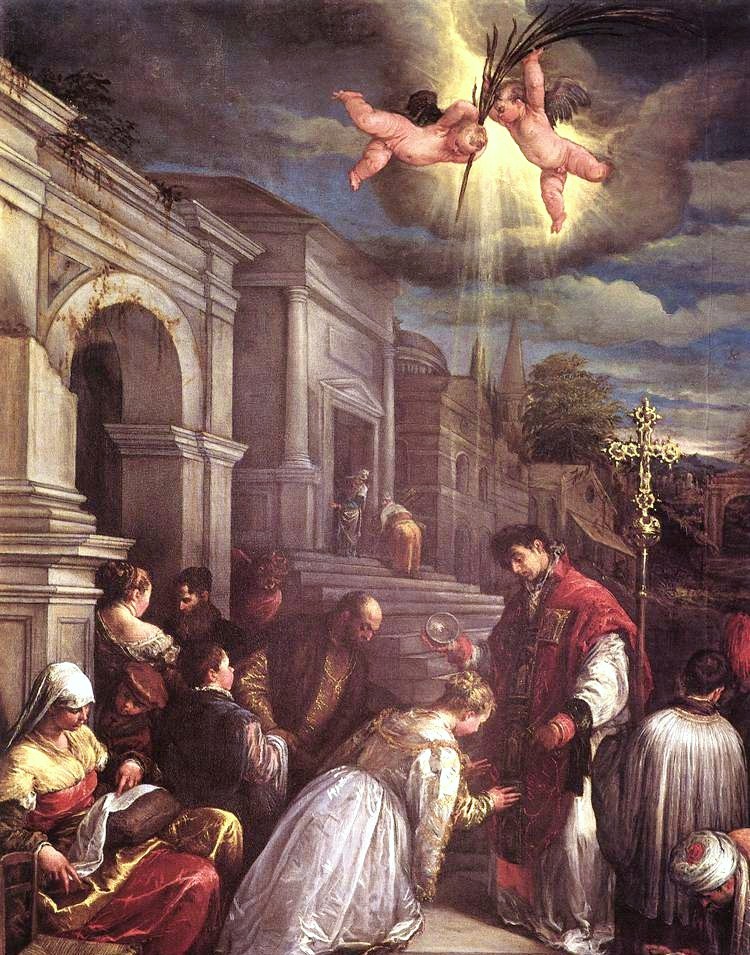
St. Valentine baptizing St. Lucila, 1575. An oil on canvas by Jacopo Bassano del Grappa.

Valentine's Day today: a day to celebrate love and friendship

Today, Valentine's Day has become a worldwide celebration. In many countries, couples exchange gifts, flowers, chocolates and cards as a token of love and appreciation. Although originally a religious holiday, it has transcended cultural barriers and is celebrated in different parts of the world with a multitude of customs:

In addition, in recent years, Valentine's Day has ceased to be just a holiday for couples and has also become an opportunity to celebrate friendship and love in all its forms.

Other people organize get-togethers with friends or even celebrate the Galentine's Daya trend popularized by the series Parks and Recreationwhich consists of a day dedicated to celebrating female friendship.

For the CARF Foundation, the most impressive and beautiful thing about this unforgettable day of love and friendship is that we are talking about a priest, St. Valentine, who baptized and imparted the sacrament of the Blessed Sacrament. Marriage so that many families would be the seed and seed of priestly vocations to serve the church throughout the world.

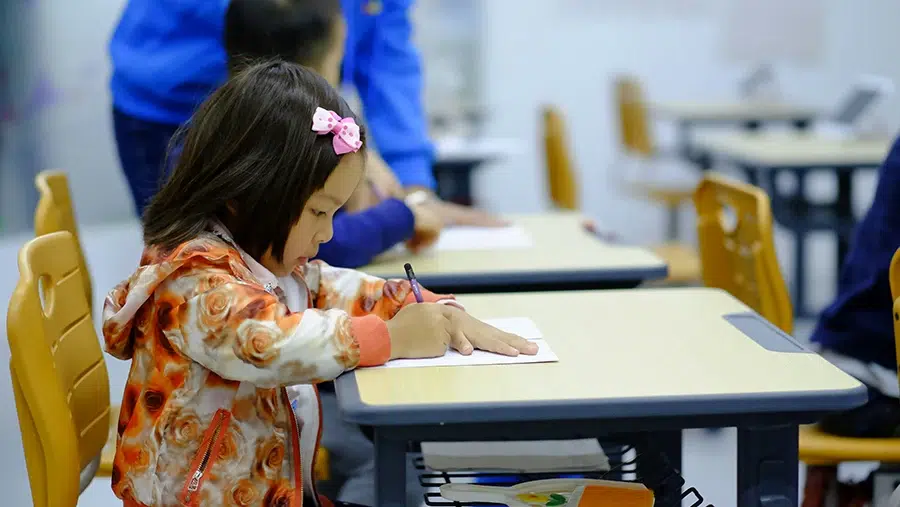
Hope, the engine of education

In this Jubilee Year of Hope, the Pope asked himself, "What is God's method of education? And he answered: it is that of proximity and closeness, the essence is fundamental in this educational process". This is how Francis began his address to a group of Italian Catholic educators, January 4, 2025

The pedagogy of God

Against the backdrop of the closeness, compassion and tenderness, characteristics of God's "style", it is outlined divine pedagogyAs a teacher who enters the world of his pupils, God chooses to live among men to teach them. through the language of life, love and essence. Jesus was born into a condition of poverty and simplicity: this calls us to a pedagogy that values what is essential and places humility, gratuitousness and welcoming at its core". 


God's," Francis points out, "is a pedagogy of the gifta call to living in communion with Him and with others, as part of a project of universal brotherhooda project in which the family occupies a central and irreplaceable place". It is a synthesis, in an educational key, of the main lines of his pontificate.

The pedagogy of God, he continues, is "an invitation to acknowledge the dignity of each person, beginning with the discarded and marginalized, as pastors were treated two thousand years ago, and to appreciate the value of every stage of life, including childhood. The family is the center, let us not forget it!" (cf. Declaration of the Dicastery for the Doctrine of the Faith, Dignitas infinita, 8-IV-2024)

Education in the context of the Jubilee

How is enlightened education in the jubilee of hope?

"The Jubilee," the Pope noted, "has much to say to the world of education and schools. In fact, pilgrims of hope are all persons who seek a meaning to their lives and also who help the youngest to walk this path".

Francisco highlights the evidence that education has to do centrally with the essence of theThe essence, supported by the experience of human history, that people can mature and grow. And this essence sustains the educator in his task:

"A good teacher is a man or a woman of essence, because. is committed with confidence and patience to a project of human growth.. Its essence is not naïve, is rooted in reality, sustained by the conviction that every educational endeavor has value and that every person has a dignity and a vocation that deserves to be cultivated".

In short, and this is the core of the discourse: "The essence is the engine that sustains the educator. in their daily commitment, even in difficulties and failures".

But, the Pope asks, "how can we not lose hope and nourish it every day?"

The pedagogy of essence

His advice begins with the educator's personal relationship with the Master and fellow teacher and pupil: "Keep your gaze fixed on Jesus, teacher and companion on the way.This allows you to be truly pilgrims of essence. Think of the people that you find at school, children and adults".

It was already said in the Bull for the convocation of the Jubilee: "Everyone waits. In the heart of every person nestles the essence as desire and expectation of the good, even in ignorance of what tomorrow will bring" (Spes non confundit, 1).

This argument, in continuity with the encyclical Spe salviBenedict XVI, says Francis: "These human essences, through each one of you - the educators -, can find the Christian essencethe essence that is born of faith and lives by charity".. And, he stresses: "let's not forget: the essence does not disappoint. Optimism disappoints, but the essence does not disappoint. An essence that surpasses all human desire, because it opens minds and hearts to life and eternal beauty".

What can be done, concretely, so that this can happen in Christian-inspired schools or colleges?

Here is the proposal of Francis: "You are called to elaborate and transmit a new culture, based on the meeting between generations, in the inclusionin the discernment of the true, the good and the beautiful; a culture of the true, the good and the responsibilityand collective, to meet the challengeThe global crises such as the environmental, social and economic crises, and the great challenge of peace. At school you can 'imagine peace', i.e., laying the groundwork of a more just and fraternal world, with the contribution of all the disciplines and the creativity of children and young people".

It is, as we can see, an incisive and articulate proposal: Christian hope assumes all our hopes (especially peace); it is a active and responsible hope which works for a new culture; it requires dialogue and interdisciplinarity (cf. ap. const. Veritatis gaudiium, 4c), discernment and creativity, which must be passed from the teachers to the students.

It is a demanding proposal, but not utopian. It all depends on the quality of our hope (that of each educator, that of each family, that of each educational community). This is the driving force.

The Pope concludes by appealing to educational traditions and encouraging educators to work together:

"Never forget where you came from, but do not walk with your heads turned backward, lamenting the old days. Think more about the present of the school, which is the future of society, in the midst of an epochal transformation. Think in young teachers who are taking their first steps in school and in families who feel alone in their educational task. Propose to each one your educational and associative style with humility and novelty".

The essence, to the extent of its quality, is the driving force of education.


Mr. Ramiro Pellitero Iglesias, Professor of Pastoral Theology at the Faculty of Theology at the University of Navarra.