St. Joseph: a father's heart in Provence

Mount Bessillon belongs to the municipality of Cotignac, in Provence. This is where the June 7, 1660 the only apparition of St. Joseph that is recognized by the Church. It does not resemble other apparitions in which detailed messages are transmitted to a visionary. In fact, there is no message to convey.

The apparition of St. Joseph

The patriarch, alone has come to the aid of a thirsty young shepherd boyon a day very close to summer.

St. Joseph appears as a man of considerable stature who points out a huge rock to the shepherd and says: "I am Joseph, lift it up and you will drink". Gaspard gives him a look of disbelief, as he finds himself unable to lift it. But St. Joseph reiterates his order and the shepherd lifts it without too much effort.

He discovers a spring of fresh water below and drinks greedily, but when he looks up, he realizes he is alone. San JoseJesus' father, has barely broken the silence attributed to him in the Gospels.. Gaspard is the one who does not keep quiet and spreads the news around, so that sick people from all over come to the spring to be cured and relieved. Soon a provisional oratory was built on the site, and in 1663 the present chapel was inaugurated.

Current sanctuary of St. Joseph
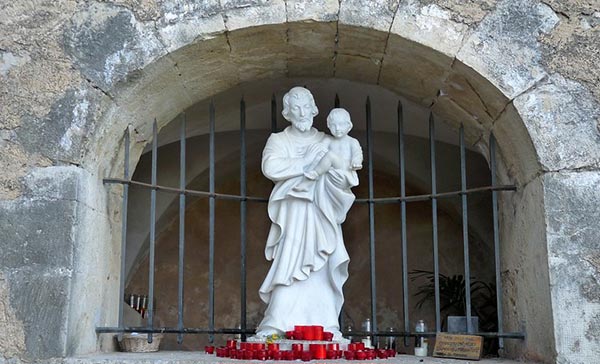
El actual Santuario de san José fue consagrado en 1663. En la fiesta de san José, desde 1661 en adelante acudían verdaderas muchedumbres al santuario del santo.

The present shrine of St. Joseph was consecrated in 1663. On the feast of St. Joseph, from 1661 onwards, large crowds flocked to the saint's shrine.

Since then, the chapel has withstood all the ravages of time, including those of the French Revolution, even if it had to be abandoned for some years. The chapel was somewhat forgotten during the 19th century and a large part of the 20th century, even if it was abandoned for a few years. every March 19, a pilgrimage would gather the people of the surrounding area to.

Finally, in 1975, the Benedictines of the Medea monastery in Algeria settled there, and the architect Fernand Pouillon built a new monastery next to the remains of the 17th century buildings. The work harmonizes the ancient and the modern.

The influence of Jacques-Bénigne Bossuet

Around the same time that this singular apparition of St. Joseph took place, France was consecrated to the holy patriarch by Louis XIV, at the request of his mother, Anne of Austria. Those were the times when the French Court stopped to listen to the sacred oratory of Jacques-Bénigne Bossuet, one of the most influential personalities of the Church at that time.

We have sometimes been given a view of Bossuet more akin to that of a treatise writer constructing a political theory of the French monarchy, and his deep spirituality and his great knowledge of Sacred Scripture and the Church Fathers have been forgotten..

Bossuet's word, like that of other palace preachers, was a seed thrown to interlocutors who seemed to have their hearts too much turned towards the demands of power and external prestige. But it is not up to the preacher to reap the fruits; it is God who gathers the harvest in his own time.
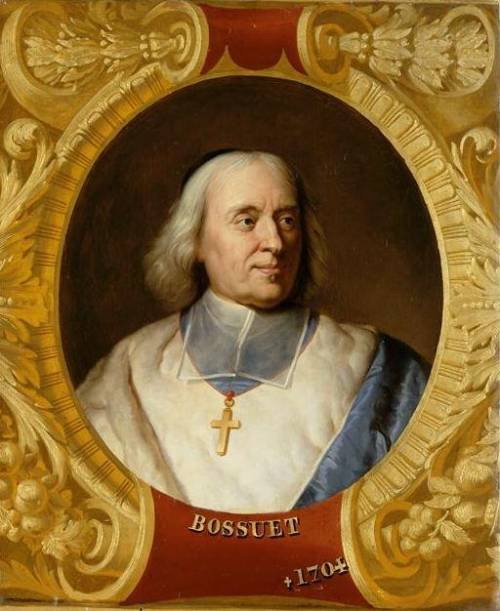
san jose corazón de padre
Prominent French clergyman, preacher and intellectual. Jacques-Bénigne Lignel Bossuet (Dijon, September 27, 1627 - Paris, April 12, 1704).

Bossuet made to Anne of Austria two panegyrics on St. Joseph, both on March 19, 1659 and 1661. In the first, St. Joseph is presented as the custodian of Mary and Jesus, and at the same time the fact that he knew how to keep all his life the secret that God had entrusted to him is highlighted. In the second, Bossuet starts from the biblical quotation that the Lord has sought a man after his own heart. (1 Sam 13:13). He refers to David, Joseph's ancestor, and the preacher praises the simplicity, detachment and humility of the patriarch. He affirms that his faith surpasses that of Abraham, model of perfect faith, because he had to guard a God who was born and grew in weakness. José resembles the moldable clay to which the potter gives the definitive contours. 

The paternity of St. Joseph

When these words were pronounced, Joseph was present in a village in Provence. He did not appear with power and majesty, he did not want to express that he had been too forgotten in 17 centuries of Church history.

On the contrary, St. Joseph's event was marked by discretion and service. He has cared for a young shepherd, as he cared for years for Jesus and Mary.. He has been a father once again. He reminds us that the paternity is always linked to service. This is the fatherhood that instills confidence, that which bases authority on guardianship and service, and not that of the father "lord of lives and property" of the past, which has contributed so much to the current discrediting of the father figure.

However, when the father is questioned or denied, fraternity becomes impossible. This is what happens in today's society, where the seed of individualism has grown. St. Joseph reminds us that the world needs fathers so that we all become brothers.

Antonio R. Rubio Plo, Degree in History and Law. Writer and international analyst @blogculturayfe / @arubioplo
Feast of the Sacred Heart of Jesus 2025

On the Feast of the Sacred Heart of Jesus we celebrate the liturgical solemnity of God's love: today is the feast of love, Pope Francis said a few years ago. And he adds "the Apostle John tells us what love is: not that we loved God, but that He loved us first. He waited for us with love. He is the first to love. St. John Paul II said that "this feast recalls the mystery of the Love that God harbors for men and women of all times".

When is the feast of the Sacred Heart of Jesus celebrated?

The whole month of June is dedicated to the Sacred Heart of Jesus, although its feast day is after the octave of Corpus Christi. This 2025 is celebrated on Friday, June 27.

During the feast, St. Josemaría invites us to meditate on the Love of God: "They are thoughts, affections, conversations that souls in love have always dedicated to Jesus. But to understand this language, to really know what the human heart and the Heart of Christ are, we need faith and humility.

Devotion to the Sacred Heart of Jesus

St. Josemaría emphasizes that as devotees we should keep in mind all the richness that is contained in these words: Sacred Heart of Jesus.

When we speak of human heart we do not refer only to feelings, we allude to the whole person who loves, who loves and treats others. A man is worth what his heart is worth, we can say.

The Bible speaks of the heart, referring to the person who, as Jesus Christ himself said, directs all of himself - soul and body - to what he considers to be his good. "For where your treasure is, there your heart will be also" (

In speaking of devotion to the Heart, St. Josemaría shows the certainty of God's love and the truth of his self-giving to us. In recommending devotion to the Sacred Heart of Jesus, he recommends that we direct ourselves entirely-with all that we are: our soul, our feelings, our thoughts, our words and our actions, our labors and our joys-to the whole of Jesus.

This is what true devotion to the Heart of Jesus is all about: knowing God and knowing ourselves, and looking to Jesus and turning to Him, who encourages us, teaches us, guides us. There is no room for more superficiality in devotion than that of a man who, not being fully human, does not succeed in perceiving the reality of God incarnate. Without forgetting that the Sacred Heart of Mary is always at his side.

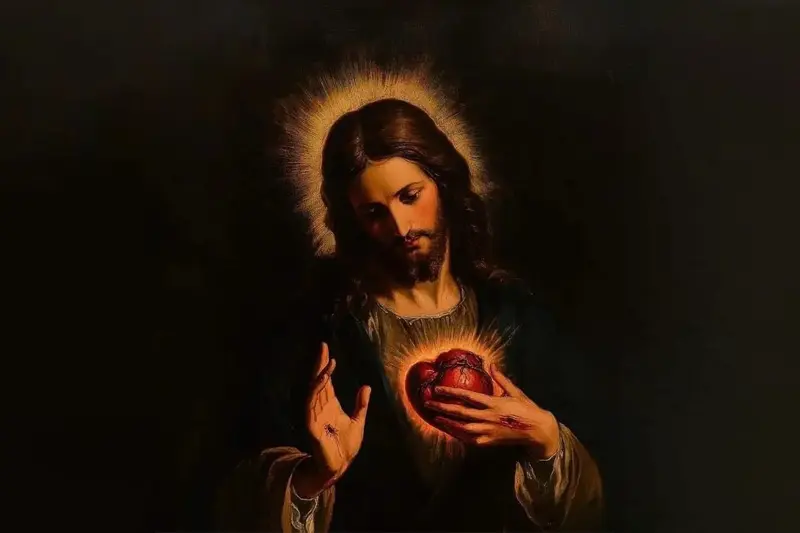
Representación del Sagrado Corazón de Jesús con halo de luz, mostrando el corazón ardiente en su pecho y las heridas de la crucifixión en sus manos, sobre fondo oscuro.

What is the significance of the Sacred Heart?

The image of the Sacred Heart of Jesus reminds us of the central core of our faith: how much God loves us with his Heart and how much we, therefore, must love him. Jesus loves us so much that he suffers when his immense love is not reciprocated.

Pope Francis tells us that the Sacred Heart of Jesus invites us to learn "from the Lord who has made himself food, so that each one can be even more available to others, serving all those in need, especially the poorest families".

May the Sacred Heart of Our Lord Jesus Christ, which we celebrate, help us to keep our hearts full of merciful love for all those who suffer. Therefore, let us ask for a heart:

We can demonstrate our love by our works; this is precisely what devotion to the Sacred Heart of Jesus is all about.

The peace of Christians

On this feast, we Christians must resolve to strive to do good. There is much to be done to ensure that our earthly coexistence is inspired by love.

Even so, the pain will not disappear. In the face of these sorrows, we Christians have an authentic response, a response that is definitive: Christ on the Cross, God who suffers and dies, God who gives us his Heart, who opened a lance for love of all.

Our Lord abhors injustice, and condemns the one who commits it. But, as he respects the freedom of each individual, he allows them to exist.

His Heart full of Love for mankind made Him take upon Himself, with the Cross, all these tortures: our suffering, our sadness, our anguish, our hunger and thirst for justice. To live in the Heart of Jesus is to unite ourselves closely to Christ; it is to become God's dwelling place.

"He who loves me will be loved by my Father, our Lord announced to us. And Christ and the Father, in the Holy Spirit, come to the soul and make their dwelling in it," St. Josemaría.

Men, their lives and their happiness are so valuable that the Son of God Himself gives Himself to redeem them, to cleanse us, to elevate us. Who will not love his heart so wounded? asked a contemplative soul. And he would go on asking: who will not return love for love, who will not embrace a heart so pure," St. Josemaría Escrivá added.

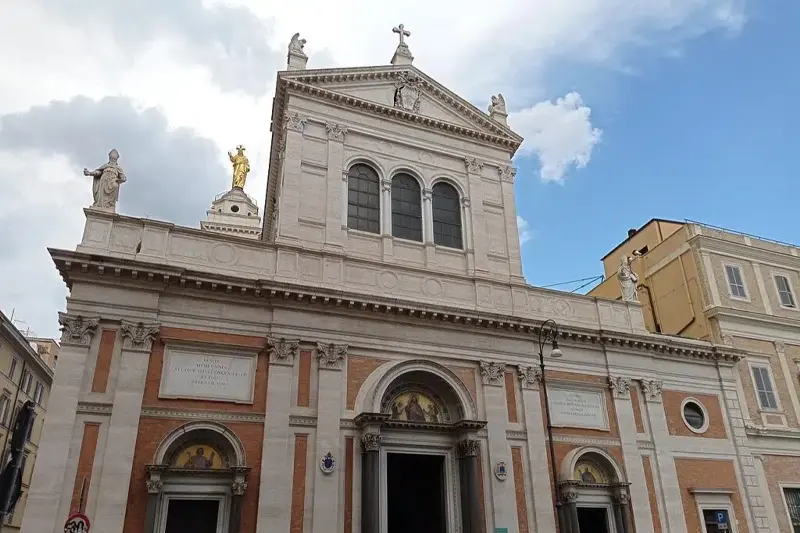
Iglesia del Sagrado Corazón de Jesús en Roma

How did the feast come about? History of the Sacred Heart of Jesus

It was an explicit request of Jesus, who on June 16, 1675, appeared to her and showed his Heart to her. St. Margaret Mary Alacoque. Jesus appeared to her on several occasions and told her how much He loved her and all men and how much it grieved His Heart that men were turning away from Him because of sin.

During these visits, Jesus asked St. Margaret to teach us to love Him more, to have devotion to Him, to pray and, above all, to behave well so that His Heart would no longer suffer from our sins.

Later, St. Margaret with her spiritual director would spread the messages of the Sacred Heart of Jesus. In 1899, Pope Leo XIII published the encyclical Annum Sacrum on the consecration of the human race, which took place in the same year.

During his pontificate, St. John Paul II established that on this feast the World Day of Prayer for the sanctification of priests should also be celebrated. Many groups, movements, orders and religious congregations, since ancient times, have placed themselves under his protection.

Rome is home to the Basilica of the Sacro Cuore (Sacred Heart) built by St. John Bosco at the request of Pope Leo XIII and with donations from the faithful and devotees from various countries.

Prayer to the Sacred Heart of Jesus in Catholic Devotionals

How to pray to the Sacred Heart of Jesus? We can get a prayer card or a picture of the Sacred Heart of Jesus and, before it, perform the family consecration to his Sacred Heart, in the following way:

Written by St. Mary of Alacoque:

"I, (say here your name), give and consecrate myself to the Sacred Heart of Our Lord Jesus Christ, my person and my life, my prayers, sorrows and sufferings, so as not to want to serve myself from any part of my being, but to honor, love and glorify Him. It is my irrevocable will to be all of Him and to do everything for His love, renouncing wholeheartedly all that could displease Him.

I take you, therefore, O Sacred Heart, for the only object of my love, the protector of my life, the security of my salvation, the remedy for my frailty and my inconstancy, the repairer of all the defects of my life, and my asylum at the hour of my death.


Bibliography

It is Christ who passesSt. Josemaría Escrivá.
ConfessionsSt. Augustine.
Letter, October 5, 1986, to Fr. R. P. Kolvenbach, M. R. KolvenbachSt. John Paul II.
Opusdei.org
Vaticannews.va

The full happiness of Guilherme Silva de Araujo

Happiness came to him through Padre Pio. And now he is studying theology and philosophy at the Pontifical University of the Holy Cross (PUSC), together with twenty Brothers from his congregation, the Servants of the Immaculate Heart of Mary, including seminarians and priests.

Guilherme was born on October 26, 2003 in Aracaju, the capital of the state of Sergipe, in northeastern Brazil, a city known for its warm climate, long beaches and peaceful atmosphere on the shores of the Atlantic Ocean. Today he lives in Rome and is in his second year of the philosophical biennium, and then he will begin the three-year period of theological studies at PUSC.

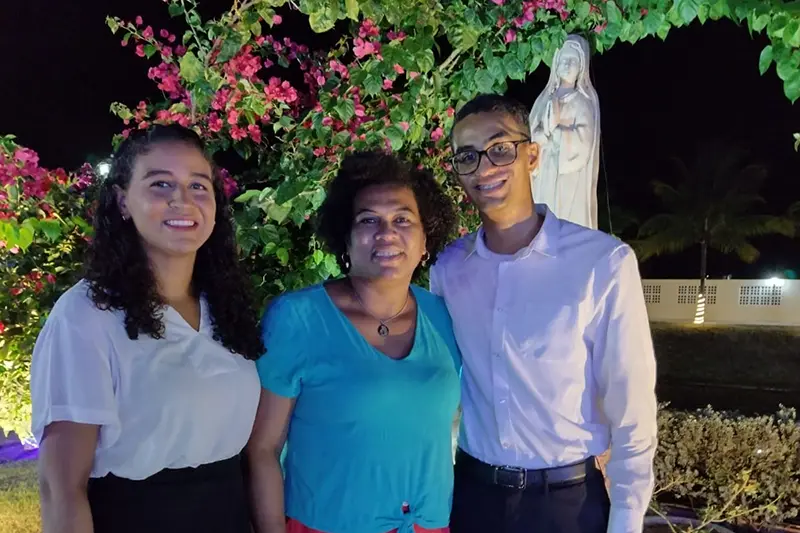
Guilherme Silva junto a su hermana y su madre

The origins of Guilherme Silva

Guilherme Silva de Araujo is a seminarian of the religious institute "Servants of the Immaculate Heart of Mary". He comes from a Catholic family, although he did not attend Mass every Sunday and prayed the rosary very little. He is the youngest at home; he has a sister who is four years older than he is.

His mother always saw to it that his sister and he received at least the initial sacraments and then gave them the freedom to choose whether or not they wanted to continue on the path of faith. For Guilherme, this was a very positive thing, at least until he was 14 years old, when his life began to change in a particular way.

Adolescence and some inner wounds provoked in him a distancing from God and a mistaken search for happiness.

At the age of 12 and during that period, he began to live certain negative experiences typical of adolescence, influenced mainly by unedifying friendships he had, especially at school. In addition to this, he had some inner wounds that he had carried with him for a long time, which led him to seek happiness in things he thought were good, but which in reality were not.

Little by little, she began to leave God aside. He only maintained a link with Him through pastoral work in his parish, where he collaborated as an assistant catechist. That was one of the few things he still did in the Church.

However, in the midst of all this, a deep sadness and a constant search for meaning in his life grew within him. He felt the need to find a "cause" for which to give up his existence.

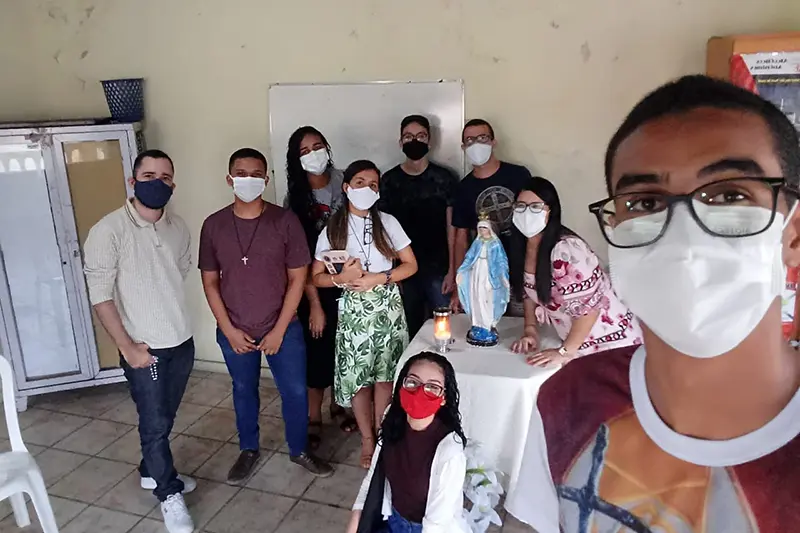
Felicidad, amor, Dios, Guilherme Brasil

A spark of hope: Confirmation

At that time he started the Confirmation course, and he did it with good will, because he felt that it would lead him to something good. In fact, he lived many beautiful experiences during that year (we are talking about 2018, when he turned 15). In addition, he reconnected with a friend who often invited him to Sunday Mass.

In his parish there was a group of young people he very much wanted to join, but because of some difficulties - such as distance and schedule - it was difficult for him. However, after receiving Confirmation, he moved to a new neighborhood and was closer to the parish. A few weeks later, he began to participate in the youth group.

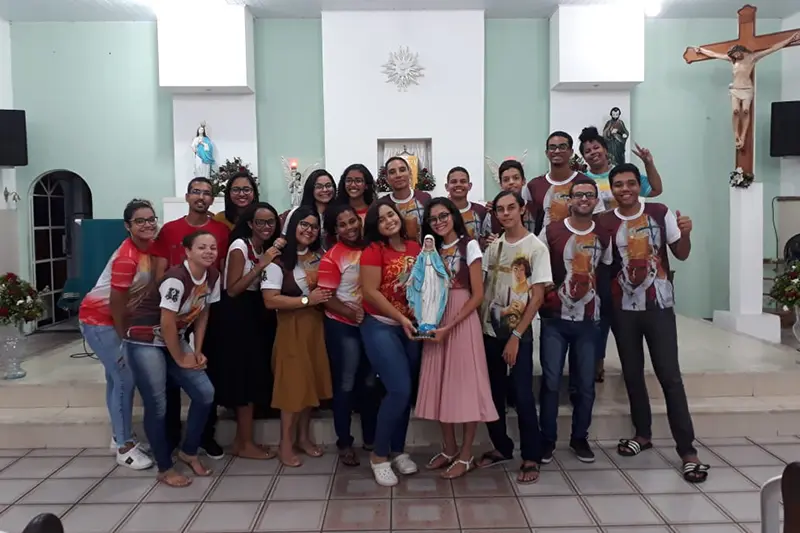
That changed his life in an incredible way! He met other young people who had the same desire as he did: to give their lives for a truly worthwhile cause, Jesus. They were few, but we had an immense thirst for something more.

True conversion

Guilherme began to know the lives of the saints, the Catechism of the Catholic Church, the tradition... All this helped him to leave behind the vices and to seek the virtues. He called this period of his life his conversion, although it was not only his own, but also that of his family.

In fact, they saw that he was no longer the same: "my friendships had changed, my arguments had changed, even the way I dressed. But, above all, there was an essential novelty in my life: prayer".

Prayer was what started my days, filled them and closed them. The happiness I was looking for was there!

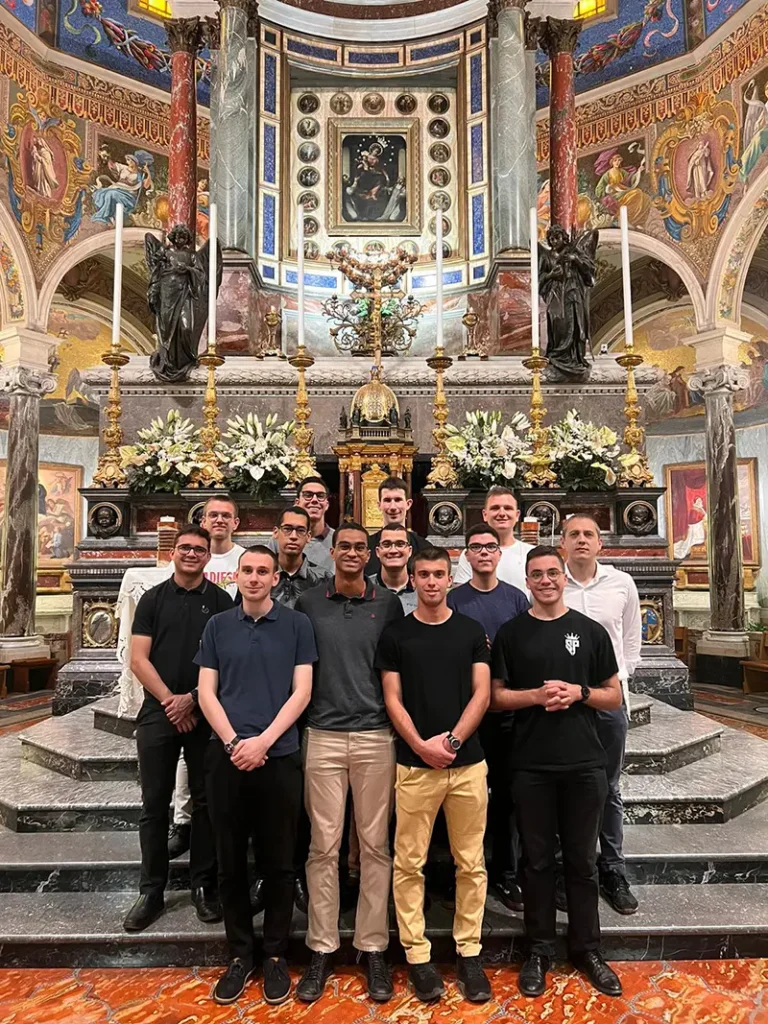
Guilheme posa junto a compañeros del seminario en una iglesia con el altar a la espalda

The yearning to love and the impact of St. Pio

Guilherme was lonely and longed for love: someone to love. So he began to ask God to allow him to find a young woman who was looking for the same thing he was: to be a saint. This was in 2019.

Some time later, in the youth group, they watched a movie about the life of St. Padre Pio. His life and his total surrender to God were like a blow to the depths of his being: "I was no longer the same. No matter how hard I tried to go on with my life as if nothing had changed, I couldn't".

There was a young woman who interested him very much, but after that "encounter" with Padre Pio, he no longer saw any point in pursuing that idea, or any other. What was burning in his heart was another desire: "I wanted to become a religious".

First steps: meeting the Community

Guilherme confided this desire to a friend who was part of the same youth group and who was already on a vocational journey. "Welcoming my open-heartedness, he invited me to the community of the Servants of the Immaculate Heart of Mary to participate in a celebration on October 13in honor of the apparition of Our Lady in Fatima.

There I went to confession and participated in Mass. Everything I experienced that day deeply touched my heart. I went back a few more times, but the community was very far from my home and, because of my lack of perseverance, I stopped going there for a year".

Firm decision: abandonment and total surrender

Guileherme's parish life was becoming more and more active and, in order to discern and nourish his vocation even more, in 2020 he entered the pastoral care of altar boys. At the end of that same year, he returned to the community, determined to resume the vocational journey with the Servants, and so it was.

In the meantime, he finished school and was accepted to the Federal University of his state. However, in order to have a year's experience within the community, he decided to give up his long-dreamed-of university place. From 2021 to August 2023 he was active in the community as a consecrated layman and "vocationed".vocation".

"I lived so many beautiful experiences: Marian missions, meetings with young people and children in the oratory... I met many people who enriched my life with their good examples, especially in the parishes through which I passed."

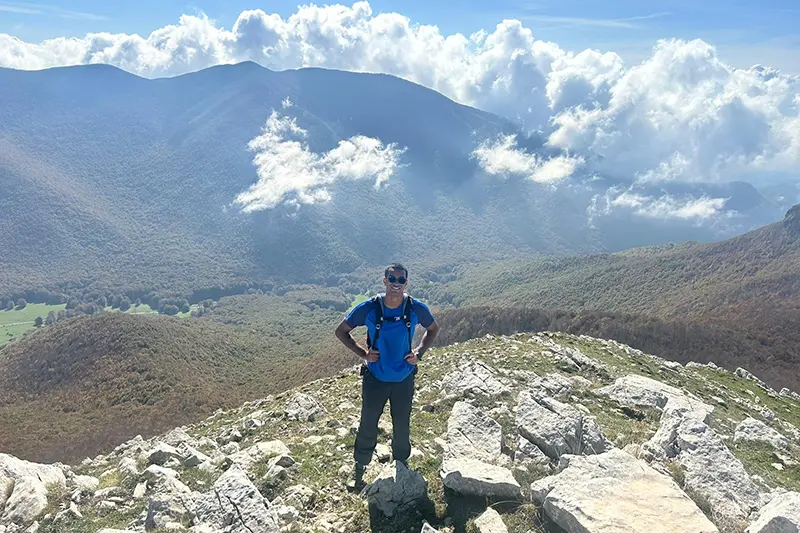
La felicidad de Guilheme Silva al contemplar la obra de Dios en la naturaleza

Arrival in Rome: formation, gratitude and fidelity

In August 2023 he arrived in Italy, entrusting his family and friends to the care of Jesus, in order to follow him more closely and begin his formation in the seminary. He is currently in his second year of postulancy and also in his second year of philosophy.

"Every day I am more grateful to the Lord for the grace of having received a particular calling, but even more so for having been able to respond to it."

Her vocational and conversion journey is driven by the infinite love that I receive from God every day, and also by the healing of so many wounds that He has allowed in my life. "I offer Him my existence daily, so that I may be an instrument of healing and a channel of grace for so many other people; so that they may discover how much love envelops them and who it is that loves them: Love! And this Love can only be responded to by loving".

Thank you to the benefactors of the CARF Foundation.

Guilhemer also wishes to express his sincere thanks to the benefactors of the CARF Foundation, who make it possible for him to continue his education at such a high quality university. "I assure them of my prayers every day, and ask them to keep me present in their prayers, so that I may remain steadfast and always faithful to God's holy designs."

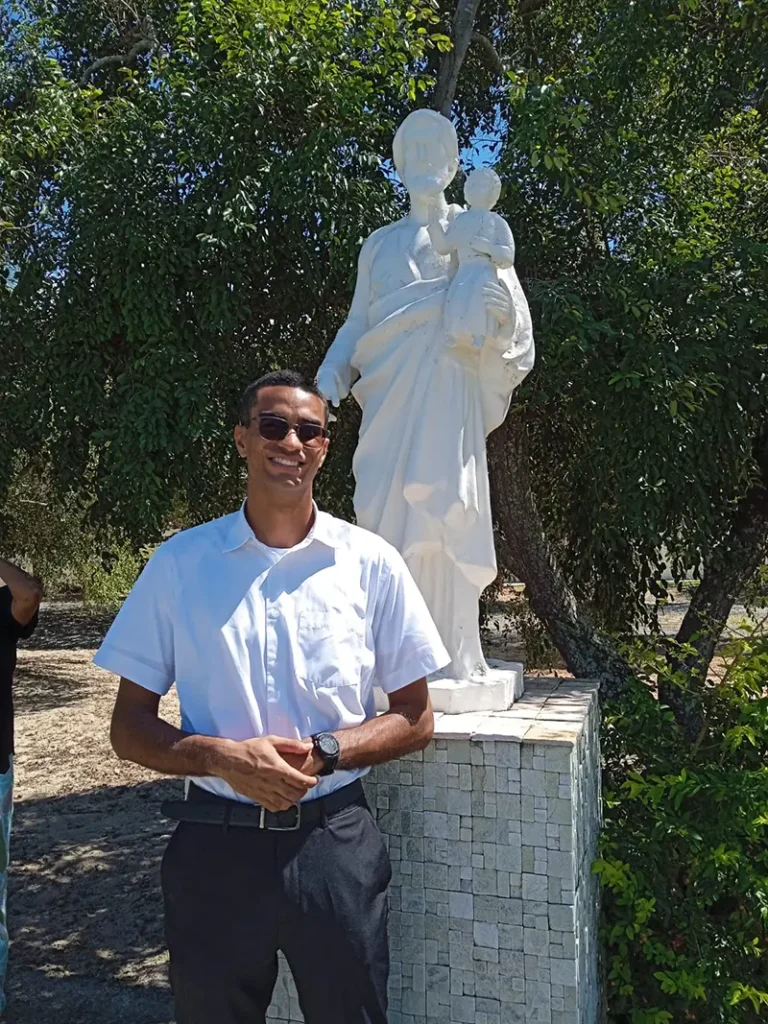
Guilheme Silva posa junto a una estatua

Gerardo FerraraDegree in History and Political Science, specialized in the Middle East. Head of the student body at the University of the Holy Cross in Rome.

Angola's vocation: from the field to the seminary

Gonçalves is a young man from Angola who discovered his vocation at a very young age, when he was eight years old. "My heart burned and I dreamed of being a catechist," he recalls with emotion. Today, together with a companion, he is one of the first vocations of Angolan seminarians studying at the Bidasoa international seminarin Pamplona.

Angola is a country rich in natural resources such as diamonds and oil. However, it continues to face great challenges. The lack of a sense of belonging among its citizens and the lack of responsibility of some rulers towards the common good contribute to the persistence of poverty.

In the service of your country

Gonçalves Cacoma Cahinga is fully aware of the challenges facing his country. Although his priestly vocation is focused on evangelization and the administration of the sacraments, he knows that, through his ministry, he will be able to contribute to the well-being of many of his compatriots.

"Despite the poverty, the shortage of schools, the lack of road infrastructure and the deficiencies in the health system, whoever visits my country will discover, above all, the joy of its people. Hospitality, humility, the desire to learn and unity among diverse cultures are living signs of the Angolan spirit and privileged paths for evangelization.

I would also highlight the deep faith of the people and their vibrant liturgy, which allows an authentic encounter with the divine, without forgetting the charms of our nature and the richness of our gastronomy," he says enthusiastically.

Angola's first vocation in Bidasoa

He belongs to the diocese of Lwena-Moxico, the largest in Angola, with an area of 223,000 km². Together with a companion, he is the first Angolan to study at the Bidasoa International Seminary. This year he will begin his third year of theology. "I have always defined my vocation as a true divine Providence" and my bishop Dom Martin Lasarte was the one who wanted me to come to Spain to be formed.

Gonçalves can be formed in Bidasoa thanks to the support of the CARF Foundation, which covers the costs of his priestly preparation. This commitment to formation is one of the fundamental pillars of the Foundation: to help vocations in countries with fewer resources, so that none are lost due to lack of financial means.

A family environment full of values

"I come from a humble, peasant family, composed of eight members: four men and three women. I am the seventh child and the only one who is still studying, since my brothers and sisters have already formed their own families. My parents, although elderly, are still alive. All of my family is Christianbut only my mother, one brother and three sisters are Catholics; the others belong to other Christian denominations. Despite the economic limitations, we grew up in an environment full of human and religious values that have deeply marked our lives," says Gonçalves.

His vocation to the priesthood was born when he was eight years old. "I used to go every Sunday to church with my mother, and I was fascinated to watch the catechist explain the readings. I felt a burning in my heart and dreamed of being a catechist one day."

This desire was strengthened in 2012, when the religious priests of the Congregation of the Sacramentaries of Our Lady arrived in his municipality from Brazil. They founded the parish of St. Anthony of Lisbon and, with their witness of life, their dedication to the Word of God, their service in the most remote villages and their care for the elderly and street children, completely transformed his vision: "From wanting to be a catechist, I went on to feel a call to the priesthood," he says.

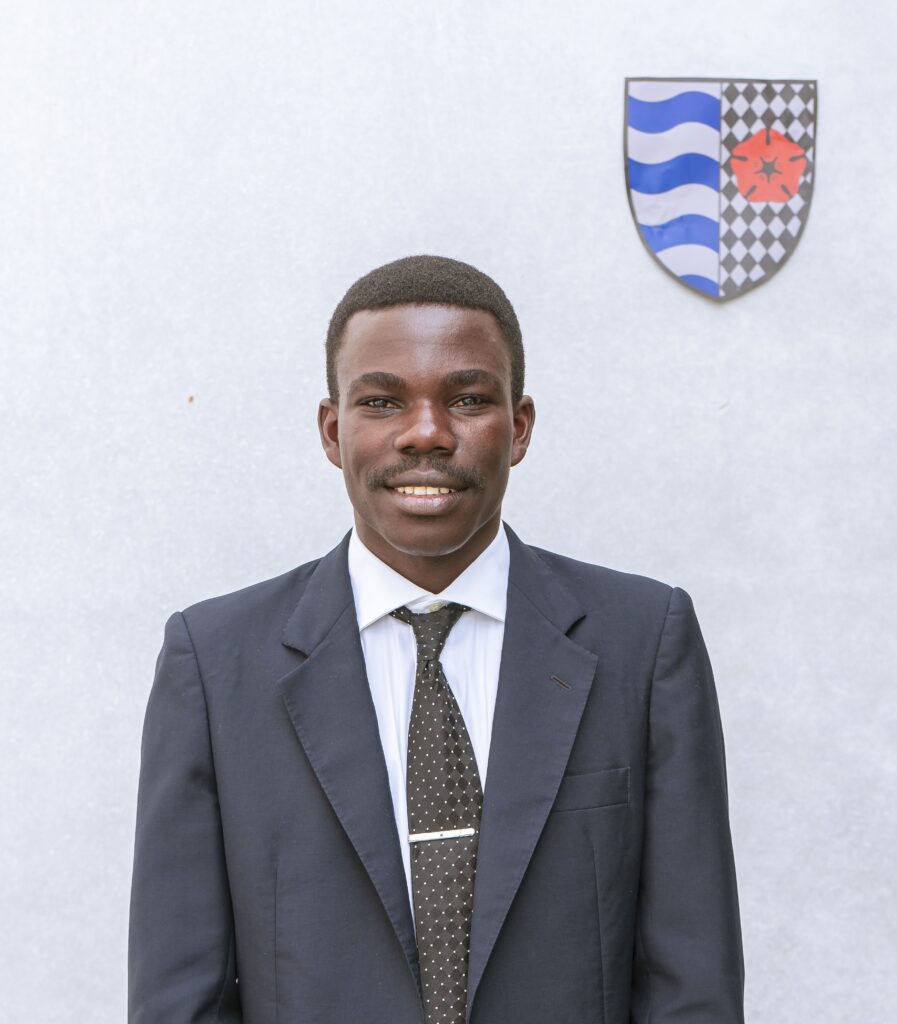
Goncalves-Cacoma-Cahinga-Angola-vocación-sacerdote

Economic difficulties and tribulations

But his vocation has not been free of difficulties and tribulations that have deeply marked his path, to the point of being on the verge of shipwreck.

In 2014 he moved to another municipality to continue his studies and, during that time, he moved away from the Church. In 2016 he finished the second cycle, returned to his town and was unable to continue studying due to lack of economic resources.

"During that year, I had other plans: to start a family and look for a job. However, the Lord had other paths for me. The priests spoke with me and my parents, and invited me to participate in vocational formation with a view to entering the seminary. Thus, in 2018, I entered St. John Mary Vianney Propaedeutic Seminary."

Three years later, in 2020, the priests who financed his studies returned to his country and, unable to continue due to lack of means, he decided to leave the seminary. However, thanks to the intervention of his rector and a generous lady who offered to pay for his education, he was able to enter the St. Joseph major seminary of philosophy, where he studied for three years.

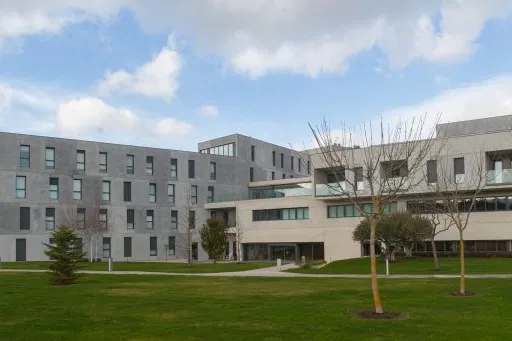
Seminario internacional Bidasoa

A great opportunity to mature in your vocation 

Gonçalves is currently attending the Bidasoa International Seminar in Pamplona. "For me it was a real surprise, and also for my family. It is an opportunity to grow in my vocation, in my mission and to mature more in my formation," he says with gratitude.

Aware of the pastoral need in his country, he adds: "In my diocese, although there are many Catholics, there are few priests and few parishes. That is why I am deeply grateful to all the benefactors of the CARF Foundation for the opportunity they are giving me. For me, being in Bidasoa is a great richness, because it allows me to discover the greatness of the universal Church".

He ends his testimony with a heartfelt thank you to the CARF Foundation, whose help has been key to his vocation moving forward.


Marta Santínjournalist specializing in religion.

Annual meeting on May 23 between benefactors and seminarians

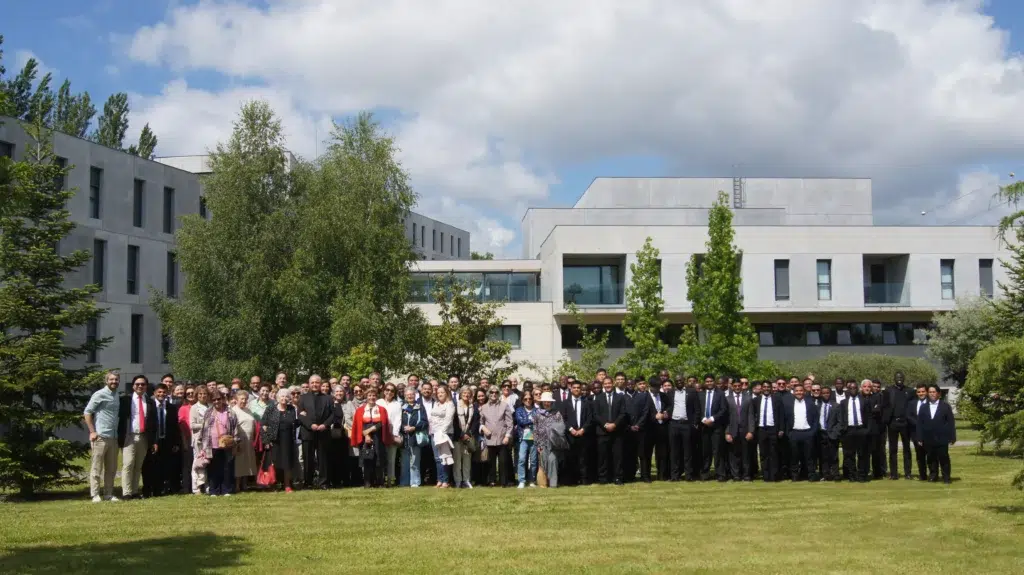
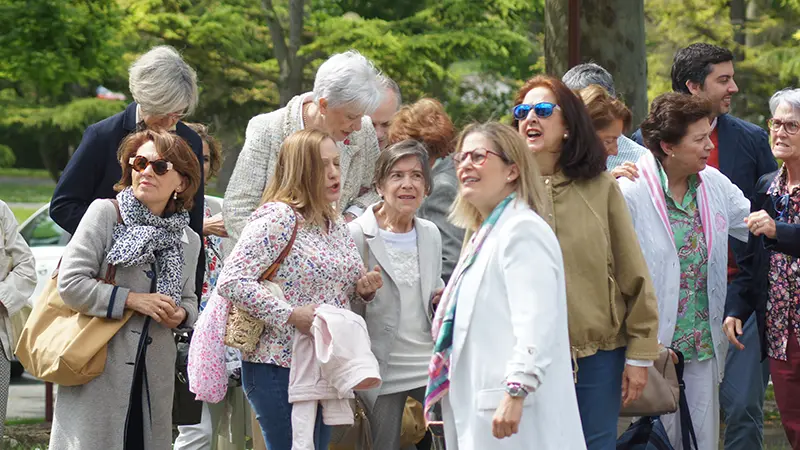
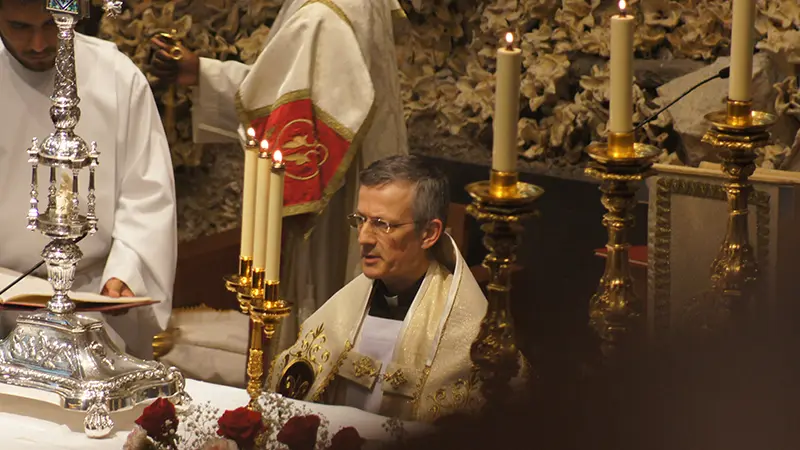
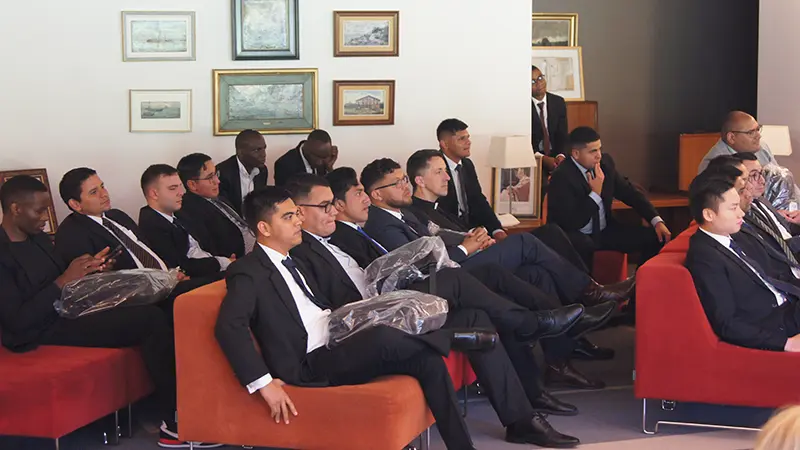
Every year in Pamplona, a day of coexistence between benefactors and friends of the CARF Foundation and seminarians is held. The event is an opportunity to meet the boys who are being trained in the Ecclesiastical Faculties of the University of Navarra and who reside in the Bidasoa International Seminary, where they also receive an integral formation to reach the priesthood.

"Shocked and excited", Mayte and María José attended for the first time this special event in the calendar of the CARF Foundation. In addition, this year also marked the 50th anniversary of the Torreciudad sanctuary.

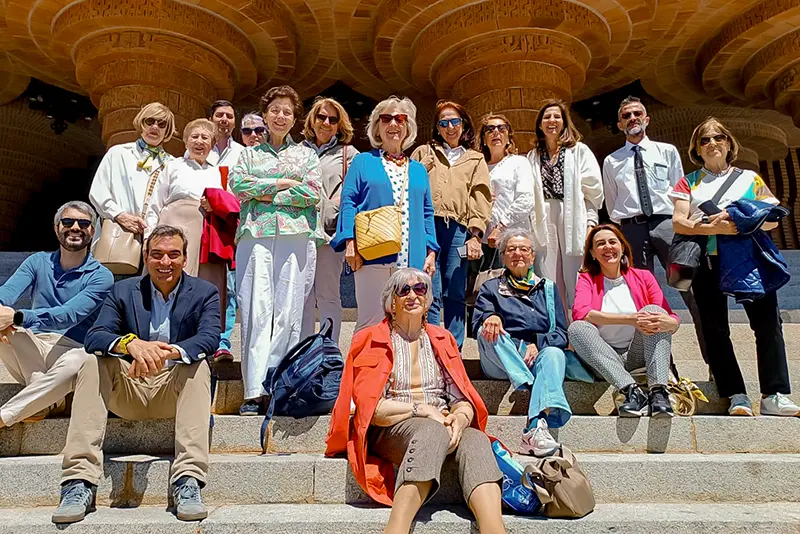
Foto de grupo de peregrinos de la Fundación CARF en Torreciudad

50th anniversary of Torreciudad

The event was held on May 23 and 24. This year also marked a very significant date: the 50th anniversary of the construction of the new sanctuary of Torreciudad. On Friday the group visited the Ecclesiastical Faculties of the University of Navarre, the Bidasoa international seminar and on Saturday, he visited the Shrine of Our Lady of the Angels of Torreciudad.

Mayte and María José return excited from the trip. The joy of the seminarians, seeing so many young people from different countries of the world and participating in the Solemn Mass that was "as if you were between Earth and Heaven", both agree that it has overwhelmed them.

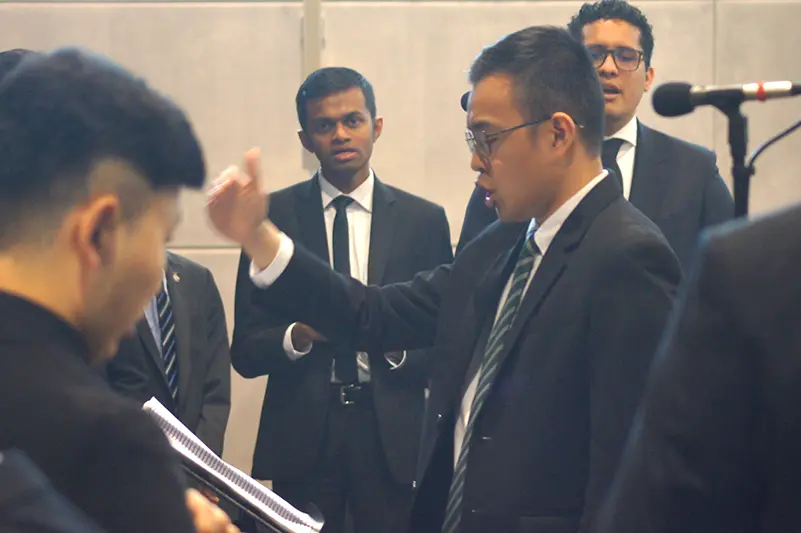
The Bidasoa Choir, the perfection of many hours of rehearsals

"The participation of the boys' choir during Holy Mass is an indescribable moment. I have never seen anything like it. It is a group of young people, but it gives the impression that they sing with one voice. The piety they transmit, the recollection, every detail of the Eucharist leads to the Love of God," explain these two benefactors.

From Torreciudad They were very pleased with the exhibition on the "Experience of Faith", which traces the faith of the Jewish people up to the present day. "It has been a wonderful two days," they said. The group, already smaller than that of the day in Pamplona, was received by Mr. Ángel Lasheras at the Tourist Office. After the welcome, they participated in the Holy Mass in the central nave of the sanctuary and took the opportunity to pray for a while in front of the image of the living Christ in the chapel of the Blessed Sacrament.

After touring the gallery of the images of the Virgin, more than 600 invocations from all over the world are present, the pilgrims took the opportunity to visit different chapels and participate in the impressive video-mapping The altarpiece tells you why Torreciudad through a show of music, light and sound.

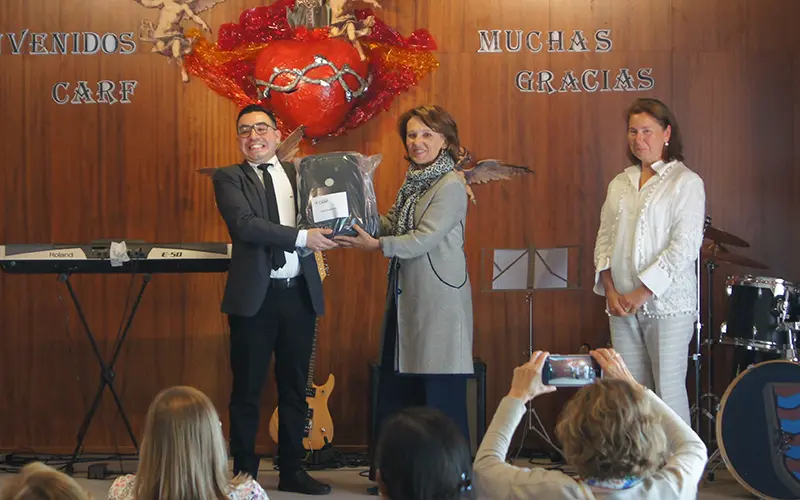
The delivery of the backpacks, a moment of great joy

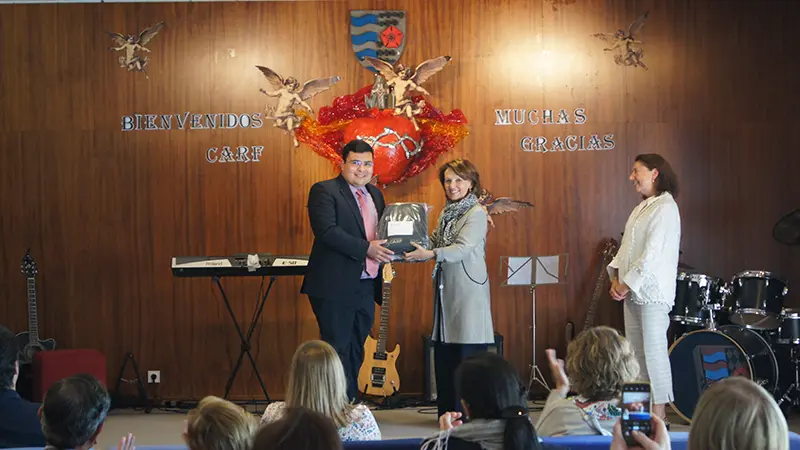
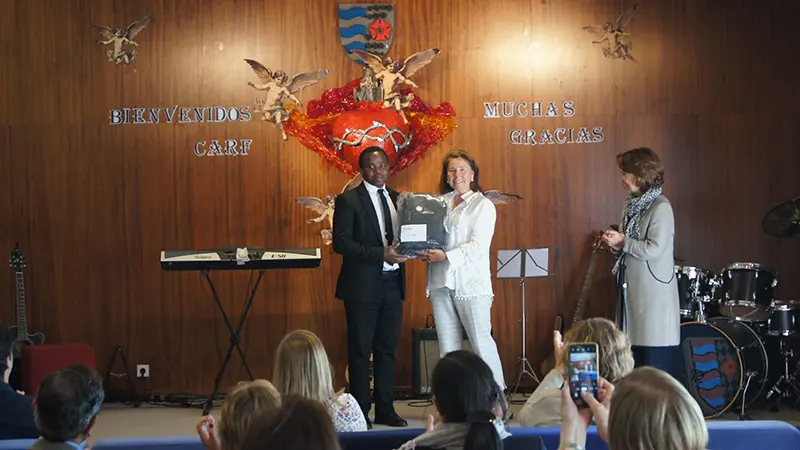
Carmen Ortega is co-president of the Social Action Board (PAS) of the CARF Foundation. Every year they deliver a backpack with sacred vessels and liturgical elements to each graduating seminarian so that they can worthily celebrate the sacraments in any corner of the world, lost villages or forgotten towns in rural areas.

"The delivery of backpacks is exciting because after all the year preparing them, and what we pray for them, to give them this gift is touching.", explains.

Carmen went on this pilgrimage with Cristina, a PAS collaborator who was going for the first time: "She was enthusiastic and said she was going to encourage all the PAS ladies to participate in this trip every year. She has said that she will not miss any of them".

Facultades Eclesiásticas de la Universidad de Navarra en Pamplona

Training at the University of Navarra

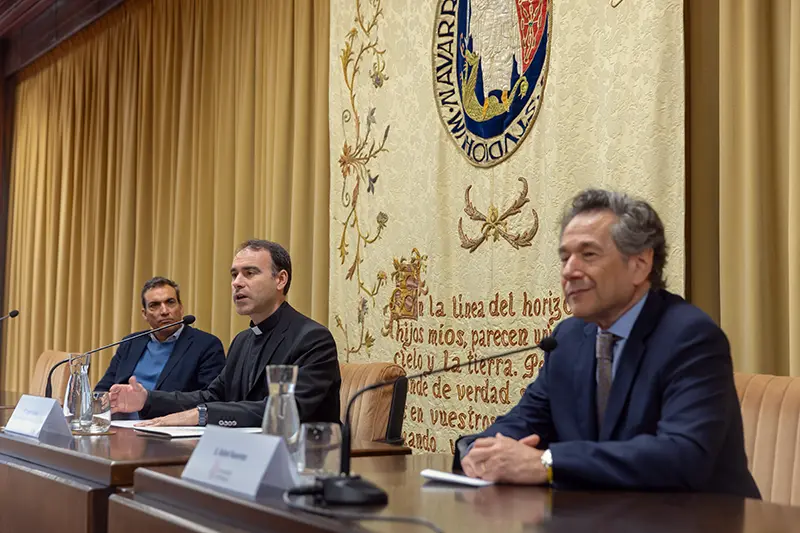
Pilar is another benefactor of the CARF Foundation. She explains that, at the Ecclesiastical Faculties of the University of Navarra, there was a very affectionate reception, where the Dean of the Faculty of Canon Law, Mr. Joaquín Sedano, dedicated a few words of thanks for all that has been organized thanks to the CARF Foundation and the benefactors of Bidasoa and the university.

He explained, as an example of the richness of the training they receive, the international congress on the figure of Benedict XVI, co-funded by the Ratzinger Foundationcourses and programs in psychology and spiritual life, creation care, matrimonial and procedural law, etc.

Hung Vicente, from Vietnam, and Erick, from El Salvador, tell their testimonies.

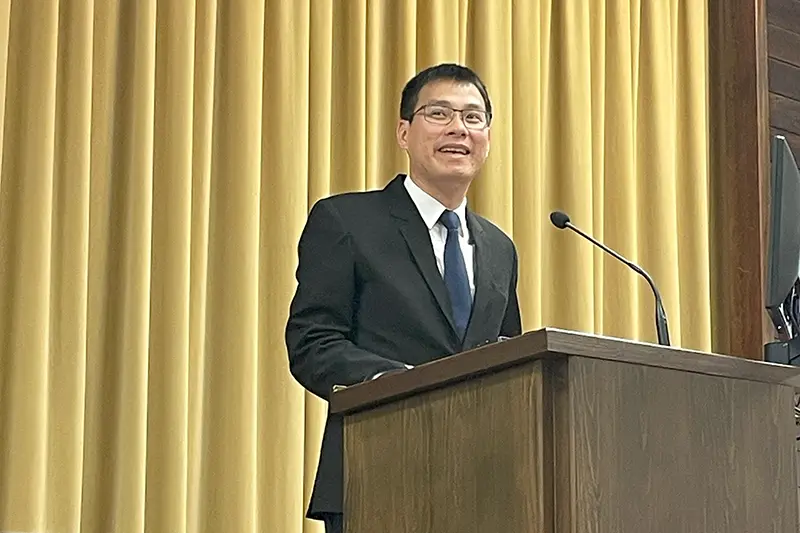
Then Rafael Navarrete, from the Alumni Admissions department, introduced two students: Hung Vicente Nguyen, a seminarian from Vietnam, and Erik Linares, a priest from El Salvador.They told their testimony, which was very moving, "showing that each seminarian is a living hope for the Church and the world," says Pilar.

The seminarian from Vietnam explained that the first year he landed in Bidasoa, he spent that entire course without knowing Spanish, but thanks to the help of his formators and other seminarians, he was able to understand most of the explanations.

A perfect environment for the formation of diocesan priests

Hung Vicente, who has obtained his degree in Canon Law (5 years) and will become a deacon and then a priest, expressed his gratitude to the benefactors of the CARF Foundation. He also said that his bishop visited the University of Navarra and told him that there were a good fraternal environment for the formation of future priests. In fact, they will send two new students from their diocese next year. There are 110 seminarians in his diocese and a total of more than 3,000 in his country.

He then participated Erik Linares, from El Salvadorwho studied 4 years in Bidasoa and later worked as secretary to the bishop of his diocese in El Salvador. And now he studies Biblical Theology and helps in some parishes in the area.

Upon completion, Álvaro GarridoLuis Alberto Rosales, Director of Communications and Marketing of the CARF Foundation, who spoke in the absence of General Director Luis Alberto Rosales, explained the three founding purposes of the institution: to pray for vocations and for seminarians and priests; to spread its good name throughout the world; and to promote their integral formation at the Pontifical University of the Holy Cross in Rome and at the Ecclesiastical Faculties of the University of Navarra, in Pamplona.

Supporting a vocation is sowing eternity

"When you spend a day with the seminarians of Bidasoa, you realize the importance of praying for priests and seminarians, and know that to support such a vocation is to sow eternity," says Pilar.

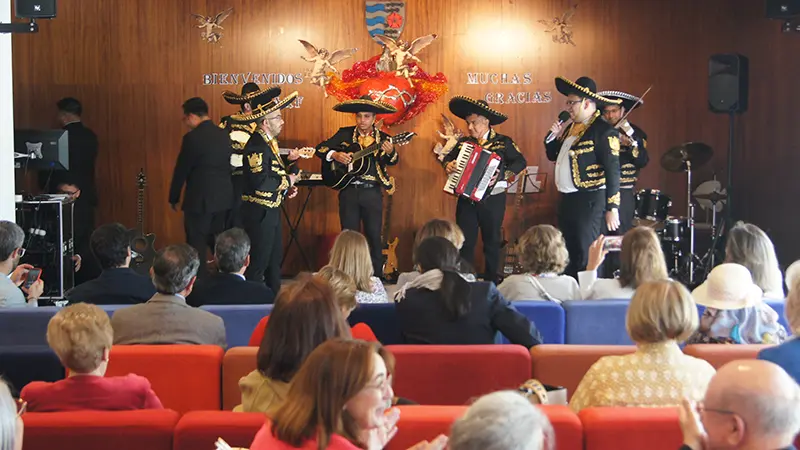
Lunch was followed by a small show of dances and music by the seminarians from different countries and the presentation of the backpacks of sacred vessels so lovingly prepared by the PAS.


Marta Santínjournalist specializing in religion.

The day Leo XIV was in Pamplona

Pope Leo XIV, shortly after his appointment as pope Bishop of Chiclayo (Peru)He made a stopover in Madrid on a trip that took him to Rome. At this time it was agreed that February 6, 2015 was the Edward Tocto's birthdaya priest from his Peruvian diocese who was studying for a degree in Canon Law at the University of Navarra. In fact, the young priest had been sent by the previous prelate, Monsignor Jesús Moliné, to complete his formation.

In a detail that reveals his close and human character, today Pope Leo XIV had no better idea than to get into a car and drive to Pamplona to present the priest with a pleasant surprise.. Curiously, they had never met before and, in a way, Prevost wanted to have a show of proximity with him as a member of his diocese.

He remembers it very well Miguel Brugarolasone of the deputy deans of the School of Theology at the University of Navarrabecause shared a table with the newcomer in a residence for priests and students of the Ecclesiastical Faculties. Of course, at that meeting there was also the birthday guest as well as Enrique Moros ClaramuntProfessor of the Ecclesiastical Faculty of Philosophy.

Without any suspicion of the fate that would befall the current Pontiff, Brugarolas discovered in him a a "very friendly and approachable" person". The professor of theology remembers his most human side of that short but endearing visit: "I didn't feel like I was eating with a bishop.". Because of the way he interacted," he notes, "he immediately empathized with his hosts in a pleasant and relaxed atmosphere that helped to maintain a cordial dialogue. "We were surprised by the affectionate detail of driving from Madrid and returning the same day. It was a great gesture.he evokes.

"We lived then two priests and two students in this small residence. And I remember that encouraged us to study and valued the studies of Canon Law and Theology.". He had never been to the University of Navarra and received from his hosts an explanation about the attendance of priests from different parts of the world to study in its Ecclesiastical Faculties. In the dialogue held, the Pope received details of the formation process that priests undergo. In fact, in the Ciudadela residence, where the meeting took place, formation activities are offered through the Priestly Society of the Holy Cross for diocesan priests "which, in some way, are nourished by the spirit of Opus Dei," explained Miguel Brugarolas.

León XIV

Pope Leo XIV's link with Peru

The vice-dean of the Faculty of Theology also notes that Bishop Prevost strengthened the link established between the Theological Institute of the seminary of Chiclayo and the faculty itself. The Peruvian center itself is visited every year by professors from the University of Navarra to examine its students. "There is a close relationship with the diocese of Chiclayowhich, under Bishop Prevost, was renewed. This is an academic relationship of an affiliated institute with a faculty. The degrees that are given at that institute are endorsed by our faculty of Theology."

According to the vice-dean and professor, upon his return to his country after completing his studies in Canon Law, Edward Tocto, received "a great responsibility" from the bishop, who was kind enough to congratulate him in person. and that this Thursday gave him another pleasant surprise.

More than four decades of pastoral service in the country

The Pope Leo XIVborn Robert Francis Prevosthas a deep and direct link with Perubuilt over more than four decades of pastoral service in the country. These are some of the key points of its relationship with Peru:

Pastoral mission in Peru

In 1985, he was sent as an Augustinian missionary to Chulucanasin the region of Piura. He developed an intense pastoral and social work in rural and marginalized communities in the north of the country.

Episcopal Service

At 2001 appointed bishop of Chiclayo by St. John Paul II. He served as bishop there for almost two decadesHe has won the affection of the people for his closeness, simplicity and commitment.

Peruvian nationality

During his time in the country, acquired Peruvian nationalityThis further deepened their integration and commitment to the local Church.

4. National impact

He was a key figure in the formation of the clergy, the promotion of religious life and the defense of human rights and social justice in various regions of Peru.

5. Recognition in Rome

His work in Peru was so remarkable that in 2023 he was recalled to Rome as a prefect of the Dicastery for Bishops and president of the Pontifical Commission for Latin America.